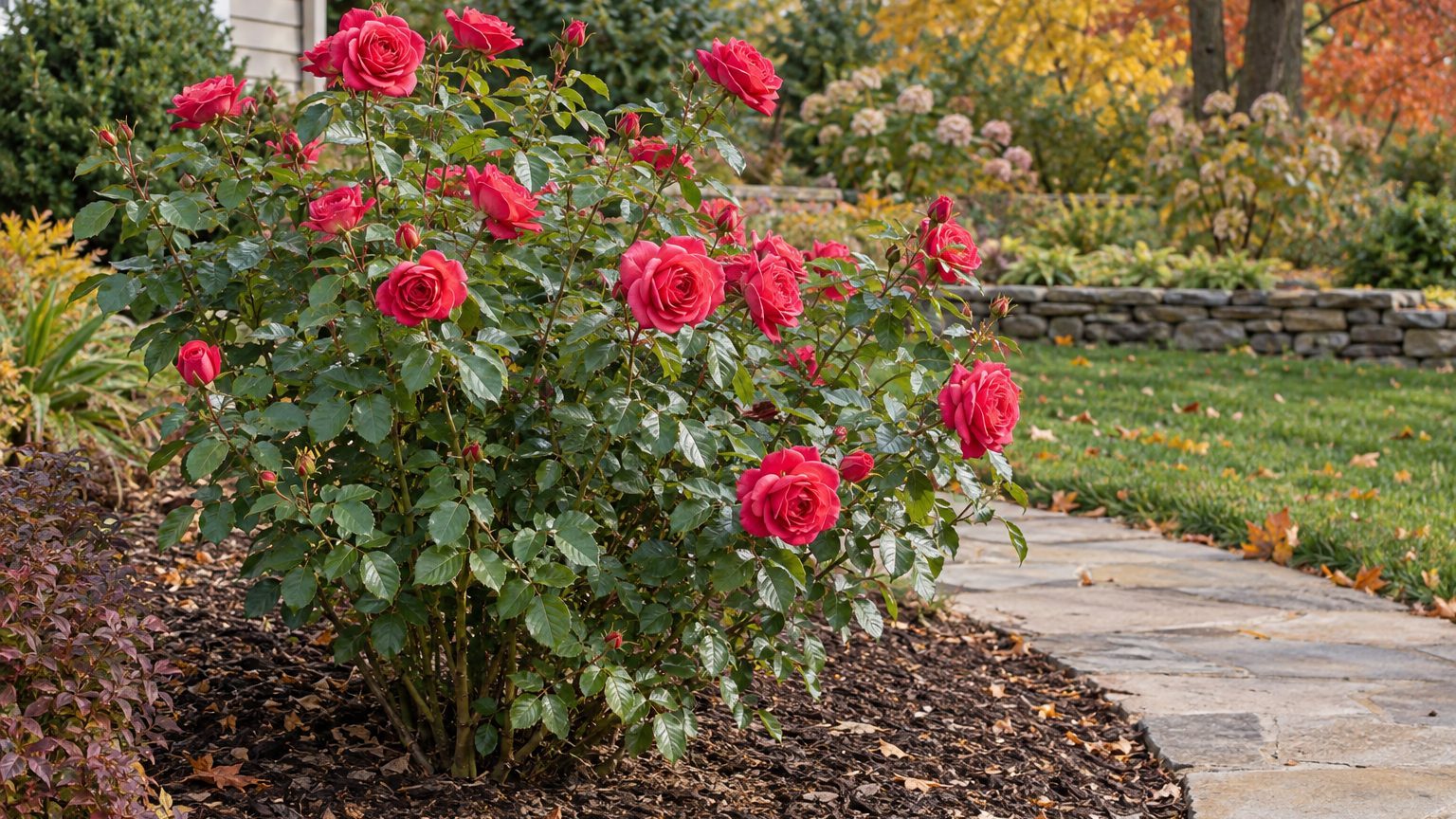
Rose canes leaf out in spring, bloom in their season and go to bed in winter, and every task in between depends on the type of rose and where the yard sits. Roses that thrive in Florida’s heat struggle in North Dakota’s cold, and the reverse is also true. Planting, pruning and winter care all shift with climate and rose type.
Rose Care Calendar by Season
A rose asks for something different at each stage of its year, and the tasks below follow the plant’s own rhythm, not the date on the wall.
- In early spring, as the buds begin to swell, the plant is waking up and the dead or damaged canes show themselves. This is the time to prune repeat-blooming roses, because they flower on new wood and the cuts shape it.
- Once the soil warms and the first shoots stretch, the rose is putting out leaves and needs steady moisture and food. New roots take hold in this period, which makes it a good moment to plant.
- At bloom time, the plant spends its energy on flowers, so regular deadheading and a watch for leaf disease keep it going. Once-blooming roses are pruned right after their flowers fade, since next year’s flowers form on this season’s growth.
- In the heat of summer, many roses slow down and stress shows quickly. Deep watering at the base and a close eye on the undersides of leaves protect the plant when the weather turns hot and dry.
- In autumn, new growth should slow so the canes can harden before frost. Fertilizing and heavy pruning at this point would only push tender shoots that winter cold would kill.
- In winter dormancy, the plant rests and the job is protection, especially for the bud union and the canes of tender types.
The state guides give each state its own planting and pruning advice.
From the almanac
When to plant roses, state by state
The months each state's extension calendar marks for this, kept inside that state's own frost-free season. Open your state for the frost dates, the USDA zone and the rest of the year.
Northeast
- ConnecticutMar–AprUSDA 6a-7b
- MaineApr–MayUSDA 3b-6a
- MassachusettsMar–AprUSDA 5a-7b
- New HampshireApr–MayUSDA 3b-6a
- New JerseyMar–AprUSDA 6a-7b
- New YorkMar–AprUSDA 3b-7b
- PennsylvaniaMar–AprUSDA 5a-7b
- Rhode IslandMar–AprUSDA 6a-7b
- VermontApr–MayUSDA 3b-5b
Southeast
- AlabamaFeb–MarUSDA 7a-9a
- ArkansasFeb–MarUSDA 6b-8a
- DelawareMar–AprUSDA 7a-8a
- FloridaDec–JanUSDA 8b-11b
- GeorgiaFeb–MarUSDA 6a-9b
- KentuckyMar–AprUSDA 6a-7a
- LouisianaFeb–MarUSDA 8a-10a
- MarylandMar–AprUSDA 5b-8a
- MississippiFeb–MarUSDA 7b-9a
- North CarolinaFeb–MarUSDA 5b-8b
- South CarolinaFeb–MarUSDA 7a-9a
- TennesseeMar–AprUSDA 5b-8a
- VirginiaMar–AprUSDA 5a-8b
- West VirginiaMar–AprUSDA 5a-7a
Midwest
- IllinoisMar–AprUSDA 5a-7b
- IndianaMar–AprUSDA 5b-7a
- IowaMar–AprUSDA 4b-6a
- KansasMar–AprUSDA 5b-7a
- MichiganMar–AprUSDA 4a-6b
- MinnesotaApr–MayUSDA 3a-5a
- MissouriMar–AprUSDA 5b-7b
- NebraskaMar–AprUSDA 4a-5b
- North DakotaApr–MayUSDA 3a-4b
- OhioMar–AprUSDA 5b-6b
- South DakotaApr–MayUSDA 3b-5b
- WisconsinApr–MayUSDA 3b-6a
Southwest
- ArizonaJan–FebUSDA 4b-10b
- New MexicoFeb–MarUSDA 4b-9a
- OklahomaFeb–MarUSDA 6a-8a
- TexasJan–FebUSDA 6a-10a
West
- AlaskaJunUSDA 1a-8a
- CaliforniaFeb–MarUSDA 5a-11a
- ColoradoApr–MayUSDA 3b-7b
- HawaiiAll yearUSDA 9a-13a
- IdahoApr–MayUSDA 3b-7b
- MontanaApr–MayUSDA 3a-6a
- NevadaJan–FebUSDA 4a-10a
- UtahApr–MayUSDA 4a-9a
- WyomingApr–MayUSDA 3a-6a
Pacific Northwest
Canada
- AlbertaApr–MayZone 4a
- British ColumbiaFeb–MarZone 9a
- ManitobaApr–MayZone 3b
- New BrunswickApr–MayZone 5a
- Newfoundland and LabradorApr–MayZone 6a
- Northwest TerritoriesJunZone 1b
- Nova ScotiaApr–MayZone 6b
- NunavutJunZone 0a
- OntarioMar–AprZone 7a
- Prince Edward IslandApr–MayZone 5b
- QuebecApr–MayZone 5b
- SaskatchewanApr–MayZone 3a
- YukonJunZone 1b
Sources: state frost facts and Iowa State University Extension ; Oregon State University Extension · Oregon State University Extension · University of Georgia CAES ; Clemson Cooperative Extension, HGIC · Clemson Cooperative Extension, HGIC ; University of Arkansas Extension. A state with no marked month is not shown.
Types of Roses and How to Tell Them Apart
Rose families differ in how they grow, and the difference decides everything from pruning to winter care. Hybrid teas carry large single blooms on long stems, floribundas and polyanthas bear flowers in clusters, and shrub roses look like full, bushy plants.
Climbers send up long canes that need support, while old garden roses and rugosas have a looser, more natural habit. Miniatures and grandifloras round out the garden-center shelves. Pruning follows how a rose blooms, so the label matters before the first cut.
| Rose type | How it blooms | What it needs |
|---|---|---|
| Hybrid tea, grandiflora, floribunda | Modern roses that take firm annual pruning | Winter protection in cold climates, plus a spray program for the most disease-prone |
| Shrub roses | Bloom freely through the season | In South Carolina, few chemical controls; in Oregon, less care than other roses |
| Old garden roses | In Florida, China types bloom best in early spring and late fall, with scattered summer flowers | Light pruning only, since hard cuts ruin the shape and cut flowering |
| Once-blooming ramblers and climbers | Flower on one-year-old wood | Pruning only after the flowers fade |
Rugosa roses are often grouped with hardy shrub roses and can look like wild roses. Ground-cover roses are generally treated like shrub types. Miniatures and polyanthas vary, so check the plant tag for its winter needs.
Best Roses by Region and Hardiness Zone
Climate sorts roses faster than any catalog does, and a few regions show the contrast clearly.
- Upper Midwest and northern plains: Most hybrid teas, floribundas and grandifloras were bred for warmer places and need protection to survive winters in Minnesota, North Dakota or Wisconsin. Hardy shrub roses skip that work, and the Canadian Artist Series was bred for winter hardiness and disease resistance.
- Northern New England: In Vermont, polyanthas, floribundas, hybrid perpetuals, shrub roses and many old-fashioned roses prove hardier than hybrid teas and grandifloras. In Vermont, the Meidiland series has proved hardy to at least zone 5. The Canadian Explorer series mostly survives in zone 4 there.
- Deep South: In South Carolina, shrub roses bloom well with few chemical controls, while hybrid teas call for a spray program set up before the growing season.
- Florida: Roses come from Asia and are not used to Florida’s extreme heat and humidity, so summer protection matters. Old garden roses such as Louis Philippe, Mutabilis and Mrs. B.R. Cant do well there, as do Knock Out and Drift roses.
Elsewhere the pattern holds. Texas gardeners lean on Earth-Kind and antique roses, California landscapes suit floribundas and polyanthas better than hybrid teas, and Alaska’s reliable performer is the rugosa. Hawaii’s warm lowlands let roses grow and flower through the year.
Common Rose Problems and What Causes Them
Black Spot and Leaf Disease

In South Carolina, susceptible roses such as hybrid teas need a spray program in place before the growing season starts. Protective sprays generally prevent rather than eradicate infection, so timing matters. A shrub rose in the same bed often needs far less.
Powdery Mildew

Resistance to this mildew varies greatly from variety to variety, and landscape shrub types are among the most resistant. A white coating on new growth, especially on a plant crowded without air movement, points to mildew. Thinning the center and choosing a resistant variety next time helps more than repeated treatment.
Spider Mites
Mites build up outdoors during hot, dry weather and also on roses kept indoors. Look for stippled, dull leaves together with fine webbing on the undersides. Watering well and rinsing the foliage regularly slows them down.
Aborted Flowers
In Maryland, buds that fail to form properly or fall early can be a symptom of rose rosette disease. That sign alone is not a diagnosis, so ask a local extension office to examine the plant before removing it.
Rose Care Guides by State
Planting and pruning dates depend on where the yard sits, so each state has its own pages for planting and for pruning, the jobs that matter most in a rose’s year.
- The page “When to Plant Roses in” your state gives the months when a new rose settles in best, so open it before you buy.
- The page “When to Prune Roses in” your state gives the pruning window for that climate, and it is the one to check as the buds begin to swell.
Common Questions
Should You Cut Roses Back in Fall?
In Oregon, leave roses alone until spring unless the canes are tall. In Pennsylvania, pruning too early can invite late-winter dieback.
When Should You Cover Roses for Winter?
Wait until the weather has truly turned. In Illinois, the advice is not to cover roses too early in fall, since covered canes can hold moisture and encourage disease.
Can a Rose Bred for a Colder Zone Grow in a Milder One?
Yes, and it gets easier. In Pennsylvania, a cultivar bred to be hardy in Zone 4 needs little to no added protection in a Zone 7b garden.
Every page in this guide
Care
- Roses Not Blooming: Causes, Fixes and Deadheading
- When to Fertilize Roses, and When to Stop
- When to Prune Roses, by Type and by State
- How Much Water Do Roses Need, and How Often
- How to Protect Roses in Winter, Zone by Zone
Choosing
Diseases
- Rose Diseases: Black Spot, Powdery Mildew and Rust
- Anthracnose on Roses: Signs, Treatment and Prevention
- Black Spot on Roses: Signs, Treatment and Prevention
- Botrytis Blight on Roses: Signs, Treatment and Prevention
- Crown Gall on Roses: Signs, Treatment and Prevention
- Downy Mildew on Roses: Signs, Treatment and Prevention
- Powdery Mildew on Roses: Signs, Treatment and Prevention
- Rose Mosaic on Roses: Signs, Treatment and Prevention
- Rose Rosette Disease on Roses: Signs, Treatment and Prevention
- Rose Rust on Roses: Signs, Treatment and Prevention
- Stem Canker and Dieback on Roses: Signs, Treatment and Prevention
Growing
- Companion Plants for Roses: What to Plant Around Them
- Growing Roses in Containers: Pot Size, Soil and Water
- When to Plant Roses: Bare-Root and Container Dates
- How to Propagate Roses from Cuttings
- Where to Plant Roses: Sun, Soil and Spacing
- When to Move a Rose Bush, and How to Transplant It
Guides
Pests
- Rose Pests, Season by Season: How to Spot and Stop Them
- Aphids on Roses: How to Spot Them and Get Rid of Them
- Rose Cane Borers on Roses: How to Spot Them and Get Rid of Them
- Caterpillars on Roses on Roses: How to Spot Them and Get Rid of Them
- Fuller Rose Beetle on Roses: How to Spot Them and Get Rid of Them
- Hoplia Beetle on Roses: How to Spot Them and Get Rid of Them
- Japanese Beetle on Roses: How to Spot Them and Get Rid of Them
- Leafcutting Bees on Roses: How to Spot Them and Get Rid of Them
- Rose Curculio on Roses: How to Spot Them and Get Rid of Them
- Rose Leafhopper on Roses: How to Spot Them and Get Rid of Them
- Rose Midge on Roses: How to Spot Them and Get Rid of Them
- Rose Scale on Roses: How to Spot Them and Get Rid of Them
- Roseslugs (sawfly larvae): How to Spot Them and Get Rid of Them
- Spider Mites on Roses: How to Spot Them and Get Rid of Them
- Thrips on Roses: How to Spot Them and Get Rid of Them
Problems
- Rose Problems: Yellow Leaves, Dieback and Few Flowers
- Rose Buds Not Opening: Causes and How to Fix It
- Rose Canes Dying Back: Causes and How to Fix It
- Rose Dropping Leaves: Causes and How to Fix It
- Rose Leaves Curling and Twisting: Causes and How to Fix It
- Brown Edges on Rose Leaves: Causes and How to Fix It
- Rose Leaves Turning Brown: Causes and How to Fix It
- Rose Winter Damage: Causes and How to Fix It
- Rose Leaves Turning Yellow With Green Veins: Causes and How to Fix It
Varieties
- Rose Types Compared: Hybrid Tea, Shrub, Climbing and More
- Abraham Darby Rose: Size, Zones, Pruning and Care
- Belinda's Dream Rose: Size, Zones, Pruning and Care
- Bonica Rose: Size, Zones, Pruning and Care
- Carefree Beauty Rose: Size, Zones, Pruning and Care
- Carefree Delight Rose: Size, Zones, Pruning and Care
- Carefree Wonder Rose: Size, Zones, Pruning and Care
- Cecile Brunner Rose: Size, Zones, Pruning and Care
- Dainty Bess Rose: Size, Zones, Pruning and Care
- Drift Rose: Size, Zones, Pruning and Care
- Dublin Bay Rose: Size, Zones, Pruning and Care
- Flower Carpet Rose: Size, Zones, Pruning and Care
- Fourth of July Rose: Size, Zones, Pruning and Care
- Frau Dagmar Hastrup Rose: Size, Zones, Pruning and Care
- Gertrude Jekyll Rose: Size, Zones, Pruning and Care
- Golden Showers Rose: Size, Zones, Pruning and Care
- Graham Thomas Rose: Size, Zones, Pruning and Care
- Joseph's Coat Rose: Size, Zones, Pruning and Care
- Julia Child Rose: Size, Zones, Pruning and Care
- Knock Out Rose: Size, Zones, Pruning and Care
- Madame Hardy Rose: Size, Zones, Pruning and Care
- Madame Isaac Pereire Rose: Size, Zones, Pruning and Care
- Mary Rose Rose: Size, Zones, Pruning and Care
- Mr. Lincoln Rose: Size, Zones, Pruning and Care
- Mutabilis Rose: Size, Zones, Pruning and Care
- New Dawn Rose: Size, Zones, Pruning and Care
- Old Blush Rose: Size, Zones, Pruning and Care
- Oso Easy Rose: Size, Zones, Pruning and Care
- Pierre de Ronsard Rose: Size, Zones, Pruning and Care
- Sally Holmes Rose: Size, Zones, Pruning and Care
- Sharifa Asma Rose: Size, Zones, Pruning and Care
- Souvenir de la Malmaison Rose: Size, Zones, Pruning and Care
- Sweet Juliet Rose: Size, Zones, Pruning and Care
- The Fairy Rose: Size, Zones, Pruning and Care
- The Pilgrim Rose: Size, Zones, Pruning and Care
- Westerland Rose: Size, Zones, Pruning and Care
- White Meidiland Rose: Size, Zones, Pruning and Care
- William Baffin Rose: Size, Zones, Pruning and Care
- Winchester Cathedral Rose: Size, Zones, Pruning and Care
- Wollerton Old Hall Rose: Size, Zones, Pruning and Care
- Zephirine Drouhin Rose: Size, Zones, Pruning and Care