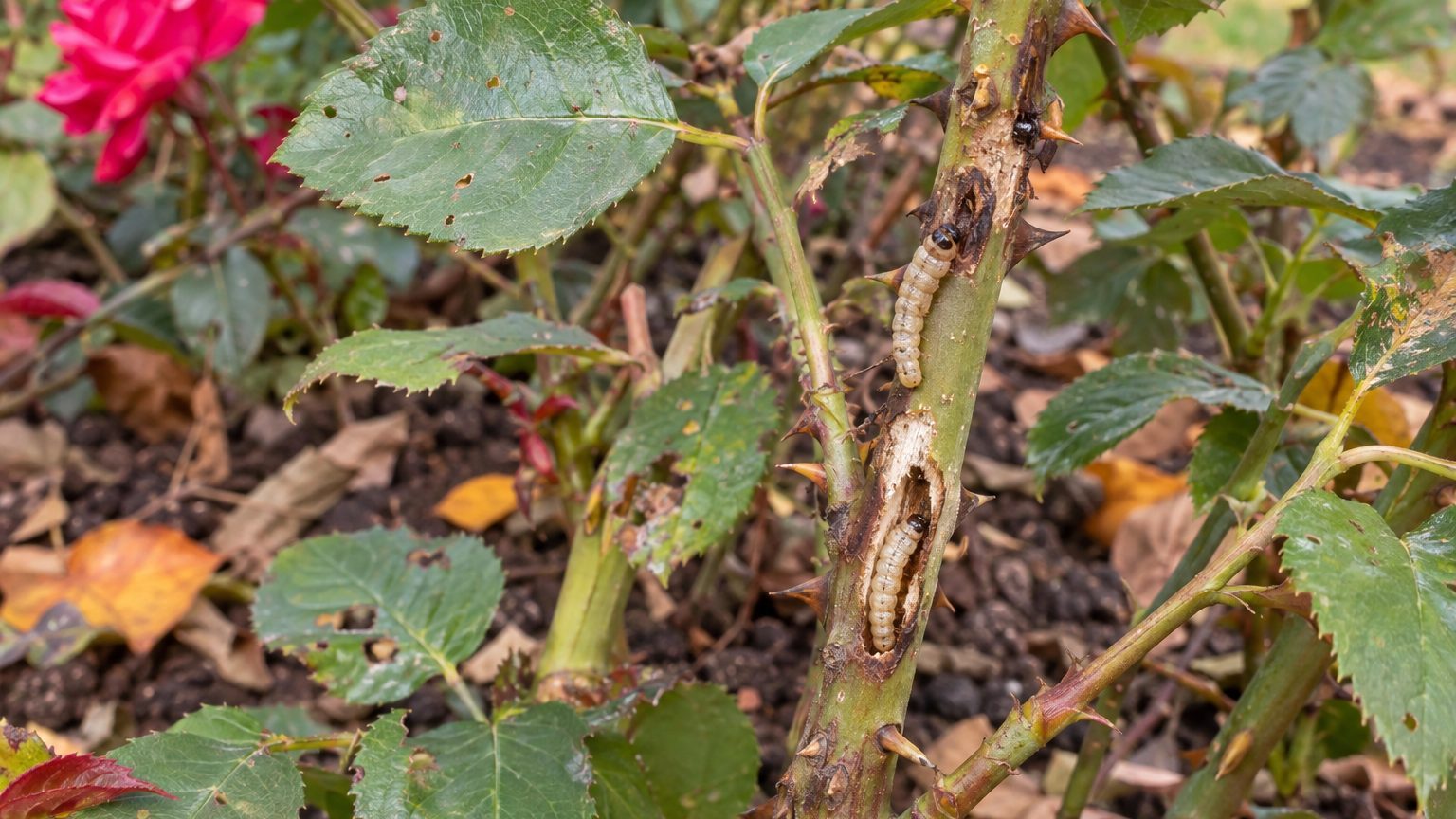
A rose cane that browns and dies back from a fresh pruning cut may have a cane borer, but a hole alone can also belong to a harmless hunting wasp. The larva tunnels inside the cane, so the damage shows at the cut end or in a wilting tip. The fix starts with your pruning shears.
Rose Cane Borers: What You See

Look at the cut ends of your canes first, then at the tips and leaves.
- A tunnel in a freshly cut cane can come from a cane borer or a harmless hunting wasp, so look for browning or dieback as well.
- In Arizona, this tunneling starts soon after winter pruning, and January is when gardeners there tend to find it.
- Canes brown and die back from the cut, and the damage becomes more serious as the larva burrows toward the base of the cane.
- Two rings of punctures circle the cane, and they sit 4-6 inches below the growing tip, which then wilts.
- The adult rose stem girdler is a slender, flattened, metallic beetle with copper-colored wing covers, and it is slightly less than 1/4 inch long.
- Small, sparse, yellow or wilted leaves can accompany tunnels, while rose stem girdler larvae can cause gall-like swellings and cane breakage.
The rings are about 1/2 inch apart, so they are easy to miss unless you run your eye slowly along the cane.
From the almanac
Roses in your state
The dates on this page depend on where you live. Your state's page carries its frost dates, its USDA zones and the year laid out month by month.
Northeast
Southeast
- Alabama
- Arkansas
- Delaware
- Florida
- Georgia
- Kentucky
- Louisiana
- Maryland
- Mississippi
- North Carolina
- South Carolina
- Tennessee
- Virginia
- West Virginia
Midwest
Southwest
West
Pacific Northwest
Canada
Rose Cane Borers or Something Else?
Not every tunnel in a rose cane means trouble. Hunting wasps nest in the same soft pith, and their holes can look just like a borer’s entry.
Yellow, thin leaves also have many causes, so the cane itself has to settle the question.
| Looks like | How to tell them apart |
|---|---|
| A tunnel in the cut end of a cane, from hunting wasps | The wasps are small, harmless and beneficial, and they nest in the pith without injuring the plant, so the cane stays green and keeps leafing out past the tunnel. |
| Small, sparse, yellow or wilted leaves | Split the cane and look for a tunnel, then check the tip for rings of punctures below it. A borer shows browning that creeps down from the cut or a wilted tip. |
A hole alone proves nothing. A hole with browning wood below it, or with a wilting tip above a ringed stem, points to a borer rather than a wasp.
What Causes Rose Cane Borers, and Where It Is Worst
The cause is an insect that lays eggs on or in the cane, and the larva does the rest from the inside. On freshly pruned roses, the open cut gives it an easy way into the pith. Fresh pruning cuts can provide an entry into the pith.
Timing depends on the borer and the place. In Arizona, the trouble comes soon after winter pruning, so January is when you watch the cut ends. In Kentucky, the raspberry cane borer adult appears about June, punctures the rings in the cane and lays an egg between them.
The rose stem girdler also attacks wild rose, raspberry and blackberry. Where larvae tunnel, canes swell, weaken and break. Cane borers can enter freshly cut canes, while the rose stem girdler can cause gall-like swellings and cane breakage.
How to Treat Rose Cane Borers
Treatment is mostly careful pruning, done in this order.
- Find the hole or browning at the cut end, then cut back gradually to locate healthy wood.
- Cut the cane back an inch or two at a time until the hole is no longer visible.
- Keep cutting until the pith is clean and the cane is healthy, since leftover damaged wood lets the problem continue.
- Remove a browning, dying cane a few inches at a time until all the damaged wood is gone, which saves as much of the healthy cane as possible.
- Seal the new cut with white wood glue, so that the next insect cannot enter the same way.
For anything beyond pruning and sealing, ask your county or state extension office what is approved where you live.
How to Prevent Rose Cane Borers Coming Back
Prevention is a matter of closing wounds and checking canes on time.
- Seal every pruning cut with glue right away to keep cane borers from entering.
- In Arizona, check the cut ends in January for holes, since that is when the first damage turns up.
- About June in Kentucky, run your eye along the canes for rings of punctures, when raspberry cane borer adults appear.
- Through the growing season, look regularly for wilting tips and browning canes, and cut them back to healthy wood before the larva reaches the base.
- After every pruning session, seal the fresh cuts, including any made to remove damage.
Keeping wood glue in your tool bucket makes it easy to seal fresh cuts.
Where This Comes From
The details here come from university extension and government pages written for gardeners in Arizona, Kentucky and other states. Pest timing and approved treatments vary by place, so check with your state’s extension service before you act on anything beyond pruning and sealing.
Common Questions
Can a Cane Borer Kill a Rose Cane?
Yes. Tip dieback is the early sign, and as the larva works down toward the base of the cane, the whole cane can die.
What Do Cane Borer Eggs Look Like?
The eggs of the rose stem girdler are round and flattened, and they measure 1/16 inch, which makes them hard to spot without a close look.
Do the Same Borers Attack Raspberries and Blackberries?
They do. The raspberry cane borer attacks blackberry, raspberry and rose, and the rose stem girdler can thin out a raspberry planting or even kill it. Check any nearby bramble patch as well.