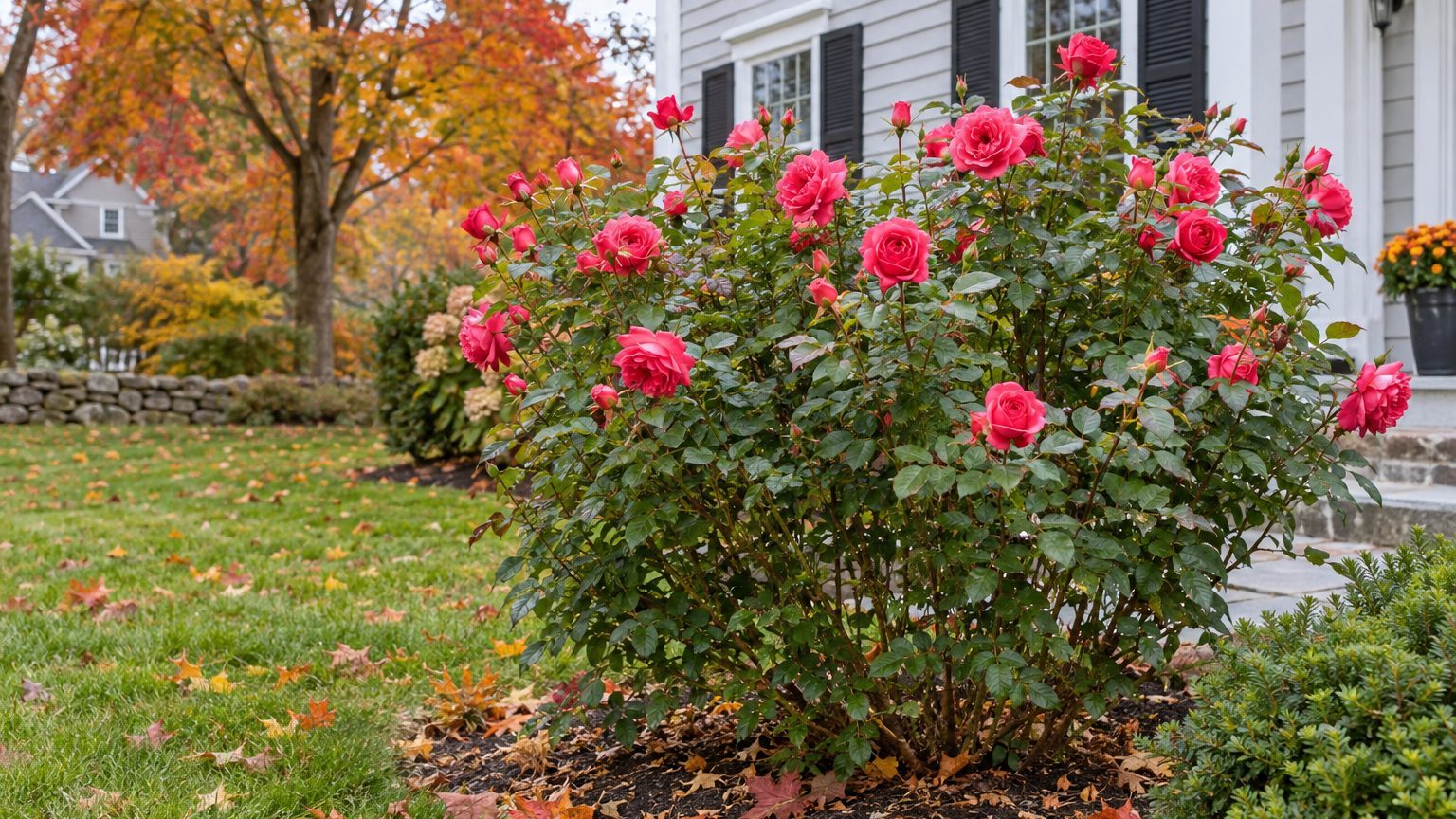
Bare-root roses go into Massachusetts soil while they are still asleep, with the bare canes showing no leaves, and that moment arrives in early spring. Container roses give you a longer stretch, from April into midsummer. Planting date, variety and winter protection all follow from a climate that runs from coastal Boston to the Berkshires.
When to Plant Roses in Massachusetts

Bare-root roses go in first, before growth starts, and container roses follow once the soil is workable. The year then runs like this.
- In March and April, plant bare-root roses while they are dormant, and prune repeat-blooming roses as the forsythia opens.
- Also in March and April, take winter protection off once the ground thaws, with mid-March to mid-April as the usual stretch.
- From April through midsummer, set container roses in the ground. Bare-root roses can still go in during May, June or July if spring got away from you, though they start behind.
- From April through July, feed after pruning, again at first bloom, and once more in mid-July. Stop by mid-August, so late growth has time to harden before winter.
- In November, once several killing freezes have passed, mound and cover the canes of tender roses. December works if November slips by.
For Boston, the last spring frost falls between April 1 and April 8, and the first fall frost between November 3 and November 14. Inland suburbs and the Berkshires frost later in spring and earlier in fall, so a young rose there needs more watching. USDA hardiness zones across the state run from 5a to 7b, which is why the same rose may need cover in one town and none in another.
Massachusetts — the year and the numbers
- State
- Massachusetts
- USDA zones
- 5a-7b
- Last spring frost
- April 1 to April 8
- First fall frost
- November 3 to November 14
- Annual rain
- 44 in
- Lawn zone
- cool-season
- Source
- NOAA NCEI 1991-2020 Climate Normals, 32F freeze probabilities · Boston
Which Roses Grow Best in Massachusetts?
Hardy shrub, landscape, species and old garden roses handle Massachusetts winters with little preparation. Hybrid teas, floribundas and grandifloras are less reliable through cold and need protection, which is extra work but manageable.
Extension guidance makes the same split, and it applies here as well. Cold is a real limit here, so choosing roses by hardiness can save you a good deal of trouble.
| Rose type | How it does in Massachusetts | Why |
|---|---|---|
| Hardy shrub roses (Knock Out, Explorer series) | Perform well without extra protection | Bred for cold hardiness |
| Old garden roses | Reliable through winter | Many tolerate cold extremely well |
| Hybrid teas | Need winter protection | Can suffer considerable cold damage |
| Floribundas and grandifloras | Need winter protection | Not reliably winter hardy in cold winters |
| Climbing roses | Many need protection | Not all are reliably hardy, so check the variety |
Once-blooming roses, including old garden roses, ramblers and many climbers, flower on last year’s wood. Prune them right after they bloom, never in early spring, or you cut off the year’s flowers.
When to Prune, Feed and Protect Roses in Massachusetts
The year’s main jobs cluster in early spring and late fall. Winter protection depends on weather more than the calendar, since it waits for several killing freezes.
Pruning here covers repeat-blooming roses. Once-blooming types wait until after their flowers fade, and the dedicated pruning page goes deeper on cuts.
| Task | Best months in Massachusetts | Why then |
|---|---|---|
| Pruning repeat-blooming roses | March, April (February can work) | Forsythia in bloom, protection already off |
| Feeding | April through July | After pruning, at first bloom, mid-July, none after mid-August |
| Winter protection on | November (December if needed) | After several killing freezes, once roses are dormant |
| Winter protection off | March, April | Once the ground thaws |
Covering too early traps warmth and keeps roses from going fully dormant. Waiting for the freezes is the safer habit.
How Rose Care Dates Change Across Massachusetts
Where you garden shifts the season, so treat the months above as a guide and let the plant and the soil set the day.
- Boston and the coast: Spring arrives soonest here and frost comes last in fall, so planting and uncovering can sit at the early end of the month ranges.
- Inland suburbs: Frost comes later in spring and earlier in fall than at the harbor, so lean toward the later end of spring tasks and cover canes a little sooner.
- The Berkshires: Winters are colder and the season is shorter, so plant later in spring, uncover later and favor the hardy shrub roses.
Watching the forsythia and the thaw works anywhere in the state.
Where to Get Rose Advice in Massachusetts
Questions about a struggling rose or the soil it sits in are best taken to UMass Amherst Extension, which serves the whole state through its programs and local contacts.
- The extension site offers plant guidance and soil testing information, useful before spring planting.
- Your county extension contact can help with a diagnosis if you bring a cutting or clear photos of the leaves and canes.
Common Questions
Can You Plant a Rose in July?
Yes, with a container rose, which can go in from April through midsummer. Water it regularly while it settles, since summer heat stresses a young root system.
Do Knock Out Roses Need Winter Protection in Massachusetts?
Hardy shrub roses such as Knock Out perform well without extra protection. Hybrid teas, floribundas and grandifloras need winter protection in cold winters.
When Should You Stop Feeding Roses?
Stop by mid-August. Later feeding pushes soft new growth that can be damaged by cold before it hardens.