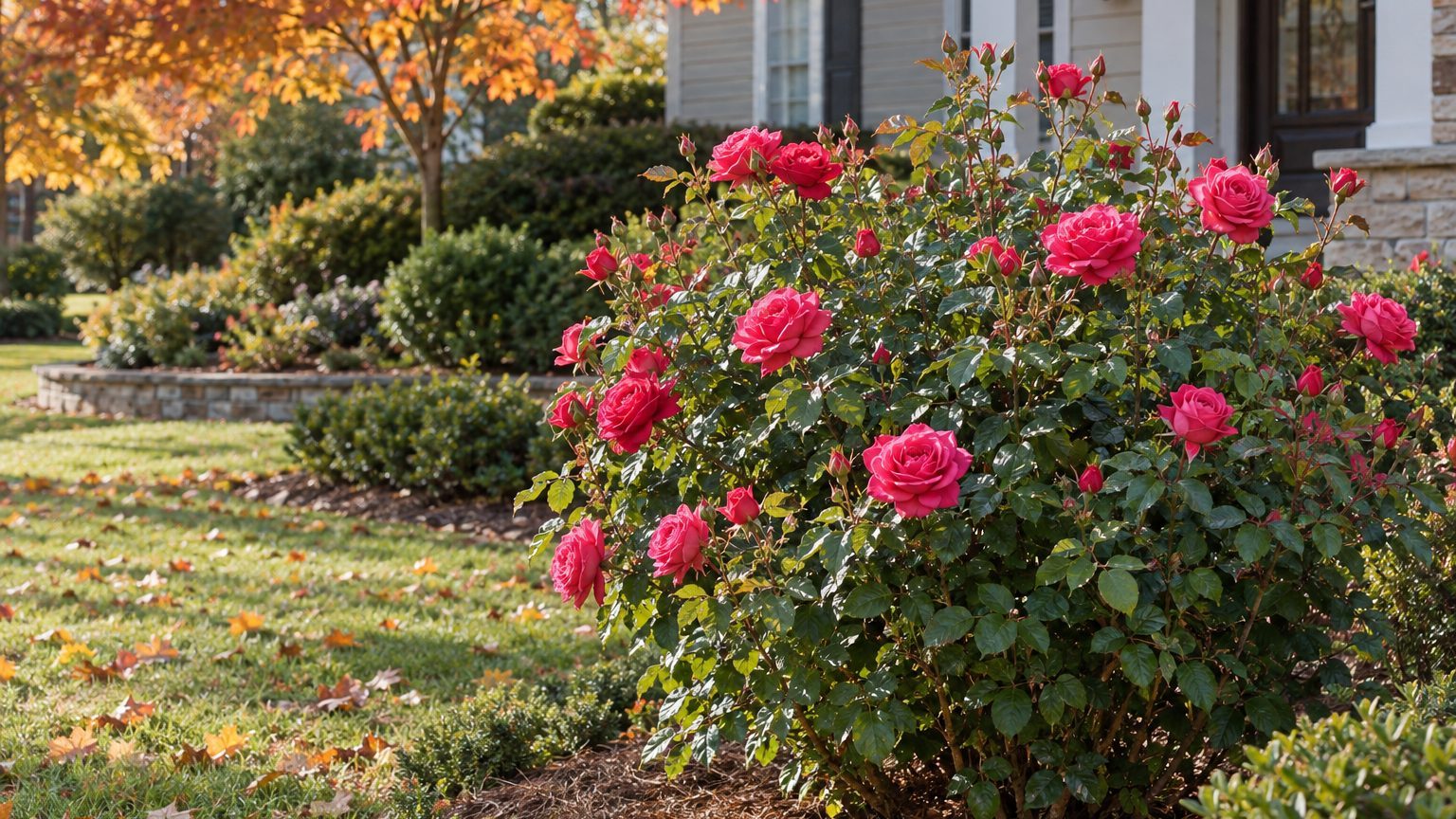
Bare-root roses go into North Carolina soil while they are still asleep, and by the time the first leaves open the roots are already settling in. Bare-root roses are usually planted from late winter into early spring, and they can also go in during late fall.
When to Plant Roses in North Carolina

Bare-root roses go in first, usually from February through March; January, April, November and December can also work when the weather or nursery schedule gets in the way. Potted roses can go in later, because they arrive with leaves and a root ball already growing.
- In winter, from February into March, bare-root roses are planted while still dormant, which lets the roots establish before the canes push new growth.
- In early spring, repeat-blooming roses such as hybrid teas, floribundas and modern shrub roses get their hard pruning, when dormancy is breaking in February and March.
- Once the leaves open in March, feeding begins, and it continues after each flush of bloom through the warm months.
- From April on, potted roses can go into beds, since the ground is warm and a leafed-out plant is easier to judge than a bundle of bare canes.
- In late summer, the last feeding of the year goes on in September at the latest, so the plant is not pushed into soft growth ahead of frost.
- In November and December, bare-root roses can be planted again, and the canes rest through winter.
At the Charlotte reference point, in the Piedmont, the last spring frost falls between March 23 and April 5, so a rose that has just leafed out can still be nipped. The first fall frost arrives between October 30 and November 8. The state spans USDA hardiness zones 5b to 8b, so mountain and coastal yards differ from these dates.
North Carolina — the year and the numbers
- State
- North Carolina
- USDA zones
- 5b-8b
- Last spring frost
- March 23 to April 5
- First fall frost
- October 30 to November 8
- Annual rain
- 44 in
- Lawn zone
- transition-season
- Source
- NOAA NCEI U.S. Climate Normals 1991-2020, 32F freeze probabilities · Charlotte
Which Roses Grow Best in North Carolina?
Roses with good disease resistance and modest pruning needs do the most for you here, especially in a humid state where black spot is a constant worry. Hardy garden roses need less prep in North Carolina.
| Rose type | How it does in North Carolina | Why |
|---|---|---|
| Hybrid teas | Rewarding but demanding | They need a rigorous spray program to keep black spot at bay, and a hard prune in February and March |
| Modern shrub roses | A dependable choice for a low-fuss bed | Many resist black spot, and they can be shaped as needed instead of cut back hard every year |
| Floribundas | Repeat bloom through the season | They flower on new wood, so they take the same late winter prune as hybrid teas |
| Hardy garden roses | Easier to settle in | They need less prep |
Old garden roses, ramblers and many climbers sit outside the table because they bloom once a year on last year’s wood. Prune them right after they flower, never in early spring, or the coming season’s buds go in the trash.
When to Prune, Feed and Protect Roses in North Carolina
Pruning, feeding and planting set the rhythm of the year, and each follows what the plant is doing. Pruning follows dormancy breaking, feeding follows the leaves, and planting follows the rest period. In North Carolina, a heavy prune is often timed around Valentine’s Day.
| Task | When to do it in North Carolina | Why then |
|---|---|---|
| Pruning repeat-blooming roses | February and March, from mid-February to early March | Dormancy is breaking and new growth has not started, so cuts do not waste energy |
| Planting bare-root roses | February and March; it can also be done in January, April, November and December | The plant is dormant and roots can settle before heat arrives |
| Feeding roses | March through August; feeding can continue into September | Feeding starts with the first leaves and repeats after each bloom flush, stopping about six weeks before the earliest frost |
Rose bushes here typically break dormancy in late February or early March, depending on winter temperatures, so watch the buds and the weather instead of the date alone. Once-blooming roses follow a different rule, covered above. The page on when to prune roses goes into cuts and technique in more depth.
How Rose Care Dates Change Across North Carolina
Elevation and distance from the coast move the whole rose year, so the dates above fit the Piedmont best and shift as you travel west or east.
- Blue Ridge Mountains: Spring arrives several weeks later than in Charlotte, so planting, pruning and the first feeding all slide later, and the hardiness zone runs colder.
- Coastal plain: Spring frost ends earlier than in the Piedmont, so work can begin sooner and the season for tender new growth opens ahead of the mountains.
- Charlotte and the Piedmont: This sits between the mountain and coastal extremes.
If you live between these places, start with the Piedmont dates and adjust by what the buds are doing in your own yard.
Where to Get Rose Advice in North Carolina
North Carolina Cooperative Extension, run through NC State Extension, answers rose questions for each county. Your county office can speak to local soil and local weather, which matters in a state this varied.
- The county extension office can diagnose leaf spots or cane problems if you bring a sample, and it is worth a visit before spraying anything.
- A soil test through the county office shows what the bed needs before you plant, so go in winter before bare-root planting.
Common Questions
Can You Plant a Potted Rose in Summer in North Carolina?
A potted rose can go in later than a bare-root one, since it arrives with leaves and roots already growing. Summer heat is hard on any new planting, so water it regularly until it settles.
Do Roses Need Winter Protection in North Carolina?
Winters are mild enough that roses are often semi-evergreen in the state’s milder areas, so heavy mounding is not a routine job. Mountain gardens in colder zones are the place to watch more closely.
Should You Prune Climbing Roses in February?
Only the repeat-blooming ones. Many climbers bloom once on last year’s wood, so they are pruned right after flowering. Cutting them in early spring removes the buds that would have bloomed.