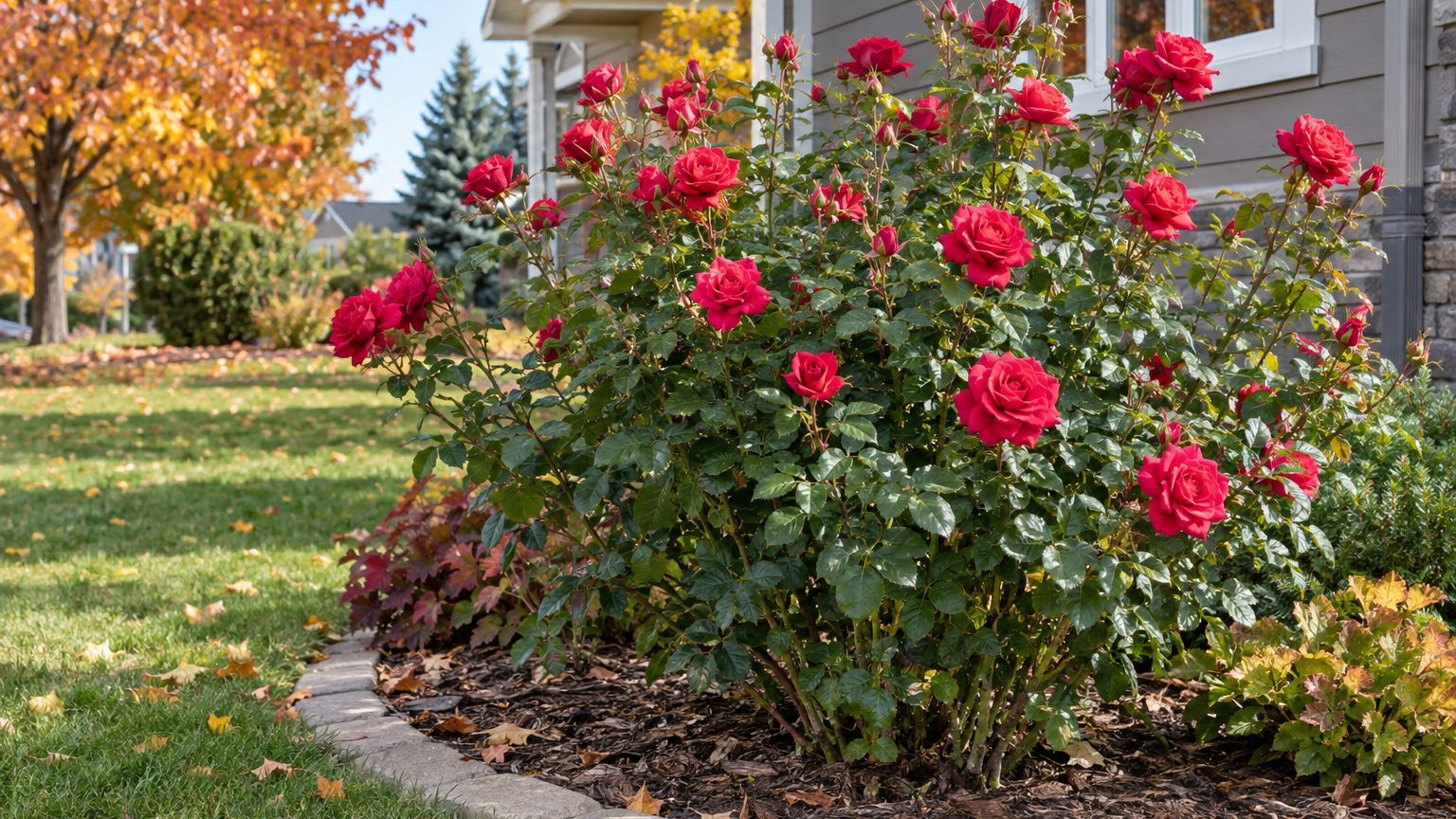
Bare-root roses show up at garden centres as bundles of leafless canes, and that dormant look is exactly what a prairie spring calls for. Roses in Saskatchewan do best when planting waits for the soil to thaw but beats the leaf-out, and when the variety is chosen for winter first. That shapes the planting calendar and the varieties worth choosing.
When to Plant Roses in Saskatchewan

Bare-root roses go in first, while the canes are still dormant, and potted roses follow once severe frost is behind you. At Saskatoon, the last spring frost falls on average on May 18, and in one year out of two it comes later, so treat that date as the middle of a window, not a safe day. The first fall frost arrives on average September 18. The Canadian hardiness zone there is 3a, a rating from a different system than the USDA zones.
- In April, bare-root roses can go into the ground as soon as the soil is workable, because a dormant bush settles in before it has leaves to lose.
- By early May, bare-root planting should be finished, since a bush that leafs out in the bag or on the garden centre bench is no longer dormant.
- In late May or early June, potted roses that were started in a greenhouse can be planted, once severe frost is past, because their soft green growth has no frost tolerance.
- Through summer, new plantings need regular watering, and feeding stops after July so the canes can slow down and mature before winter.
- In November, after several hard freezes, the roses that need cover get it, once they are fully dormant.
Spring frost can harm a young rose, and a bare-root bush planted dormant and early avoids much of that damage. Keep a sheet or an upturned bucket handy for any cold night after leaves have opened.
Saskatchewan — the year and the numbers
- State
- Saskatchewan
- Hardiness zones
- 3a
- Last spring frost
- May 18
- First fall frost
- September 18
- Annual rain
- 14 in
- Lawn zone
- cool-season
- Source
- Environment and Climate Change Canada — Canadian Climate Normals 1981-2010, station SASKATOON SRC · Saskatoon
Which Roses Grow Best in Saskatchewan?
Winter decides which roses succeed here. Hybrid teas, floribundas and grandifloras were bred for warmer climates and cannot survive northern winters without protection, so they take more work. Hardy shrub roses are the easier path because they do not need that cover.
| Rose type | How it does in Saskatchewan | Why |
|---|---|---|
| Hybrid teas, floribundas and grandifloras | Possible, but only with winter protection each year | Bred for warmer climates and not fully hardy in northern areas |
| Hardy shrub roses | Reliable without extra winter protection | Built to tolerate cold winters without cover |
| Explorer series and Knock Out | Perform well without extra protection | Hardy shrub roses that perform well without extra protection |
| Canadian Artist Series | A good fit for the prairie winter | Bred to be winter hardy and disease-resistant |
Winter hardiness varies among climbers and old garden roses. Ask a local garden centre or rose society which ones have come through your area’s winters.
When to Prune, Feed and Protect Roses in Saskatchewan
The rose year here is built around the mound of soil or leaves that covers tender roses in winter. Uncovering it, pruning, and feeding all follow in spring, and covering the plants again waits until November.
| Task | Best months in Saskatchewan | Why then |
|---|---|---|
| Taking winter protection off | April, and it can run into May | The mound comes off in stages from mid-April to avoid exposing bare stems too soon |
| Pruning repeat-blooming roses (hybrid teas, floribundas, modern shrub roses) | April to May | Dead and weak wood is easy to spot once the mound is off and the chance of a hard freeze has passed |
| Feeding | April to July | Feed in late April, again at peak bloom, and stop after July |
| Putting on winter protection | November | Wait until the rose is fully dormant after several hard freezes |
Once-blooming roses, such as old garden roses, ramblers and many climbers, flower on last year’s wood, so prune them right after they bloom and never in early spring. Leaving feeding out of late summer lets new growth harden before the cold arrives.
How Rose Care Dates Change Across Saskatchewan
The dates above come from the Saskatoon area, and Saskatchewan is not one climate. Northern and upland districts run behind it, so the same jobs wait a little longer there.
- Saskatoon and the central parklands: The spring and fall frost dates here are the guide for the calendar above, so planting, uncovering and pruning can follow those months.
- Prince Albert and the northern forest edge: Spring arrives later, so wait longer before taking the mound off and before planting potted roses.
- Cypress Hills: This upland runs behind the lower prairie, so treat the late part of each month range as the safer part.
Saskatchewan has no local extension page on rose timing, so these dates follow the nearest comparable climate on the northern plains; confirm local timing with a garden centre, a rose society or provincial gardening groups.
Where to Get Rose Advice in Saskatchewan
Canada has no county extension offices, so advice here comes from the province and from local growers. A rose that sulks after winter is worth showing to someone who knows your soil and your street.
- The Government of Saskatchewan agriculture pages point you to provincial agriculture resources and contacts.
- A local garden centre can help identify winter damage and sells soil test supplies, and spring is a good time to ask.
- A rose society or master gardener group can tell you which varieties came through recent winters in your area, so ask before you buy.
Common Questions
Can You Plant a Rose in June in Saskatchewan?
A potted rose can go in during early June once severe frost is past. A potted rose can still be planted in June, but it is a fallback, and the better window is once severe frost is past, in late May or early June.
Is Saskatchewan’s Zone 3a the Same as USDA Zone 3a?
No. The Canadian hardiness system uses seven climate variables, and the USDA system uses one. There is no simple conversion between the Canadian and USDA systems, so check that a rose is rated for the Canadian zone before you buy it.
Are Hybrid Teas Worth Growing in Saskatchewan?
They can work if you will cover them every November and uncover them in stages each April. If that sounds like too much work, plant hardy shrub roses and skip the winter protection.