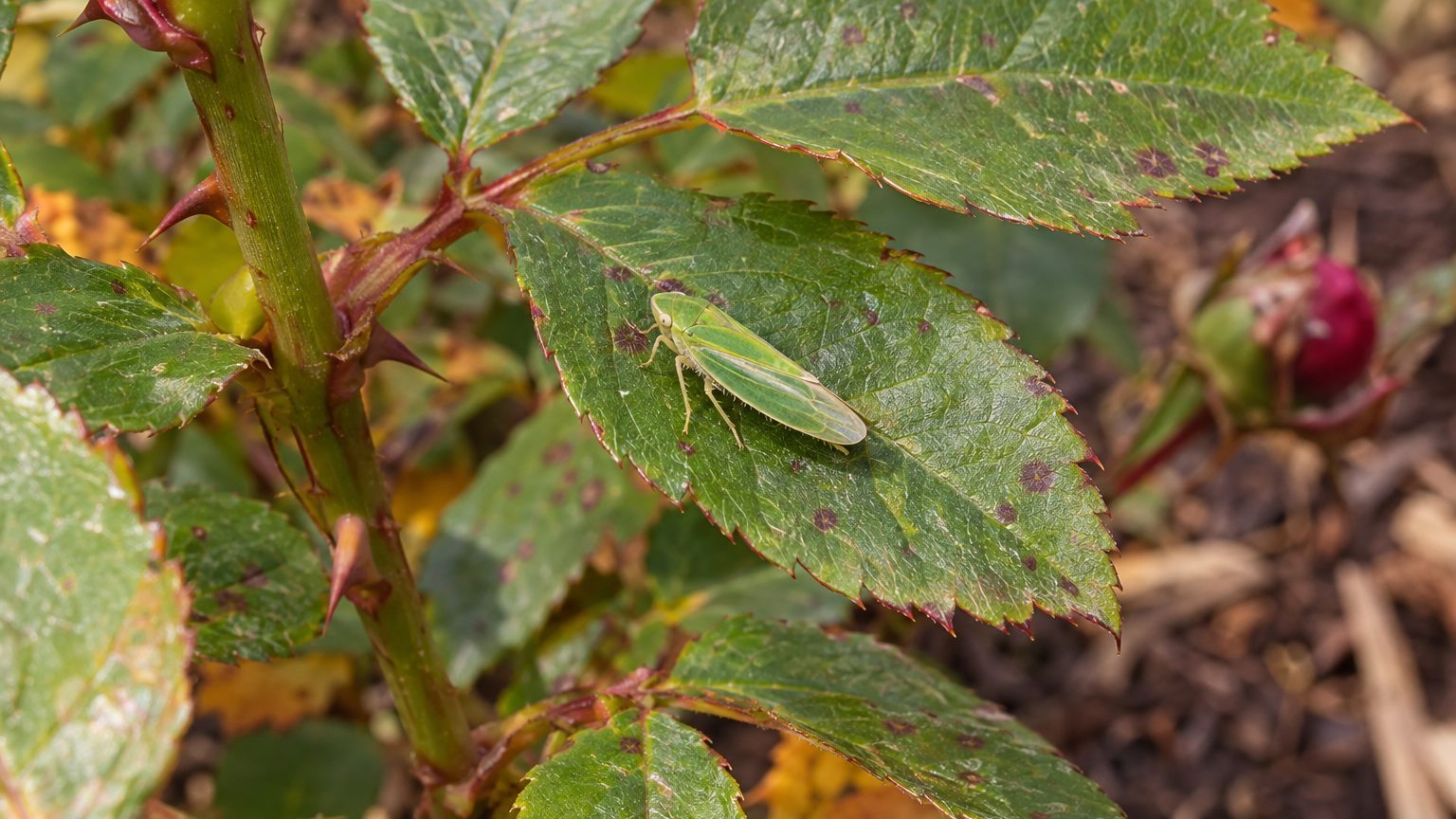
Pale, speckled rose leaves, with tiny wedge-shaped insects flicking away when a cane is touched, usually point to rose leafhoppers. They feed on leaf undersides and lay eggs in the canes, while the wounds they leave can admit fungi that cause stem canker.
Rose Leafhopper: What You See

Start with the insect itself, because the leaf damage alone can fool you.
- The adults are wedge-shaped and between ¼- to ½-inch long, and they hop or fly away quickly when the plant is disturbed.
- The nymphs are white with red eyes, and older ones show rows of dark spots on the back of the thorax.
- Leaves develop white or pale blotches that look like spider mite stippling, only larger.
- Cast skins cling to the underside of the leaves, where the feeding happens.
- Dark, purple, pimple-like spots on the bark mark the places where eggs have been laid.
Heavy feeding can leave leaves browning and dropping, and a sticky honeydew film may grow sooty mold when numbers climb.
From the almanac
Roses in your state
The dates on this page depend on where you live. Your state's page carries its frost dates, its USDA zones and the year laid out month by month.
Northeast
Southeast
- Alabama
- Arkansas
- Delaware
- Florida
- Georgia
- Kentucky
- Louisiana
- Maryland
- Mississippi
- North Carolina
- South Carolina
- Tennessee
- Virginia
- West Virginia
Midwest
Southwest
West
Pacific Northwest
Canada
Rose Leafhopper or Something Else?
Stippled, blotchy leaves have several culprits, and a single clue is not enough to name one. Look at the underside of the leaf and at the timing before you reach for any treatment.
Leafhoppers are not common problems in most areas, so find the insects themselves before deciding that is what you have.
| Looks like | How to tell them apart |
|---|---|
| Spider mites | Stippling is smaller than leafhopper damage, and webbing shows on the leaf underside, while leafhoppers leave cast skins and no webbing. |
| Roseslug sawfly | Larvae up to ¾ inches long eat the soft leaf tissue and leave the veins, and damage shows in May and June in Wisconsin. |
| White apple leafhopper | Adults match in size and color, but this one has two generations a year, while rose leafhopper has three. |
Sawfly damage looks like lace, with the veins left standing, which is quite different from the pale flecks of a leafhopper. The adults are the same size and color, and differences in their genitalia distinguish rose leafhoppers from white apple leafhoppers.
What Causes Rose Leafhopper, and Where It Is Worst
The cause is a cycle that starts on the cane. In South Carolina, the adult female lays eggs inside the bark of rose canes in the fall, and in spring the young nymphs emerge from them. That is the pattern described for the species.
Rose is the only plant this leafhopper appears to overwinter on, as described for Washington. During summer generations it can move to other hosts, and the nymphs also feed on dogwood, hawthorn, plum and oak.
Wounds from egg laying and from emerging nymphs can let stem canker fungi in, and stem canker can result in plant death.
How to Treat Rose Leafhopper
Plants tolerate moderate stippling, so begin with the gentlest tools and step up only if the infestation is severe.
- Check the leaf undersides for insects and cast skins, so that you treat leafhoppers and not a mite problem that looks alike.
- Knock the insects off with a water spray, since adults and nymphs feed on the undersides.
- Use an insecticidal soap on the nymphs if the infestation is severe, because the immature stage is the one this treatment is aimed at.
- Inspect the canes for dark, pimple-like spots that indicate the presence of eggs.
- Look at the bark for egg-laying wounds, which can provide openings for fungi that cause stem canker.
If sprays are not enough, a garden store product must list leafhoppers on the label and be clearly labeled for roses. Follow the label directions carefully.
How to Prevent Rose Leafhopper Coming Back
In South Carolina, females lay eggs in rose canes in fall and young nymphs emerge in spring.
- In South Carolina, females deposit eggs in the bark in fall; dark, purple spots indicate their presence.
- In South Carolina, watch for wingless nymphs as they emerge from the cane in spring.
- Cast skins on leaf undersides are a useful sign that leafhoppers are present.
- Rinse the leaf undersides with water when you see insects feeding there.
- Nymphs can also feed on dogwood, hawthorn, plum and oak.
Where This Comes From
Common Questions
Do Rose Leafhoppers Kill Roses?
Plants can tolerate moderate stippling. Egg-laying and emergence wounds can admit fungi that cause stem canker, which can result in plant death.
Why Are There Sticky Leaves and Black Film on My Roses?
Leafhoppers secrete honeydew, and with enough of them, sooty mold fungus grows on it. Look under the leaves for the insects or cast skins to confirm the cause.
Can Rose Leafhoppers Live on Other Plants?
Yes. In Washington, the species appears to overwinter only on rose but can use other plants in summer. The nymphs also feed on dogwood, hawthorn, plum and oak.