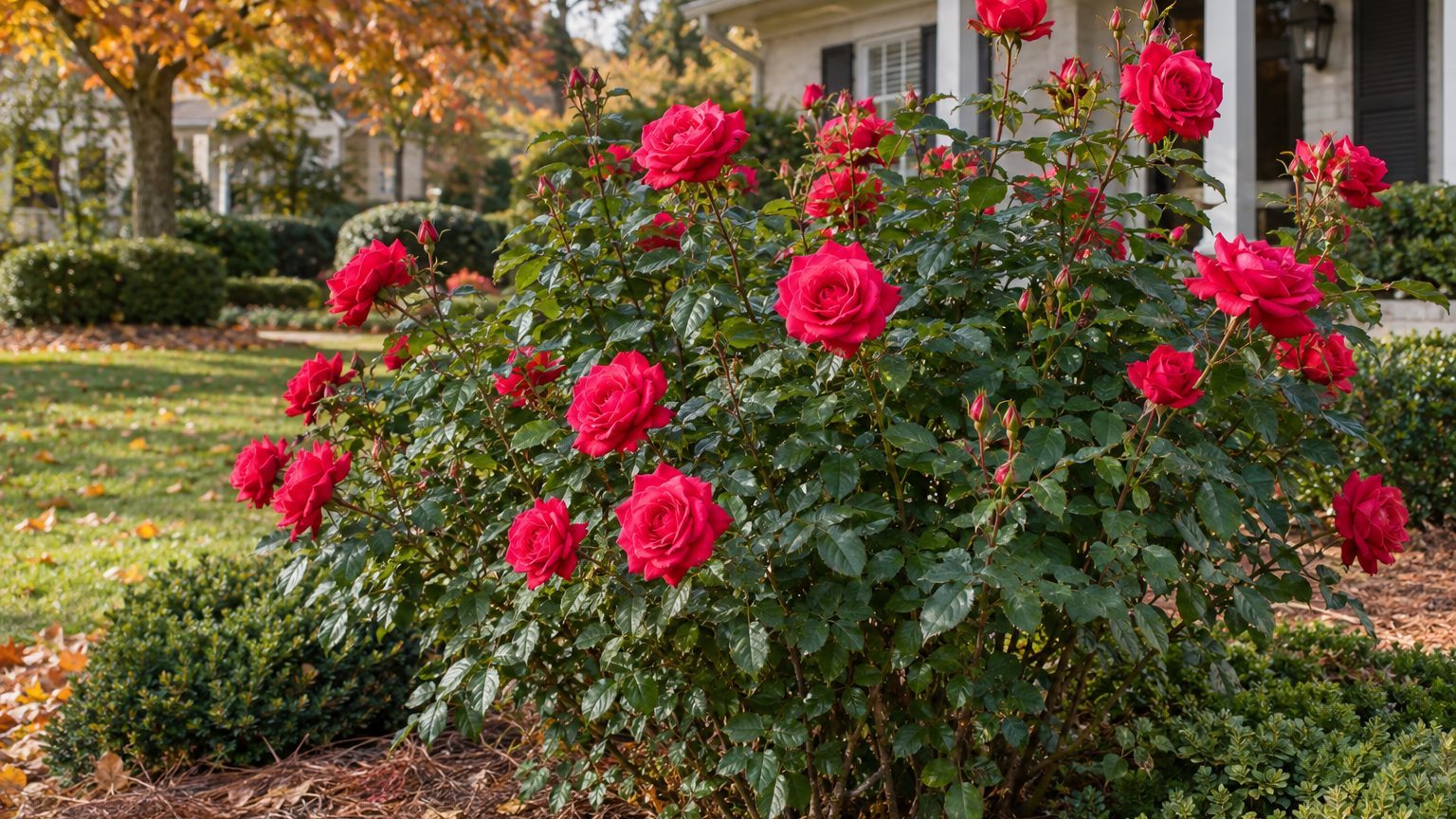
Bare, thorny canes show up at garden centers in late winter, and that is the cue to get roses into Georgia soil. A rose planted while dormant has months to root before summer heat arrives.
When to Plant Roses in Georgia

Bare-root roses go in first, in February and March, while the plant is asleep and the frost risk is still real. Potted roses can follow later, since they arrive with roots already growing. Here is how a rose’s year runs in Georgia.
- In late winter, plant bare-root roses in February, spacing them 5 to 6 feet apart so air moves through the leaves later.
- Through March, keep planting bare-root roses and begin feeding, because new growth is waking up even though cold snaps can still come. In Atlanta, the last spring freeze usually falls between March 11 and March 29.
- In April, a bare-root rose can still go in if March slipped by, though the plant is already leafing out and needs closer watering.
- From spring through summer, potted roses can be planted once the danger of a late freeze has passed, and established roses keep blooming on a monthly feeding.
- In late fall, November and December work as a fallback for bare-root planting. In Atlanta, the first fall freeze usually arrives between November 13 and December 1.
A young rose is tender to hard freezes, which is why spring planting is timed with the frost risk in mind. Georgia covers USDA hardiness zones 6a to 9b, so mountain yards and coastal yards each run on their own schedule.
Georgia — the year and the numbers
- State
- Georgia
- USDA zones
- 6a-9b
- Last spring frost
- March 11 to March 29
- First fall frost
- November 13 to December 1
- Annual rain
- 50 in
- Lawn zone
- transition-season
- Source
- NOAA NCEI 1991-2020 Climate Normals, 32F freeze probabilities · Atlanta
Which Roses Grow Best in Georgia?
Disease-resistant roses are a practical choice in Georgia’s warm, damp growing season. Black spot and other leaf diseases hit some types harder than others, so the type you choose decides how much spraying you will do.
Shrub roses are the low-fuss option, and old garden roses suit gardeners who want an informal look. Hybrid teas can be grown here, but only with a plan for protecting the leaves.
| Rose type | How it does in Georgia | Why |
|---|---|---|
| Shrub roses | Bloom well with few chemical controls | Better disease resistance than hybrid teas |
| Hybrid teas | Grow well but need a spray program | Susceptible to black spot, so protection starts before the season |
| Old garden roses | Keep a graceful, relaxed shape | Hard pruning ruins their form and cuts flowering |
Floribundas are close cousins of hybrid teas and are pruned on the same schedule. Climbers and ramblers fit fences and arbors, though many of them bloom only once on last year’s wood and need a different pruning schedule.
When to Prune, Feed and Protect Roses in Georgia
Rose work in Georgia is front-loaded. Pruning happens in late winter, and monthly feeding runs from March through September. Winter protection is rarely the main worry here, so most of the effort goes into the jobs already mentioned.
| Task | Best months in Georgia | Why then |
|---|---|---|
| Prune repeat-blooming roses (hybrid teas, floribundas, modern shrub roses) | February to March | Cut as the buds swell, mid-February in the south of the state and mid-March in the north |
| Feed roses | March through September | Monthly feeding supports steady new growth and repeat bloom |
Watch the buds more than the calendar. Once they begin to swell, go ahead and prune. Once-blooming roses, including old garden roses, ramblers and many climbers, flower on last year’s wood, so prune them right after they bloom and never in early spring. The full pruning method lives on the page about when to prune roses in Georgia.
How Rose Care Dates Change Across Georgia
Georgia’s roses do not all wake up on the same day, and the difference between the mountains and the coast is large enough to shift your whole routine.
- North Georgia and the mountains: Buds swell later here, so pruning waits until toward the end of the pruning window. Fall freezes also arrive several weeks earlier than in Atlanta, which shortens the season at the far end.
- Atlanta: The city sits on an urban heat island, so its frost dates read a little mild for yards in the surrounding countryside. Use them as a guide, then check your own buds.
- South Georgia and the coastal plain: Winters are milder and buds swell earlier, so pruning starts toward the front of the window and planting can go in early.
Wherever you garden, the rose itself is the best clock: swelling buds mean pruning time, and a hard freeze in the forecast means holding off on tender new growth.
Where to Get Rose Advice in Georgia
Local help is worth using when a rose looks wrong or a bed refuses to perform. The state’s land-grant university and your county office offer diagnosis and soil testing.
- University of Georgia Extension publishes rose guides for the state and routes questions to the right specialist.
- Your county extension office can test your soil and look at a diseased leaf or cane, so bring a sample in a sealed bag before spring feeding begins.
- With the buds on your canes starting to swell, a soil test now tells you what the first feeding should contain.
Common Questions
Is January Too Early to Plant Bare-Root Roses in Georgia?
January works as a fallback when the ground is workable. February and March remain the preferred months, so wait for those if the soil is soggy or frozen.
How Much Fertilizer Does a Rose Need in Georgia?
Without a soil test, the usual Georgia recommendation is three tablespoons per plant each month from March through September. The product is typically a 16-4-8 or 12-4-8 fertilizer.
Should Old Garden Roses Get the Same Hard Pruning as Hybrid Teas?
No. Old garden roses need far less cutting, and a heavy pruning can ruin their graceful shape and severely reduce their flowering. Prune them after they bloom, avoiding the heavy spring cut used for repeat bloomers.