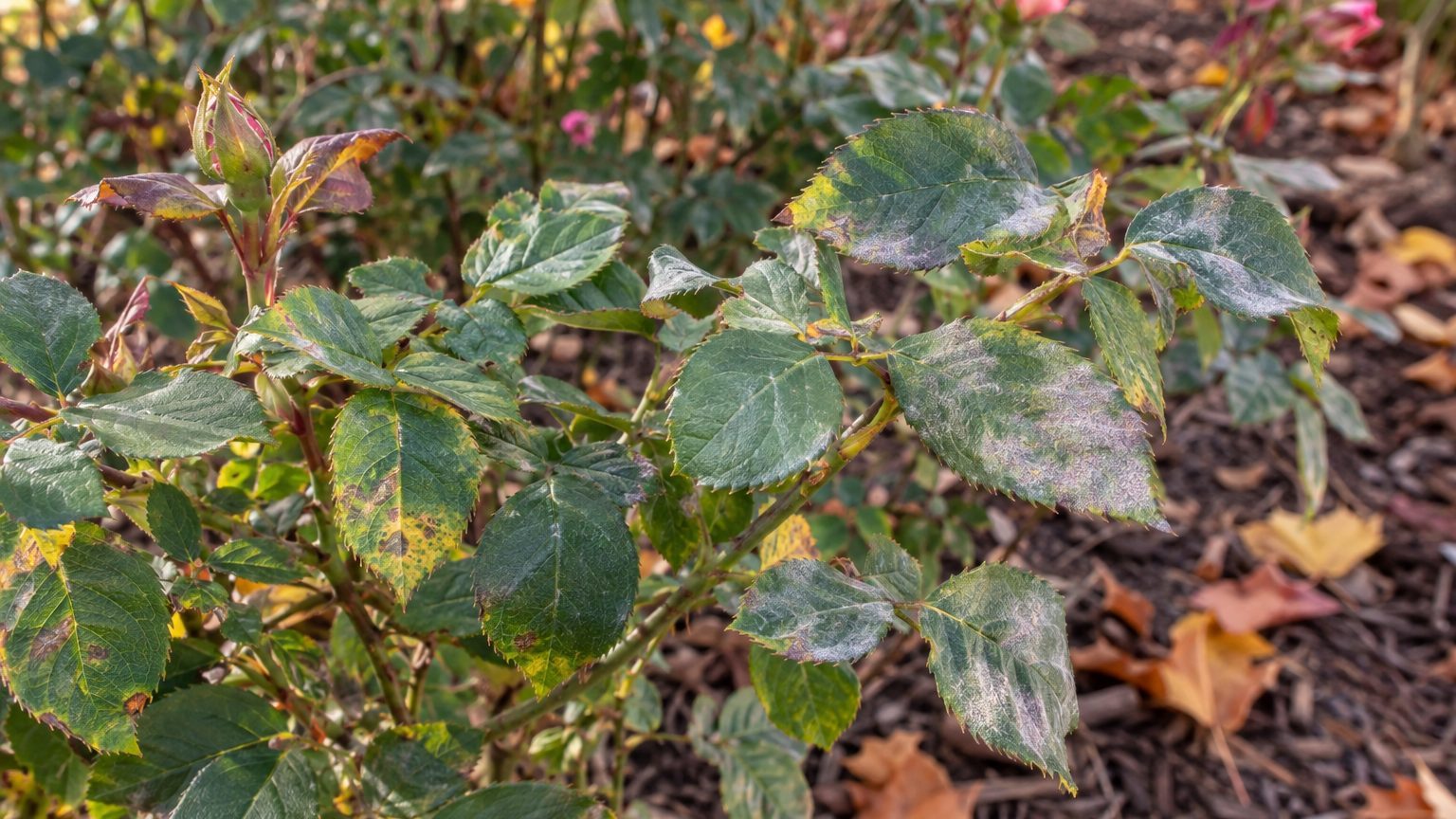
Turn a rose leaf over after a cool, damp spell and the underside may carry a pale, fuzzy bloom that the top never shows. That fuzz is the giveaway for downy mildew, a disease that blights leaves and canes and can strip a bush fast.
Downy Mildew: What You See

The signs start on the leaves and usually work upward from the oldest growth near the base of the bush.
- Fluffy or fuzzy patches of spores form only on the lower leaf surfaces when humidity is high, and they look white, gray, brown or purplish.
- Angular spots in purple, red or brown sit between the veins, and the larger veins box them into a square or angular shape.
- Older leaves near the bottom of the plant are usually hit first, then they wither and turn brown as the disease climbs the stem.
- Affected leaves turn yellow and drop, and heavy infections cause major leaf drop across the whole bush.
- Petals and stems can show symptoms too, and infected parts may brown or bronze.
A hand lens helps, because the fuzzy patches look like tiny bunches of branched hairs.
From the almanac
Roses in your state
The dates on this page depend on where you live. Your state's page carries its frost dates, its USDA zones and the year laid out month by month.
Northeast
Southeast
- Alabama
- Arkansas
- Delaware
- Florida
- Georgia
- Kentucky
- Louisiana
- Maryland
- Mississippi
- North Carolina
- South Carolina
- Tennessee
- Virginia
- West Virginia
Midwest
Southwest
West
Pacific Northwest
Canada
Downy Mildew or Something Else?
Different rose problems leave spotted, yellowing leaves, so no clue is decisive by itself. Check the shape of the spot and look at the underside of the leaf before you decide.
| Looks like | How to tell them apart |
|---|---|
| Black spot | Spots are round, while downy mildew lesions look angular or square because the pathogen stops at the veins. Look underneath for pale, felty patches. |
| Powdery mildew | Powdery mildew typically produces visible growth on both sides of the leaves and on shoots and buds. Downy mildew shows pale, felty patches only on the undersides. |
| Nutrient deficiency or spray injury | Early downy mildew symptoms can look like these. Hunt for angular spots between veins and fuzz on the leaf underside. |
In California, under cool, moist conditions, the spores last only a short time, so the fuzz may be gone even while the disease is doing damage. The angular, vein-limited discoloration is the clue to trust when no spores show.
What Causes Downy Mildew, and Where It Is Worst
The cause is Peronospora sparsa, a fungus-like water mold that survives in plant debris or on infected plants. It is fairly host specific and does not infect other ornamentals. Some species are noted as seed borne or systemic, and some weeds can hold the pathogen as a reservoir.
Weather decides how bad it gets. In Illinois, the pathogen thrives in cool conditions from 60-70 degrees F when humidity is above 85%. Its distribution varies: it appears sporadically in some areas and predictably in others.
Roses in greenhouses and rose fields suffer most, and potted roses in nurseries have been plagued by it since the 1800s. Home gardens can see it too. It is far more likely to turn up at nurseries and garden centers, where roses sit in high humidity or get overhead watering, so inspect new plants before bringing them home.
How to Treat Downy Mildew
Work from the cleanup outward, and keep leaves dry while you do it.
- Inspect the undersides of leaves, starting low on the bush, so you know how far the disease has climbed.
- Pick off and bag infected leaves and cut out affected stems, because the pathogen survives in plant debris.
- Rake up fallen leaves beneath the bush, since dropped foliage keeps the pathogen close to the plant.
- Pull weeds around the bed, because some weed species act as reservoirs of inoculum.
- Water at the soil line and skip overhead sprinklers, so leaves dry quickly in the humidity the disease needs.
- Open up crowded growth with light thinning, so air moves through the bush and shortens the damp periods.
If the disease keeps returning, ask your state’s cooperative extension office which fungicides are registered in your state and when to apply them. Labels and approvals differ from place to place, so local advice beats a general rule.
How to Prevent Downy Mildew Coming Back
Prevention follows the seasons, because the disease favors cool, damp weather.
- Clear last year’s leaves and debris from beneath the bushes, since the pathogen survives there.
- When you buy roses in spring, check the undersides of leaves at the nursery and pass over plants with fuzz or angular spots.
- During cool, damp weather, water at the base and early in the day so foliage dries fast.
- During the growing season, keep weeds pulled around the bed, because some serve as reservoirs for the pathogen.
- After leaves drop, rake and remove all fallen foliage instead of composting it.
Give each bush enough space that air can move between plants, which cuts the time leaves stay wet.
Common Questions
Can Downy Mildew Spread to Other Plants in the Garden?
Not easily. The pathogen that infects roses is specialized and does not infect other ornamentals, so your other shrubs and flowers are not at risk from it.
Why Can’t You See Any Fuzz on Leaves That Are Dropping?
In California, spores persist only briefly in cool, moist conditions, so the fuzz may vanish while damage continues. Look for angular purple, red or brown spots between the veins, plus yellowing leaves, to confirm.
Does Downy Mildew Kill Rose Bushes?
It can be highly destructive, causing major leaf drop on whole plants. Garden roses are less often affected than nursery and greenhouse stock, but major leaf drop still calls for prompt attention.
Where This Comes From
These details come from university extension plant disease guidance, with some points written for Maryland, Wisconsin, North Carolina, Illinois and California. Check with your own state’s cooperative extension office for local timing and approved treatments.