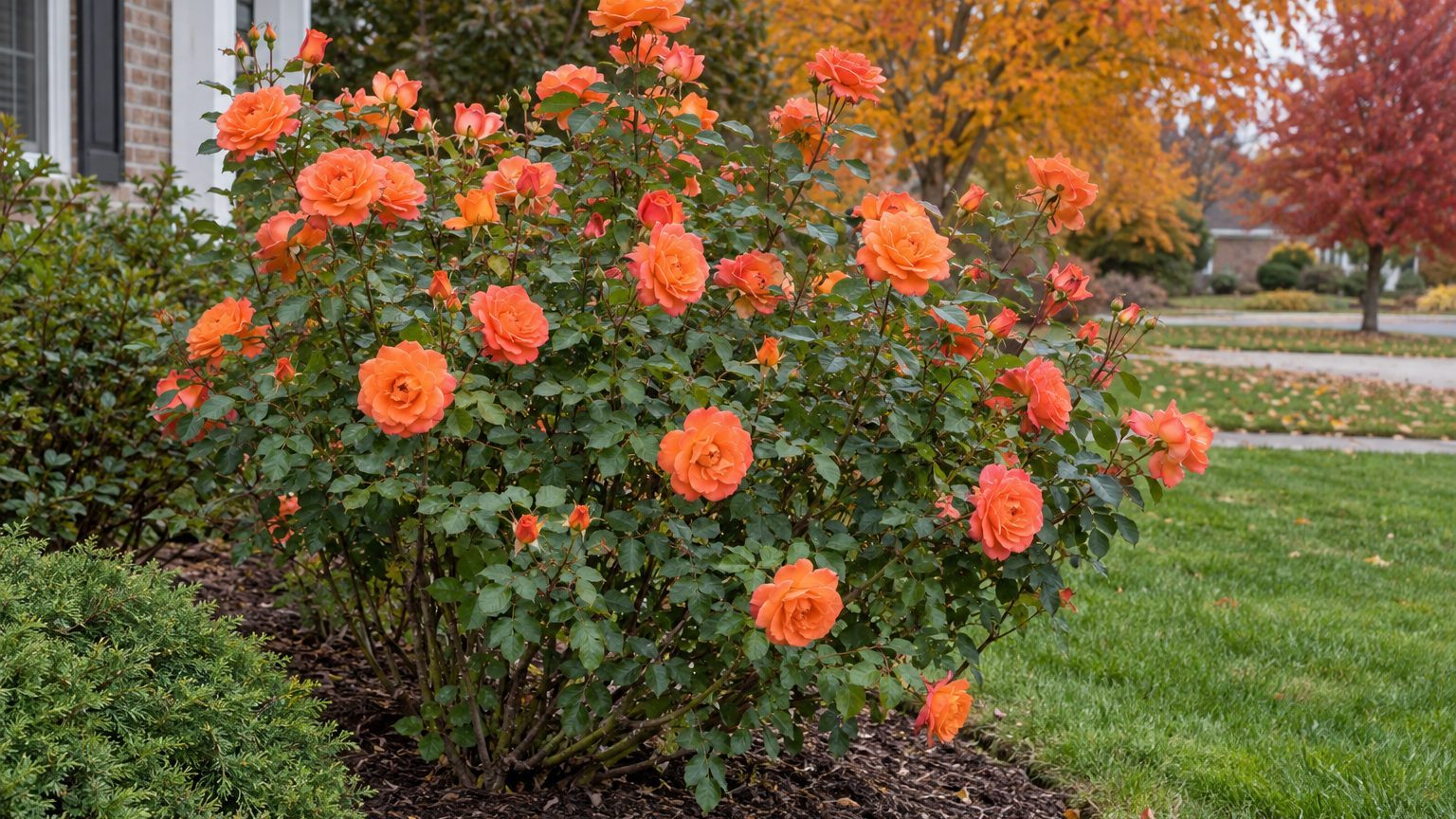
Apricot clusters opening on a fence or arbor, with a spicy scent drifting across the yard, are what Westerland is grown for. This rose can be trained as a climber or left as a large shrub, and the choice changes how you prune it and how much room it needs.
What Is the Westerland Rose?
Westerland is a shrub or climbing rose in the rose family, bred by Reimer Kordes in 1969. It is vigorous enough to be grown free-standing or trained against a structure.
The flowers are double, apricot, and up to 5 inches across. Each carries 20-25 ruffled petals and a strong spicy fragrance, and they open in clusters.
The plant repeats its bloom through the season. Expect 8-12 feet in height, especially in warmer climates, with a spread of 3-6 feet.
From the almanac
Roses in your state
The dates on this page depend on where you live. Your state's page carries its frost dates, its USDA zones and the year laid out month by month.
Northeast
Southeast
- Alabama
- Arkansas
- Delaware
- Florida
- Georgia
- Kentucky
- Louisiana
- Maryland
- Mississippi
- North Carolina
- South Carolina
- Tennessee
- Virginia
- West Virginia
Midwest
Southwest
West
Pacific Northwest
Canada
Where Does the Westerland Rose Grow Best?
Westerland needs moist, well-drained, fertile soil and full sun. Its height shifts with the climate, so where you live decides whether it stays a big shrub or becomes a tall climber.
- In warm climates, give it a sturdy fence or arbor from the start.
- Central Maryland: Fall can turn dry here, and a dry stretch in that season is worth watching. Check the soil around the roots and water when it is parched.
- Use the plant tag to plan for Westerland’s mature height in your location, and give it full sun.
Check with your local county or provincial extension office for local pruning months and frost timing.
How to Care for the Westerland Rose Through the Year
Early Spring

As growth wakes, check that the soil stays moist but drains freely, since Westerland dislikes sitting wet. Fertile ground supports vigorous growth for the climbing season ahead.
Pruning
Prune in late winter to early spring to remove winter damage and shape the plant. Where a light trim is all it needs, wait until late winter or early spring.
Climbing roses are pruned less harshly than shrub roses. Westerland blooms on last year’s stems and on stems growing this summer, so heavy cutting removes flowers you would have had.
Bloom
Flowers come in clusters and keep arriving nearly continuously through the season. Cut spent clusters if you like a tidy look, and leave the canes themselves alone.
Summer
Tall stems that overshoot an arbor can be tipped after peak bloom. The cut makes side branches near the arbor corners that are easier to tie in.
Another option is to let the top canes grow taller and arch over the arbor on their own, draping across the top.
Fall
Do not prune in fall. Keep watching the soil for dryness, because dry autumns do happen, and a steady drink keeps the roots in good shape going into winter.
Winter
Winter preparation depends on your climate, so check with your local county or provincial extension office. In central Maryland, if mulch is not already down, lay it about 3 inches thick over the root zone and leave the canes standing until late-winter pruning.
Westerland Rose Diseases and Weak Points
The foliage of Westerland is fairly disease-resistant. Resistant is not immune, though, and black spot and mildew still deserve a regular look.
Check the leaves through the growing season, especially after humid weather, and remove affected foliage when it appears.
| Threat | How Westerland handles it |
|---|---|
| Leaf diseases in general | Foliage is fairly disease-resistant |
| Black spot | Watch for it despite the resistance |
| Mildew | Watch for it despite the resistance |
In central Maryland, monitor the soil for watering needs during a dry fall. Water when needed and keep the root zone mulched.
Is the Westerland Rose Right for Your Yard?
Westerland suits a yard with a fence, wall, or arbor to cover and a sunny spot that drains well. It asks for little pruning, but it will not fit a tight corner.
- Choose it for a tall support where you want repeat bloom and fragrance, and plant when the soil can be worked.
- Skip it for a small bed or a narrow strip where a plant reaching 8-12 feet would crowd walkways.
- Check with your local county or provincial extension office for the pruning months that fit your local winter, then mark them on the calendar.
Common Questions
Can You Grow Westerland in Partial Shade?
It tolerates partial shade, though full sun is what it prefers. Choose the sunniest wall or fence you have and treat shade as a compromise.
Can You Cut Dead Canes Whenever You See Them?
Yes. Dead or diseased canes can come out at any time of year, even when the main pruning is still months away.
Why Is It Hard to Bend Westerland Canes Onto a Support?
Climbing roses grow upright and arch, then hold on with their thorns rather than by twining. Their stems are not very bendy, so guide them early and tie in the side branches that form after tipping.