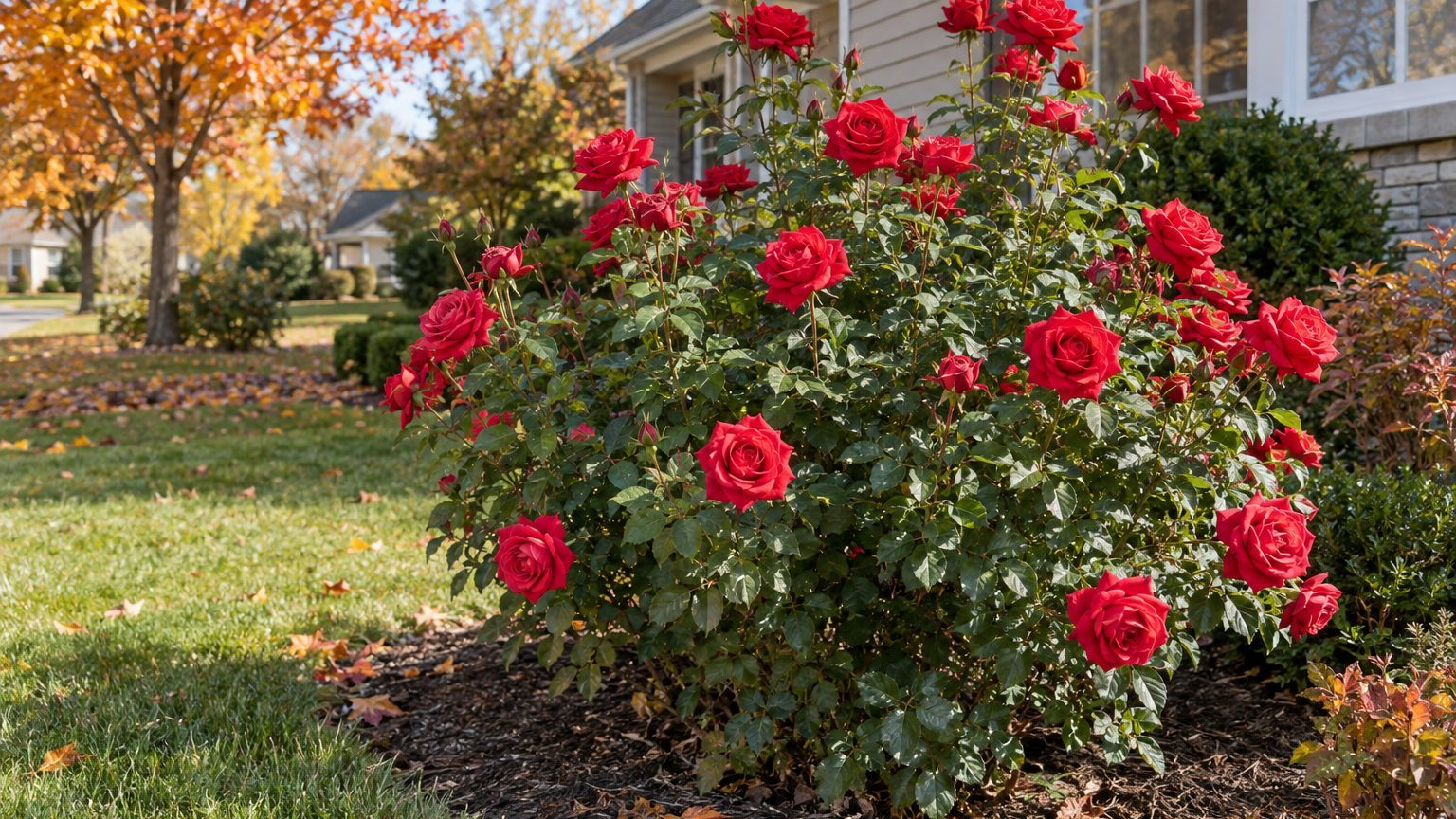
A bare-root rose goes into Kansas soil while it is still asleep, before its leaves open, and that early start is what carries it through the first summer. Container roses have a longer window that stretches into midsummer.
When to Plant Roses in Kansas

Bare-root roses go in first, in March and April, and container roses follow from April through midsummer. At the reference city, Wichita, the last spring frost falls between April 4 and April 18, and Kansas sits in USDA hardiness zones 5b to 7a. Suburban and rural yards usually see frost later in spring and sooner in fall, so check your own county before you dig.
- In March and April, plant bare-root roses while they are dormant, before growth starts. A dormant rose is less vulnerable to a late cold snap than a leafed-out young plant.
- In April, once the soil is workable, container roses can go in, and they can also be planted in May, June and July. Young leaves are tender, so a rose planted this way should be covered if a frost is forecast.
- In May and June, feed new plants after pruning and again at first bloom, and water them regularly as the heat builds.
- In July, a last feeding goes on, and a container rose planted in July needs steady water while its roots settle in.
- In November, after several killing freezes, the winter protection goes on, since the first fall frost at the reference city arrives between October 23 and November 2.
Planting while the plant is dormant, or while the soil is warm and the frost danger has passed, is the whole logic of these dates. Bare-root roses that wait past spring have already started to push growth and suffer for it.
Kansas — the year and the numbers
- State
- Kansas
- USDA zones
- 5b-7a
- Last spring frost
- April 4 to April 18
- First fall frost
- October 23 to November 2
- Annual rain
- 34 in
- Lawn zone
- transition-season
- Source
- NOAA NCEI 1991-2020 Climate Normals, 32F freeze probabilities · Wichita
Which Roses Grow Best in Kansas?
Roses that shrug off cold winters are a dependable choice because Kansas winters can injure canes that are not fully hardy. Hardy shrub roses perform well without extra protection, while hybrid teas, floribundas and grandifloras need it.
Old garden roses are often very tolerant of cold, and most shrub and species roses need little preparation for winter. Climbers vary, and many are not reliably hardy.
| Rose type | How it does in Kansas | Why |
|---|---|---|
| Hybrid teas | Need winter protection | Not reliably winter hardy |
| Floribundas and grandifloras | Need winter protection | Not reliably winter hardy |
| Shrub roses (Knock Out, Explorer series) | Perform well without extra protection | Reliably winter hardy |
| Old garden roses | Often tolerant of cold | Many are hardy and need little winter preparation |
Climbing roses fall in between, since some are hardy and many are not, so check the label before you buy. Once-blooming roses, such as old garden roses, ramblers and many climbers, flower on last year’s wood. Prune them right after they bloom, never in early spring.
When to Prune, Feed and Protect Roses in Kansas
The rose year turns on a few dates. Repeat-blooming roses are pruned in March and April, feeding runs from April through July, and winter protection goes on in November. For pruning detail, see the Kansas page on when to prune roses.
Forsythia in bloom is a handy signal that pruning season has arrived, and the winter protection is off by then.
| Task | Best months in Kansas | Why then |
|---|---|---|
| Pruning repeat-blooming roses | March, April (February can also work) | Buds are about to swell and winter cover is off |
| Feeding | April, May, June, July | After pruning, at first bloom, and in mid-July |
| Putting on winter protection | November (December can also work) | After several killing freezes, once the plant is dormant |
| Taking winter protection off | March, April | Once the ground thaws, between mid-March and mid-April |
Stop feeding after mid-August. Fertilizer late in the season pushes soft growth that the first hard freezes can damage. In Kansas, extension advice is to remove winter protection in mid-April and then prune out weak, dead, damaged or crossing canes.
How Rose Care Dates Change Across Kansas
Kansas runs long from east to west and from north to south, so the same rose wakes up on different days depending on where you garden.
- Wichita and the south: Spring arrives sooner here, so the earlier part of each window suits you, and the reference frost dates above come from Wichita.
- Northern Kansas: Cold lingers longer in spring and returns sooner in fall, so lean toward the later part of the planting and pruning months and put winter cover on a little earlier.
- Western Kansas: Higher ground and colder winters call for the later dates in spring and extra care that hybrid teas stay protected.
Suburban and rural gardens in any of these areas tend to see frost later in spring and sooner in fall than the city figures.
Where to Get Rose Advice in Kansas
K-State Research and Extension serves every county, and the local county office can help with a sick plant or a soil test.
- The county office can look at a leaf or cane that worries you and suggest a cause, so bring a sample if black spots or dieback appear.
- A soil test from the county office tells you what to add before planting, so ask for one before bare-root roses go in during March.
Common Questions
Can You Plant a Rose in July in Kansas?
Yes, a container rose can go in as late as July, though it needs steady watering while its roots settle. Bare-root roses are better left for March and April.
Do Hybrid Tea Roses Survive Kansas Winters?
They can, with protection. Hybrid teas are not reliably winter hardy, so cover them after several killing freezes in November.
Should You Cut Back Roses in Fall?
Heavy pruning waits for spring. In fall, clean up debris around the plant and put on winter protection once the plant is dormant.