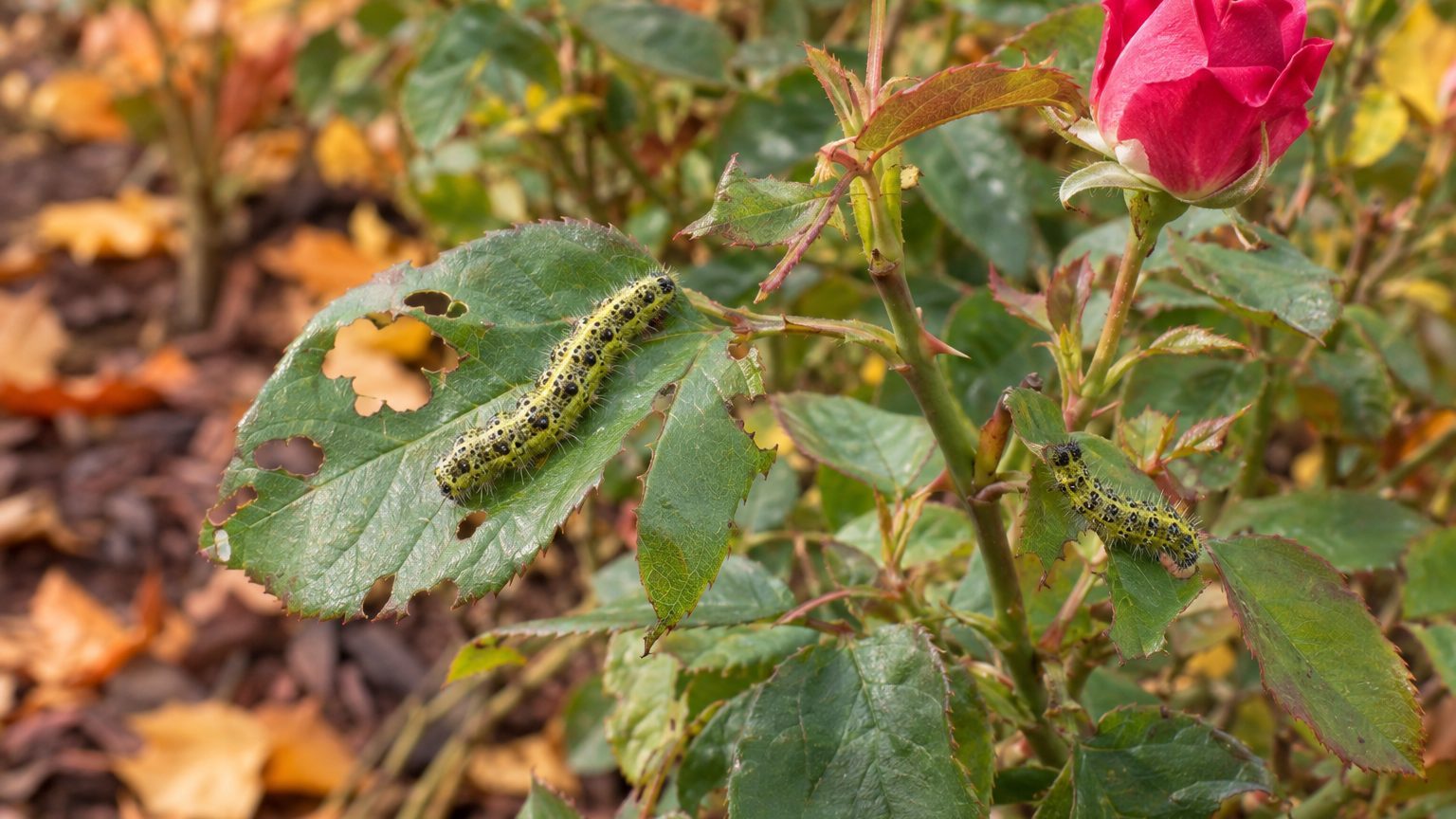
Ragged leaves with see-through patches usually point to small larvae feeding on the underside, and most of them are not true caterpillars at all. They are sawfly larvae, and they behave differently from moth and butterfly caterpillars. Knowing which one you have decides whether you pick, prune or simply tolerate the damage.
Caterpillars on Roses: What You See

The larvae that most often get called caterpillars on roses are small, tapered and slimy, and they are easiest to spot by the damage they leave on the leaves.
- Leaves show windowpane damage, small papery patches that are nearly see-through, because the larvae eat the soft tissue and leave the veins.
- The larvae sit on the underside of the leaf, where they look like tiny caterpillars with a bead-like head and jointed legs.
- Their shape is tapered and their skin looks slimy, which gives them a vague resemblance to a true slug.
- Full-grown larvae reach up to ¾ inches in length, and older ones chew entirely through the leaf instead of leaving a thin layer.
- Heavily fed-on leaves turn brown, curl and dry out, and in Kentucky the first damage shows up in April.
In Wisconsin the damage typically starts in early to mid-May and can run through mid-June.
From the almanac
Roses in your state
The dates on this page depend on where you live. Your state's page carries its frost dates, its USDA zones and the year laid out month by month.
Northeast
Southeast
- Alabama
- Arkansas
- Delaware
- Florida
- Georgia
- Kentucky
- Louisiana
- Maryland
- Mississippi
- North Carolina
- South Carolina
- Tennessee
- Virginia
- West Virginia
Midwest
Southwest
West
Pacific Northwest
Canada
Caterpillars on Roses or Something Else?
Several different insects chew rose foliage, and the fix depends on which one you have. Sawfly larvae are related to wasps, so they are not caterpillars even though they look like them.
Real caterpillars, the young of moths and butterflies, turn up on roses only infrequently, so check the clues below before assuming.
| Looks like | How to tell them apart |
|---|---|
| Roseslug sawfly larva | Slimy, tapered body with a bead-like head, found on the leaf underside, leaving windowpane patches with the veins intact. |
| Leafroller or tent caterpillar | Leaves tied or rolled together with silk, and a caterpillar or its frass hiding inside when you open the roll (seen in California). |
| Budworm caterpillar | Flower buds bored into, with the caterpillar or its frass found inside the bud. |
Other caterpillars reported on roses in South Carolina include the corn earworm, stinging rose caterpillar and puss caterpillar, so wear gloves when handling any hairy one. Their feeding leaves holes or irregular areas in the leaf blade instead of windowpanes.
What Causes Caterpillars on Roses, and Where It Is Worst
The cause is an insect that specializes in roses. Female roseslug sawflies are shiny black with yellowish-orange markings. The roseslug sawfly is native to Europe and now feeds on wild and cultivated roses alike.
No soil type or climate zone is singled out, so any rose can be visited. Timing differs by place: damage starts in April in Kentucky and in May and June in Wisconsin, with northern Wisconsin running slightly later.
The kinds of sawfly differ too. In California the bristly roseslug is the most common, and it occurs mainly in cooler areas such as near the coast. The curled roseslug and the roseslug are occasional pests there, and at least three sawfly species attack roses in California.
How to Treat Caterpillars on Roses
The damage from rose slugs is mostly cosmetic, so a calm, hands-on approach is usually enough. Work in this order.
- Turn the leaves over and look on the underside, so that you find the larvae where they actually feed.
- Hand pick the larvae you find, which removes them before they grow large enough to chew right through the leaf.
- Prune out infested buds and rolled leaves, since they often hide caterpillars inside, and look for the caterpillar or its frass to confirm.
- Dispose of the clippings promptly in a sealed bag, so that nothing crawls back onto the plant.
- Check the plant regularly because new damage can keep appearing throughout the growing season.
- Contact your state extension service before reaching for any spray, so that you learn what is approved where you live.
Leaves that are already brown and dry will not recover.
How to Prevent Caterpillars on Roses Coming Back
Prevention comes down to timing your checks to the season, since the larvae follow a predictable calendar.
- In Kentucky, start inspecting leaf undersides in April, when roseslug damage first appears.
- In Wisconsin, look closely from early to mid-May through mid-June, or slightly later in northern parts of the state.
- Keep checking regularly, and remove any rolled leaves or damaged buds as soon as you see them.
A short look at the plant can catch feeding damage early.
Where This Comes From
The details here come from university extension guidance written for Kentucky, Wisconsin, South Carolina and California. Rules and timing vary by place, so confirm what applies to you with your state’s extension service.
Common Questions
Do Rose Slugs Kill Roses?
Rarely. Rose slugs and sawflies generally cause mostly cosmetic damage, though heavy infestations can turn leaves brown and curl them.
Can Rose Slugs Spread to Other Plants?
They specialize in roses, but there are reports of them damaging strawberries and raspberries as well.
Why Are the Leaves Turning Brown with See-Through Spots?
Windowpane patches on the leaf, together with larvae on the underside, point to sawfly feeding. The thin areas eventually brown and dry.