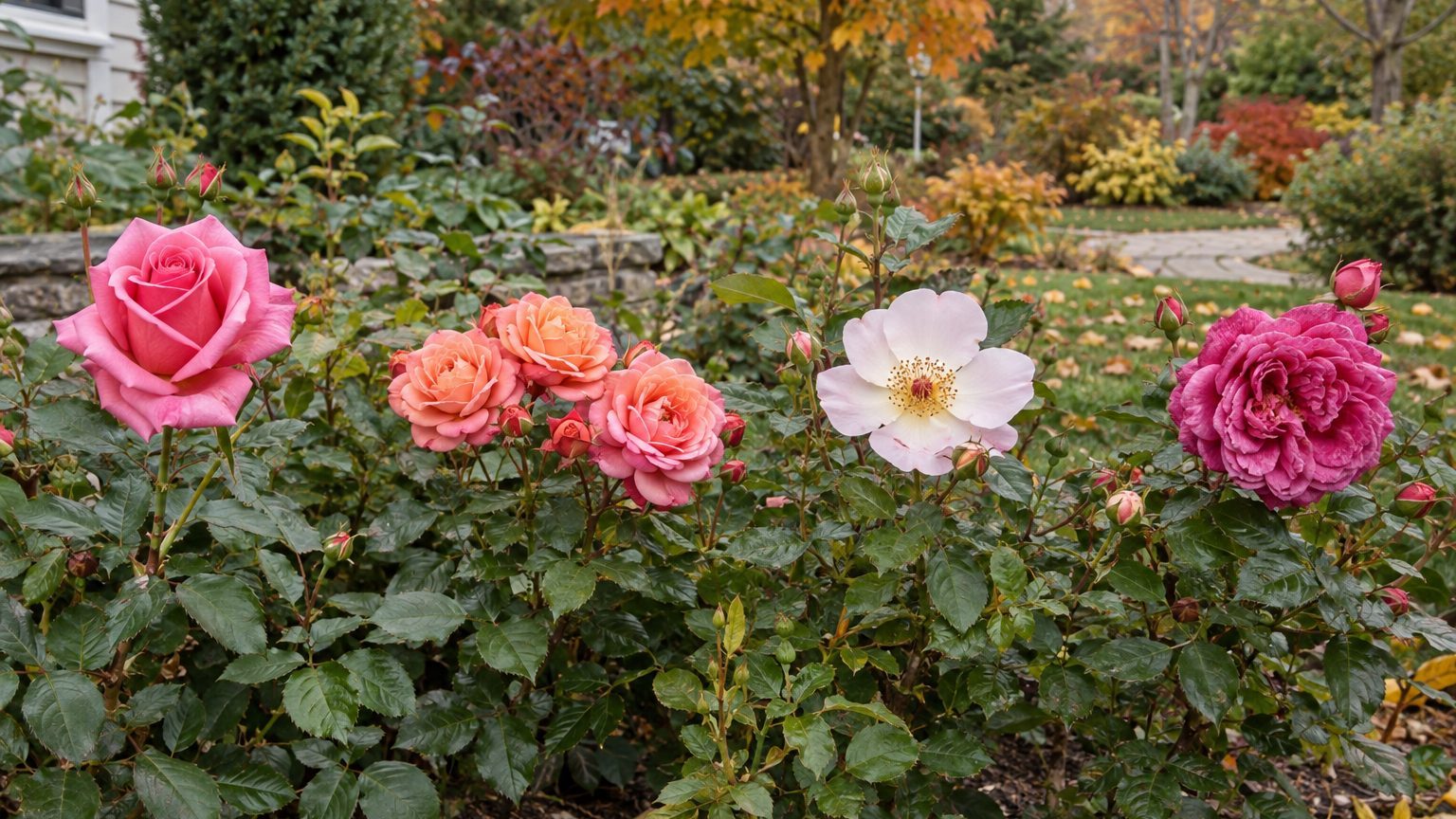
Walk past a few front yards when roses are in bloom and the plants look nothing alike. You may see a tidy bush with large blooms held on separate stems, a sprawling mound covered in clusters, and a climber winding up a porch post. Those are different types of roses, and the type decides how tall the plant gets, how often it flowers and how you prune it.
What Are the Main Types of Roses?
Roses sort into types by habit and by how they flower: hybrid teas, floribundas, grandifloras, shrub roses, miniatures, climbers, old garden roses and rugosas. Size swings widely, and in South Carolina roses range from miniatures of 8 inches tall to tree-climbing giants that reach 50 feet or more.
The bigger split is bloom habit. Repeat-blooming roses flower on new wood through the season, while once-blooming roses flower on last year’s wood in a single show. Climate then decides which type stays healthy and how much winter protection it needs.
The state selector just below this section leads to the page for your state.
From the almanac
Roses in your state
The dates on this page depend on where you live. Your state's page carries its frost dates, its USDA zones and the year laid out month by month.
Northeast
Southeast
- Alabama
- Arkansas
- Delaware
- Florida
- Georgia
- Kentucky
- Louisiana
- Maryland
- Mississippi
- North Carolina
- South Carolina
- Tennessee
- Virginia
- West Virginia
Midwest
Southwest
West
Pacific Northwest
Canada
How to Tell Rose Types Apart

A rose tag or a nursery listing usually says enough, but you can read most plants yourself if you check a few things in a sensible order.
- Look at how the flowers sit on the stem, so that you can distinguish hybrid tea blooms on long stems from the clusters found on floribunda, shrub and climbing roses.
- Find out whether the plant blooms once or repeatedly, because that tells you when pruning is safe and whether you will have color after the first flush.
- Check the mature size on the tag and picture it in your bed, since in Florida the smallest micro-minis stay at 6 inches or less while other types fill a corner of the yard.
- Match the use to the plant. Landscape roses left untrimmed reach about 4 feet in Maryland and work as hedges or in mass plantings, while a climber needs a wall, fence or pillar to hold its canes.
- Confirm the winter hardiness rating for your area, so that you are not replacing a rose that could not handle your coldest nights.
In Florida, several hundred cultivars are on the market, which is why the tag matters more than flower color. Roses with the same pink blooms can still have very different habits, from a compact bush to a rangy climber.
Rose Types Compared
Height is the first difference you notice, but habit matters just as much. A hybrid tea stands upright and carries large blooms on single stems, while a shrub rose spreads and flowers in clusters.
Floribunda flowers are generally smaller than those on grandiflora and hybrid tea roses, which suits them to mass color rather than cutting.
| Rose Type | What changes | Why it matters |
|---|---|---|
| Hybrid tea | Typically 4 to 6 feet tall in South Carolina | Upright shape with large blooms suits a bed with room behind it |
| Floribunda | Generally 3 to 4 feet tall in South Carolina | Smaller flowers in groups give steady color at a moderate height |
| Grandiflora | Can grow 5 to 6 feet tall in Georgia | Needs more space than a floribunda, so it belongs toward the back |
| Shrub rose | About 3 feet tall and wide in Georgia | Spreads sideways, so it fits borders and mixed plantings |
| Miniature | Up to 24 inches tall in Florida | Works as a small feature near the front of a bed |
| Climbing | Popular climbers reach 8 to 15 feet in South Carolina | Canes can grow 20 feet in one season in Georgia, so give them a strong support |
| Old garden | One vigorous Florida selection reaches 6 feet if pruned yearly | The same plant can be trained as a climber, which changes how much room it takes |
For rugosa roses, check the tag for mature size before choosing a planting spot. Match the row to your space first, then to your climate. A rose that is too big for its spot creates avoidable pruning and crowding.
Rose Selection Mistakes to Avoid
Planting a Giant in a Small Bed

Tags list a mature size, and it often surprises people. In Florida, one medium pink rose with 3- to 5-inch double blooms grew to between 8 and 10 feet tall and wide.
Crowded roses shade each other and get hard to prune. Read the mature size before you buy, and put large types where they can spread.
Hiding Small Roses at the Back

Short roses disappear behind taller plants. In Florida, place small roses near the front, since they will grow only 8 to 24 inches tall.
Behind a perennial border they get shaded out and nobody sees the blooms. Set them along the edge of the bed or in a pot by the walk.
Pruning Once-Bloomers in Early Spring
Once-blooming roses set their flowers on last year’s wood. Cutting them back in early spring removes the buds and leaves a green plant with no flowers that year.
Prune them right after they finish blooming. Repeat-bloomers flower on new wood, so they take pruning as the buds swell in late winter or early spring.
Best Rose Types for Your State
Your best choice depends on your winters and your space. The months for each state are on that state’s page.
- Go to your state’s page for planting and pruning months, and use them before you shop for a new rose.
- Check it again before winter, when dormancy and the first hard freezes decide when to protect the canes.
Common Questions
Which Rose Types Make a Good Low Hedge?
Landscape and shrub roses are the usual choice, since they are bred for hedges and mass plantings. In Maryland, landscape roses that go untrimmed reach about 4 feet, so plan the hedge height around that and prune to keep it where you want it.
Can You Grow Roses in Pots?
Miniatures suit containers because they stay small. Use a pot with drainage holes, and keep an eye on watering, since a container dries out faster than a bed. Larger roses need a larger container and more attentive care.
Are There Roses for Cold Winters?
Yes. Winter-hardy roses bred in Canada are hardy down to -35 degrees Celsius with only snow as winter protection. They also flower repeatedly through summer and need only minimal pruning, so they are worth a look if your winters are harsh.