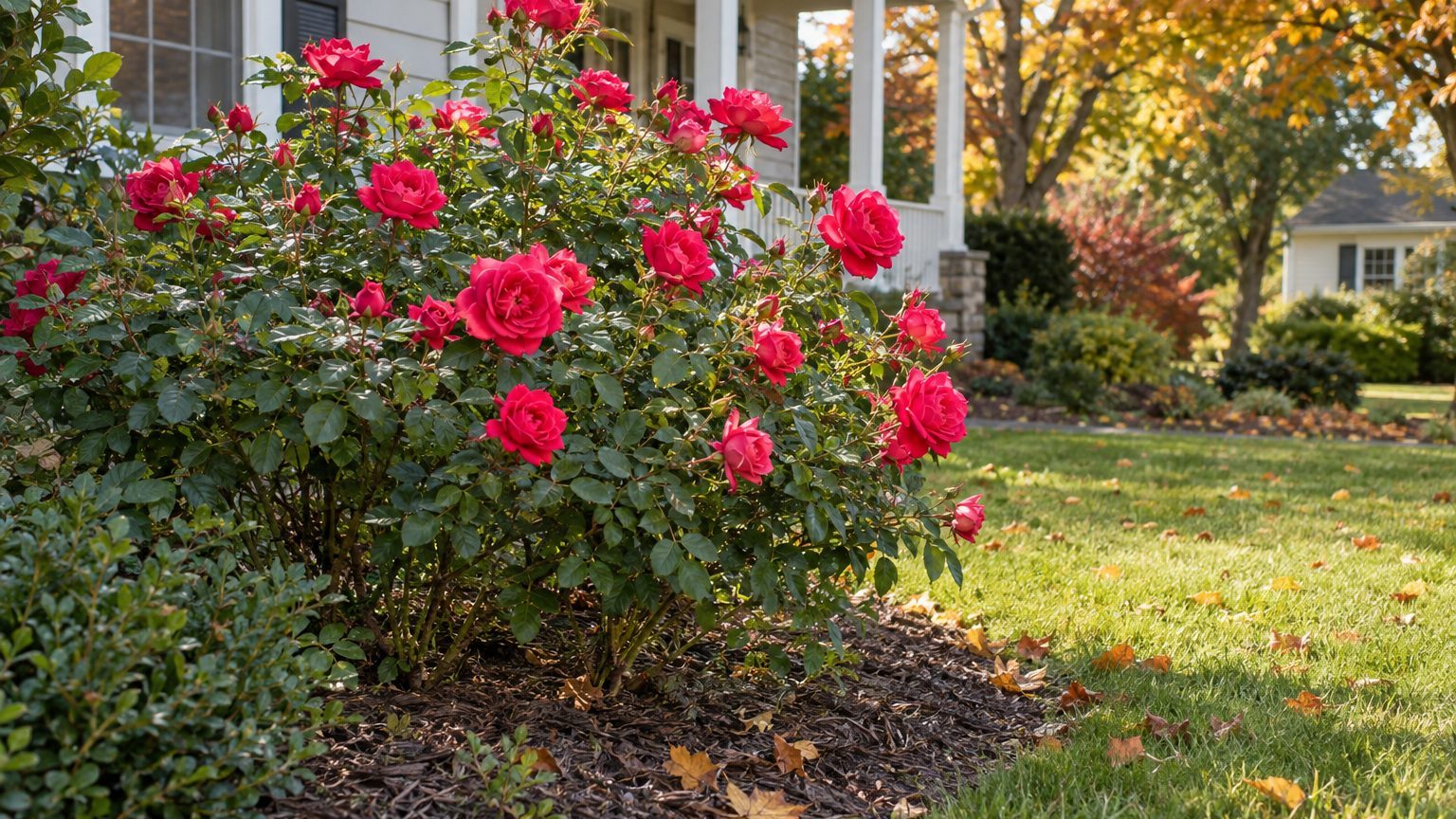
Bare-root roses arrive as bundles of bare, dormant canes, and in Virginia they go into the ground while the weather is still cool. Potted roses are more forgiving about timing.
When to Plant Roses in Virginia

Bare-root roses go in first, in late winter and early spring, and potted roses follow once the weather settles. Spring frost at Virginia Beach usually ends between March 20 and April 3, which is why young, leafy growth is the part of a new rose to protect.
- In late winter, bare-root roses can be planted in February, as long as the soil is workable, because the canes are still dormant and nothing tender is exposed.
- In March, the main planting window for bare-root roses opens, and repeat-blooming roses already in the ground are pruned as their buds swell.
- In April, bare-root planting continues, and the first feeding goes on once leaves have opened.
- From late spring on, potted roses can go in later than bare-root ones, since they arrive with a full root ball and active growth.
- Through summer, from May to August, feeding continues so the plant keeps producing blooms.
The first fall frost at Virginia Beach arrives between November 10 and November 24, which is when growth slows for the year. Virginia Beach sits at the mild end of the state, and the Blue Ridge and southwest Virginia run weeks later in spring and earlier in fall. USDA hardiness zones across Virginia run from 5a to 8b, so a mountain yard and a coastal yard do not share the same calendar.
Virginia — the year and the numbers
- State
- Virginia
- USDA zones
- 5a-8b
- Last spring frost
- March 20 to April 3
- First fall frost
- November 10 to November 24
- Annual rain
- 47 in
- Lawn zone
- transition-season
- Source
- NOAA NCEI 1991-2020 Climate Normals, 32F freeze probabilities · Virginia Beach
Which Roses Grow Best in Virginia?
Winter cold is the main thing that sorts roses in Virginia, because the state spans a wide range of hardiness zones. A rose that shrugs off winter near the coast can take real damage in the mountains, so type matters as much as the planting date.
| Rose type | How it does in Virginia | Why |
|---|---|---|
| Old garden roses | Hold up well to cold, so they suit colder parts of the state | Many are extremely tolerant of low temperatures and do not need hard pruning, which can ruin their shape and cut flowering |
| Hybrid teas | Need more care in cold areas, since they can be hit hard by winter | Hybrid teas can suffer considerable cold damage. |
| Roses bred for colder zones | A sensible pick for the Blue Ridge and southwest Virginia | A rose bred for colder conditions may need little or no added protection in a milder Virginia garden. |
Ramblers and many climbers sit closer to old garden roses in habit, since they bloom once a year. Modern shrub roses and floribundas fall on the repeat-blooming side, with the same pruning rhythm as hybrid teas.
When to Prune, Feed and Protect Roses in Virginia
Planting bare-root roses while they sleep, pruning as buds swell, and feeding through the growing season set the rhythm of the rose year here. Protection through winter is local to your yard, so it depends on where in Virginia you garden.
| Task | Best months in Virginia | Why then |
|---|---|---|
| Pruning repeat-blooming roses | March, and it can also be done in February or April | Buds are swelling and the forsythia is blooming, so you can see where live wood begins |
| Planting bare-root roses | March and April, and it can also be done in February | The canes are dormant, so roots can settle before leaves demand water |
| Feeding roses | April through August, and it can also be done in March | Feeding starts with the first leaves and ends in time for late growth to harden off before winter |
Stop monthly feeding late in the season so new growth has time to harden off before winter. The pruning dates have an important limit: once-blooming roses, meaning old garden roses, ramblers and many climbers, flower on last year’s wood, so they are pruned right after they bloom, never in early spring. The page on when to prune roses in Virginia goes deeper on technique.
How Rose Care Dates Change Across Virginia
Within the month lists above, your spot in the state tells you which end of the window to use.
- Virginia Beach and the coast: This is the mild end of the state, so planting bare-root roses and pruning lean toward the early part of the windows, and feeding can start with the first leaves.
- Blue Ridge and southwest Virginia: Spring arrives weeks later and fall frost comes earlier, so planting and pruning lean toward the later part of March and April, and feeding should wind down sooner.
Whatever your location, watch the buds and let them set the day for pruning.
Where to Get Rose Advice in Virginia
Virginia Cooperative Extension serves the whole state, and the office in your county can speak to your soil and your microclimate.
- The county extension office can test your soil, so ask before planting if you are unsure about drainage or fertility.
- Bring a cutting or clear photos of a troubled rose to the county office for a diagnosis, ideally when symptoms first show.
- Master gardener volunteers connected with the extension office can answer variety questions, which helps before a spring order.
Common Questions
Can Potted Roses Be Planted Later than Bare-Root Roses?
Yes. Bare-root roses have a narrow window while they are dormant, but potted roses can go in later because they arrive already growing, with roots intact.
Can You Plant Roses in Fall in Virginia?
The planting months for Virginia are February, March and April for bare-root roses. Fall is outside the bare-root planting window for Virginia.
When Should You Feed Roses Again After the First Bloom?
Feed when the plant first leafs out and again after each flush of bloom. For Virginia, the feeding months run from April through August.