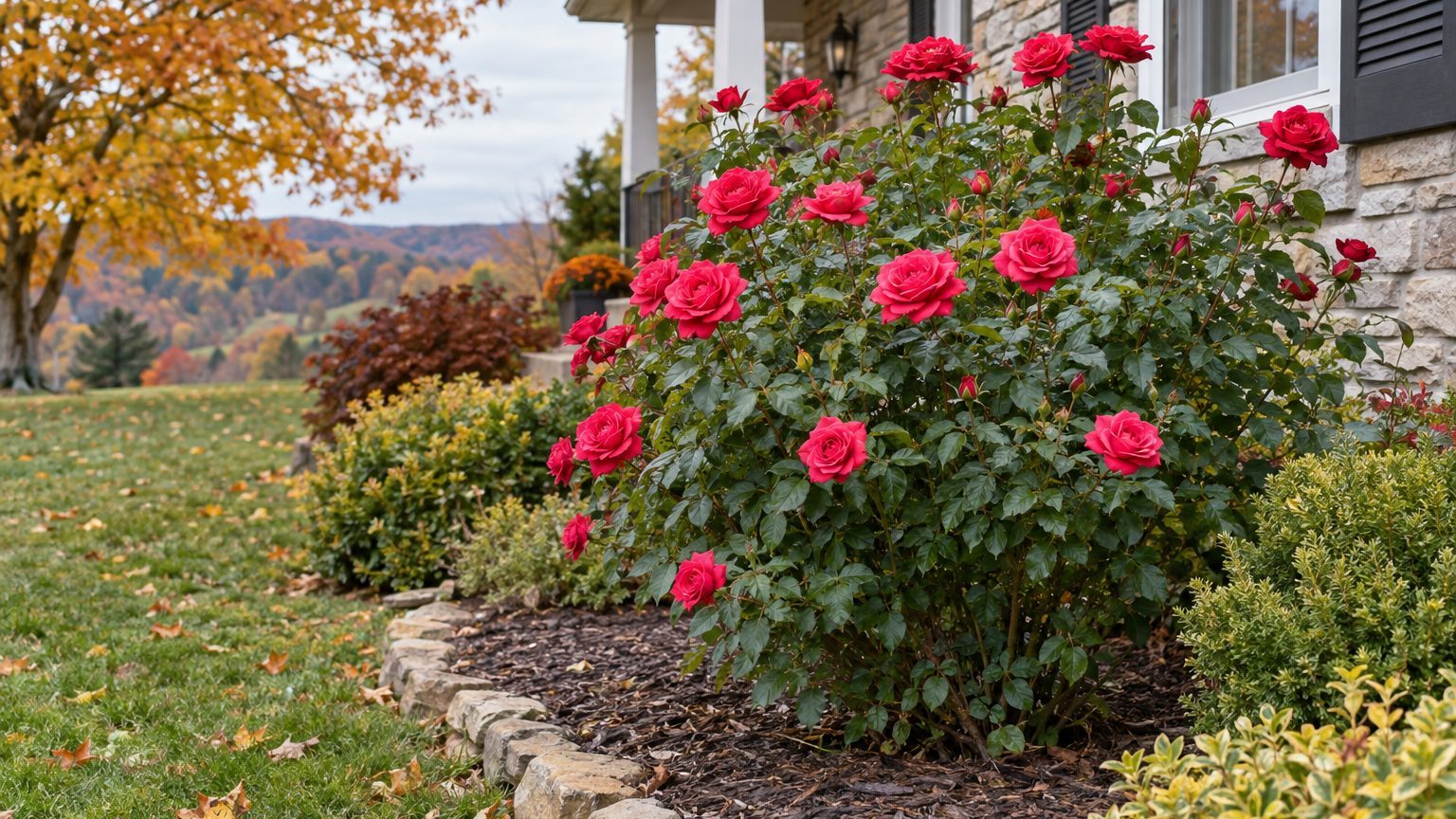
A bare-root rose arrives in late winter as a bundle of dormant canes with the roots wrapped in damp packing, and it asks to be planted before the buds wake up. In West Virginia that moment falls in early spring, and the rest of the rose year follows from it. Here are the planting dates, the roses that suit the hills, and the key dates of the year.
When to Plant Roses in West Virginia

Across the state, USDA hardiness zones run from 5a to 7a, so the mountains and the lower valleys play by different rules. At Charleston, the last spring frost falls between April 9 and April 23, and that is what a freshly planted rose has to get past.
- In February, bare-root roses can go in during a mild spell if the soil is workable, though March and April are the better months.
- In March, plant bare-root roses while they are still dormant, and prune repeat-blooming roses once the forsythia opens and the buds swell.
- In April, bare-root planting continues, and feeding begins as the first leaves open. Young growth is tender, so a late frost can still burn it.
- From May through August, feed regularly, and potted roses can go in later than bare-root ones, since they are not dormant and are not racing the buds.
- In autumn, the first frost at Charleston arrives between October 18 and November 1, and by then feeding has stopped so the canes can toughen up.
A dormant bare-root rose tolerates cold, while a leafed-out young plant does not. That is why the planting months sit before the buds break rather than after the last frost has passed. Higher ground sees frost on a different schedule, covered further down.
West Virginia — the year and the numbers
- State
- West Virginia
- USDA zones
- 5a-7a
- Last spring frost
- April 9 to April 23
- First fall frost
- October 18 to November 1
- Annual rain
- 46 in
- Lawn zone
- cool-season
- Source
- NOAA NCEI 1991-2020 Climate Normals, 32F freeze probabilities · Charleston
Which Roses Grow Best in West Virginia?
Roses with cold tolerance are the safe bet, because winter low temperatures vary a lot between the valleys and the mountains. Old garden roses and roses bred for colder zones tolerate low temperatures well, while hybrid teas can suffer considerable damage in a hard winter.
| Rose type | How it does in West Virginia | Why |
|---|---|---|
| Old garden roses | Reliable through cold winters | Many are extremely tolerant of low temperatures and do not want hard pruning |
| Hybrid teas | Fine in milder valleys, riskier on high ground | They can take considerable cold damage and need a heavy spring pruning |
| Modern shrub roses | Good choice for repeat bloom | They flower again on new growth and are pruned in March |
| Roses bred for colder zones | Need little added protection in the milder zones | Extra hardiness is built in, so winter cover matters less |
Floribundas behave like hybrid teas in the pruning calendar, since they also bloom repeatedly on new wood. Ramblers and many climbers lean toward the old garden roses, flowering once a year, so they are handled differently from the repeat bloomers.
When to Prune, Feed and Protect Roses in West Virginia
The year is short on tasks, and each has a clear window. Pruning follows the buds, not the calendar alone. Feeding follows the leaves, starting when growth begins and finishing before the plant needs to slow down for winter.
| Task | When to do it in West Virginia | Why then |
|---|---|---|
| Pruning repeat-blooming roses | March (February or April also work) | Buds are swelling and the forsythia is in bloom, so you can see which canes survived |
| Feeding roses | April through August (March is fine when growth starts early) | The plant is leafing out and flowering, and feeding stops so late growth can harden before freezes |
Once-blooming roses, which include old garden roses, ramblers and many climbers, flower on last year’s wood. Prune them right after they bloom, never in early spring, or you cut off the season’s flowers. Hybrid teas and other tender types also benefit from winter cover in colder pockets, and the cover comes off as spring pruning begins. Pruning in detail has its own page for the state.
How Rose Care Dates Change Across West Virginia
Elevation matters in a state this hilly, and the dates above lean toward the valley end of the range.
- Kanawha Valley: Charleston sits in a river valley, so the frost windows given here fit the lower, warmer ground. Planting and pruning can start toward the early side of the months listed.
- Allegheny Highlands: Places like Canaan Valley and the high ridges freeze noticeably earlier in fall and warm up later in spring. Plant and prune toward the end of the listed months, watch the buds, and give hybrid teas more protection.
Between the valley and the highlands, a rose in a sheltered hollow behaves more like a valley rose, while one on an exposed ridge behaves more like a highland rose, whatever its county.
Where to Get Rose Advice in West Virginia
Local conditions vary from one hollow to the next, so local help pays off. West Virginia University Extension supports home gardeners through offices in the counties, and those offices can look at a problem rose or a bed that has never performed.
- The county extension office can test your soil, so ask before the spring planting months and use the results to decide what the bed needs.
- Bring a cutting of a struggling rose to the county office, ideally while the symptoms are fresh on the plant.
- Before the next planting window, collect a soil sample from the bed where the roses will go.
Common Questions
Can You Plant a Potted Rose After the Bare-Root Months?
Yes. A potted rose is not dormant, so it does not have to go in during the early spring window. It can be planted later in the season, as long as it gets regular water while the roots settle in.
Why Stop Feeding Roses at the End of Summer?
Feeding after August pushes soft new growth that may not harden before the first freezes. Stopping then lets the canes toughen for winter, which is especially useful on high ground where fall frost comes sooner.
What If the Forsythia and the Calendar Disagree?
Trust the plant. March is the main pruning month, but a cold spring can push it into April, and a mild late winter can allow February. Prune repeat-blooming roses when the buds begin to swell and the forsythia opens.