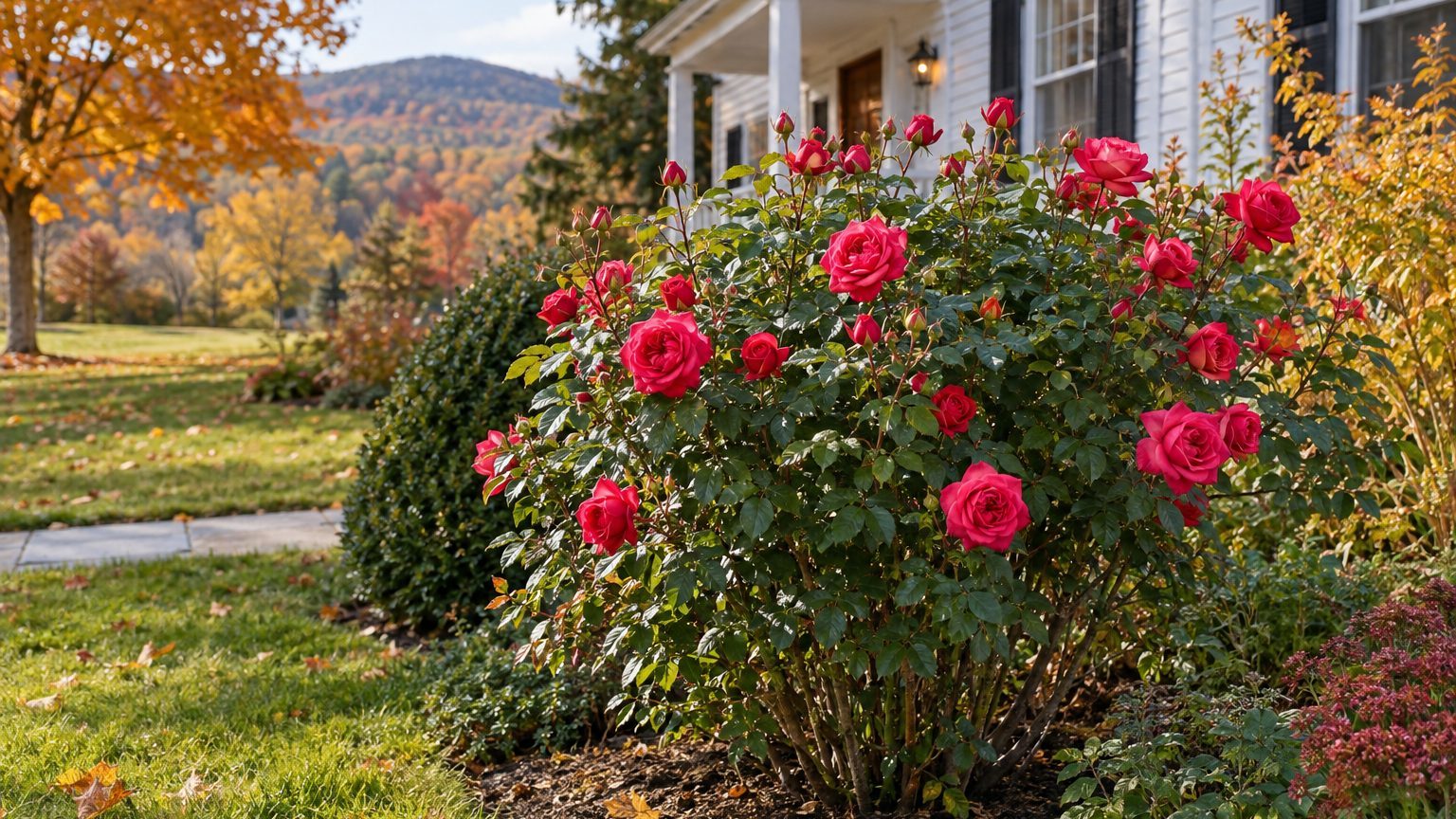
Bare-root roses go into Vermont soil in April and May, while the ground is cool and the plants are still asleep. Potted roses follow once the weather settles.
When to Plant Roses in Vermont

Bare-root roses go in first, in April and May, because they must be planted dormant. Potted roses can go in later, once frost no longer threatens their new leaves. For Burlington, on Lake Champlain, the last spring frost falls between April 30 and May 10, and a young rose with soft new growth does not tolerate a freeze after that. Burlington sits in a milder part of the state than the Green Mountains and the Northeast Kingdom, so those areas run shorter. Vermont spans USDA hardiness zones 3b to 5b, which is why the type of rose matters as much as the date. In Burlington, the first fall frost arrives between October 3 and October 13, so a rose planted in spring has the whole season to root before winter.
A rose’s year in Vermont runs like this:
- In early spring, bare-root roses go into the ground in April and May, and the winter mulch comes off in early May, before new growth begins.
- Once the shoots are several inches long, repeat-blooming roses are pruned in April and May. Pruning can also happen in March, but wait for active growth.
- From spring through midsummer, roses are fed in April, May, June and July, with a last feeding possible in August.
- Potted roses can be planted later, and established plants bloom on the new wood they grew this year.
- In late November, after hard frosts have killed the leaves, winter protection goes on.
Potted roses are the flexible option, since they arrive with roots already growing and tolerate a later planting day than bare-root plants.
Vermont — the year and the numbers
- State
- Vermont
- USDA zones
- 3b-5b
- Last spring frost
- April 30 to May 10
- First fall frost
- October 3 to October 13
- Annual rain
- 38 in
- Lawn zone
- cool-season
- Source
- NOAA NCEI 1991-2020 Climate Normals, 32F freeze probabilities · Burlington
Which Roses Grow Best in Vermont?
Hardy roses do well here, and tender ones struggle. The winters decide which plants come back, so choose types rated for your zone, which can be as cold as zone 3b in the north.
Polyanthas, floribundas, hybrid perpetuals, shrub roses and many old-fashioned roses prove more winter hardy than hybrid teas and grandifloras, according to Vermont guidance. Hybrid teas can still be grown, but they need protection.
| Rose type | How it does in Vermont | Why |
|---|---|---|
| Shrub roses (Meidiland series) | Hardy to at least zone 5, marginal by variety in zone 4 | Tested for cold hardiness in Vermont |
| Explorer series (Champlain, Cabot, Kelsey) | Mostly live in zone 4, as shrubs or climbers | Bred in Canada for cold winters |
| Floribundas and polyanthas | More winter hardy than hybrid teas | Tougher canes and sturdier constitution |
| Old-fashioned roses and hybrid perpetuals | More winter hardy than hybrid teas | Long-proven in cold climates |
| Hybrid teas and grandifloras | Need winter protection in cold winters | Less hardy than the types above |
Hardy shrub roses such as Knock Out and the Explorer series perform well without extra protection. Once-blooming roses, including old garden roses, ramblers and many climbers, flower on last year’s wood, so prune them right after they bloom, never in early spring.
When to Prune, Feed and Protect Roses in Vermont
Rose chores in Vermont follow the buds more than the calendar. Pruning waits until shoots are several inches long, and winter cover waits until the leaves are dead. The months below apply to repeat-blooming roses such as hybrid teas, floribundas and modern shrub roses.
Feeding starts in spring and stops in late summer, so new growth has time to harden off before winter.
| Task | Best months in Vermont | Why then |
|---|---|---|
| Pruning repeat-blooming roses | April, May (March is possible) | Wait for active growth and shoots several inches long |
| Feeding | April, May, June, July (August is possible) | Monthly feeding from spring, stopping in August so growth hardens off |
| Putting on winter protection | November, late in the month | Hard frosts have killed the leaves by then |
| Taking winter protection off | May (April is possible) | Early May, before new growth begins |
Pruning in March is the outer limit, so wait for active growth. Wait until hard frosts have killed the leaves, which is why late November is the target. For pruning detail, see the page on when to prune roses in Vermont.
How Rose Care Dates Change Across Vermont
Elevation and distance from the lake shift the season by a good margin, so adjust the months above to your own corner of the state.
- Burlington and the Champlain Valley: The lake keeps this area milder than much of the state, so planting and pruning can start at the early end of the windows.
- Green Mountains: Higher ground has a substantially shorter season, so plant and prune toward the later end and choose roses hardy enough for your USDA zone.
- Northeast Kingdom: Colder and shorter, so hardy shrubs such as Explorer roses are well suited to these conditions, while tender roses need winter protection.
Watch the buds on your own plants and let them overrule the calendar when they disagree.
Where to Get Rose Advice in Vermont
Local help turns general dates into dates for your yard. University of Vermont Extension publishes rose guidance for the state, and your county office can help with specific problems.
- Its winter protection guidance is worth reading in the fall before the first hard frosts.
- Your county extension office can run a soil test and help diagnose a struggling plant.
If bare-root roses are on your list, check the soil and pick the planting spot in April.
Common Questions
Can You Plant a Rose in Summer in Vermont?
Yes, if it is a potted rose. Bare-root roses must go in dormant, in April and May, but a container rose already has an active root system. Water it regularly while it settles in.
Do Roses Survive Vermont Winters?
Hardy types do. Shrub roses, Explorer roses, floribundas and old-fashioned roses cope better than hybrid teas. Choose types rated for your zone and protect tender ones.
Should You Cut Back a Rose in the Fall in Vermont?
For repeat-blooming roses, heavy pruning belongs in spring, after the winter cover comes off and shoots are growing. In November, the job is covering tender roses once hard frosts have killed the leaves.