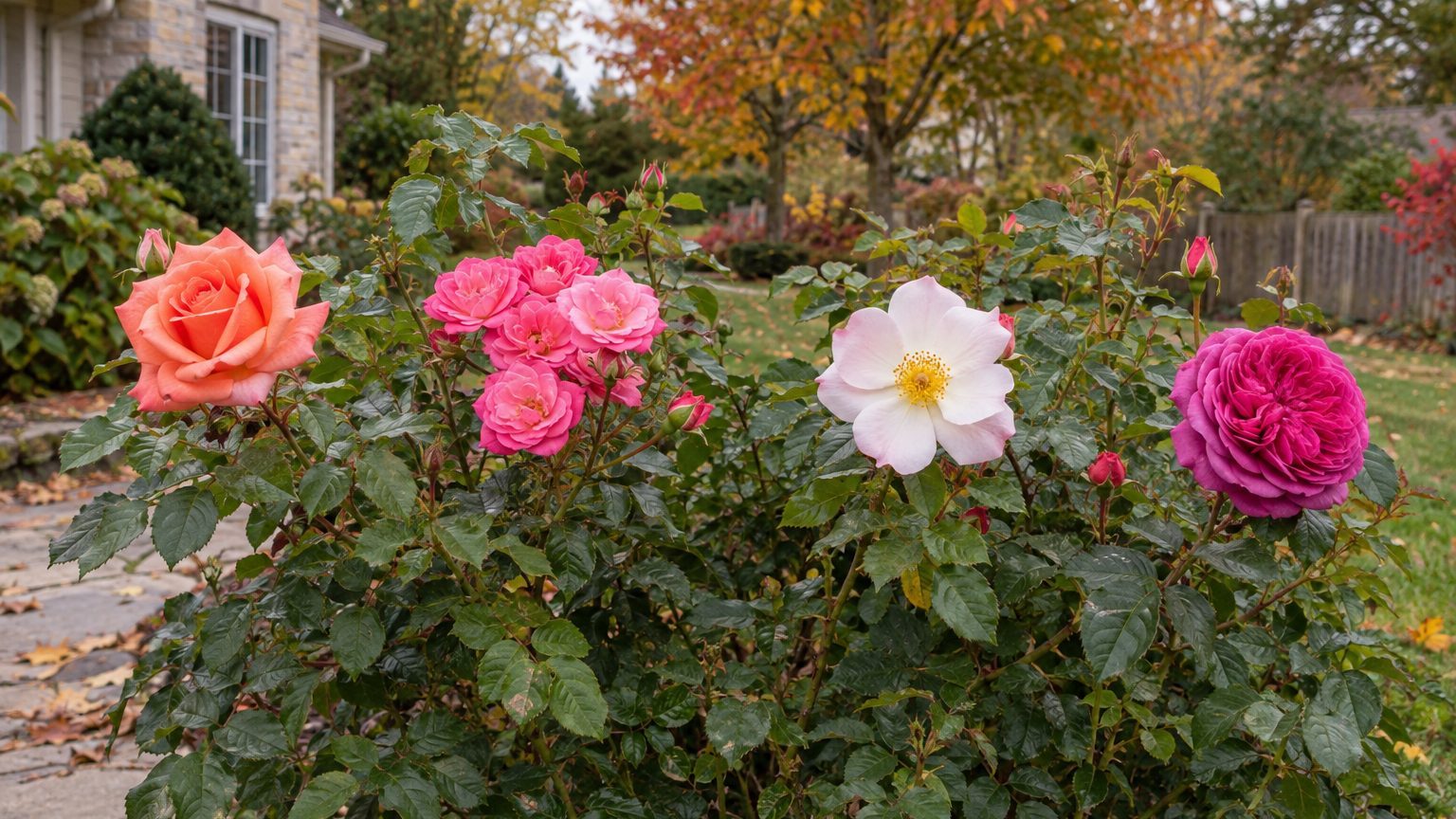
A rose that sulks in Yukon usually sulks after winter, with canes blackened to the snow line and nothing sprouting in May. Tough shrub roses come through that far better than the fussy ones sold in most catalogs.
Best Roses to Grow in Yukon

Hardy shrub roses are the ones that hold here, because winter, not summer heat or damp, decides what survives. Whitehorse sits in Canadian hardiness zone 1b (a Canadian rating that does not match any USDA zone), so a rose has to shrug off deep cold with little help from you.
Rugosa Roses
Northern extension advice calls Rosa rugosa hardy in most locations, and that is the reason to start here. Rugosas tolerate cold that flattens other roses, so they suit a first rose bed in the territory.
Varieties still differ from one garden to the next. Plant a rugosa, watch it through a winter, and add others once you know your own spot.
Explorer Series Roses
Explorer roses are hardy shrub roses that perform well without extra winter protection. That saves the autumn chore of covering canes, which matters when the season turns quickly.
They repeat-bloom, so prune them in May once active growth is underway.
Knock Out Roses
Knock Out is another hardy shrub rose that does well without extra winter protection. It is a sensible pick if you want a tidy, low-fuss rose near the front walk.
Treat it like the Explorers: feed in May, June and July, then stop.
Hybrid Teas and Floribundas
Tender roses do not reliably overwinter in cold northern gardens. That list includes hybrid teas, grandifloras, floribundas and miniature roses.
They need winter protection in cold winters, and in Yukon even protection may not carry them through. Grow them as an experiment, not as the backbone of the bed.
Yukon — the year and the numbers
- State
- Yukon
- Hardiness zones
- 1b
- Last spring frost
- June 5
- First fall frost
- August 25
- Annual rain
- 10 in
- Lawn zone
- cool-season
- Source
- Environment and Climate Change Canada — Canadian Climate Normals 1981-2010, station WHITEHORSE A · Whitehorse
How to Choose a Rose for a Yukon Garden
Start with the winter you can count on, not the flower you picture. Rugosas and hardy shrub roses answer the cold directly, and they ask the least of you once planted.
Planting time matters too. Bare-root roses go in during June, and potted roses can go in later.
| Your situation | What suits it in Yukon | Why |
|---|---|---|
| Very cold winter | Rugosa roses | Rugosa is hardy in most locations across cold northern gardens |
| Little time for winter care | Explorer series or Knock Out | Hardy shrub roses perform well without extra protection |
| You love hybrid teas or floribundas | Hybrid teas or floribundas, with winter protection | Tender roses do not reliably overwinter, and cold winters call for protection |
| A late start in spring | Potted roses | They can go in after the June window for bare-root plants |
Winter hardiness and low upkeep should guide the choice. For old garden roses, ramblers and many climbers, remember they bloom once a year on last year’s wood.
Which Roses Suit Different Parts of Yukon
Yukon is not one climate, and northern or upland districts can run colder and later than Whitehorse.
- Whitehorse: The usual last spring frost averages June 5, which means frost comes later than that in one year out of two. Treat June 5 only as the middle of the local frost window, and wait until conditions have settled before planting.
- Dawson City: Northern districts like this run weeks behind Whitehorse’s frost date. Lean on rugosas and other hardy shrub roses, and hold off planting until the weather has truly settled.
Because no local rose-timing page exists for the territory, the months here follow the nearest comparable climate. Confirm local timing with a garden centre, a rose society or a territorial gardening group.
Rose Buying Mistakes to Avoid in Yukon
Buying a Tender Rose Without a Plan
Hybrid teas, floribundas, grandifloras and miniatures may look appealing on the shelf, but they do not reliably overwinter in northern gardens. The result can be dead canes after a hard winter.
If you want one anyway, buy it knowing it needs protection, or pick a rugosa or Explorer instead.
Pruning Too Soon in Spring
Wait until active growth is underway in May before pruning repeat-blooming roses, because snow cover lasts into spring and buds are slow to show. Cutting early removes wood that may still be alive.
Once-blooming roses are different. They flower on last year’s wood, so prune them right after they bloom and never in early spring.
Feeding Past the Season
Feed in May, June and July, then stop by August 1. Late fertilizer pushes soft new growth that the first hard freeze will kill.
If fertilizer remains in August, store it for later use.
Where to Get Rose Advice in Yukon
Gardeners can combine general agriculture guidance with advice from local growers.
- Agriculture and Agri-Food Canada offers general guidance on plants and growing conditions, so check it before you shop.
- A local garden centre can tell you which hardy roses are in stock, and spring is the time to ask.
- A rose society or territorial gardening group knows what has survived in nearby yards, so ask them to confirm local timing.
Common Questions
Can You Plant a Potted Rose Later than a Bare-Root Rose in Yukon?
Yes. Bare-root roses are best planted in June, while potted roses can go in later.
Is June 5 a Safe Date to Plant Roses in Whitehorse?
No. That date is an average, and in one year out of two the last frost falls later. Treat it as the middle of a window and watch the forecast.
Does Zone 1b Apply to All of Yukon?
No. Zone 1b is a Canadian rating for Whitehorse, the reference city, and it is not a USDA zone. Northern and upland districts can run colder and later, so test hardy roses in your own garden first.