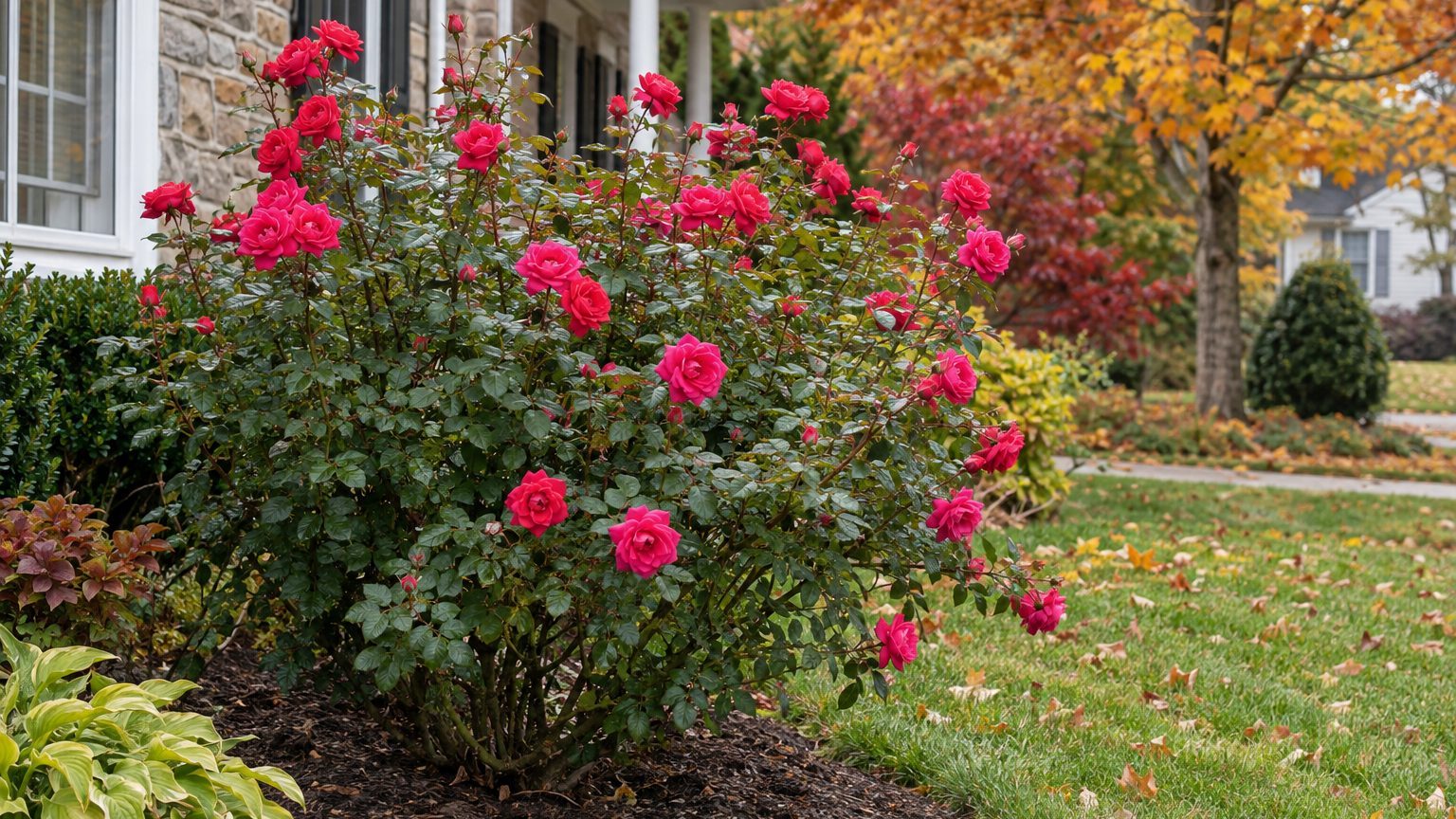
A bare-root rose that goes into Kentucky soil while it is still dormant has the whole spring to root before the heat arrives. Planting windows here run from late winter into spring, with potted roses stretching a little later.
When to Plant Roses in Kentucky

Bare-root roses go in first, in March and April, with February as a fallback when the ground is workable. Potted roses can follow later, since they arrive already leafed out and carry their own root ball. Louisville, the reference city here, sees its last spring frost between March 24 and April 4, so a young rose with tender new growth can still be nipped after planting. The first fall frost arrives between November 2 and November 12, and Kentucky sits in USDA zones 6a to 7a, so other parts of the state differ a little from the city.
- In late winter, bare-root roses can go in during February if the soil is not frozen or soggy, though March and April are the stronger months.
- In March and April, plant bare-root roses while they are still dormant, so the roots settle in before the canes leaf out.
- Once spring is underway, potted roses can follow the bare-root plantings, with no need to wait for a particular week.
- In March, repeat-blooming roses are pruned as the buds begin to swell, which is also when forsythia comes into bloom.
- From April through August, roses are fed while they are actively growing, and the feeding stops well ahead of fall frost.
Rural yards in Jefferson County tend to run cooler than Louisville, so spring may arrive later and fall frost sooner.
Kentucky — the year and the numbers
- State
- Kentucky
- USDA zones
- 6a-7a
- Last spring frost
- March 24 to April 4
- First fall frost
- November 2 to November 12
- Annual rain
- 48 in
- Lawn zone
- transition-season
- Source
- NOAA NCEI 1991-2020 Climate Normals, 32F freeze probabilities · Louisville
Which Roses Grow Best in Kentucky?
Kentucky has cold enough winters to punish tender roses and summers humid enough to invite leaf disease, so tough, hardy types are a sensible choice here. A rose bred for cold winters has a useful margin in Kentucky.
| Rose type | How it does in Kentucky | Why |
|---|---|---|
| Old garden roses | Reliable through cold snaps | Many are extremely tolerant of cold temperatures, and they do not need hard pruning |
| Hybrid teas | Worth growing, but more demanding | They can suffer considerable damage in hard cold and need a heavy spring pruning |
| Floribundas | Repeat bloomers that suit March pruning | They flower on new growth, so a spring cut as buds swell sets up the season |
| Cold-hardy bred roses | May need less winter protection | Breeding for cold hardiness gives these roses a useful margin |
Modern shrub roses and climbers also grow here, and their pruning depends on whether they repeat bloom or flower once on last year’s wood. Once-blooming roses, including old garden roses, ramblers and many climbers, are pruned right after they bloom, never in early spring.
When to Prune, Feed and Protect Roses in Kentucky
The year’s main jobs fall into a few clear months. Pruning comes with the first swelling of buds, feeding follows steady leaf growth, and planting takes place while roses are dormant. The pruning page for Kentucky goes deeper on technique, so this covers the key dates.
| Task | Best months in Kentucky | Why then |
|---|---|---|
| Prune repeat-blooming roses | March (February or April also work) | Buds are swelling and forsythia is in bloom, so you can see where live wood begins |
| Plant bare-root roses | March and April (February also works) | The roses are dormant and the roots can establish before growth begins |
| Feed roses | April through August (March also works) | Feeding begins with the first leaves and stops early enough for new growth to harden off before winter |
Winter protection is not covered by a fixed Kentucky month here, so watch the weather instead. In Kentucky, extension advice is to stop feeding late in summer so late growth does not stay tender into winter, and that reasoning applies to any rose you feed through summer.
How Rose Care Dates Change Across Kentucky
Kentucky stretches across several zones, and local conditions shift the rose season slightly from one corner to another.
- Louisville: the city runs warmer than the countryside around it, so spring comes a little sooner and fall frost arrives a little later than in rural Jefferson County.
- Rural Jefferson County: gardens outside the city should expect a tighter window, with later spring warmth and earlier fall frost.
- Higher and cooler parts of the state: zone 6a areas run colder than zone 7a ones, so planting and pruning settle toward the later end of each month range.
Let the buds guide pruning wherever you garden, since swelling buds and blooming forsythia show when your own yard is ready.
Where to Get Rose Advice in Kentucky
The University of Kentucky Cooperative Extension Service is the place to start for local rose questions. Your county extension office can look at a troubled plant or help with a soil test.
- County extension offices can examine a sample of a sick rose and help you work out what is wrong with it.
- A soil test through the county office is worth doing before planting, ideally in late winter before bare-root roses go in.
Common Questions
Can You Plant a Potted Rose in Summer?
A potted rose can be planted later than a bare-root one, since it arrives with roots intact. Kentucky summers are hot and humid, though, so plan on regular watering for a newly planted rose.
Should You Prune Climbing Roses in March?
It depends on the rose. Repeat-blooming climbers can take a spring pruning, while once-blooming ones are left until after flowering.
Do Old Garden Roses Need Hard Pruning?
No. Hard pruning can ruin their graceful shape and sharply reduce flowering, so a gentle approach suits them.