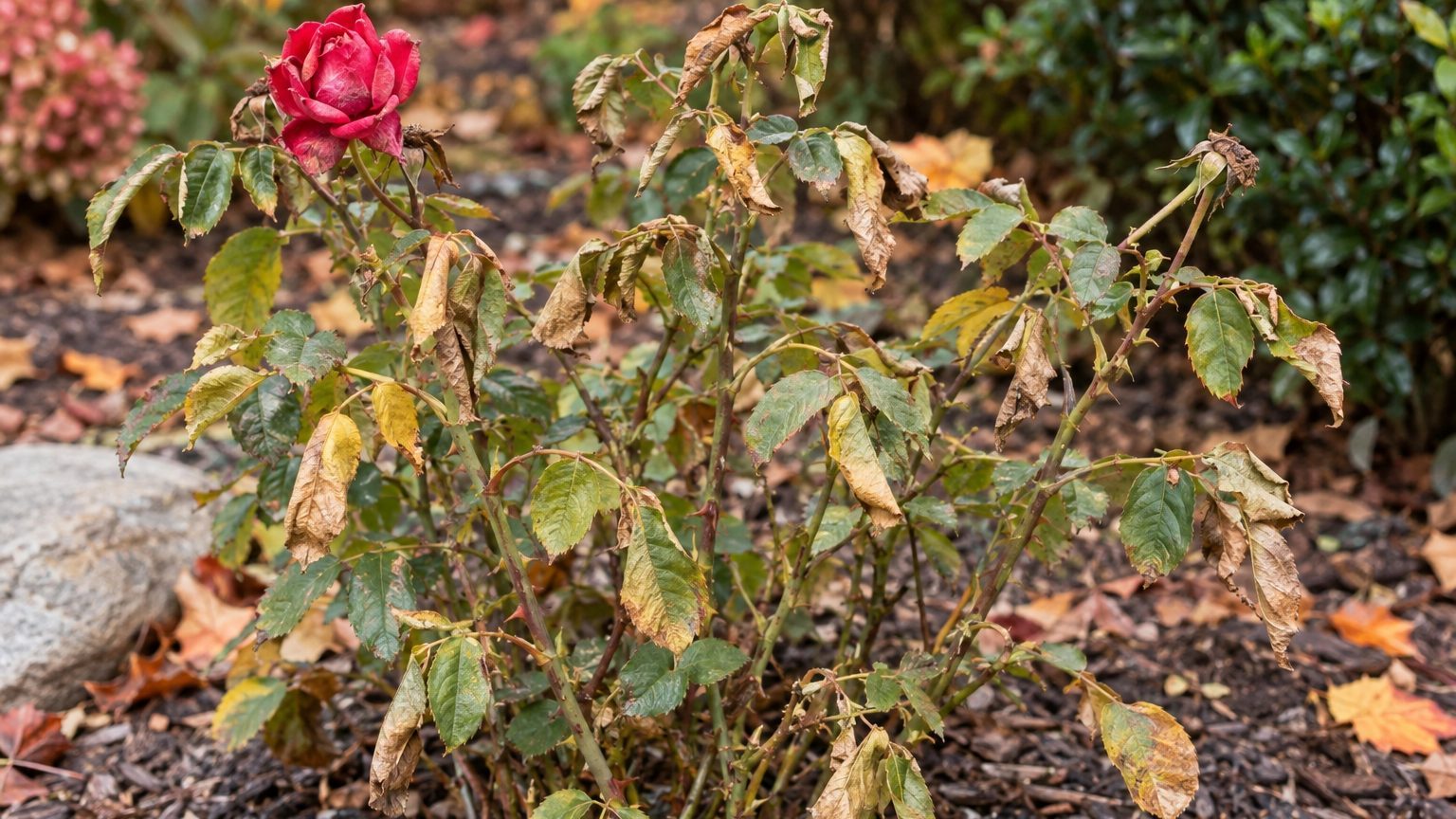
Yellow leaves with dark blotches can pile up under a rose bush, leaving the canes looking thin. Black spot is a fungus that spreads on wet foliage and makes leaves fall early. Removing fallen leaves and keeping the foliage dry can help limit the conditions black spot needs.
Rose Dropping Leaves: What You See

The leaves tell the story before they fall, so look at them closely while they are still on the bush.
- Purplish red to dark brown irregular spots appear on the leaf, often with angular edges between the veins.
- Leaves turn yellow around the spots, and yellow leaves drop from the plant, even when only a few lesions are present.
- In Minnesota, the leaves fall in spring or early summer, so a bush can look thin before the main bloom is over.
- In South Carolina, severely infected plants may have lost all of their leaves by mid-summer.
- In Tennessee, canes may end up bare except for the growing tips, and fresh leaves may appear and then drop again once spots show on them.
Bare lower canes with a tuft of green at the top are the classic late look of a bush that has been fighting this for a while.
From the almanac
Roses in your state
The dates on this page depend on where you live. Your state's page carries its frost dates, its USDA zones and the year laid out month by month.
Northeast
Southeast
- Alabama
- Arkansas
- Delaware
- Florida
- Georgia
- Kentucky
- Louisiana
- Maryland
- Mississippi
- North Carolina
- South Carolina
- Tennessee
- Virginia
- West Virginia
Midwest
Southwest
West
Pacific Northwest
Canada
Rose Dropping Leaves or Something Else?
Several problems make a rose shed foliage, and a yellow leaf alone does not tell you which one you have. Check the underside of the leaf and the shape of the new growth too.
| Looks like | How to tell them apart | What else shows |
|---|---|---|
| Rust | Small orange pustules on the undersides, while the upper sides discolor (described in California) | Infected leaves drop early |
| Nutrient shortage | Yellowing between the veins or along the veins, with dead leaf tips and margins | Leaves drop early, but without the dark spots of black spot |
| Rose rosette | Witch’s broom clusters of leaves, red leaves and succulent stems | Stems carry an excessive number of thorns, and the distortion can mimic herbicide damage |
Powdery mildew also distorts leaves and can leave flower buds that never open. Downy mildew can strip leaves too, so a bush that sheds without spotted leaves deserves a closer look.
What Causes Rose Dropping Leaves, and Where It Is Worst
The fungus Diplocarpon rosae causes black spot. It overwinters in diseased canes and in infected fallen leaves beneath the plant, which is why last year’s litter matters so much this year.
In Indiana, the spores germinate in spring and are splashed up onto leaves and stems by water. Infection needs long periods of moisture in spring and summer, so a dry stretch slows the disease while a rainy one speeds it up.
Black spot is most severe after long, wet, warm periods in spring, a pattern described in North Carolina. In Tennessee, plants may lose all their leaves when conditions favor the disease.
Each lost leaf costs the bush some of its energy reserves. In Indiana, that loss is tied to fewer flowers and to a plant that is more likely to suffer winter damage.
How to Treat Rose Dropping Leaves
Start with cleanup and watering, since those steps cut off the fungus where it lives and spreads.
- Rake and remove fallen leaves under the bush so that spores overwintering in the litter cannot splash back onto healthy foliage.
- Cut out canes that look diseased to reduce the infected tissue where the fungus can overwinter.
- Water at the base of the plant and avoid wetting the leaves, because the disease needs moisture on the foliage to take hold.
- Use a protective fungicide to prevent spread to uninfected leaves, but do not expect it to cure leaves that are already infected.
- Keep checking new growth regularly, so that fresh spots are caught early and the bush does not go through the strip-and-regrow cycle again.
Spotted leaves that are still on the bush will not turn green again. The goal is to protect the leaves that have not yet been infected.
How to Prevent Rose Dropping Leaves Coming Back
Prevention follows the fungus through the year, from the litter it winters in to the damp spells that wake it up.
- In Utah, rake and remove fallen leaves in fall so that infected foliage does not sit under the bush all winter.
- Look over the canes and remove any that are diseased, since the fungus overwinters in them.
- Clear any leaves that were missed before spores germinate and splash upward.
- During wet weather, keep irrigation off the leaves and water at the soil line, because infection needs extended moisture.
- During long, warm, wet spring weather in North Carolina, check the leaves regularly and consider a protective spray before spots spread.
Removing fallen leaves and keeping irrigation off the foliage help reduce the disease cycle.
Where This Comes From
Black spot survives in diseased canes and infected fallen leaves beneath the plant.
Common Questions
Will a Rose Grow New Leaves After Losing Them All?
It often does, but susceptible plants may refoliate only to drop the new leaves once black spot appears on them. This defoliation and regrowth cycle can occur several times in a growing season, and each round drains the bush.
Can a Rose Die from Dropping Its Leaves?
Repeated loss can kill it. Severe leaf loss on susceptible cultivars can lead to dead plants over several seasons, and in Indiana the weakened bush is also more exposed to winter damage.
Are Black Spot Resistant Roses Safe from Leaf Drop?
Not entirely. In Maryland, roses resistant to black spot are often susceptible to Cercospora leaf spot and may defoliate during warm, rainy summers.