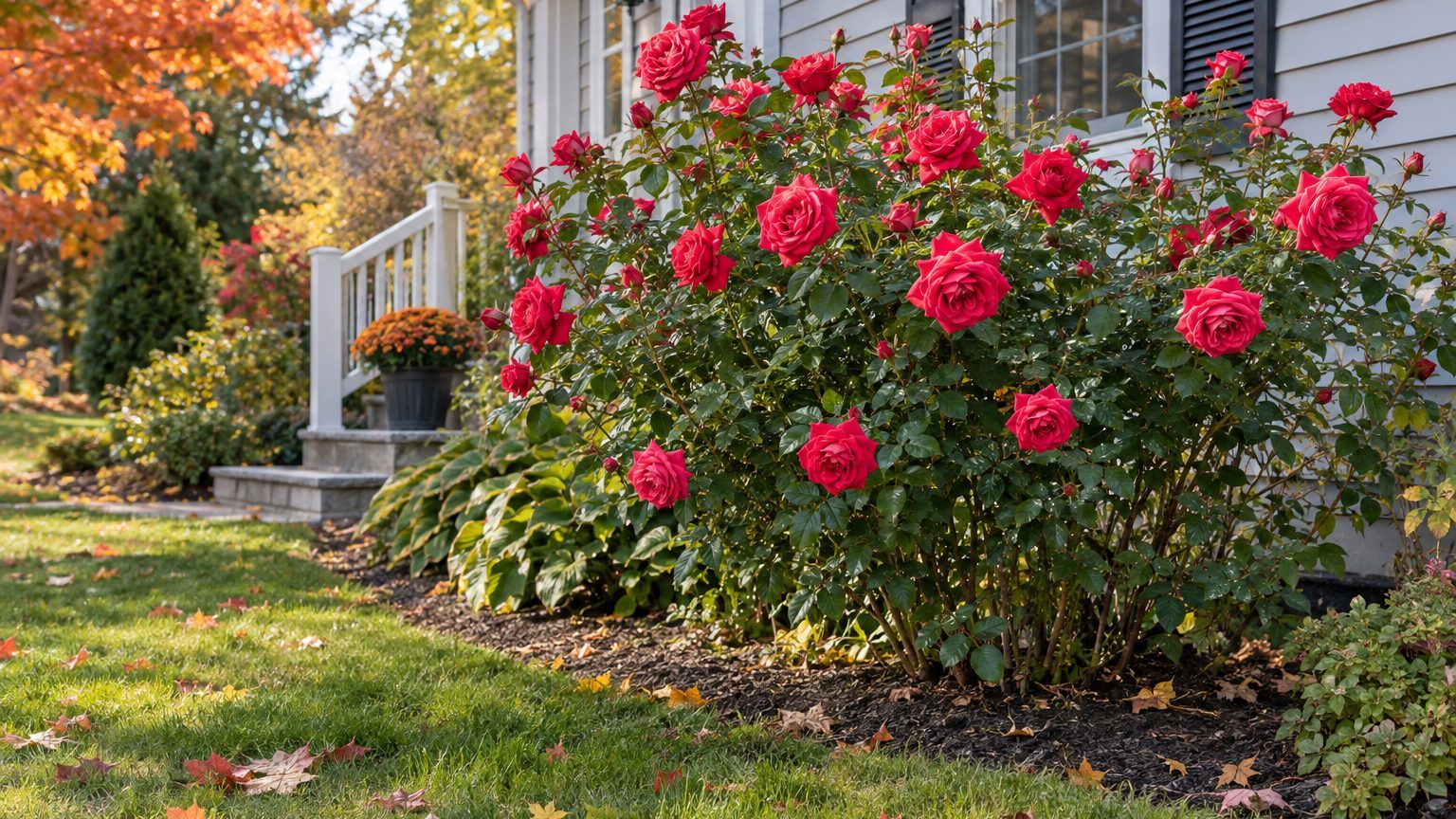
Bare-root roses arrive in spring as bundles of dormant canes, and the weeks when they can go into the ground are short. In New Brunswick, that window opens in April and runs through May. Potted roses give you more room, though they too prefer to settle in before summer heat and well before the first hard frosts.
When to Plant Roses in New Brunswick

Bare-root roses go in first, in April and May, and potted roses follow once the soil has warmed. In Moncton, in Canadian hardiness zone 5a, frost lingers into late spring on average around May 23, which is the midpoint of a window, so half of all years bring a frost later than that. Young shoots dislike frost, while a dormant bare-root rose does not care, so planting dormant stock early is the safer habit. Here is how a rose’s year runs:
- In April, bare-root roses are planted while still dormant, and repeat-blooming roses are pruned once shoots begin to grow.
- In May, potted roses can go in as the soil warms, and any winter mounding left over comes off before new growth starts.
- From April through July, roses are fed monthly, which is the stretch when they are pushing the most growth.
- In August, feeding stops so the last soft shoots have time to toughen up before winter. In Moncton, the first fall frost arrives on average around October 2.
- In November, after hard frosts have killed the leaves, tender roses get their winter protection.
New Brunswick has no provincial rose-timing guide of its own, so these months follow the nearest comparable climate. Confirm local timing with a garden centre, a rose society or a provincial gardening group before you order.
New Brunswick — the year and the numbers
- State
- New Brunswick
- Hardiness zones
- 5a
- Last spring frost
- May 23
- First fall frost
- October 2
- Annual rain
- 47 in
- Lawn zone
- cool-season
- Source
- Environment and Climate Change Canada — Canadian Climate Normals 1981-2010, station MONCTON · Moncton
Which Roses Grow Best in New Brunswick?
Winter decides what lasts here. Roses bred for tough climates, such as shrub roses, floribundas, polyanthas, hybrid perpetuals and many old-fashioned types, come through cold better than hybrid teas and grandifloras.
Choose roses rated for your zone’s coldest average winter. In Moncton, that means a plant labeled for Canadian zone 5a or colder, not a rating from another zone system.
| Rose type | How it does in New Brunswick | Why |
|---|---|---|
| Hybrid teas and grandifloras | Need winter protection in cold winters | Less winter hardy than most other types |
| Floribundas and polyanthas | Generally hardier than hybrid teas | Tougher canes that cope with winter better |
| Shrub roses such as Knock Out | Perform well without extra protection | Bred for hardiness |
| Meidiland series | Hardiness varies by variety, so check each rose against local winter conditions | Hardiness varies by variety |
| Explorer series (Champlain, Cabot, Kelsey) | Shrub or climbing roses that mostly come through winter without extra protection | Bred in Canada for cold winters |
| Old-fashioned and hybrid perpetual roses | Hardier than hybrid teas | Long-established, tough types |
Hybrid teas are still worth growing if you love the flowers, as long as you plan on protecting them each November. If you would rather skip that chore, start with the Explorer series or a shrub rose.
When to Prune, Feed and Protect Roses in New Brunswick
Rose chores follow the buds and the shoots, so the months below are a guide, not a fixed date. Pruning waits until growth is active and winter damage is easy to see. The page on when to prune roses in New Brunswick goes deeper on technique.
| Task | Best months in New Brunswick | Why then |
|---|---|---|
| Pruning repeat-blooming roses | April and May; March also works | Wait for active growth so you can see which canes survived |
| Planting bare-root roses | April and May | Dormant roots settle in before top growth starts |
| Feeding | April through July; August also works | Monthly from April, stopping in August so late growth can harden before winter |
| Putting on winter protection | November, late in the month | Wait until hard frosts have killed the leaves |
| Taking protection off | May; early April also works | Remove the mounding in early May, before new growth begins |
Protection applied too early can trap warmth and keep the plant active when it should be shutting down. Hybrid teas, floribundas and grandifloras gain the most from it.
How Rose Care Dates Change Across New Brunswick
The dates above come from the Moncton area, and a province is never one climate. Some districts run later than that, and only a few corners of New Brunswick have a clear local pattern.
- Moncton and the southeast: this is where the dates in this article apply most directly, with planting and unmounding in April and May.
- In the north, spring arrives later, so planting, unwrapping and the first pruning slide toward the later part of their calendar windows.
- Upland districts inland: cold lingers longer here as well, so treat the later end of each window as your starting point.
Watch your own yard for clues, such as buds swelling on neighboring shrubs, before you commit to a date.
Where to Get Rose Advice in New Brunswick
For rose questions, start with federal agriculture guidance and local gardening groups.
- Agriculture and Agri-Food Canada publishes federal gardening and plant health information you can browse any time of year.
- A local garden centre or rose society knows your district’s frost pattern, so ask them before you buy bare-root stock in April.
Common Questions
Is Canadian Zone 5a the Same as USDA Zone 5a?
No. The Canadian system draws on seven climate variables, while the USDA system uses one, so there is no simple conversion between them. When a rose tag lists a zone, check which system it uses.
Can You Plant a Potted Rose After Bare-Root Season?
Yes. Potted roses can go in later than bare-root roses, once the soil has warmed and spring frost has passed. Water them regularly while they settle in.
When Should You Prune Roses That Bloom Only Once a Year?
Old garden roses, ramblers and many climbers flower on last year’s wood. Prune them right after they bloom, never in early spring, or you cut off the buds.