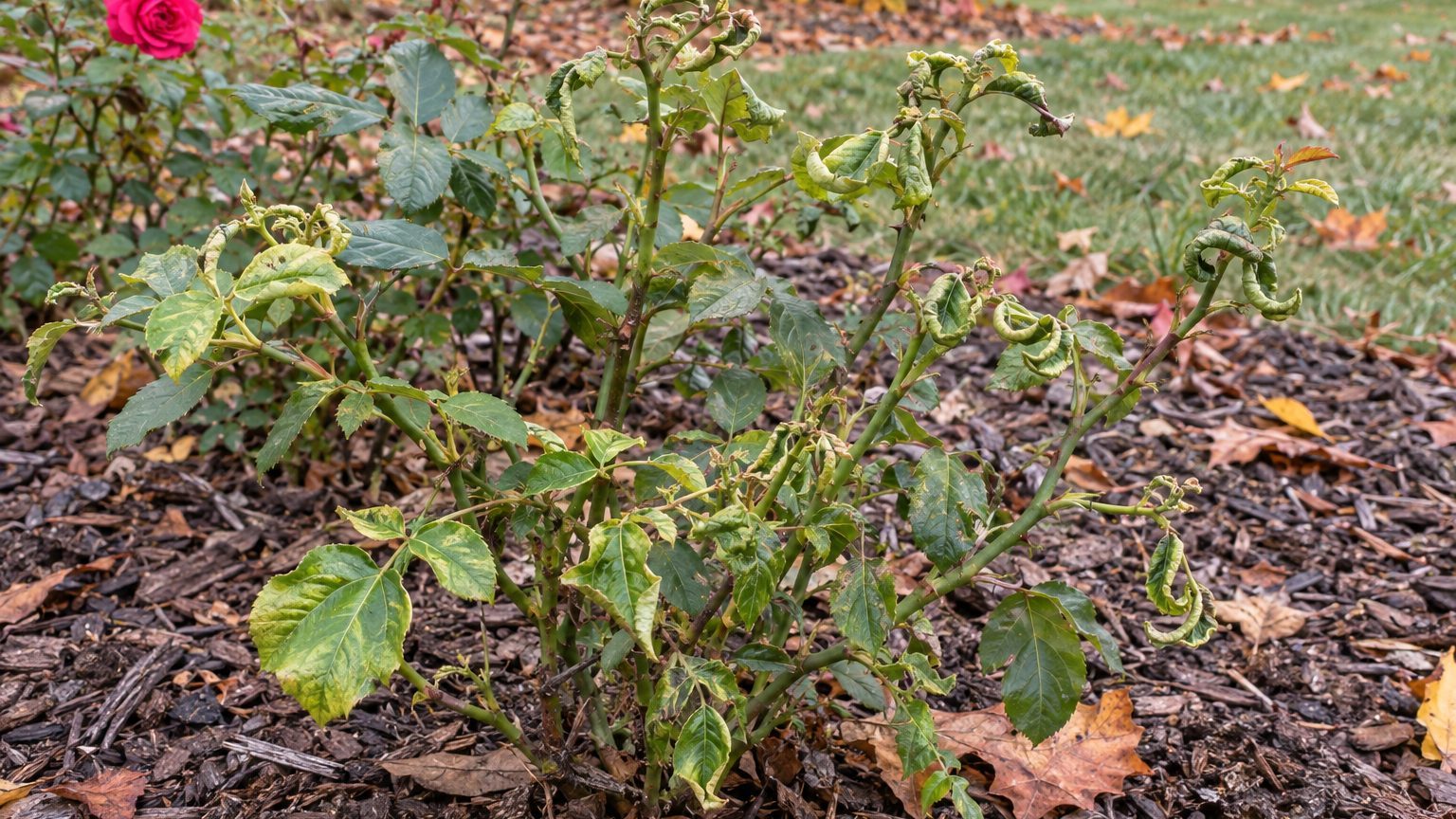
Curled, twisted leaves on a rose can point to powdery mildew, a fungus that coats and bends new growth, or to the rose leaf-curl mite, a tiny pest that can carry rose rosette virus. Telling them apart changes what you do next, because one can be managed and the other cannot be cured.
Rose Leaves Curling and Twisting: What You See

Start with the leaf itself, because the color and texture of the distortion separate the likely causes.
- Leaves are twisted or bent, and orange lesions show on them, which points away from a simple mildew problem.
- A white, powdery coating sits on the leaf surface while the leaf curls beneath it.
- Leaves feel leathery, wrinkled or distorted rather than smooth and supple.
- Twisting is often worst at the spot where the infection began, so one curved patch can sit beside a healthy leaf.
- New terminal growth turns red, and the stems thicken and feel more succulent than the older parts of the plant.
Check the newest growth at the tips of the canes first, since infected branches show reddened terminal growth.
From the almanac
Roses in your state
The dates on this page depend on where you live. Your state's page carries its frost dates, its USDA zones and the year laid out month by month.
Northeast
Southeast
- Alabama
- Arkansas
- Delaware
- Florida
- Georgia
- Kentucky
- Louisiana
- Maryland
- Mississippi
- North Carolina
- South Carolina
- Tennessee
- Virginia
- West Virginia
Midwest
Southwest
West
Pacific Northwest
Canada
Rose Leaves Curling and Twisting or Something Else?
Several problems bend rose foliage, and a single clue can mislead. Pair what you see with where it sits on the plant and a simple check, such as rubbing the leaf or comparing new growth with old.
Whatever the cause, look at the tips and undersides before you decide.
| Looks like | How to tell them apart |
|---|---|
| Powdery mildew | A white powdery film on the leaf surface that can also cover stems, petals and buds, with curling on the same leaves. |
| Rose rosette virus | Reddened terminal growth with stems thicker and more succulent than the rest of the plant, and twisted, distorted leaves on the same shoots. |
| Rust | Orange lesions on the leaves, with twisted or bent leaves around them. |
Leaves that look leathery or wrinkled without any powder, red tips or orange spots deserve a closer look at the stems before you name a cause.
What Causes Rose Leaves Curling and Twisting, and Where It Is Worst
Fungi such as powdery mildew leave a white coating on the leaf and make it curl. The rose leaf-curl mite is an extremely small eriophyid that feeds on sap from tender stems and leaf petioles, and it can carry rose rosette virus.
The mite alone does little harm while feeding. If it carries the virus, symptoms typically appear within one to three months, which is why a healthy-looking rose can turn distorted later in the season.
In Arizona, leaves may become twisted and distorted, so the symptom is not limited to humid climates.
How to Treat Rose Leaves Curling and Twisting
Work from the simplest check to the hardest decision, and confirm the cause before you cut or spray anything.
- Inspect the newest growth for red tips and thick, succulent stems, so that you can tell a virus from a fungus before acting.
- Look for a white powdery coating on leaves, stems, petals and buds, because powdery mildew can attack all of them.
- Remove and discard badly affected leaves, so that fungal material does not stay on the plant or in the bed.
- Clean up fallen and old leaves after pruning and throw them away, so that they do not carry trouble into the next season.
- Because there is no cure for rose rosette virus and no vaccine against plant viruses, confirm the diagnosis before making a final decision about the rose.
How to Prevent Rose Leaves Curling and Twisting Coming Back
Good gardening habits lessen the incidence of powdery mildew considerably, and most of them follow the calendar.
- At planting time, give bushes enough space so air and sunlight move through the plants.
- During the growing season, check new growth regularly for red tips, thickened stems and twisted leaves.
- After pruning, clean up old leaves from around the roses and discard them.
- Through the following season, keep the bed clear of debris so fungal material has fewer places to settle.
Prevention cannot guarantee safety from the virus, since it is not always preventable, but open spacing and tidy beds remove the easy openings for mildew.
Where This Comes From
Curling can come from powdery mildew or from rose leaf-curl mites associated with rose rosette virus.
Common Questions
Can You Save a Rose with Rose Rosette Virus?
No cure exists for the virus, and no vaccine protects plants against it. Confirm the diagnosis before making a final decision about the rose.
Does Powdery Mildew Only Affect the Leaves?
No. It can attack stems, leaves, petals and buds, so check all of them when you see curling.
Do Mites Cause Damage on Their Own?
The pest alone causes little damage while feeding. The concern is that it can carry the virus, and symptoms then begin to appear.