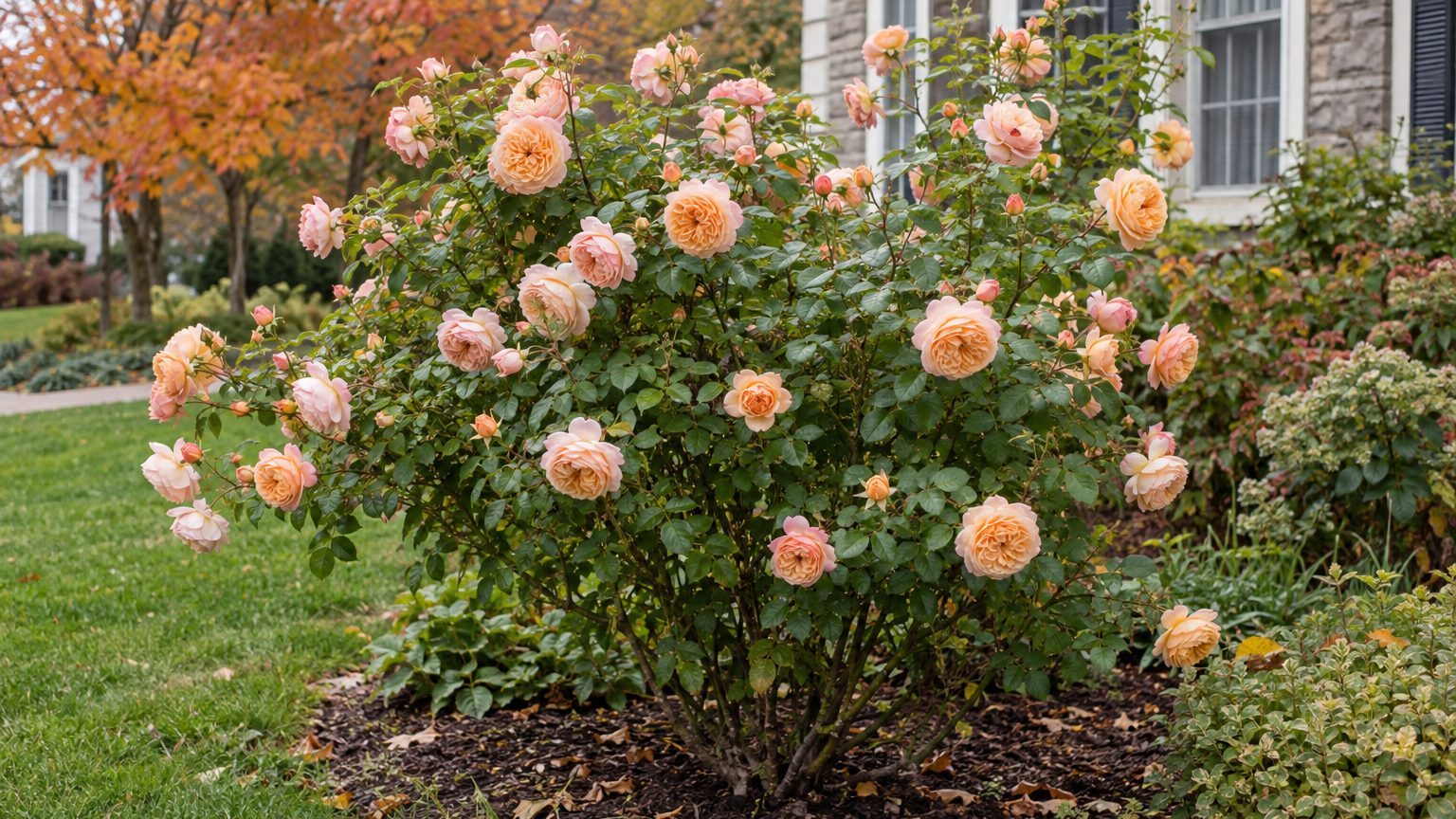
Wollerton Old Hall is a tall rose with apricot-and-yellow flowers and a strong fragrance. It is an English rose that can be trained up or left as a shrub.
What Is the Wollerton Old Hall Rose?
Wollerton Old Hall is a deciduous climber in the rose family, bred by David Austin of Great Britain and introduced in 2011. It can be grown as a climber against a support or kept as a large shrub, and it reaches 5-12 feet tall.
The flowers are solitary, fully double and rounded, 3–4 inches across, in a blend of apricot and yellow. Their fragrance is strong, and it counts among the most fragrant of the English roses.
Bloom begins in late spring or early summer. Because it is a good repeat bloomer, flowers return after the first flush, which makes it more than a one-season show.
From the almanac
Roses in your state
The dates on this page depend on where you live. Your state's page carries its frost dates, its USDA zones and the year laid out month by month.
Northeast
Southeast
- Alabama
- Arkansas
- Delaware
- Florida
- Georgia
- Kentucky
- Louisiana
- Maryland
- Mississippi
- North Carolina
- South Carolina
- Tennessee
- Virginia
- West Virginia
Midwest
Southwest
West
Pacific Northwest
Canada
Where Does the Wollerton Old Hall Rose Grow Best?
This rose is rated for USDA Plant Hardiness Zones 5a, 5b, 6a, 6b, 7a, 7b, 8a, 8b, 9a and 9b.
- Ohio River Valley and the Mid-Atlantic: Ohio, Pennsylvania and Virginia sit well inside the range, with winters cold enough to rest the plant and summers it can handle.
- Carolina Piedmont and the Southeast: North Carolina, Georgia and Tennessee fall in the middle to warmer zones, where the climber can be grown.
- Willamette Valley and Puget Sound: Oregon and Washington have mild, moist conditions that suit it, though good air movement matters more where mornings stay damp.
- Red River Valley and the northern Upper Midwest: Check with your local county extension office about whether this rose survives the winter there.
- Southern Florida and the hottest desert Southwest: Check with your local county extension office about whether this rose grows well there.
The state selector just below this section leads to the page for your state, where local timing is laid out.
How to Care for the Wollerton Old Hall Rose Through the Year
Spring Wake-Up

As buds swell and the first leaves open, check the canes for dead tips and loosen any ties that have tightened over winter. A climber that has been tied up since last year often needs its ties redone as the canes thicken.
Feed as growth starts and water at the base, not over the leaves, to keep the foliage dry.
Late Winter Pruning
Prune in late winter to control size and remove damaged or diseased canes.
Take out dead and weak wood first, then shorten the rest to fit the space. If you grow it as a climber, leave the strongest canes long and tie them down as close to horizontal as they bend.
First Flush

The apricot-and-yellow flowers open in late spring or early summer and reach 3–4 inches across.
Cut a few for the house. The fragrance fills a room.
Summer
Remove spent flowers by cutting back to a healthy leaf so the plant sends up more bloom. Water deeply at the base in dry spells, and keep mulch around the roots to hold moisture.
Watch the tallest canes, which can whip around in storms. Tie in new growth as it comes.
Autumn
Ease off feeding so the canes can harden before cold arrives. Rake up fallen leaves around the base, because old foliage that stays on the ground can carry problems into the next year.
Hold off on heavy cutting. Pruning belongs to late winter.
Winter
The plant drops its leaves and rests.
Use the quiet season to repair the trellis or wire before the new growth needs it.
Wollerton Old Hall Rose Diseases and Weak Points
Like most roses, this one does best with sun, airy spacing and watering at the soil rather than over the leaves. Dense, crowded canes hold moisture longer, which favors the leaf problems roses are known for.
Look for spots on the leaves that spread, paired with leaves yellowing and dropping from the lower canes, before treating anything. A single yellow leaf alone tells you little. Cutting out damaged or diseased canes in late winter, and clearing fallen leaves, keeps trouble from building.
The other weak point is size. A rose that tall will outgrow a small space unless it is pruned and tied each year.
Is the Wollerton Old Hall Rose Right for Your Yard?
It suits a gardener with a sunny wall, fence or arbor and a willingness to prune and tie each year. It is a poor fit for a tiny bed or a spot with no support nearby, and for anyone wanting a rose that needs no attention.
- Fence or arbor owners will find a tall, narrow plant that fills vertical space without spreading wide, best planted where its scent reaches a path or seat.
- Check the support before you buy the plant, then mark late winter on the calendar for the first pruning.
Common Questions
Can You Grow Wollerton Old Hall on a Trellis?
Yes. It grows as a climber, so a sturdy trellis, wall wires or an arbor works well. Tie the canes loosely as they grow so they do not rub the support.
Should You Deadhead Wollerton Old Hall?
Yes, cut spent blooms back to a healthy leaf. Because it repeats, removing old flowers encourages the next round instead of letting the plant put energy into seed.
Can You Grow Wollerton Old Hall in a Pot?
Its mature size can make container growing difficult.