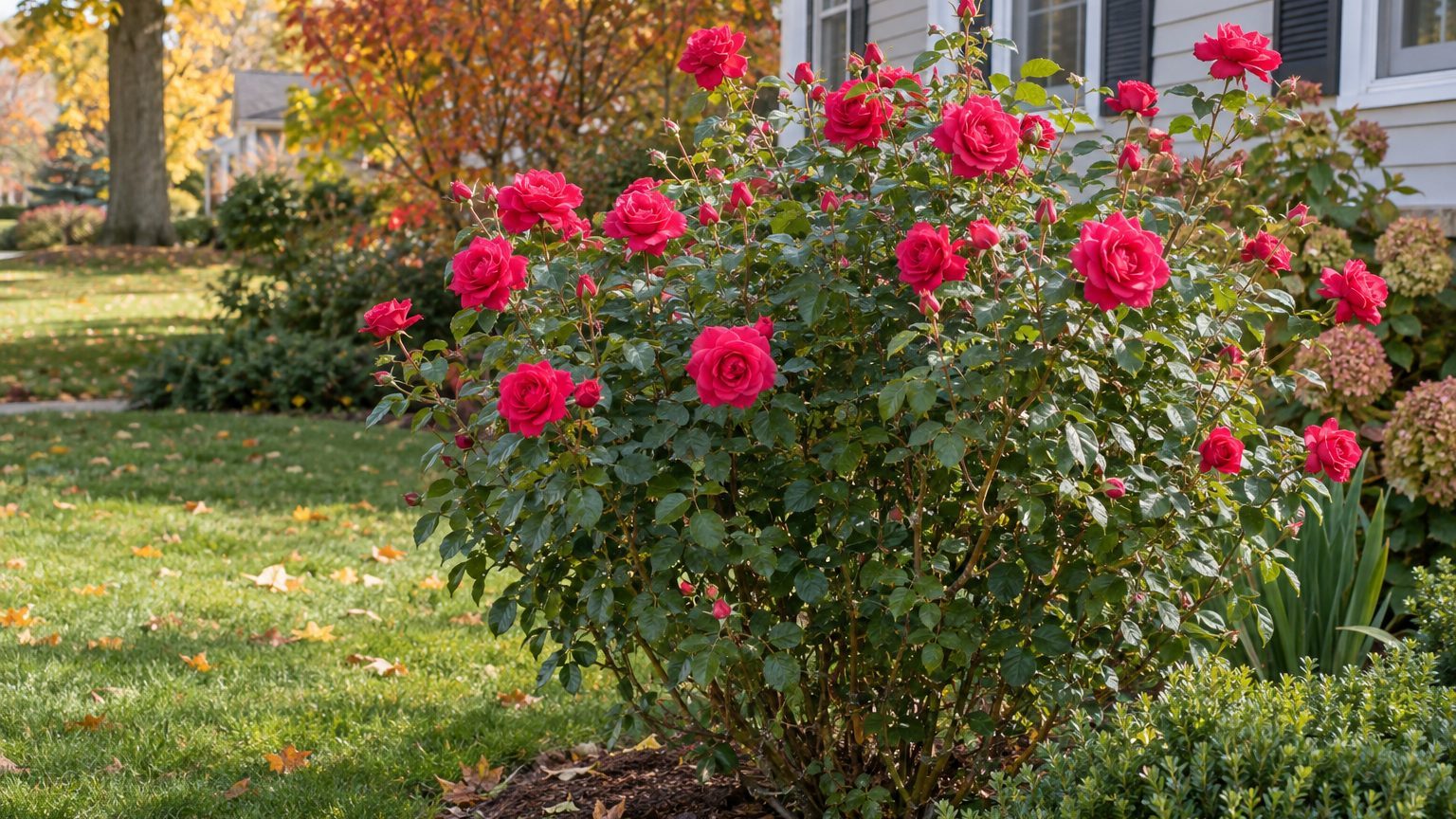
A bare-root rose goes into Illinois soil while it is still asleep, in the cool weeks of early spring, and a potted rose follows once the ground has warmed. Hybrid teas and their relatives want a cover of mulch for winter, while tougher shrub roses mostly shrug the cold off.
When to Plant Roses in Illinois

Bare-root roses go in first, then container roses, and the frost dates explain why. At the Chicago reference city, the last spring frost falls between April 11 and April 22, and a young rose with new leaves is tender to that kind of cold. Suburban and rural gardens often see frost later than that, so check your own county.
- In March and April, plant bare-root roses while they are still dormant, before any growth starts. May, June and July also work for bare-root plants if you missed the early window.
- From April through midsummer, container roses can go in, since they arrive with leaves and a root ball already established.
- In April, May, June and July, feed established roses after pruning, at first bloom and in mid-July.
- Through summer and early fall, let the plants harden off naturally, because the first fall frost at the reference city arrives between October 24 and November 3 and soft late growth is easily damaged.
- In November, once several killing freezes have passed, put on winter protection. December also works if the freezes come late.
Illinois spans USDA hardiness zones 5a to 7b, so a rose that sails through a southern winter may need a coat of mulch in the north. Dormant planting is the reason March and April lead the list: the roots settle in before the plant has leaves to support.
Illinois — the year and the numbers
- State
- Illinois
- USDA zones
- 5a-7b
- Last spring frost
- April 11 to April 22
- First fall frost
- October 24 to November 3
- Annual rain
- 38 in
- Lawn zone
- cool-season
- Source
- NOAA NCEI 1991-2020 Climate Normals, 32F freeze probabilities · Chicago
Which Roses Grow Best in Illinois?
Winter cold is the main test here. Many old garden roses are very tolerant of cold temperatures, while hybrid teas can suffer considerable damage without protection. Shrub roses such as Knock Out and the Explorer series perform well without extra cover.
Heat and humidity are real in an Illinois summer, so choose healthy, vigorous plants and give them room for air to move through the canes.
| Rose type | How it does in Illinois | Why |
|---|---|---|
| Hybrid teas | Need winter protection | Not reliably winter hardy and can take considerable damage in cold winters |
| Floribundas and grandifloras | Need winter protection | Not reliably winter hardy, much like hybrid teas |
| Shrub roses | Perform well without extra cover | Reliably winter hardy, as with Knock Out and the Explorer series |
| Old garden roses | Many tolerate cold well | Hardy, but most bloom once a year on last year’s wood |
Climbers vary. Some are not reliably hardy, so they may need protection too. Once-blooming roses, including old garden roses, ramblers and many climbers, flower on last year’s wood, so prune them right after they bloom, never in early spring. Miniatures and polyanthas are mixed: some are hardy and some are not.
When to Prune, Feed and Protect Roses in Illinois
Repeat-blooming roses are pruned in early spring, when the forsythia blooms and the winter protection is off. Feeding follows pruning and carries through midsummer. Detailed pruning cuts live on the Illinois pruning page.
Winter protection is a matter of patience. Wait for several killing freezes so the plants are truly dormant before you cover them.
| Task | Best months in Illinois | Why then |
|---|---|---|
| Pruning repeat-blooming roses | March, April (February also works) | Forsythia in bloom signals the start, and the winter protection is off |
| Feeding roses | April, May, June, July | After pruning, at first bloom, and again in mid-July |
| Putting on winter protection | November (December also works) | Several killing freezes have passed, mid-November on |
| Taking winter protection off | March, April | Between mid-March and mid-April, once the ground thaws |
Stop feeding in mid-August. Fertilizer after that point pushes soft, succulent growth that winter can easily damage. Hybrid teas, floribundas and grandifloras get the full winter treatment, while hardy shrub roses mostly need none.
How Rose Care Dates Change Across Illinois
Illinois runs a long way from north to south, and the season moves with it. Use the dates above as a starting point and nudge them to your location.
- Chicago and the northern counties: Spring arrives later and winter protection matters more, so lean toward the later end of the March and April planting window.
- Central Illinois: Expect dates close to the middle of each range, and watch the forsythia as your pruning signal.
- Southern Illinois: Spring warms sooner and winter bites less, so the early end of each window suits you, and fewer roses need heavy cover.
Lake Michigan can cool the shoreline in spring, which holds back growth near the water. Your own yard may differ from the reference city by a week or two, so watch the buds and the soil as well as the calendar.
Where to Get Rose Advice in Illinois
University of Illinois Extension publishes rose care and pruning guidance for the state, and its local offices can help with local questions.
- Your county extension office can look at a leaf or cane sample and help work out what is wrong, so bring a fresh one when you go.
- The same office can explain how to take a soil test, which is worth doing in early spring before you plant bare-root roses.
Common Questions
Can You Plant a Rose in July?
Yes, if it is a container rose, since those can go in from April through midsummer. Bare-root roses can also be planted in July, though March and April suit them better. Water a midsummer planting regularly while it settles.
Do Roses in Illinois Need Winter Protection?
Hybrid teas, floribundas and grandifloras do, and some climbers do as well. Hardy shrub roses, including the Knock Out and Explorer types, usually do not. Cover tender roses in November after several killing freezes, and remove the cover in March or April.
When Should You Stop Feeding Roses?
Stop by mid-August. Later feeding encourages soft new growth that cold can damage before it hardens. Feeding runs from April through July, so the last application is mid-July.