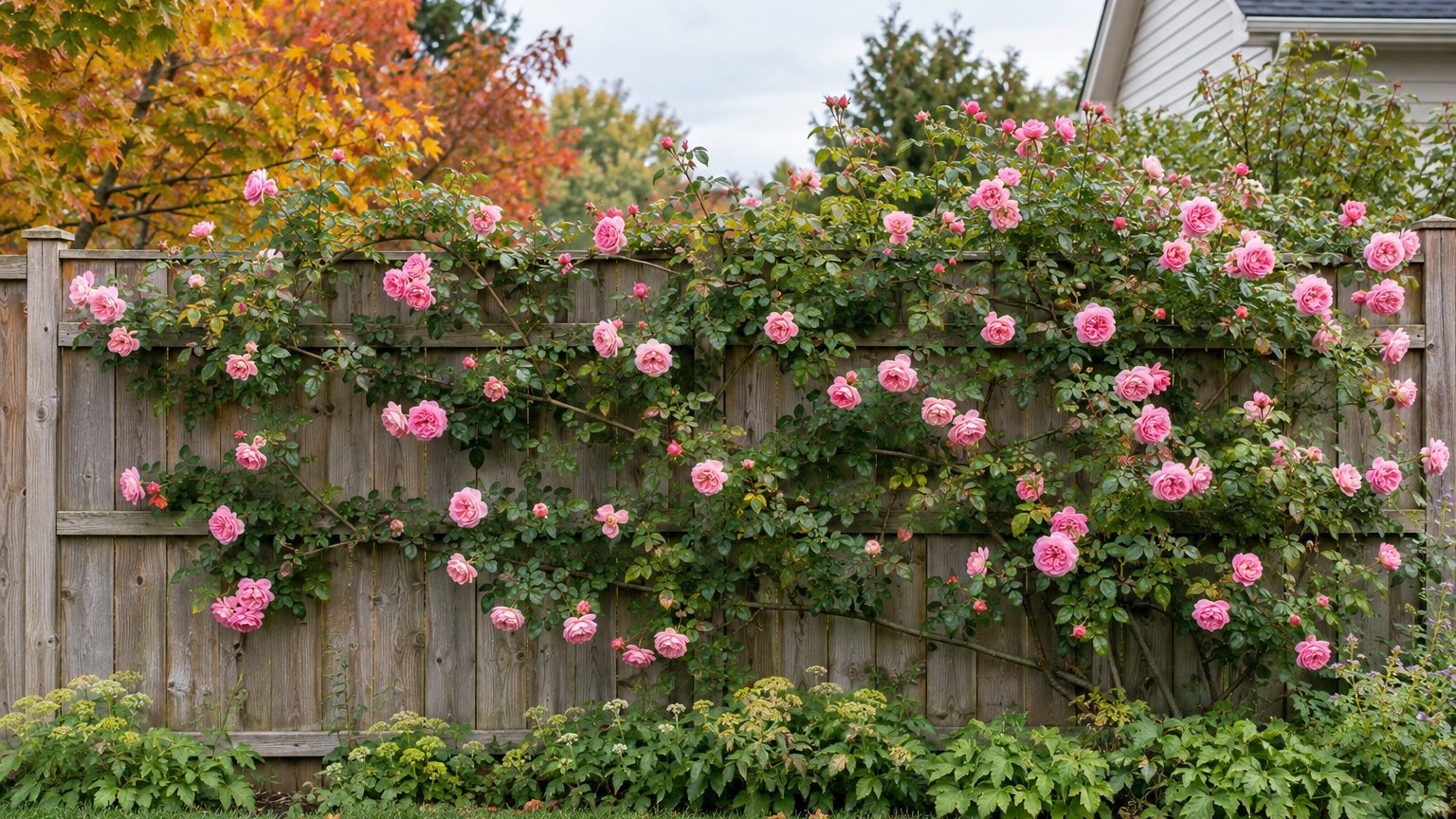
A climbing rose in full bloom, with canes arching over a fence or an arbor, looks effortless. The show depends on cuts made in the right season and canes tied where air can reach them. Climbers need far less cutting than a bush rose, and the timing depends on whether the plant flowers once or repeatedly. Bloom habit sets both the pruning and the training.
When Should You Prune a Climbing Rose?
Prune according to how the rose blooms. Once-blooming climbers and old-fashioned ramblers wait until after they flower, because they produce their best shoots on one-year-old wood. Repeat-blooming climbers are pruned in spring, as Kansas advice puts it.
Climate moves the dates more than it changes the rule. Spring arrives earlier in warm regions than in cold ones, and winter damage only shows once the buds start to move. In Illinois, pruning is often limited to removing that damaged wood.
The state selector just below this section leads to the page for your state.
From the almanac
Roses in your state
The dates on this page depend on where you live. Your state's page carries its frost dates, its USDA zones and the year laid out month by month.
Northeast
Southeast
- Alabama
- Arkansas
- Delaware
- Florida
- Georgia
- Kentucky
- Louisiana
- Maryland
- Mississippi
- North Carolina
- South Carolina
- Tennessee
- Virginia
- West Virginia
Midwest
Southwest
West
Pacific Northwest
Canada
How to Train and Prune a Climbing Rose

Training comes before pruning, since the cuts only make sense once the canes follow a frame.
- Set the rose about 12–18 inches from the wall, as Arizona advice suggests for modern roses, so air can move around the foliage.
- Tie each new cane loosely to the support with strips of stretchy material at 15-inch intervals, as Kansas advice describes, so the ties do not choke the cane as it thickens.
- Remove winter-damaged wood once the buds show which canes are alive, because in many cases in Illinois that is all the pruning a climber needs.
- Cut the upward-pointing shoots on a trained rose back to 2-3 buds each year, as Florida advice describes, so the flowers form close to the main canes.
- Remove shoots growing downward or away from the trellis completely, so the plant stays flat against its support and the framework stays easy to tie.
Keep the younger canes. In Indiana, canes 2-3 years old produce the most flowers and should be cut back to two or three healthy buds. Older, worn canes are the ones to reconsider when the plant gets crowded.
Pruning Climbers by Bloom Habit
Bloom habit decides where the flower buds sit, and that decides which wood you can safely cut. A cut at the wrong season removes the flowers before they open.
Climbers need cutting far less than other roses, so most of the work is tying and tidying. The table sorts the climbers by how they flower.
| Rose Type | What changes | Why it matters |
|---|---|---|
| Once-blooming climbers and ramblers | Prune only after they flower. | They produce their best shoots on one-year-old wood. |
| Repeat-blooming climbers | Prune in spring, as Kansas advice puts it. | Spring cuts shape the plant before the new growth that carries the next flowers. |
| Climbing roses in general | In New Mexico, laterals can be cut back to 8 or 10 buds. | They blossom on 1- and 2-year-old wood in New Mexico, so old and new wood both matter. |
| Climbers in general | In Oregon, they do not need to be cut back like other roses. | Most of the work is tying them to the support, since they do not attach naturally. |
Hybrid tea, shrub, old garden and rugosa roses each follow their own routines, so do not copy a bush rose cut onto a climber. For a climber, check first whether it flowers once or repeatedly, then cut by that habit. A young climber may also need a few seasons in the garden before any pruning is necessary, as Illinois advice notes.
Climbing Rose Mistakes to Avoid
Tying Canes Too Tight

Ties pulled snug leave no gap between cane and support, and air cannot circulate behind the canes. In Kansas the advice is to allow at least 4 to 6 inches of give. Check the ties as the canes thicken and loosen any that bite.
Pruning Once-Bloomers in Spring

A rambler or once-blooming climber carries its flowers on wood grown the year before. A spring trim cuts that wood away and costs you the season’s bloom. Wait until the flowers fade, then cut.
Leaving Side Shoots Long
Long laterals leave the plant shaggy, with fewer blooms along the main canes. In Illinois, reducing them to 3-6 inches stimulates flower production. Make those cuts once the main canes are tied in, so the framework shows clearly.
Climbing Roses in Your State
The sign that starts the work is on the plant. In Kansas, repeat-blooming climbers are pruned in spring. Once-bloomers wait until the flowers fade; winter-protection timing depends on local conditions.
- The Roses page for your state gives the months for pruning repeat-blooming climbers, so check it when buds start to swell.
- The same page gives the months for winter protection, so read it before the first hard freezes and gather the soil or mulch you need.
Common Questions
How Long Do Climbing Roses Grow?
Canes of climbing roses can reach 5 to more than 20 feet long, according to Iowa guidance. Among the cultivars described there, ‘William Baffin’ can reach a height of 8 to 10 feet. ‘Henry Kelsey’ has long, arching canes that can grow 7 to 9 feet long. Choose a support sized for the mature cane, not the young plant.
Can Climbing Roses Cling Without Ties?
No. In Oregon, the advice is that they do not attach naturally, so they must be tied to or trained through the support. A trellis or wire frame gives the canes something to follow, and the ties do the holding.
How Do You Protect Climbing Roses in Winter?
In cold climates, gardeners use different winter-protection methods. In Nebraska, one method is to take the canes off the trellis and bury them in a shallow trench, covered with 3-4 inches of soil. In New Hampshire, the advice is to mound 10”-12” of soil around the base of the plant. The method should match local winter conditions.