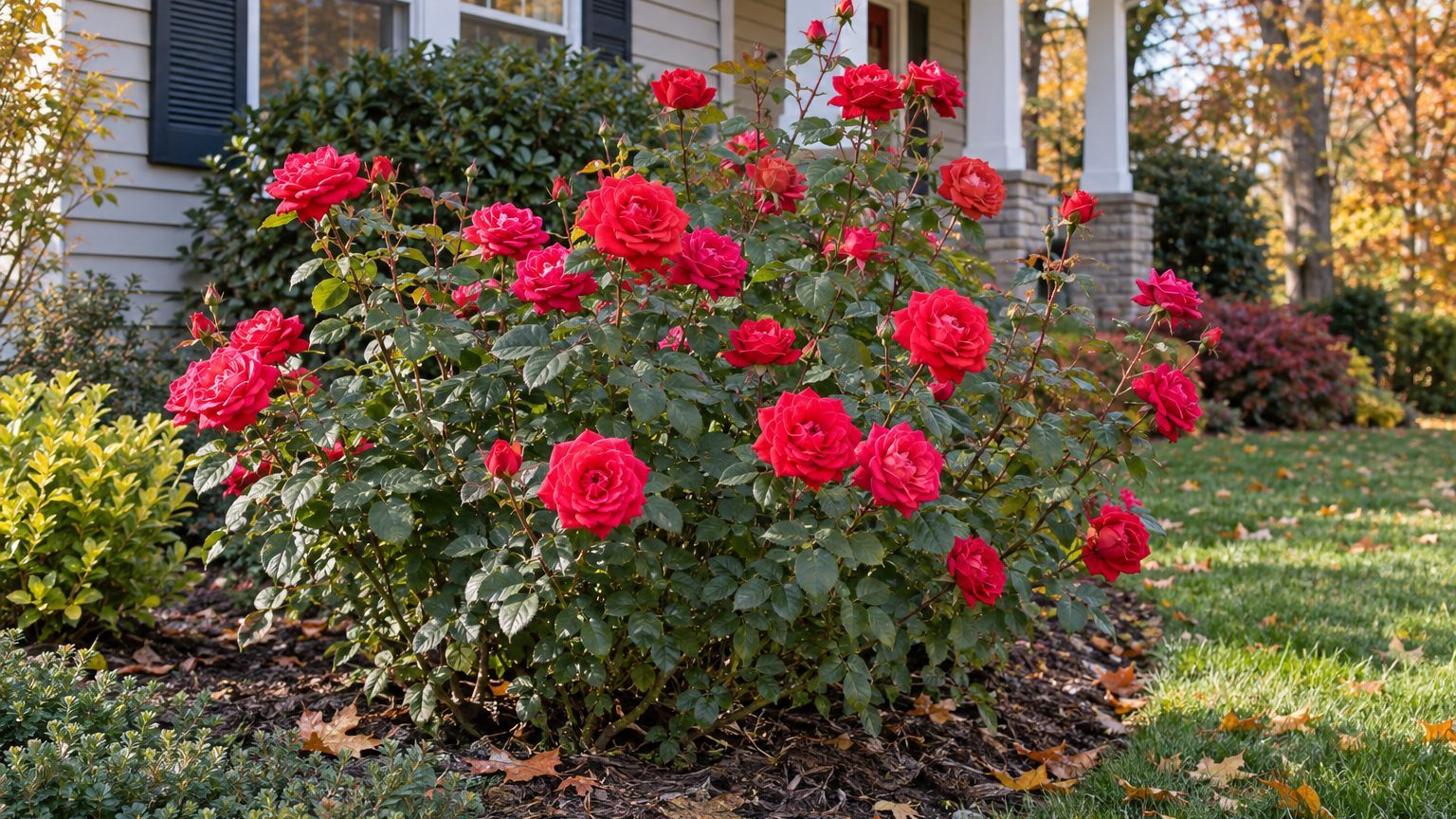
Bare-root roses go into Delaware soil while they are still dormant, with the buds bare and the weather cool. That early planting is what lets the roots settle before summer heat arrives.
When to Plant Roses in Delaware

Bare-root roses go in first, in March and April, with February as a fallback in a mild winter. Potted roses can go in later in spring. Delaware sits in USDA hardiness zone 7a-8a. At the reference station near Wilmington, the last spring frost falls between April 3 and April 14, which matters for young, leafed-out plants.
- In late winter, bare-root roses can go in if the ground is workable, because a dormant rose has no tender growth for a late freeze to damage.
- In March, bare-root planting hits its stride, and repeat-blooming roses are pruned as the buds begin to swell.
- In April, the last bare-root roses go in, and the first feeding follows once new leaves open.
- From May through August, roses are fed regularly while they push new growth and flower.
- Later in spring, potted roses can be planted, since they already carry leaves and roots and no longer depend on dormancy.
Fall brings the first frost, which at the same reference station arrives between October 26 and November 7. Suburban and rural yards usually freeze later in spring and earlier in fall than that airport figure, so check your own county before you set a planting date.
Delaware — the year and the numbers
- State
- Delaware
- USDA zones
- 7a-8a
- Last spring frost
- April 3 to April 14
- First fall frost
- October 26 to November 7
- Annual rain
- 45 in
- Lawn zone
- cool-season
- Source
- NOAA NCEI 1991-2020 Climate Normals, 32F freeze probabilities · Wilmington
Which Roses Grow Best in Delaware?
Delaware spans USDA hardiness zones 7a to 8a, so winters are mild enough for a wide range of roses. The real divide is between roses bred for toughness and those that need a little more attention through the cold months.
Extension guidance describes old garden roses as extremely tolerant of cold, while hybrid teas can take considerable damage in a hard winter.
| Rose type | How it does in Delaware | Why |
|---|---|---|
| Hybrid teas | Perform well with care, but are the type most likely to be hurt by cold | They suffer considerable damage in cold winters and need a heavy annual pruning in spring |
| Old garden roses | Reliable and forgiving | They are extremely tolerant of cold and do not need hard pruning, which can ruin their shape and cut flowering |
| Cold-hardy cultivars | Need little to no added winter protection | A cultivar bred for colder conditions may need little added protection in a milder garden |
Floribundas and modern shrub roses behave like hybrid teas, repeating bloom on new growth and taking their main pruning in spring. Climbers and ramblers fall mostly with the once-blooming group, so they are handled differently from the repeat bloomers.
When to Prune, Feed and Protect Roses in Delaware
Seasonal care sets the rhythm of the rose year, with a clear window for each task. Pruning and planting cluster in late winter and spring, while feeding runs through the growing season.
| Task | Best months in Delaware | Why then |
|---|---|---|
| Pruning repeat-blooming roses | March, and February or April can work too | Prune when the forsythia blooms and the buds swell, so cuts are made as growth restarts |
| Planting bare-root roses | March and April, with February as a fallback | The roses are dormant and the soil is cool and workable |
| Feeding roses | April through August, and March can work too | Feed from the first leaves, then stop with August so late growth can harden before winter |
Once-blooming roses flower once a year on last year’s wood, so they are pruned right after they bloom and never in early spring. Cutting them in March removes the very canes that carry the flowers. The page on when to prune roses in Delaware goes deeper on technique.
How Rose Care Dates Change Across Delaware
Delaware is a small state, so the shifts are modest, but they follow the landscape. Roses wake earlier where the air stays mild and later where nights run cold.
- Wilmington and northern New Castle County: Spring arrives a bit later and fall frost comes sooner than along the coast, so leaning toward the later part of each planting and pruning window makes sense.
- Dover and inland Kent and Sussex counties: Open farmland lets cold air settle on clear nights, so frost lingers later in spring and returns earlier in fall than airport readings suggest.
- The Atlantic coast around Lewes and Rehoboth Beach: The ocean and bay soften the cold, so roses tend to leaf out earlier here, and the early end of each window is the safer bet.
Watching the buds beats following the calendar, since they respond to the weather in your own yard.
Where to Get Rose Advice in Delaware
The state extension service answers rose questions for home gardeners across Delaware, and each county has its own office. It is the place to turn when a plant looks wrong or the soil is a mystery.
- The University of Delaware Cooperative Extension offers fact sheets and plant diagnosis for roses grown in Delaware yards.
- The New Castle, Kent and Sussex county offices can help with a soil test, and the winter before planting is a good time to ask.
- Before ordering bare-root roses for spring, send in a soil sample so any adjustments are ready when the planting window opens.
Common Questions
Can You Plant Potted Roses at the Same Time as Bare-Root Roses?
Potted roses can go in later than bare-root ones, because they already have leaves and an established root ball. Planting in the weeks after the last frost risk has passed protects the new growth.
Do Old Garden Roses Need Hard Pruning?
No. Extension guidance says old garden roses do not need the hard pruning that many modern roses get. Heavy cutting can ruin their graceful shape and sharply reduce flowering, so a light trim is plenty.
How Long Do Roses Keep Blooming Through the Year?
Repeat-blooming roses such as hybrid teas, grandiflora and floribunda flower almost continuously from early summer until frost. Once-blooming types give one flush a year, which is why varieties are worth matching to the show you want.