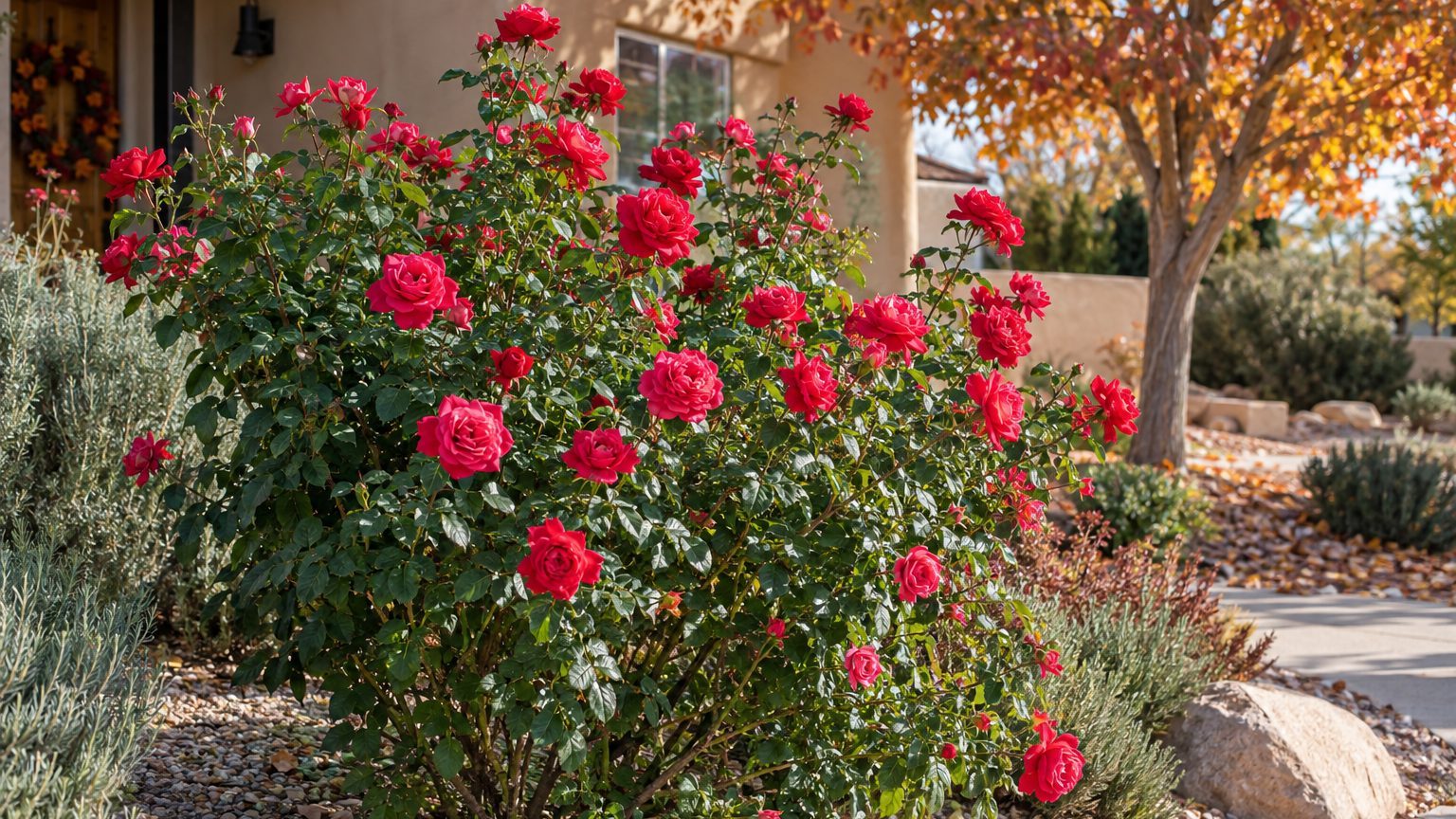
Bare-root roses go into New Mexico soil while they are still dormant, and by the time the first leaves unfurl the roots are already settling in. In New Mexico, bare-root planting and pruning meet in late winter, and feeding begins as spring growth starts.
When to Plant Roses in New Mexico

Bare-root roses go in first, in February or March, and potted roses can follow later once the weather settles. Local frost timing matters, so the dates below describe Albuquerque, the reference city. Gardens outside town usually see frost later in spring and sooner in fall.
- In February and March, plant bare-root roses while the bushes are dormant, because a rose set out then has the whole spring to root before top growth asks for water.
- In spring, the last frost in Albuquerque falls between March 31 and April 12, so a young potted rose with soft new shoots should wait until that risk has passed, or be covered on cold nights.
- Once the soil warms, potted roses can go in later than bare-root ones, as long as the plants are healthy and the roots are not crowded in the container.
- Through summer, roses already in the ground grow and bloom on a steady feeding schedule, and they need regular watering.
- In fall, the first frost in Albuquerque arrives between October 29 and November 9, after the feeding season has already closed.
Planting bare-root bushes in fall or early winter is a poor bet, since they usually die back more than those planted in late winter. Hardiness zones in New Mexico run from 4b to 9a on the USDA system, so check your own county before trusting any single date.
New Mexico — the year and the numbers
- State
- New Mexico
- USDA zones
- 4b-9a
- Last spring frost
- March 31 to April 12
- First fall frost
- October 29 to November 9
- Annual rain
- 9 in
- Lawn zone
- transition-season
- Source
- NOAA NCEI U.S. Climate Normals 1991-2020, 32F freeze probabilities · Albuquerque
Which Roses Grow Best in New Mexico?
Hybrid teas and floribundas are the roses grown most often in New Mexico, and the state’s gardeners also grow tea roses, hybrid perpetuals, polyanthas, miniatures and climbers. These include repeat-blooming roses as well as climbers that may flower only once on last year’s wood.
Repeat-blooming types flower on new growth, so they respond well to a hard late-winter pruning and steady feeding through the season.
| Rose type | How it does in New Mexico | Why |
|---|---|---|
| Hybrid tea | Grown most often in the state | Repeat blooms on new wood after a late-winter prune |
| Floribunda | Grown most often, alongside hybrid teas | Repeat blooms in clusters through the season |
| Climber | Popular in the state | Many bloom once a year, so prune right after flowering |
| Miniature | Popular in the state | Compact bushes suited to small beds and containers |
Tea roses, hybrid perpetuals and polyanthas also appear on the list of popular types for New Mexico. Old garden roses, ramblers and many climbers bloom once a year on last year’s wood, so they are pruned right after they flower, never in early spring.
When to Prune, Feed and Protect Roses in New Mexico
Pruning and planting share the same late-winter window, and feeding then carries through the whole growing season. Pruning has its own page for the details, so only the key dates appear here.
| Task | Best months in New Mexico | Why then |
|---|---|---|
| Pruning repeat-blooming roses | February, March | Cutting in late winter avoids cold injury that forces a harsher second pruning |
| Planting bare-root roses | February, March | Dormant bushes settle in before spring growth begins |
| Feeding roses | March through September | Repeat bloomers keep growing and need regular feeding |
Feeding starts just before the buds break in early spring and repeats every four to six weeks. Nitrogen continues at four-week intervals until three weeks before the average first fall frost, so late feeding does not push tender growth right before cold.
How Rose Care Dates Change Across New Mexico
Elevation does most of the sorting in New Mexico, and the dates for Albuquerque slide earlier or later depending on where you garden.
- Rio Grande Valley: Around Albuquerque, the dates in this article apply most directly, and the valley floor warms earlier in spring than the mountains above it.
- Northern mountains and Santa Fe: Higher ground sees frost later in spring and sooner in fall, so potted roses wait longer and feeding ends earlier.
- Southern desert around Las Cruces: Warmer ground means spring comes sooner, and the season for planting and feeding opens earlier than in the north.
Because the state spans zones 4b to 9a, a local frost check matters more than any statewide date.
Where to Get Rose Advice in New Mexico
New Mexico State University’s Cooperative Extension Service publishes rose guidance written for the state, and every county has an office that answers local questions.
- Call your county extension office to bring in a sick leaf or cane for diagnosis, and ask about a soil test before planting.
- Use the state extension’s rose publication to check pruning and feeding questions against New Mexico conditions.
- In February or March, call ahead to confirm local frost timing before you set out dormant bushes.
Common Questions
Can You Plant a Potted Rose in Summer in New Mexico?
Potted roses can go in later than bare-root ones, as long as the plant is healthy. A summer planting needs regular watering while the roots establish, because the plant is already in full growth.
Should You Cover Roses for Winter in New Mexico?
Winter protection needs vary across New Mexico, so ask your county extension office what your roses need. For pruning, wait until late winter, since cutting in fall or early winter can invite cold injury.
When Should You Stop Feeding Roses in New Mexico?
Stop three weeks before the average first fall frost. Feeding later pushes soft new growth that cold can damage, so the last nitrogen goes on while the plant still has time to harden.