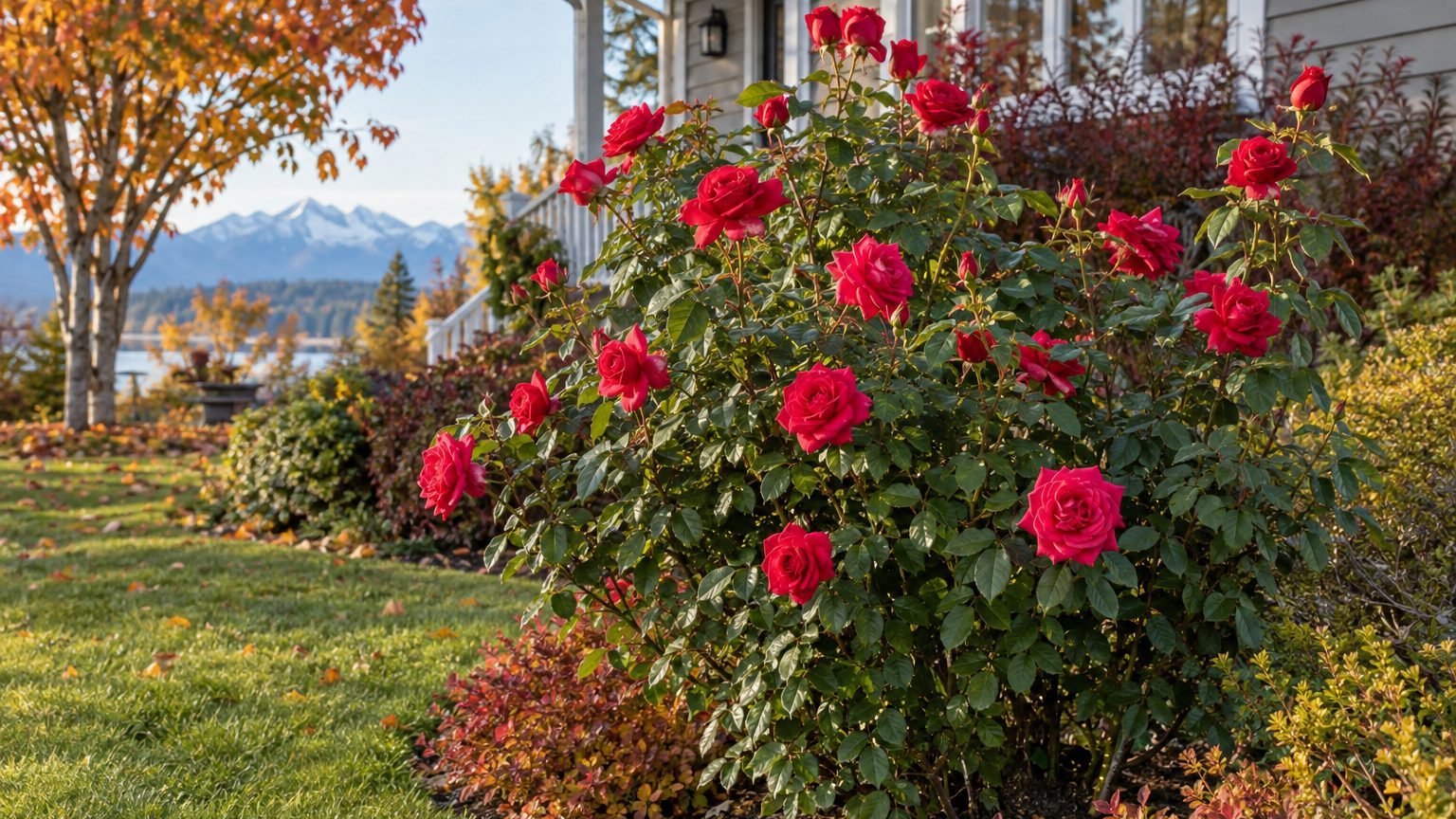
Snow cover lingers on Alaska rose beds well into spring, and that slow thaw sets the pace for everything you do with a rose here. Bare-root roses go in during June, feeding and pruning follow the same short season, and the choice of rose matters as much as the date.
When to Plant Roses in Alaska

Bare-root roses go in first, in June, and potted roses can follow later in the season. The planting window is tight, so the order of the year matters.
At Anchorage, the last spring frost falls between May 3 and May 12, which is why a young rose has to wait for June. The first fall frost arrives between September 22 and October 1, so a newly planted rose needs the whole summer to settle before it is tested. Across the state, the USDA hardiness zone system runs from 1a to 8a, so Anchorage dates do not carry over to every yard.
A bare-root rose is planted dormant, which is why it goes in as soon as the soil is workable and frost danger has eased. Here is how a rose’s year unfolds:
- In May, repeat-blooming roses are pruned once active growth starts, and feeding begins.
- In June, bare-root roses go into the ground, and potted roses can be planted a little later.
- Through July, regular feeding keeps the long summer days working for the plant.
- By August 1, feeding stops so new growth can harden before frost.
- After the first hard freezes, tender roses are covered for winter.
Long summer daylight makes up for part of the short season, so a rose planted on time can still put on good growth before fall.
Alaska — the year and the numbers
- State
- Alaska
- USDA zones
- 1a-8a
- Last spring frost
- May 3 to May 12
- First fall frost
- September 22 to October 1
- Annual rain
- 16 in
- Lawn zone
- cool-season
- Source
- NOAA NCEI 1991-2020 Climate Normals, 32F freeze probabilities · Anchorage
Which Roses Grow Best in Alaska?
Winter decides which roses last here. Tender roses do not reliably overwinter across Alaska, and that group includes hybrid teas, grandifloras, floribundas and miniatures. Hardy types do far better.
Alaska varies from place to place in which varieties thrive, but the rugosa rose (Rosa rugosa) is hardy in most locations. That makes it a safe starting point.
| Rose type | How it does in Alaska | Why |
|---|---|---|
| Hybrid teas | Not reliable over winter | Tender, need winter protection |
| Floribundas and grandifloras | Not reliable over winter | Tender, need winter protection |
| Miniature roses | Not reliable over winter | Tender across the state |
| Rugosa roses | Hardy in most locations | Tough enough for Alaska winters |
| Hardy shrub roses (Explorer series) | Perform well without extra protection | Bred for cold winters |
Once-blooming old garden roses, ramblers and climbers flower on last year’s wood. Prune them right after they flower, never in early spring.
When to Prune, Feed and Protect Roses in Alaska
The gardening year here is compressed into a few months, so each job has a narrow window. Pruning waits for growth, and feeding stops before fall.
Ask your local University of Alaska Fairbanks Cooperative Extension office for advice suited to your area.
| Task | When to do it in Alaska | Why then |
|---|---|---|
| Prune repeat-blooming roses | May | Wait for active growth, since snow cover lasts into spring |
| Plant bare-root roses | June | Safe from late frost, with the whole summer ahead |
| Feed roses | May, June, July | Plants use nutrients while shoots are growing |
| Stop feeding | By August 1 | Fertilizer stops four to six weeks before a hard frost is expected |
Alaska advice for feeding calls for a soluble fertilizer once a week during those months. Tender roses such as hybrid teas, floribundas and grandifloras need winter protection, which goes on after the first hard freezes. Hardy shrub roses such as the Explorer series skip it.
How Rose Care Dates Change Across Alaska
Rose timing changes sharply from the coast to the Interior.
- Anchorage: One of the mildest inhabited parts of Alaska, so the season for planting and feeding runs longer here than in the north.
- Fairbanks and the Interior: Snow cover lasts into spring, so pruning waits for growth and planting holds off until June. The growing season is far shorter than at Anchorage.
- Northern Alaska: The season is shorter still, so cold-hardy roses make more sense there.
A yard on a sheltered, sunny slope may warm sooner than one in a low, shaded pocket, even within the same town.
Where to Get Rose Advice in Alaska
Local advice matters in a state where conditions change so much between towns. A rose that thrives in a sheltered yard can struggle elsewhere nearby.
- The University of Alaska Fairbanks Cooperative Extension Service publishes rose guides, so check it before choosing varieties.
- A local extension office can help diagnose a struggling rose or arrange a soil test, ideally before spring planting.
Common Questions
Can You Plant Roses in Alaska in Fall?
The calendar points to June for planting bare-root roses, not fall. A young rose fears frost, and there is little time for new roots to settle before cold arrives.
What Does the Hardiness Zone Tell You About Roses in Alaska?
The USDA system rests on a single measure, the average coldest temperature of the year. It says nothing about snow cover, summer warmth or how short the season is, so it only gets you partway toward picking a rose.
Does Long Summer Daylight Help Roses in Alaska?
Yes. Long daylight partly makes up for the short frost-free season. Roses planted on time and fed regularly can put on strong growth before fall.