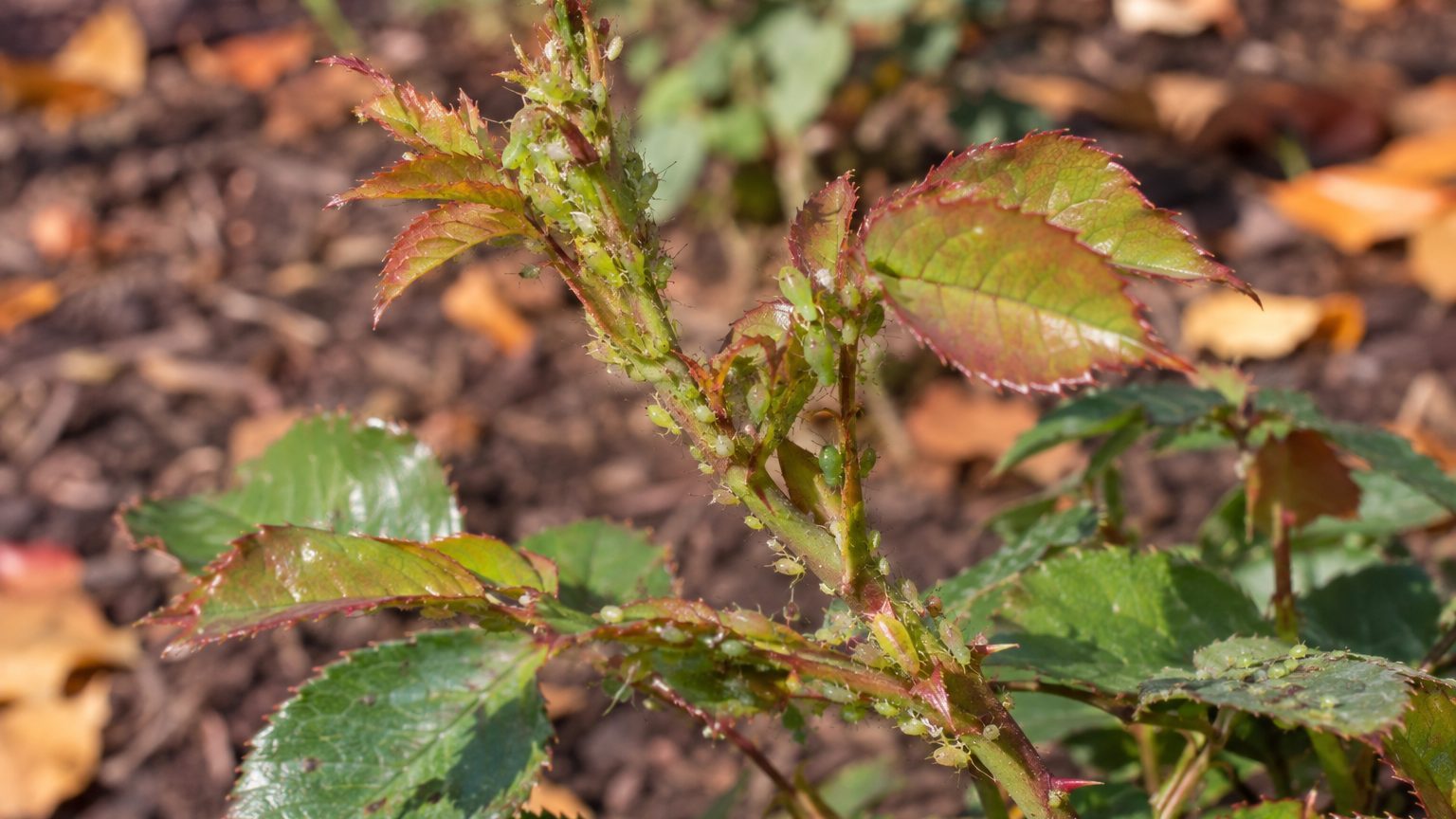
Sticky, curled new growth and tight clusters of tiny insects on rose buds are classic signs of aphids. Those insects are aphids, and the fix is usually simple and gentle. A strong rinse and help from insects that prey on aphids can keep a small infestation in check.
Aphids: What You See

Start with the clusters themselves, because the insects give themselves away before any damage does.
- Soft-bodied insects packed tightly along buds and shoot tips, each only about ⅛ inch long in the case of the rose aphid.
- Colonies tucked on the underside of leaves and on young, tender growth, where the sap is easiest to reach.
- A shiny, sticky film on leaves and nearby surfaces, which is the honeydew the insects excrete as they feed.
- Curled leaves and twisted buds or branch tips, the distortion that comes from sap being drained.
- Pale cast skins left on the leaves, which in Georgia can be the only hint that aphids were there.
- Blackened streaks on leaves where sooty mold has settled on the honeydew.
In South Carolina, aphids can turn up at any point from spring to fall, and winged adults appear when a colony gets crowded and leave to start new ones.
From the almanac
Roses in your state
The dates on this page depend on where you live. Your state's page carries its frost dates, its USDA zones and the year laid out month by month.
Northeast
Southeast
- Alabama
- Arkansas
- Delaware
- Florida
- Georgia
- Kentucky
- Louisiana
- Maryland
- Mississippi
- North Carolina
- South Carolina
- Tennessee
- Virginia
- West Virginia
Midwest
Southwest
West
Pacific Northwest
Canada
Aphids or Something Else?
Some of what you see on a rose is aphid fallout rather than the insect. A dark coating or white flecks can send you after the wrong problem, so pair what you see with where it sits and what is around it.
| Looks like | How to tell them apart |
|---|---|
| Black, sooty film on leaves | Sooty mold grows on honeydew, so the leaves feel sticky and the film sits below clusters of aphids on new growth. |
| White flecks scattered on leaves | Cast skins are left behind as aphids grow, so they gather near colonies, often beside sticky honeydew. |
Aphids on roses are not always the rose aphid either. The potato aphid and the cotton aphid also feed on roses, so the insects on your canes may be a different species from the one in the pictures.
What Causes Aphids, and Where It Is Worst
Aphids reproduce quickly and run through multiple generations in a year, and they favor rapidly growing tissue such as buds and shoots. A flush of soft new growth on a rose is exactly the meal they look for. Roses also share the yard with other hosts, including zinnias and coreopsis, so colonies can move in from nearby plantings.
Natural enemies usually keep aphids at levels you never notice, and tiny parasitic wasps do a lot of that work. Trouble starts when those helpers fall behind and numbers jump. Ants make it worse, because in Georgia they are drawn to the honeydew and tend to nurture the aphids.
Aphids are common rose pests, but their timing varies by place. Timing varies by place. In South Carolina, populations can appear from spring to fall. In California, a naturally occurring fungal disease may control aphids when conditions are wet or humid.
How to Treat Aphids
Begin with the gentlest step and move up only if the colonies keep growing.
- Inspect the shoot tips, buds and leaf undersides, so that you know whether you have a few insects or a crowd, since a low population does little damage to a rose bush.
- Rinse the plant with a strong stream of water, which knocks the aphids off and washes away some of the honeydew.
- Leave the natural enemies alone, because the parasitic wasps and other predators are doing steady work that you want to keep.
- Look along the canes for ants, since in Georgia they may tend aphid colonies.
- Reach for insecticidal soap if the colonies rebuild, as it is among the alternatives to plain water.
- Before using any insecticide, check that it is approved where you live and suitable for roses.
In California, the convergent lady beetle is sold at nurseries for release against aphids, though it may give only limited control even when released properly. Sooty mold grows on the honeydew and blackens leaves.
How to Prevent Aphids Coming Back
Prevention is mostly about timing your attention to the way roses grow through the season.
- Check tender shoots and buds as soon as new growth appears, since young, succulent growth is where aphids settle first.
- When you feed the roses, choose a slow-release or low-nitrogen formula, because high nitrogen levels in the plant encourage aphids to reproduce.
- Through the growing season, look under the leaves regularly, as aphids can arrive from spring to fall in South Carolina.
- Ants may be attracted to the honeydew, and since they tend to nurture the aphids, this creates an additional nuisance.
Heavy feeding can lower both the quantity and the quality of the flowers, so catching the first colonies protects the blooms as well as the leaves.
Where This Comes From
This guidance reflects conditions described for Georgia, South Carolina and California. Check local guidance for treatments and timing suited to your roses.
Common Questions
Will Aphids Kill a Rose Bush?
A low population does little harm, but aphids reproduce rapidly and can quickly reach damaging numbers. Severe infestations damage leaves and flowers, and feeding can make leaves drop, which weakens the plant.
Can Aphids Spread Disease to Other Plants?
Some aphids can spread plant viruses as they move from plant to plant. Their honeydew also feeds sooty mold, which blackens leaves.
What Else in the Yard Do Aphids Feed On?
Besides roses, landscape hosts include zinnias, coreopsis and many other ornamentals, along with vegetables, shrubs, fruit trees and shade trees. A colony on a neighboring plant is worth checking when your roses keep getting reinfested.