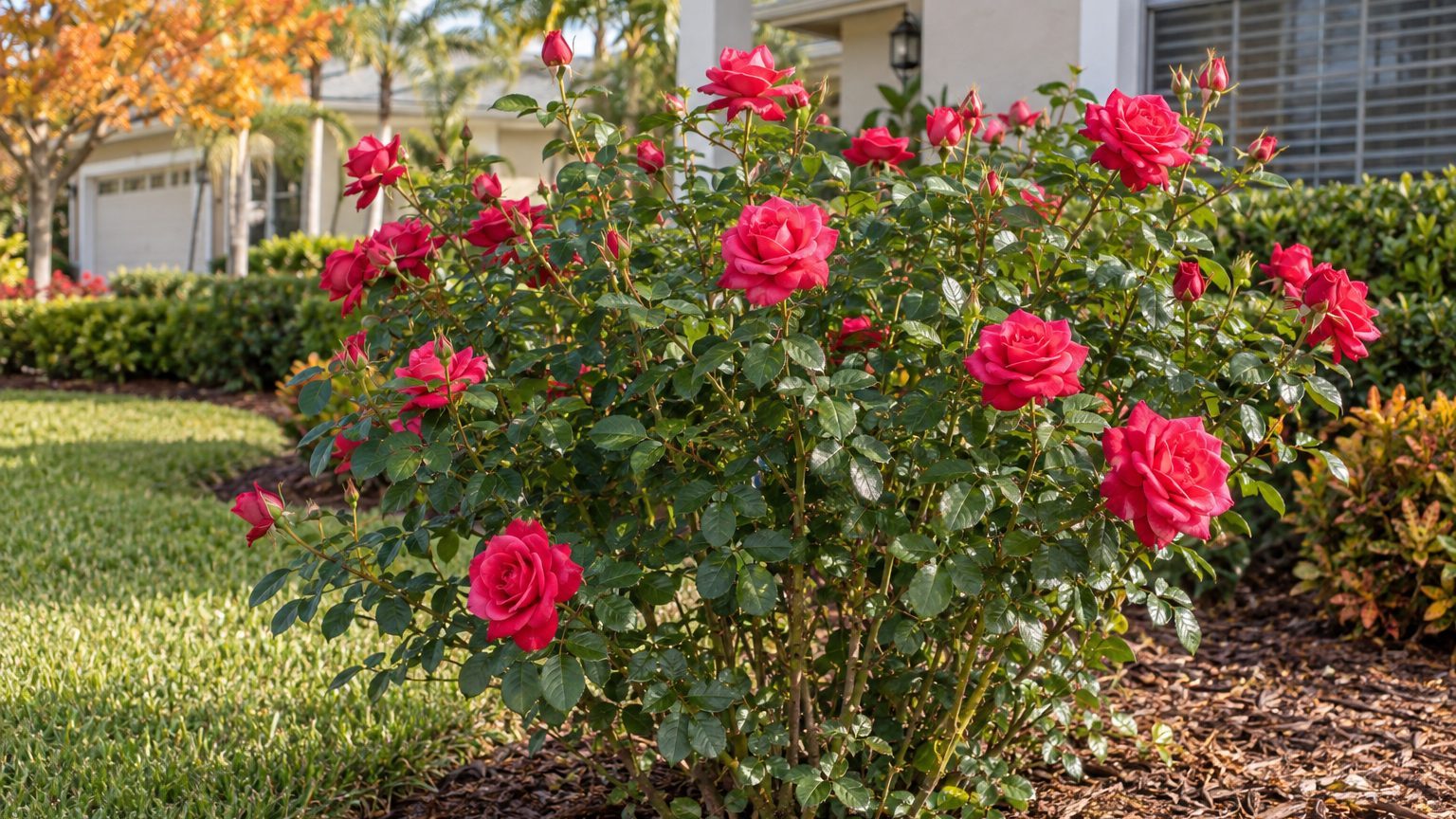
Bare-root roses go into Florida soil while they sleep in winter, while potted roses can be planted year-round except in North Florida. Roses came from Asia and struggle with Florida’s heat and humidity, so timing and variety matter here.
When to Plant Roses in Florida

In Jacksonville, the last spring freeze falls between February 16 and March 7, and the first fall freeze between November 26 and December 13. Those bounds shape the rose year, because a young plant fears frost while a bare-root rose goes in dormant. Central and South Florida are effectively frost-free, so their calendar runs differently.
- In December and January, plant dormant bare-root roses, which settle in while the weather is mild and the plant is asleep.
- In February and March, bare-root planting can still be done, though the plants wake up soon and roots have less time to establish.
- Through the year, potted roses can go in almost any month, except in north Florida, where early spring is the better choice.
- In North and Central Florida, start feeding in mid-February as new growth gets under way; in South Florida, feed year-round.
- Through summer, protect roses from the extreme heat and humidity they are not used to.
North Florida gardeners should hold potted roses until early spring so a late freeze cannot catch tender new growth.
Florida — the year and the numbers
- State
- Florida
- USDA zones
- 8b-11b
- Last spring frost
- February 16 to March 7
- First fall frost
- November 26 to December 13
- Annual rain
- 53 in
- Lawn zone
- warm-season
- Source
- NOAA NCEI 1991-2020 Climate Normals, 32F freeze probabilities · Jacksonville
Which Roses Grow Best in Florida?
Roses that shrug off heat, humidity and fungal disease do well here. Modern roses, and hybrid teas especially, are more prone to disease and count as high-maintenance in Florida, needing more attention to disease control, feeding and watering.
The old garden and landscape roses named below fit the climate better. Any grafted rose should sit on Fortuniana rootstock.
| Rose type | How it does in Florida | Why |
|---|---|---|
| Hybrid teas | Demanding, high maintenance | More prone to disease, with greater need for feeding and irrigation |
| Old garden roses | Examples include ‘Louis Philippe’, ‘Mutabilis’ and ‘Mrs. B.R. Cant’ | Better suited to local heat and humidity |
| Landscape shrub roses | Examples include Knock-Out and Drift roses | Newer selections that cope with Florida conditions |
Once-blooming roses, such as many old garden roses and ramblers, flower on last year’s wood, so prune them right after they bloom, never in early spring.
When to Prune, Feed and Protect Roses in Florida
Pruning, feeding and planting each have their own months here. Prune repeat-blooming roses in the cool season, feed regularly through the growing months with a rose fertilizer that includes micronutrients, and protect the plants from extreme summer heat and humidity.
The dedicated pruning page for Florida goes deeper on technique, so only the key dates appear here.
| Task | When to do it in Florida | Why then |
|---|---|---|
| Prune hybrid teas, floribundas and modern shrub roses | February in North and Central Florida (January or March can also work); December in South Florida | Major pruning belongs in the cool season, before new growth takes off; South Florida may need pruning again later in the year |
| Plant bare-root roses | December and January (it can also be done in February or March) | The plants are dormant and settle in before growth starts |
| Feed roses | February through November in North and Central Florida; year-round in South Florida | Monthly feeding from mid-February to mid-November supports steady growth and bloom |
South Florida follows its own pattern: hybrid teas, grandifloras and floribundas are pruned in December and sometimes a second time in the year, and feeding continues year-round. North and Central Florida prune in February; March can also work.
How Rose Care Dates Change Across Florida
Florida stretches across a wide climate gradient, and the rose calendar moves with it.
- North Florida (Jacksonville and the Panhandle side): Freezes still happen here, so potted roses are better planted in early spring and pruning belongs in February, though March can also work.
- Central Florida (the Orlando area): Frost is rare, so the main growing season runs through winter, and summer heat becomes the hard part for the plant.
- South Florida (the Miami area): Pruning moves earlier, to December, and monthly feeding continues all year.
The farther south you garden, the more the rose year turns upside down, with winter as the productive season and summer as the stress.
Where to Get Rose Advice in Florida
Local help matters here because conditions shift so much from the Panhandle to the Keys.
- The UF/IFAS Extension network offers growing guides for roses, and the winter planting season is a good time to read them.
- Your county extension office can help identify problems such as black spot, and it is worth a visit when leaves yellow and drop in humid weather.
- If you plan a soil test, arrange it before planting, ahead of the December and January bare-root window.
Common Questions
Can You Plant Roses in Florida in Summer?
Potted roses can be planted year-round except in north Florida, but summer heat and humidity stress them, so shade and regular watering matter while they establish.
Why Do Hybrid Teas Struggle in Florida?
Hybrid teas are more susceptible to disease and need more attention to disease control, fertilization and irrigation than tougher shrub roses or old garden roses.
Do Roses Need Winter Protection in Florida?
In north Florida, freezes can still hit young growth, so early spring planting for potted roses helps. Central and South Florida are effectively frost-free, so heat protection in summer matters more.