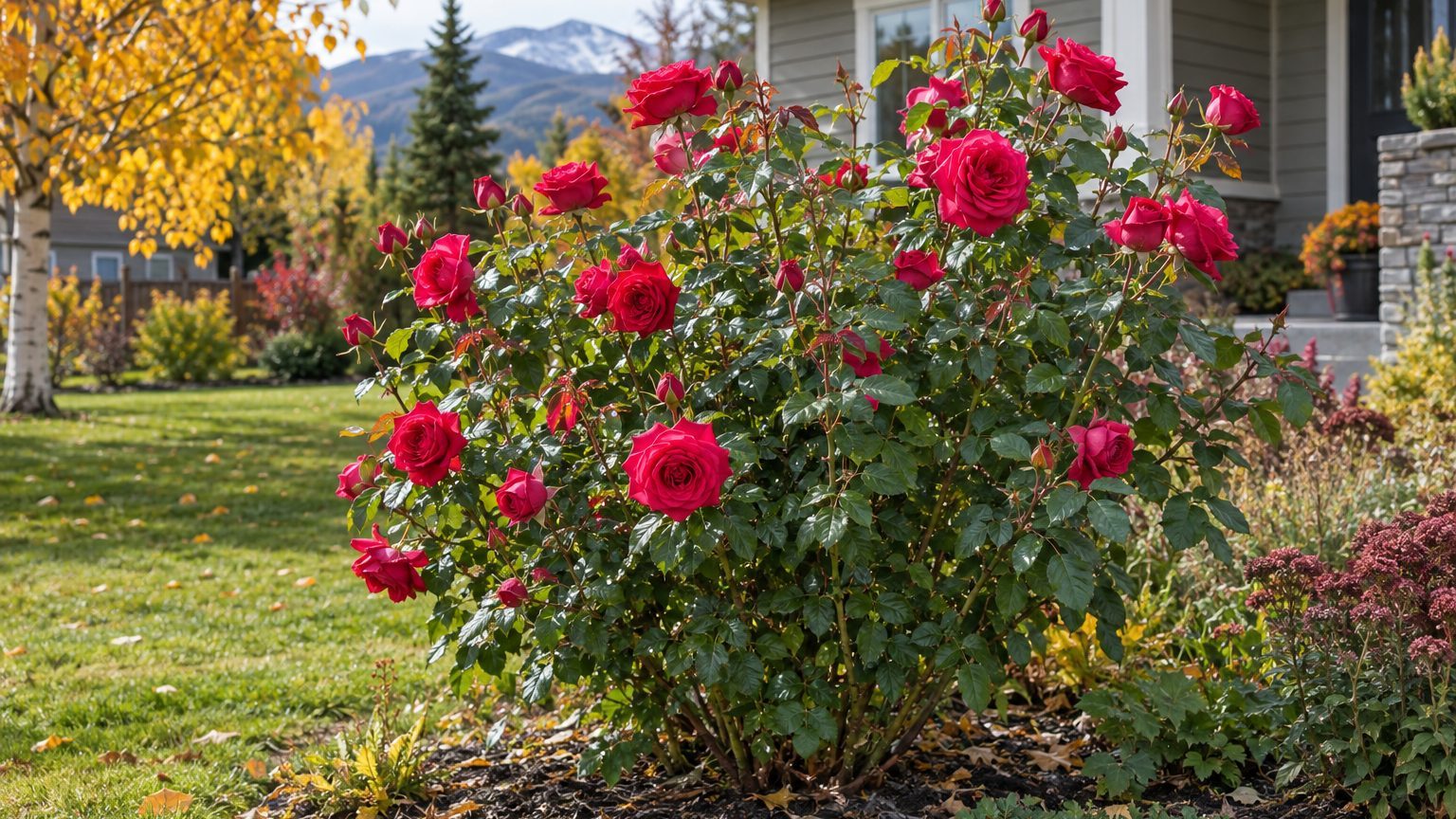
A rose in the Yukon spends the first warm weeks of summer waking up slowly, with canes still bare while the snow fades from the shady side of the house. Planting here follows a short season, and the choice of rose matters as much as the date.
When to Plant Roses in Yukon

Bare-root roses go in first, in June, while they are still dormant, and potted roses can follow later in the season. The dates here follow the nearest comparable climate, since no local rose timing exists for the territory, so confirm local timing with a garden centre, a rose society or a territorial gardening group.
- In late winter and early spring, the canes stay under snow, and a young rose at this stage only needs to be left alone until growth shows.
- In May, repeat-blooming roses are pruned once active growth starts, and feeding begins for roses already in the ground.
- In June, bare-root roses are planted while still dormant, and in Whitehorse the last spring frost falls on average around June 5 (a midpoint, so in one year out of two the frost comes later).
- From June into July, potted roses can go in, and feeding continues through July so new growth has time to firm up.
- By August 1, feeding stops, because in Whitehorse the first fall frost arrives on average around August 25 (again a midpoint, with northern and upland spots running weeks behind) and soft new growth would not survive it.
- In fall, after the first hard freezes, tender roses are covered for winter.
The territory sits in Canadian hardiness zone 1b at Whitehorse, a Canadian system that does not convert to a USDA zone. A growing season this short means a young rose can lose its first shoots to a late frost, so a cold night after planting calls for a cover. A bare-root rose planted dormant puts its energy into roots before leaves, which is why June suits it.
Yukon — the year and the numbers
- State
- Yukon
- Hardiness zones
- 1b
- Last spring frost
- June 5
- First fall frost
- August 25
- Annual rain
- 10 in
- Lawn zone
- cool-season
- Source
- Environment and Climate Change Canada — Canadian Climate Normals 1981-2010, station WHITEHORSE A · Whitehorse
Which Roses Grow Best in Yukon?
Winter decides the answer. Tender roses need winter protection in Yukon’s cold winters; this group includes hybrid teas, grandifloras, floribundas and miniature roses. Hardy shrub roses and rugosas cope far better with long cold and a short summer.
Heat is rarely the problem here, so the choice comes down to cold tolerance and how much work you want in fall.
| Rose type | How it does in Yukon | Why |
|---|---|---|
| Rugosa | Cold-hardy, with local performance varying by variety | Rosa rugosa takes cold well, though the best varieties differ from place to place |
| Hardy shrub (Explorer series) | Performs well without extra protection | Bred for cold winters |
| Hybrid tea | Does not reliably overwinter | Tender canes need winter protection |
| Floribunda and grandiflora | Does not reliably overwinter | Tender, and they need protection in cold winters |
Miniature roses share the tender reputation. Once-blooming roses, including old garden roses, ramblers and many climbers, flower on last year’s wood, so prune them right after flowering, never in early spring.
When to Prune, Feed and Protect Roses in Yukon
Pruning in spring, feeding through early summer, and covering tender roses in fall set the rhythm of the year. Wait until active growth appears before pruning.
| Task | Best months in Yukon | Why then |
|---|---|---|
| Pruning repeat-blooming roses | May | Active growth shows what is alive, and snow cover lasts into spring |
| Planting bare-root roses | June | Dormant roots settle in as the soil warms, and potted roses can go in later |
| Feeding roses | May, June, July | Feeding stops by August 1 so growth can harden before frost |
Feed roses from May through July, then stop by August 1. Winter protection of tender roses comes after the first hard freezes, and the covering comes off in spring once the hardest cold has passed. Hybrid teas, floribundas and grandifloras need that cover, while hardy shrub roses usually do without. The details of pruning have their own page.
How Rose Care Dates Change Across Yukon
Timing varies with elevation and with distance from the warmer valley floors, so treat the dates above as a rough starting point.
- Whitehorse: the dates here follow the Whitehorse area, where frost risk ends in early June and returns in late August.
- Northern spots like this run later in spring and earlier in fall, so planting can slip later than the dates above.
- Upland yards: higher ground around the territory stays colder, so frost lingers longer and a rose needs more cover.
Shelter from wind and a south-facing wall can create a warmer spot for a rose.
Where to Get Rose Advice in Yukon
Canada has no county extension offices, so advice comes from Agriculture and Agri-Food Canada, local garden centres and gardening groups across the territory.
- Garden centres can tell you which hardy roses they stock and when bare-root plants arrive.
- Rose societies and territorial gardening groups share what has survived local winters, and spring is the time to ask.
Common Questions
Can You Plant a Rose in July in Yukon?
A potted rose can go in after June, as long as it gets regular water. Bare-root roses are a June job, because they need to be planted dormant.
Do Roses Need Winter Protection in Yukon?
Tender roses do, and the covering goes on after the first hard freezes. Rugosas and hardy shrub roses generally manage without.
Why Is My Rose Cane Brown After Winter?
Check the color inside the cane and wait for new shoots to appear. Brown, dry wood with no buds swelling is dead, while green inside and buds breaking means it is still alive.