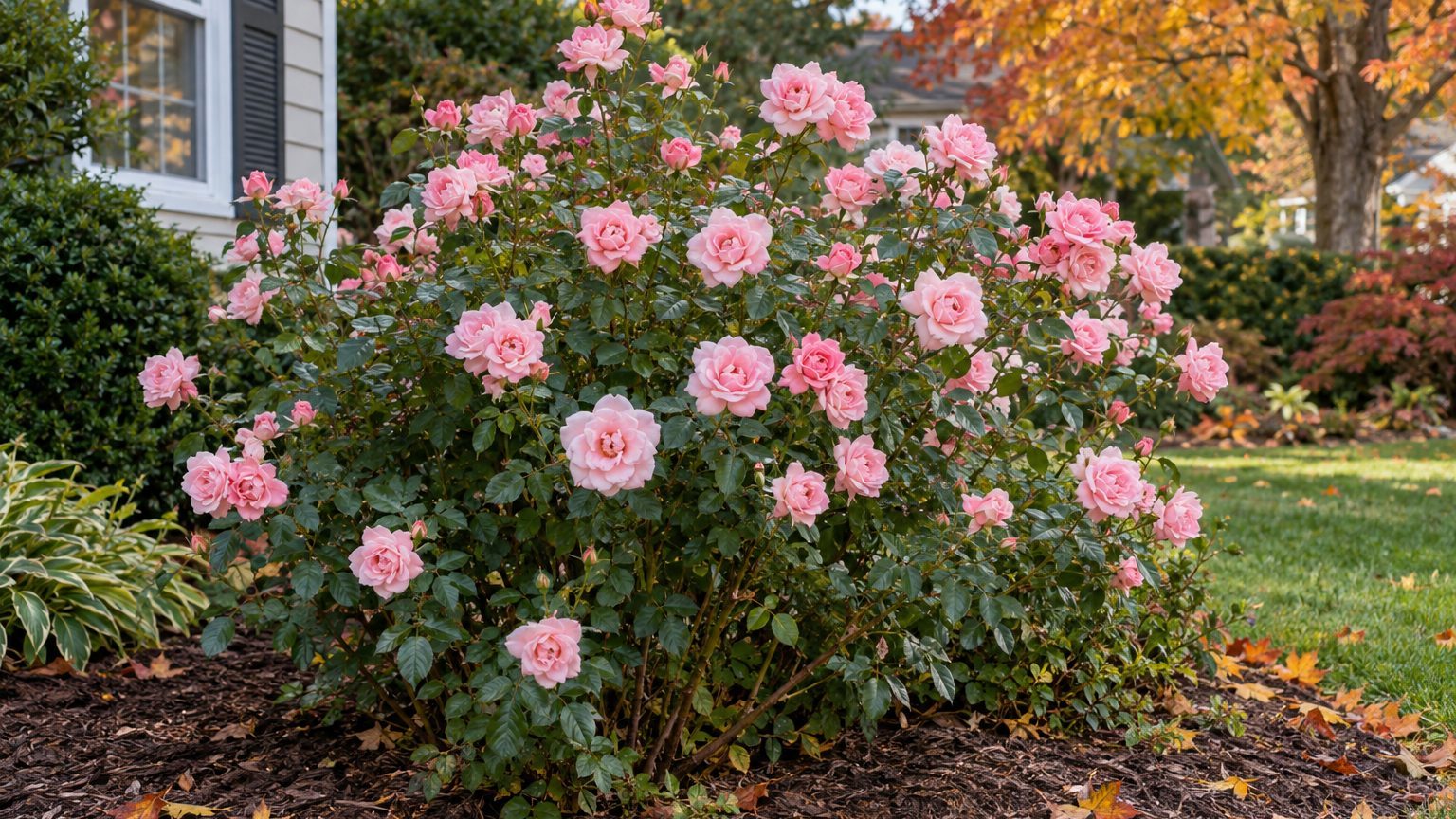
A rose with flat, ruffled pink blooms and dark maroon stamens catches the eye from across a front yard, and that is usually how gardeners meet Dainty Bess. Dainty Bess is a compact, upright shrub with repeat blooms through fall.
What Is the Dainty Bess Rose?
Dainty Bess is a hybrid tea shrub in the rose family. Its flowers are single, with five flat petals and ruffled edges, and they open in clusters.
The color runs from light pink to salmon-pink, set off by maroon stamens and a mild spicy fragrance. Each bloom spreads 3-4 inches across.
The plant itself is upright and vigorous. It reaches 3-4 feet tall and stays narrow, at 2-3 feet wide, so it fits a border without crowding its neighbors.
From the almanac
Roses in your state
The dates on this page depend on where you live. Your state's page carries its frost dates, its USDA zones and the year laid out month by month.
Northeast
Southeast
- Alabama
- Arkansas
- Delaware
- Florida
- Georgia
- Kentucky
- Louisiana
- Maryland
- Mississippi
- North Carolina
- South Carolina
- Tennessee
- Virginia
- West Virginia
Midwest
Southwest
West
Pacific Northwest
Canada
Where Does the Dainty Bess Rose Grow Best?
Dainty Bess is rated for USDA zones 5a, 5b, 6a, 6b, 7a, 7b, 8a, 8b and 9a.
- Upper Midwest: At the cold edge of its listed range, compare your USDA zone with the cultivar’s rating before planting. Plant in a sheltered spot there and expect to protect it from late frosts.
- Piedmont and Mid-Atlantic: Give the shrub full sun and amended, well-drained garden soil. Protect new growth from late frost.
- Gulf Coast: Compare your USDA zone with the cultivar’s listed range before planting.
- Pacific Northwest and Northern California: Give the shrub full sun and amended, well-drained garden soil.
The state selector shown just below this section leads to the page for your own state, with the months that apply where you garden.
How to Care for the Dainty Bess Rose Through the Year
Waking Up

New growth needs protection from late frost. When a cold night is forecast after the buds swell, drape a frost cloth or an old sheet over the shrub in the evening and remove it the next morning.
Pruning
Prune in late winter. Cut out dead and diseased canes back to healthy green wood, and clear the cuttings from the bed so any disease on them does not stay near the plant.
Bloom

Dainty Bess is a good repeat bloomer, nearly continuously in bloom through fall. Remove dead and diseased canes in late winter. It simply sets the stage for the next flush.
Summer
Give the shrub full sun, since shade weakens bloom and keeps leaves damp for longer. Water at the base of the plant, not over the leaves, because black spot, rust and powdery mildew all take hold on wet foliage.
Fall
The flowers keep coming well into fall, so there is no need to rush a cleanup. Rake fallen leaves from under the shrub once they drop, because spotted leaves left in the bed can carry disease into the next season.
Winter
Leave the canes standing through the cold, since the pruning is saved for late winter. Keep frost protection handy when new growth starts.
Dainty Bess Rose Diseases and Weak Points
Watch for black spot, rust and powdery mildew on this rose. Check the plant regularly for signs of black spot, rust and powdery mildew.
Cold is the other weak point, particularly a freeze that follows early warmth.
| Threat | How Dainty Bess handles it |
|---|---|
| Black spot | Watch for it on the leaves |
| Rust | Watch for it on the leaves |
| Powdery mildew | Watch for it on the leaves and new growth |
| Late frost | Needs protection once growth starts |
Good air movement and morning sun help leaves dry quickly. Give the shrub room from its neighbors, and remove any leaf that looks spotted or dusty before it spreads.
Is the Dainty Bess Rose Right for Your Yard?
Dainty Bess suits a sunny bed where a compact shrub is welcome. It asks for steady attention to leaf health and an eye on late frosts, so it fits a gardener who walks the yard often.
- It works well in a sunny border or foundation bed, where its size leaves room for companions.
- It is a poor match for shade or for a spot where you cannot cover the plant on a frosty night.
- Open your state page from the selector to see the months for pruning and frost protection where you live.
Common Questions
Where Did the Dainty Bess Rose Come From?
It was bred in the United Kingdom by Wm. E.B. Archer & Daughter in 1925 and released in 1927.
What Soil Does Dainty Bess Rose Like?
Amended, well-drained garden soil in full sun. Choose amended, well-drained garden soil.
Is Dainty Bess a Climbing Rose?
No. It is an upright shrub that stays within a few feet of the ground, so it needs no trellis or support.