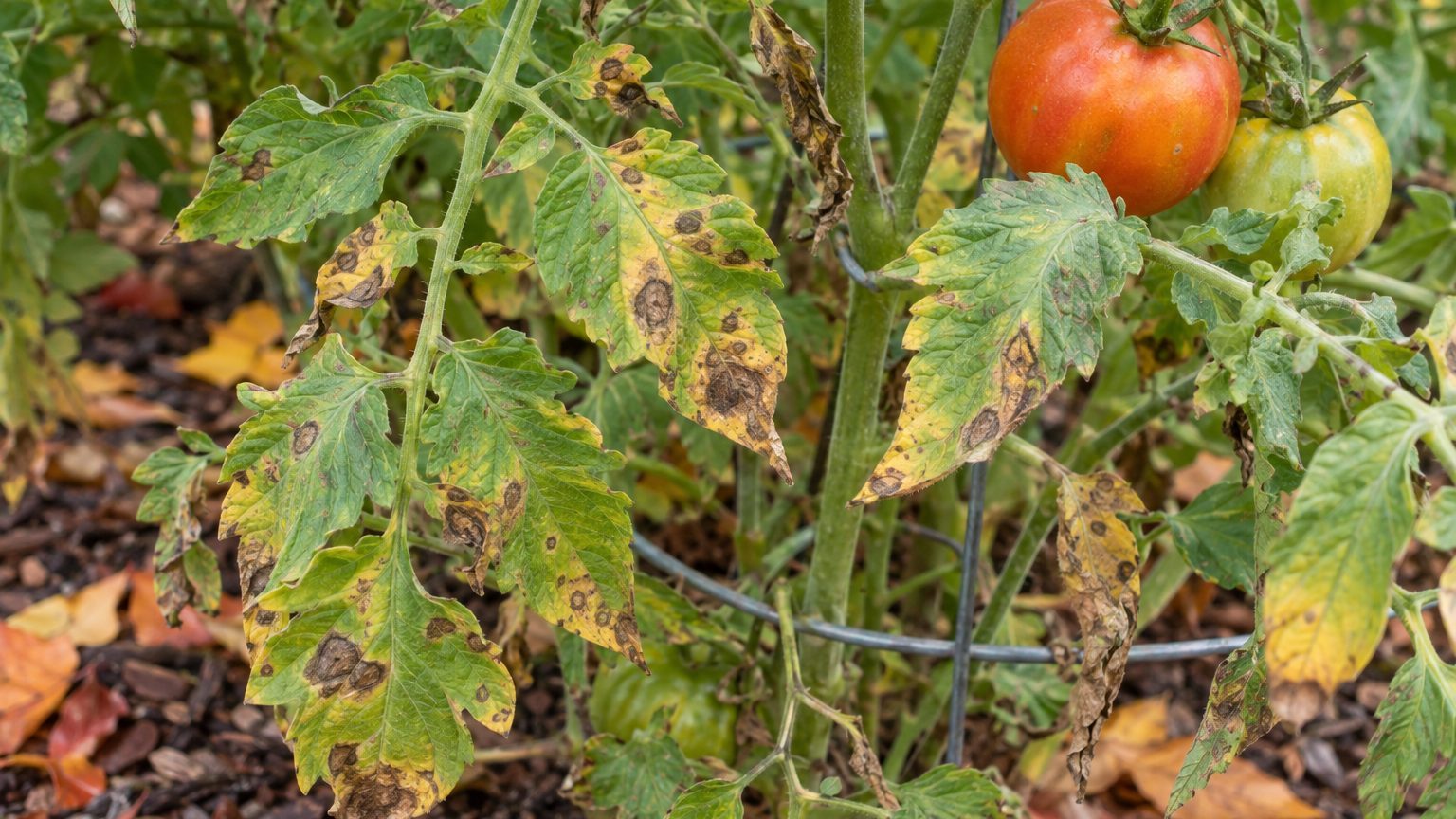
Brown spots with ringed centers on the lowest tomato leaves, usually once the plants are growing well and the weather turns warm and wet, point to a fungal disease that returns to many gardens year after year. The fungus lives over in garden debris, so cleanup and watering habits matter as much as anything you spray.
Early Blight: What You See

The disease announces itself on the oldest foliage first, near the soil, and works upward from there.
- Brown spots on the lowest, oldest leaves show concentric rings inside them, like a target, when you look closely.
- Young spots are small, less than 1/16 inch across, and each one is ringed by a yellow zone.
- Spots also appear on stems, where they are roughly circular and brown.
- As spots enlarge they can join together and kill whole leaves.
- Fruit can be infected too, and plants stripped of leaves leave fruit open to sunscald.
In warm, rainy weather the damage spreads fast enough to cost you yield and fruit quality.
From the almanac
Tomatoes in your state
The dates on this page depend on where you live. Your state's page carries its frost dates, its USDA zones and the year laid out month by month.
Northeast
Southeast
- Alabama
- Arkansas
- Delaware
- Florida
- Georgia
- Kentucky
- Louisiana
- Maryland
- Mississippi
- North Carolina
- South Carolina
- Tennessee
- Virginia
- West Virginia
Midwest
Southwest
West
Pacific Northwest
Canada
Early Blight or Something Else?
Several leaf problems put brown spots on tomatoes, and a single clue rarely settles it. Pair what the spot looks like with where it starts on the plant before you decide.
Ringed, target-like centers on the lowest leaves, with a yellow halo, fit early blight. A spot without rings, or one that begins high on the plant, needs a second look.
| Looks like | How to tell them apart |
|---|---|
| Other leaf spot diseases | Spots stay plain brown with no concentric rings inside, whereas early blight spots show target-like rings on the oldest leaves first. |
| Sunscald on fruit | Pale, bleached patches appear on fruit exposed after leaves are lost, but early blight shows ringed brown spots on the leaves and stems of the same plant. |
Yellowing of old leaves can also come from plain age or watering trouble. If those leaves lack brown ringed spots, early blight is not the cause.
What Causes Early Blight, and Where It Is Worst
A fungus called Alternaria solani causes early blight. It is present worldwide wherever tomatoes grow and is found throughout the United States, so no region is spared.
The fungus survives on infected debris in the soil, on seed, and on volunteer tomato plants. It also lives on related plants such as Irish potato, eggplant and black nightshade. Spores reach tomatoes by wind or splashing rain, and in Pennsylvania this happens in spring.
The fungus needs a wet surface to germinate and grow. Low leaves that drip with morning dew give it ideal conditions, which is why warm, damp summers, and plantings with foliage touching the soil, suffer most.
How to Treat Early Blight
Once spots appear you cannot reverse them, but you can slow the spread by working in this order.
- Pick off the lowest spotted leaves and bag them, so that spores are not splashed from them onto healthy foliage.
- Clear fallen leaves from the soil beneath the plant, because the fungus survives in crop debris.
- Pull any weeds near the bed, especially black nightshade, since the fungus lives on them too.
- Water at the base of the plant in the morning and keep the leaves dry, so that the fungus lacks the wet surface it needs.
- Ask your state extension office which fungicides are approved for home tomatoes where you live, and follow the label if you choose to use one.
Throw diseased material in the trash or burn it where allowed, rather than composting it, since spores can persist in debris.
How to Prevent Early Blight Coming Back
Prevention follows the garden year, because the fungus carries over from one season to the next on leftovers.
- In early spring, before planting, remove old tomato debris and volunteer tomato seedlings, since spores spread to new plants by wind or splashing rain.
- Once the soil warms and plants go in, keep the lowest leaves from touching the ground, because splashing soil carries spores up into the foliage.
- Through summer, water at the soil line early in the day so that morning dew and wet leaves do not linger.
- Whenever weeds such as black nightshade appear nearby, pull them, as they host the fungus.
- After the season ends in fall, clear every leaf and stem from the bed so that nothing is left for the fungus to survive on.
Avoid planting tomatoes right after potatoes or eggplant in the same spot, since they share the fungus.
Where This Comes From
The descriptions here draw on guidance from university extension services and a state agricultural experiment station. Local conditions vary, so check with your state’s extension service before you choose a treatment.
Common Questions
Can You Eat Tomatoes from a Plant with Early Blight?
The fungus can infect fruit, so cut away any spotted areas. Fruit that is unblemished and firm is usually fine to use, but quality drops when the plant loses many leaves.
Will Early Blight Kill a Tomato Plant?
Severe attacks strip a plant of leaves, which cuts yield and leaves fruit exposed to sunscald. Catching spots on the lowest leaves early keeps the damage from climbing the plant.
Can Early Blight Spread to Potatoes and Eggplant?
Yes. The same fungus lives on Irish potato and eggplant, so keep an eye on those crops if tomatoes nearby show spotted leaves.