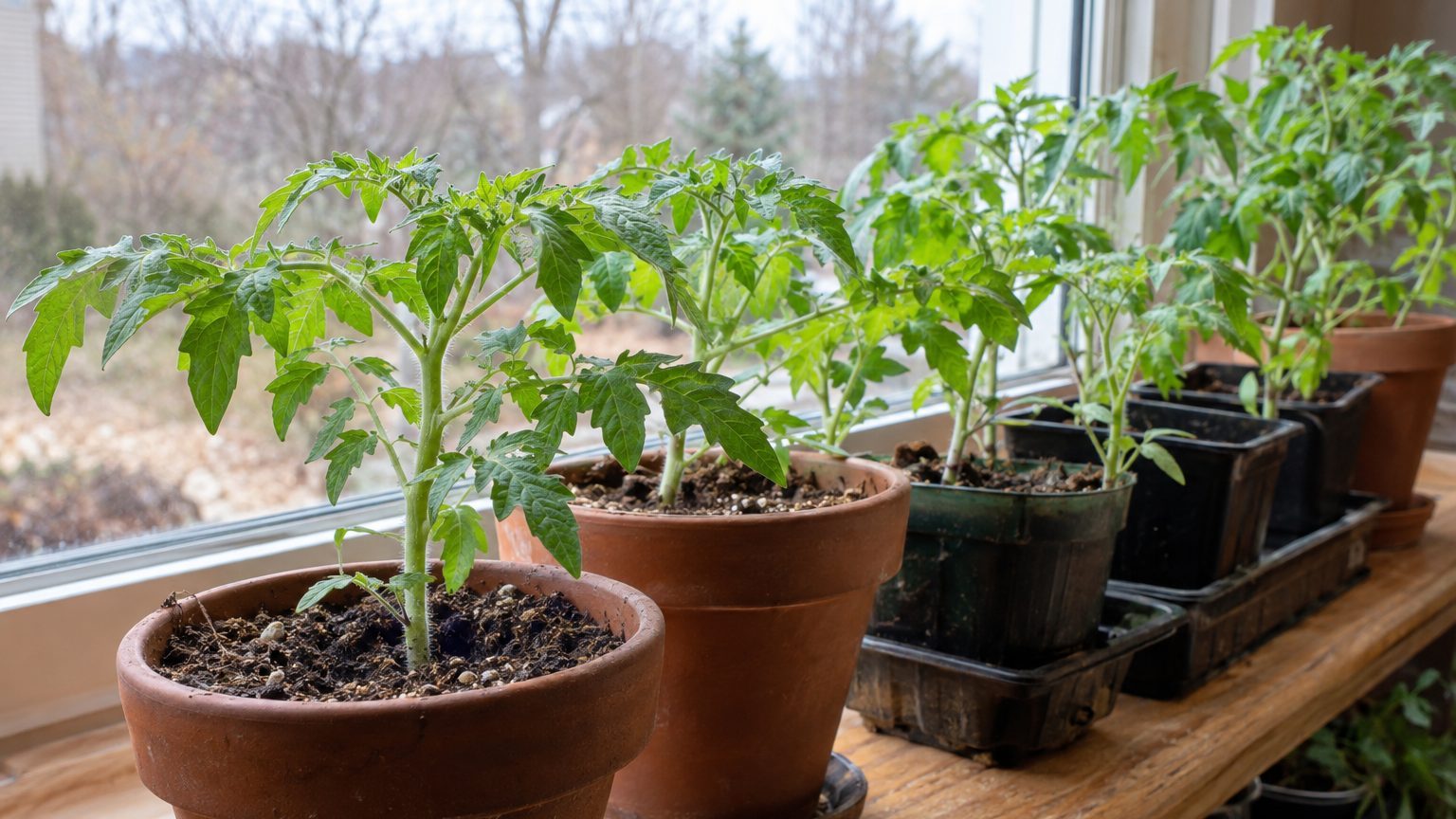
Tomato seedlings grown on a sunny windowsill in a northern spring are a small act of defiance, and they can pay off. In Nunavut the whole game is timing, because the seedlings must be ready the moment frost danger fades. Here is when to sow, pot up and plant.
When Should You Start Tomato Seeds in Nunavut?

Sow tomato seeds indoors in April. Late March also works if you want a little more lead time. The dates for the territory follow a comparable climate on the northern plains and the Canadian Prairies, so confirm local timing with a garden centre, a garden society or a territorial gardening group.
| Step | When in Nunavut | Why |
|---|---|---|
| Sow seeds indoors | April (late March to mid-April also works) | Seedlings need 6 to 8 weeks indoors before they can go out |
| Harden off | 1 to 2 weeks before planting out | Plants grown indoors need time to adjust to wind and direct sun |
| Plant outside | May to June (mid-May to mid-June) | All danger of frost has passed and the soil has warmed to about 16°C (60°F) |
Treat the average last spring frost of June 19 at Rankin Inlet as the middle of a window. In one year out of two, frost arrives later than that, and northern districts run weeks behind. Plant only when frost danger is truly over.
How to Start Tomatoes from Seed
Seed starting is simple once you give the seedlings what they cannot get from a cold, dim spring indoors: warmth, light and steady moisture.
- In April, sow the seeds in a fine seed-starting mix and keep the container somewhere warm, because warm mix is what coaxes tomato seeds to germinate.
- As soon as seedlings show, move them under a bright light set close above the leaves, since a dim window makes them stretch and flop.
- Through the weeks that follow, water the mix evenly so it stays damp without turning soggy, which keeps young stems from rotting at the base.
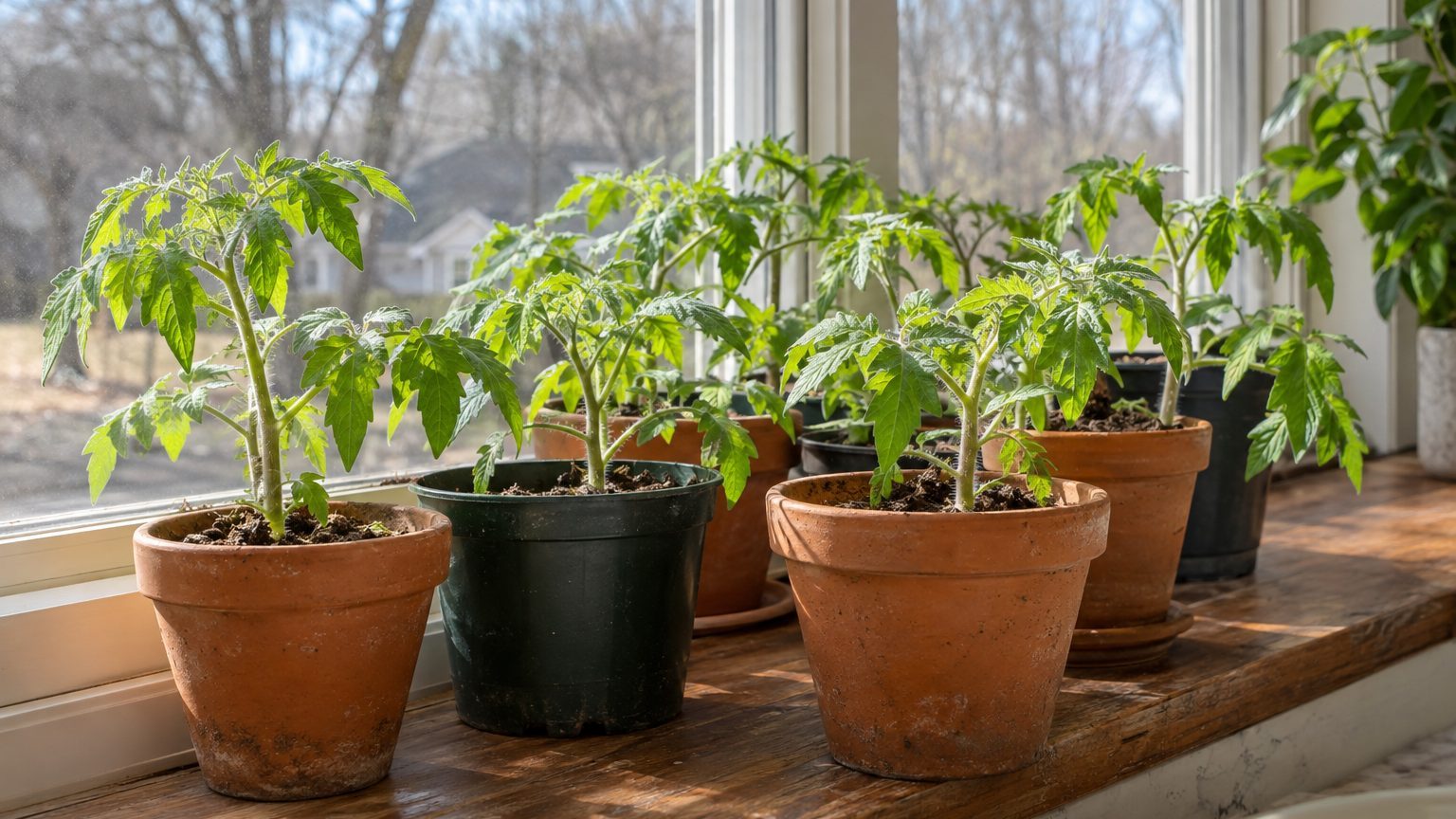
- When the first true leaves have opened, move each seedling into its own pot so the roots have room and the plants do not tangle.
Keep the pots in good light the whole time, and the plants will be stocky and dark green when the weather finally allows them outside.
What Happens If You Start Tomato Seeds Too Early
Seedlings sown far ahead of planting time grow tall and weak. They run out of room in their pots, the stems stretch toward whatever light they can find, and the plants become floppy and harder to settle into the garden.
In Nunavut the risk is real, because planting out falls in May to June, and frost can still return after that. A March sowing is the fallback for gardeners who want a head start. An earlier start only leaves you with crowded plants waiting by the window.
If seedlings do get ahead of the weather, give them more light and a larger pot, and keep them indoors until frost danger has passed. Late-planted tomatoes lose little. Seedlings that are weak and leggy from months of waiting struggle much more.
Where to Get Seed-Starting Advice in Nunavut
Canada has no county extension offices, so local advice comes from agriculture departments and local growers. Agriculture and Agri-Food Canada is a good place for general guidance. For timing in your own community, ask the people who garden there.
- Visit Agriculture and Agri-Food Canada for federal growing guidance, and check it before you buy seed in late winter.
- Talk to a local garden centre or garden society in late winter, when they can tell you which transplants and varieties have worked near you.
- Ask a territorial gardening group before sowing in April, since they can confirm when your own district stops getting frost.
Common Questions
Which Tomato Varieties Suit a Short Season?
Look for early and cool-climate types. ‘Early Girl’ is widely available and gardeners like its extra-early yields. The ‘Mountain’ series, including ‘Mountain Fresh Plus’, is known for growing well in cool climates and resisting disease. You may have to try several before finding the one that suits your yard.
Can You Grow Tomatoes Outdoors in Nunavut?
Outdoor planting depends on how long frost lingers where you live. Because northern districts run weeks behind, a sheltered, sunny spot and transplants that are healthy and well hardened give you the best chance. Waiting for the soil to warm matters more than the calendar date.
Where Should You Put the Transplants?
Choose the sunniest spot in the yard, out of the wind. Tomatoes stall in cold soil, so a place that warms early in the day helps them settle in and start growing.