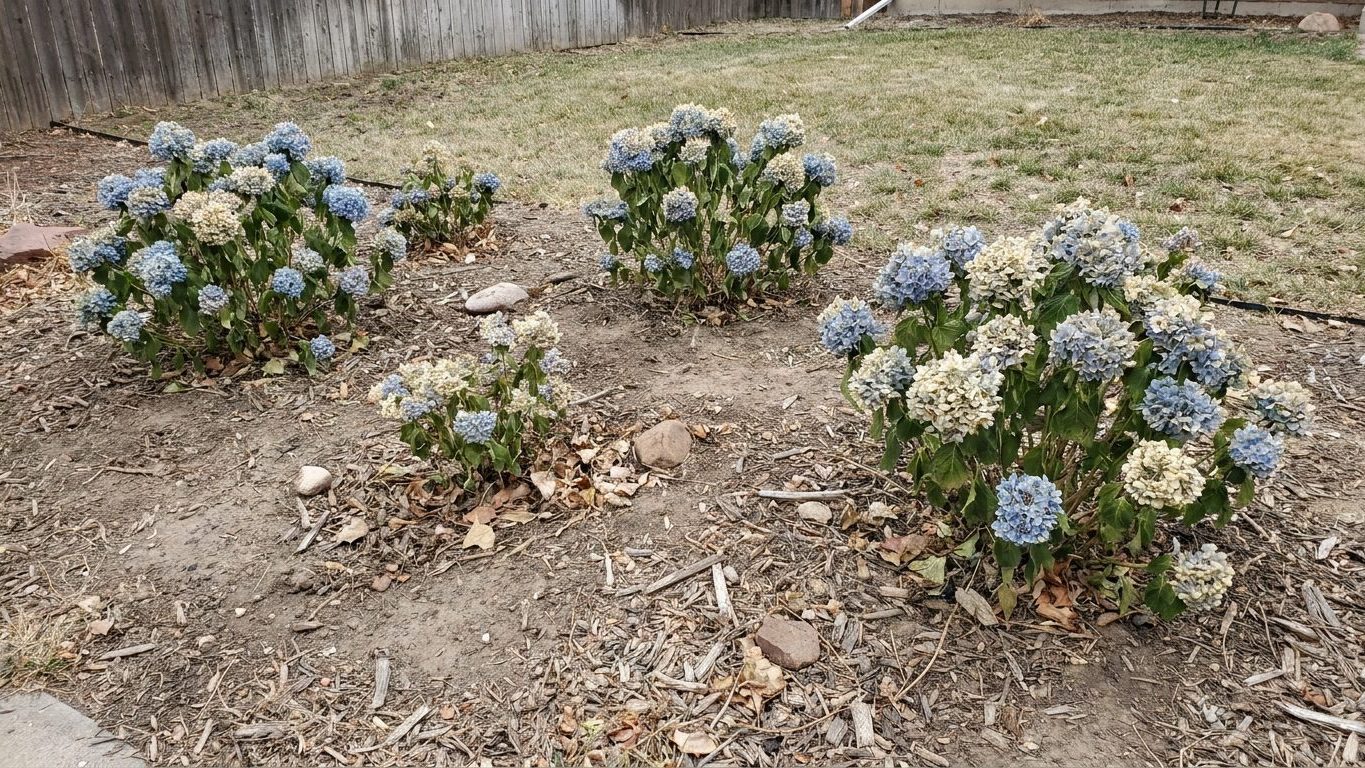
In lowland Hawaii, hydrangeas never meet a frost date because none exists here, so the state’s growing calendar runs on rainfall and elevation instead. USDA places the islands in zones 9a through 13a. Plant in January, February, October or November, feed in March, May and July, and prune bigleaf types in June and July.
Hydrangeas Care Calendar for Hawaii

NOAA NCEI 1991-2020 Climate Normals list zero days at or below 32°F for the Hilo station behind these numbers, and every freeze percentile comes back not-computable because frost simply never reaches the gardens people plant.
- January and February planting: the first of two windows in the state’s calendar, timed to steady lowland rain rather than any thaw.
- March feeding: the first of three fertilizing months, feeding new spring growth before the heat builds.
- May feeding: a second round, feeding while flower buds are forming for the first summer bloom.
- June and July pruning: the one cut bigleaf types get all year, done right after the earliest flowers fade.
- July feeding: the last of the three feeding months, closing out the summer push.
- October and November planting: the second planting window, set ahead of the wetter winter months.
Elevation and rainfall drive more of this than the calendar does, so treat these months as a starting point and watch your own slope and rain.
Best Hydrangeas for Hawaii
USDA Plant Hardiness Zone Map puts the islands at zone 9a through 13a, one of the widest ranges of any state, which matters more for hydrangeas than any frost date since frost never factors in here.
Most hydrangea types were bred for a cold winter they’ll never get in lowland Hawaii, so the real question isn’t cold hardiness but how much winter chill a variety needs to set flower buds.
| Kind | Verdict here | Why |
|---|---|---|
| Bigleaf | Common but uneven bloomer | Needs some winter chill for buds, which lowland gardens barely get |
| Panicle | Better at higher elevation | Flowers on new wood, less dependent on a cold winter to bloom |
| Smooth (Annabelle type) | Reliable low-elevation choice | Also blooms on new wood each year, so a mild winter doesn’t skip a season |
| Climbing | Good on shaded, wet walls | Tolerates the humidity and rain of windward sites well |
Oakleaf and mountain hydrangeas are the other kinds, and they lean on a seasonal cold snap lowland Hawaii doesn’t supply, so they stay niche choices reserved for high-elevation gardens.
When to Plant, Prune and Feed Hydrangeas in Hawaii
There’s no frost to count backward or forward from here, so the state’s three key windows follow rainfall and the growing season instead of any thaw date.
Plant twice a year, feed three times, and give bigleaf types a single pruning pass once their first flowers are spent.
| Task | Window here | Counted from |
|---|---|---|
| Plant | January-February and October-November | The two steadier rain windows in the state’s calendar, not a frost date |
| Fertilize | March, May, July | Roughly two months apart through the active growing season |
| Prune bigleaf | June-July | Right after the first flush of bloom fades |
Smooth and panicle types skip the pruning debate entirely since they bloom on new wood and can be cut back hard in late winter without losing a season of flowers.
Hydrangeas Problems in Hawaii and What Causes Them
No flowers on an otherwise healthy bigleaf

Lowland Hawaii rarely delivers the stretch of cool nights bigleaf hydrangeas use to set next year’s buds, so a shrub can leaf out fine and still skip bloom. Switch to a panicle or smooth type instead, or move the plant upslope where nights run cooler.
Leaves scorched on the dry, leeward side

Kona, Waianae and similar leeward coasts get intense sun and far less rain than the windward side of the same island, and hydrangea leaves burn fast in that combination. Afternoon shade and deep, regular watering fix most of it.
Roots sitting wet on windward slopes

Windward valleys can see rain on most days of the year, and hydrangea roots left in soggy, poorly drained soil will rot before they ever wilt from thirst. Raised beds or a slope that sheds water solve this before it starts.
Hawaii North to South: How the Dates Shift
Hawaii doesn’t run north to south so much as low to high and wet to dry, and that split matters more here than in almost any other state.
- Windward coasts and valleys (Hilo, Hamakua, windward Oahu): rain falls most days of the year, so drainage matters more than watering.
- Leeward and dry coasts (Kona, Waianae, Kihei): strong sun and light rainfall call for afternoon shade and a regular hose.
- Upland and high-elevation gardens (Volcano, Kula, Waimea): cooler nights come closest to the winter chill bigleaf types were bred for.
Your county office and your own hillside will tell you more than any statewide date, and the Hawaii page lays out the full zone range, while the Manitoba hydrangea guide shows what a true frost calendar looks like by contrast.
Hawaii Extension Offices and County Contacts
USDA NIFA lists CTAHR as the land-grant extension service for the islands, and its county offices know your soil and your slope better than any statewide zone number can.
- The hydrangeas hub: every type and every state’s page in one place.
- Your Hawaii page: the full zone range and windows for the whole state.
- CTAHR Cooperative Extension: find your county office for a soil test before you plant.
Common questions
Do hydrangeas need a winter freeze to bloom in Hawaii?
Bigleaf types bloom best after some winter chill, which lowland Hawaii rarely provides, so panicle and smooth types that flower on new wood are the more reliable bloomers at low elevation.
What USDA zone is Hawaii for hydrangeas?
The USDA Plant Hardiness Zone Map places the islands from zone 9a up to zone 13a, one of the widest ranges in the country, so a plant that struggles on the coast can thrive a few thousand feet up the same mountain.
When should I plant hydrangeas in Hawaii?
The state’s calendar sets two windows, January and February, then October and November, both timed to steadier rainfall rather than any thaw since frost never factors into the islands’ growing season.