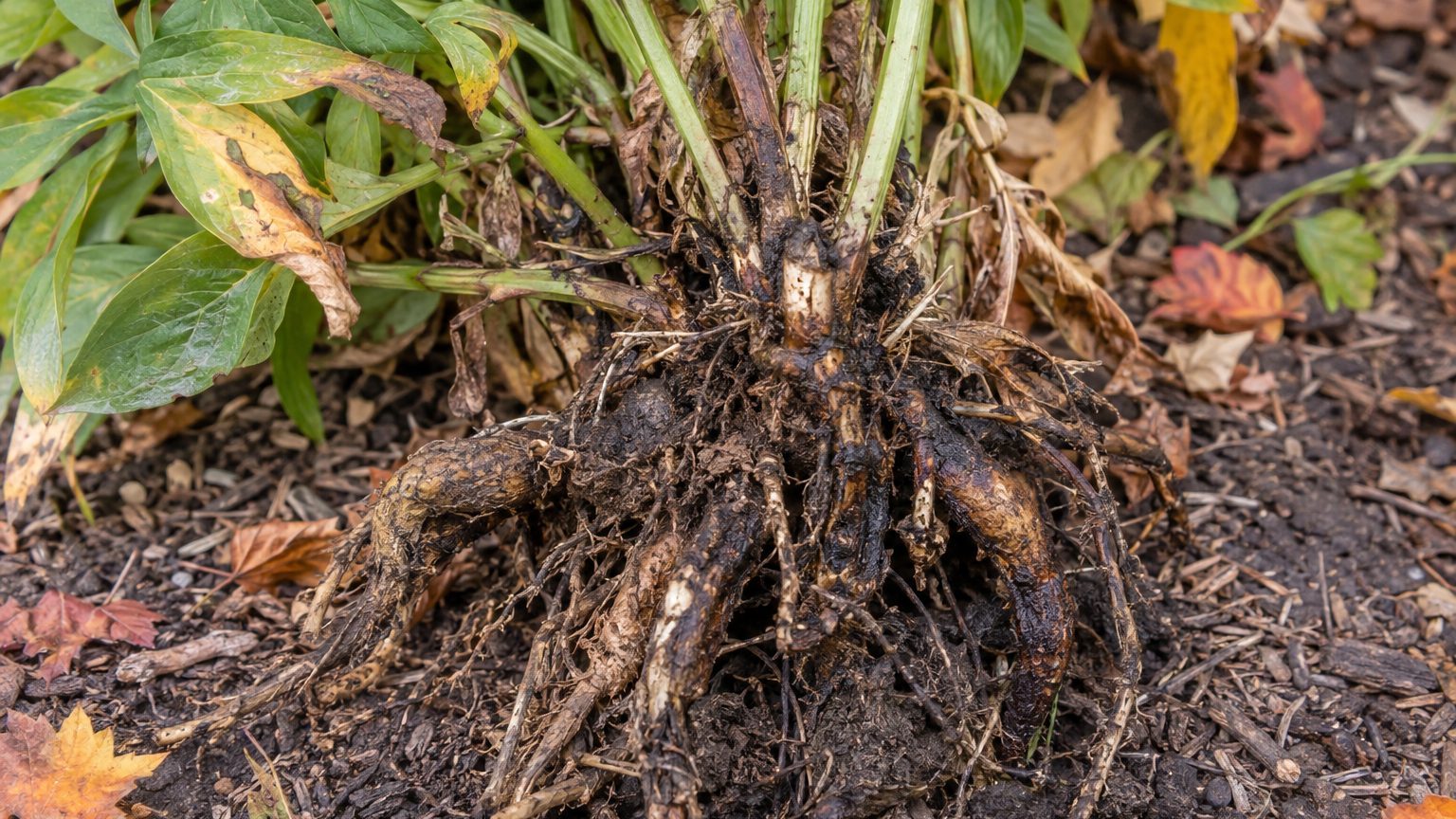
Peony shoots that blacken at the soil line and then flop over are a sign of root rot. The fungus Phytophthora cactorum causes it, and in Iowa, cool, wet conditions during spring favor the disease. Once the crown is infected, the plant usually cannot be saved. What you can do is recognize the signs early, remove the plant and protect the peonies nearby.
Root Rot: What You See

The disease looks different at each stage, but the tissue color and texture stay consistent from shoot to crown.
- Infected tissue turns dark brown to black and feels leathery rather than soft and green.
- Small, water-soaked spots show up first on emerging shoots, stems, leaf stalks, buds or leaves.
- In Iowa, black, often sunken areas can extend several inches and may also appear on upper stem tissue.
- In Iowa, stems tend to fall over at the lesions, while in Texas, stem cankers may also make them fall over.
- Flowers, buds and leaves may also turn dark brown or black.
- When the crown and roots are infected, a wet rot sets in and the whole plant collapses and dies.
Phytophthora initially attacks roots or developing shoots at soil level, so watch that area for blackening and decay.
From the almanac
Peonies in your state
The dates on this page depend on where you live. Your state's page carries its frost dates, its USDA zones and the year laid out month by month.
Northeast
Southeast
- Alabama
- Arkansas
- Delaware
- Florida
- Georgia
- Kentucky
- Louisiana
- Maryland
- Mississippi
- North Carolina
- South Carolina
- Tennessee
- Virginia
- West Virginia
Midwest
Southwest
West
Pacific Northwest
Canada
Root Rot or Something Else?
Different peony problems can blacken tissue, so color alone proves little. Match what you see with where it sits on the plant and what the tissue feels like when you handle it.
| Looks like | How to tell them apart |
|---|---|
| Frost-nipped shoots, with blackened tips after a cold night | Damage sits on the exposed tips and leaves, while the stem base stays firm and green. Root rot lesions start at the soil line and feel leathery. |
| Gray mold on buds, with brown, collapsing buds in a damp spring | Look for a fuzzy gray coating on the buds and stem tissue, and the base of the stem is still sound. Root rot shows dark, sunken, leathery areas low on the stem. |
A rotted crown is dark and leathery at the base.
What Causes Root Rot, and Where It Is Worst
The fungus Phytophthora is common in most soils, so it is usually already in the bed. It attacks either the roots or the developing shoots at soil level, which causes the blackening and decay of stem tissue.
Wet conditions give it the upper hand. In Iowa, cool, wet weather in spring is known to favor the disease. Peonies planted where drainage is poor are the ones that develop blight and stem canker.
Because the trigger is soggy soil rather than a particular climate, the risk follows your own yard. Low spots and heavy clay hold moisture around the crown.
How to Treat Root Rot
Treatment for a rotted peony is mostly removal, done in an order that protects the rest of the bed.
- Confirm the signs by checking the stem base and crown for dark, leathery or wet, mushy tissue, so you do not dig up a plant that only suffered frost.
- Dig out the whole infected plant, crown and roots included.
Removing and destroying infected plants is the only reliable means of control, and once symptoms are noticed, chemical treatments are usually not effective. Your state extension service can tell you what is legal and sensible where you live.
How to Prevent Root Rot Coming Back
Prevention comes down to keeping the crown dry and the bed open, and the work follows the seasons.
- Through summer, keep lawn sprinklers aimed away from the bed, because spray that keeps soil wet around the crown invites rot.
- When planting or moving a peony, choose a spot with good drainage and loosen the soil first, so water drains away from the roots.
Good drainage matters more than spacing because wet soil favors the disease.
Where This Comes From
The details here come from university extension guidance written for Texas, Arkansas and Iowa. Check with your own state’s extension service for local timing and approved options.
Common Questions
Can You Plant a New Peony Where One Died?
A different spot is not automatically safer, because Phytophthora is common in most soils. If you must reuse the site, improve the drainage first by loosening the soil or raising the bed.
Should You Put Infected Peony Stems in the Compost?
No. Bag them and discard them with household trash so the fungus does not carry over into compost you spread on other beds.
Does Mulch Cause Root Rot on Peonies?
Mulch itself does not cause it, but mulch piled against the crown holds moisture there. Keep it pulled back from the shoots so the base can dry out between rains.