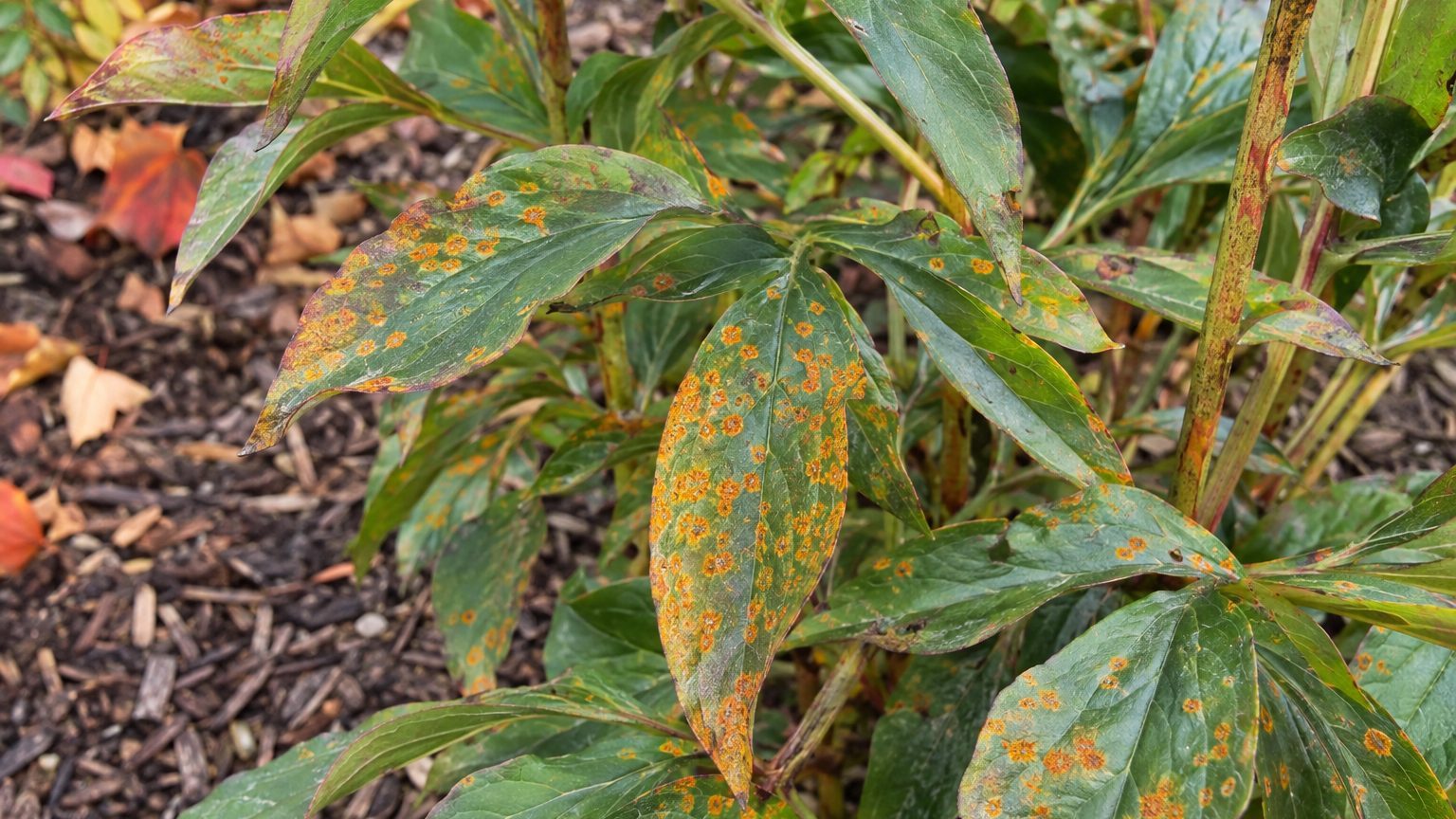
Reddish-brown spots on peony leaves usually point to a fungus called leaf blotch, not true rust. The spots show up on the upper leaf surface and spread over the season. Leaf blotch is best managed through careful cleanup, and learning to tell it from its look-alikes keeps you from treating the wrong problem.
Rust: What You See

Leaf blotch, also called red spot, measles or stem spot, leaves a clear trail on leaves and stems.
- On the upper side of a leaf, the spots are glossy and purplish-brown, while the underside of the same spot turns chocolate brown or chestnut-brown.
- Infection is generally more pronounced at the margins of the outer leaves.
- Over time the spots expand and grow together into large blotches of dead tissue.
- On young stems, distinct red to reddish-black spots appear, sometimes raised, and they can merge into short reddish-brown to purple streaks.
- In Ohio, stem spots typically show up ahead of the leaf symptoms and keep enlarging as the season goes on.
Stem spots tend to appear before leaf blotch, so check young shoots before the leaves change.
From the almanac
Peonies in your state
The dates on this page depend on where you live. Your state's page carries its frost dates, its USDA zones and the year laid out month by month.
Northeast
Southeast
- Alabama
- Arkansas
- Delaware
- Florida
- Georgia
- Kentucky
- Louisiana
- Maryland
- Mississippi
- North Carolina
- South Carolina
- Tennessee
- Virginia
- West Virginia
Midwest
Southwest
West
Pacific Northwest
Canada
Rust or Something Else?
Different peony diseases leave brown, purple or discolored patches, and they call for different handling. A spot’s color alone is a poor guide, so match it with the spot’s position on the plant and the other symptoms nearby.
Powdery mildew looks very different once you see it up close, and the gray mold group can mimic leaf blotch on young leaves.
| Looks like | How to tell them apart |
|---|---|
| Powdery mildew | Small white spots on the leaves that can quickly spread into a white-to-gray powdery coating over the whole leaf surface. |
| Botrytis blight | Reddish-purple leaf spots together with shriveled, discolored buds. A hand lens may reveal brown or gray fuzzy masses of spores on affected tissue. |
| Phytophthora blight | In Wisconsin, black lesions several inches long can appear on the lower half of young shoots, and the entire shoot may collapse. Symptoms also start at the base of blighted leaves. |
Powdery mildew mostly affects the look of the plant and does not usually cause significant damage. Phytophthora can invade the entire crown in severe cases, so a collapsing shoot deserves a quick call to your extension office.
What Causes Rust, and Where It Is Worst
Leaf blotch comes from a fungus, Graphiopsis chlorocephala, formerly known as Cladosporium paeoniae. It survives the winter in plant debris, which is why last year’s leaves left at the base of the clump matter so much. Warm, humid weather provides ideal conditions for new infections.
Warm, humid weather provides favorable conditions for leaf blotch. In Illinois, measles (red blotch or leaf blotch) is among the most common summer and fall foliar problems, alongside Botrytis blight and powdery mildew.
Powdery mildew follows a different weather pattern, with cool nights and hot, humid days. Plants stressed by drought are also susceptible, and the disease has become increasingly common over the years.
How to Treat Rust
Management starts with sanitation, and the order below keeps spores from spreading as you work.
- Cut off spotted leaves and stems as soon as you see them, so that fewer spores are left to blow or splash onto healthy growth.
- Bag the removed material and dispose of it away from the garden instead of composting it.
- Pull damp, thick mulch back from the crown, since constant dampness keeps fungal problems going.
- Water at the base of the plant in place of overhead sprinkling, so that leaves dry off between waterings.
- Check with your state’s extension service before using any fungicide, since it knows which products are registered for peonies where you live.
Treatment aims to protect the foliage you still have, because spotted leaves will not return to normal. Keep any healthy foliage that remains while removing spotted leaves and stems.
How to Prevent Rust Coming Back
Prevention follows the peony year, with each gesture timed to the point where the fungus is most active or most easily removed.
- Look over new shoots for small red spots because stem symptoms tend to appear before leaf blotch.
- During dry spells, water the soil under the plant rather than wetting the foliage.
- During warm, humid weather, keep stems from crowding and keep mulch loose, so the center of the clump dries out.
- Once the foliage has finished for the year, clear every leaf and stem remnant from the bed, because that debris is where the fungus spends winter.
Sanitation is the dependable way to manage leaf blotch because the fungus survives in plant debris.
Where This Comes From
The symptom descriptions and management advice here draw on university extension guidance on peony diseases, including notes written for Ohio, Illinois, Maine and Wisconsin.
Disease pressure and legal treatment options vary by state, so your state’s extension service can confirm what applies to your yard.
Common Questions
Is Peony Measles the Same as Leaf Blotch?
Yes. Measles and red spot are names for the stem-spot stage of the same fungal disease, and in Ohio the leaf spots follow later.
Does Powdery Mildew Kill Peonies?
Generally it affects the appearance of the plant but does not cause significant damage, so a white coating is mostly a cosmetic problem.
Why Do Peony Buds Turn Brown and Rot?
Blights can make buds brown and rot suddenly at any stage of development. Botrytis can also leave buds shriveled and discolored, so check the stems and leaves for other signs before deciding which disease is at work.