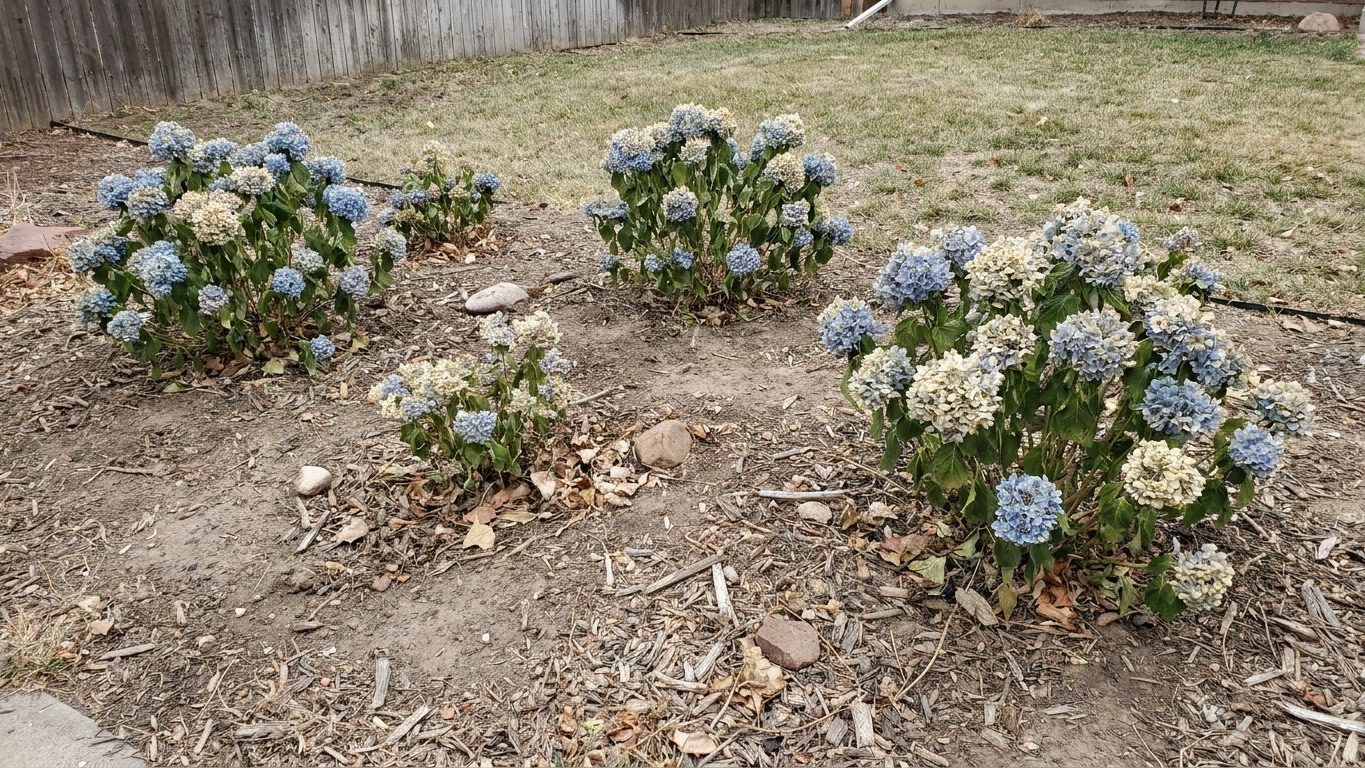
Kansas gardeners can grow hydrangeas successfully, but the state’s spread from cooler northwest counties to milder southeast ones means the right variety and the right week matter more than they would in a single-zone state. Panicle and smooth types are the safest bet almost everywhere.
Hydrangeas Care Calendar for Kansas

Topeka’s last spring frost lands between April 4 and April 18, and the first fall frost arrives between October 23 and November 2, according to NOAA NCEI’s 1991-2020 Climate Normals, with the state itself spanning USDA hardiness zones 5b to 7a.
- Dormancy: from late fall through late winter, before buds swell, is the one safe window to move or divide a hydrangea here.
- Planting: wait two to three weeks after the last spring frost, so mid to late April around Topeka, once the soil has warmed.
- First feeding: apply once new leaves unfold, roughly a month after the last frost date.
- Pruning: timing splits by type, old-wood bloomers right after their flowers fade, new-wood types in late winter before the last frost.
- Summer watering: soak the root zone weekly once daytime heat settles in, from June through the driest weeks of August.
- Mulching: lay two to three inches of mulch two to three weeks before the first fall frost, so early to mid October.
- Winter cover: wrap or mound mulch over the crown before the first hard freeze, especially for bigleaf types in the state’s colder 5b pockets.
Every one of these windows shifts with your county, so treat the Topeka dates as a starting point, not the final word for your yard.
Best Hydrangeas for Kansas
USDA’s Plant Hardiness Zone Map puts the state at 5b to 7a, ruling out hydrangeas bred for warmer climates and rewarding the toughest kinds instead.
Smooth and panicle hydrangeas bloom on new wood, so a late freeze can’t erase the season. Bigleaf types bloom on old wood and stall out more years than not in the state’s cooler pockets.
| Kind | Flowers on | USDA zones | Sun |
|---|---|---|---|
| Smooth (Annabelle-type) | New wood | Fits the whole 5b-7a range | Part shade to morning sun |
| Panicle | New wood | Fits the whole 5b-7a range | Full sun |
| Bigleaf | Old wood | Struggles below 6a | Morning sun, afternoon shade |
| Oakleaf | Old wood | Reliable at 6a and warmer | Part shade |
The other kinds, climbing and mountain hydrangeas among them, are on their own pages, since neither one has much of a track record across this state’s zone spread.
When to Plant, Prune and Feed Hydrangeas in Kansas
Three dates decide most of the season here: when to plant, when to prune, and when to feed. Each one counts forward or backward from NOAA NCEI’s Topeka frost windows, April 4 to 18 in spring and October 23 to November 2 in fall.
Pruning splits by bloom type, so check which kind you’re holding before you cut. Get the timing wrong and you lose a whole season of flowers, not just a few branches.
| Task | Window here | Counted from |
|---|---|---|
| Planting | Late April through mid-May | Two to three weeks after the last spring frost |
| First feeding | Early to mid-May | About a month after the last spring frost |
| Pruning (new-wood types) | Late February to mid-March | Four to six weeks before the last spring frost |
| Mulching for winter | Early to mid-October | Two to three weeks before the first fall frost |
Old-wood bloomers like bigleaf follow a different clock entirely, pruned right after their flowers fade rather than by the calendar. The full month-by-month rundown lives on this state’s calendar page.
Hydrangeas Problems in Kansas and What Causes Them
No flowers after a hard winter

Bigleaf and other old-wood bloomers set next year’s flowers by late summer, so a hard freeze that slips past a thin layer of mulch kills the buds outright. Mound extra mulch over the crown before the first fall frost and skip fall pruning that removes those buds.
Leaves scorched by August heat

Kansas summers push well past what most hydrangeas evolved for, and afternoon sun on a shallow root system shows up as brown, crisping leaf edges by mid-August. Move new plants to a spot with morning sun and afternoon shade, and water deeply rather than often.
Yellow leaves despite regular watering

Much of the state sits on alkaline clay, and hydrangeas pull iron poorly from that kind of soil, which shows up as yellow leaves with green veins. A soil test through the local extension office settles whether the fix is iron or drainage.
Kansas North to South: How the Dates Shift
The 5b to 7a range cited above isn’t one climate, it’s a gradient across the state, and the Topeka dates above sit closer to the middle of it than either edge.
- Northeast Kansas (Topeka, Kansas City, Lawrence): closest to the dates above, with the mildest, most reliable window for bigleaf types.
- Western Kansas and the High Plains (Dodge City, Garden City, Colby): colder nights and constant wind push the safe planting window later in spring and the first frost earlier in fall.
- South-central and southeast Kansas (Wichita, Pittsburg, the Oklahoma border): the mildest corner of the state, where the season runs longest and old-wood bloomers have the best odds.
None of these shifts show up on a statewide map, so a county-level check against the numbers above is worth the five minutes it takes.
Kansas Extension Offices and County Contacts
The 5b to 7a range and the Topeka frost dates above are a starting point, not a substitute for what’s happening in your own yard. K-State Research and Extension and your county office track local frost and soil data more closely than any statewide figure can, reachable at ksre.k-state.edu.
- The month by month calendar: the full year mapped out week by week for this state, beyond the three windows above.
- Which ones hold up here: a deeper look at bigleaf, panicle, smooth and oakleaf varieties and how each one performs across the state.
- What goes wrong here: the pests and diseases behind spotted leaves, wilting stems and stunted growth.
Common questions
Can hydrangeas survive Kansas winters?
Yes, panicle and smooth types handle the state’s 5b to 7a range without protection, while bigleaf needs mulch over the crown before the first fall frost.
What is the best hydrangea for Kansas heat?
Panicle hydrangeas tolerate full sun and summer heat better than the other kinds, since they bloom on new wood and don’t stall out after a stressful season.
When should I plant hydrangeas in Kansas?
Two to three weeks after the last spring frost, once the soil has warmed, which lands in late April to mid-May around Topeka.