Skip to content

Diseases

Witches Broom on Lilacs: Signs, Treatment and Prevention

Witches Broom on Lilacs: Signs, Treatment and Prevention

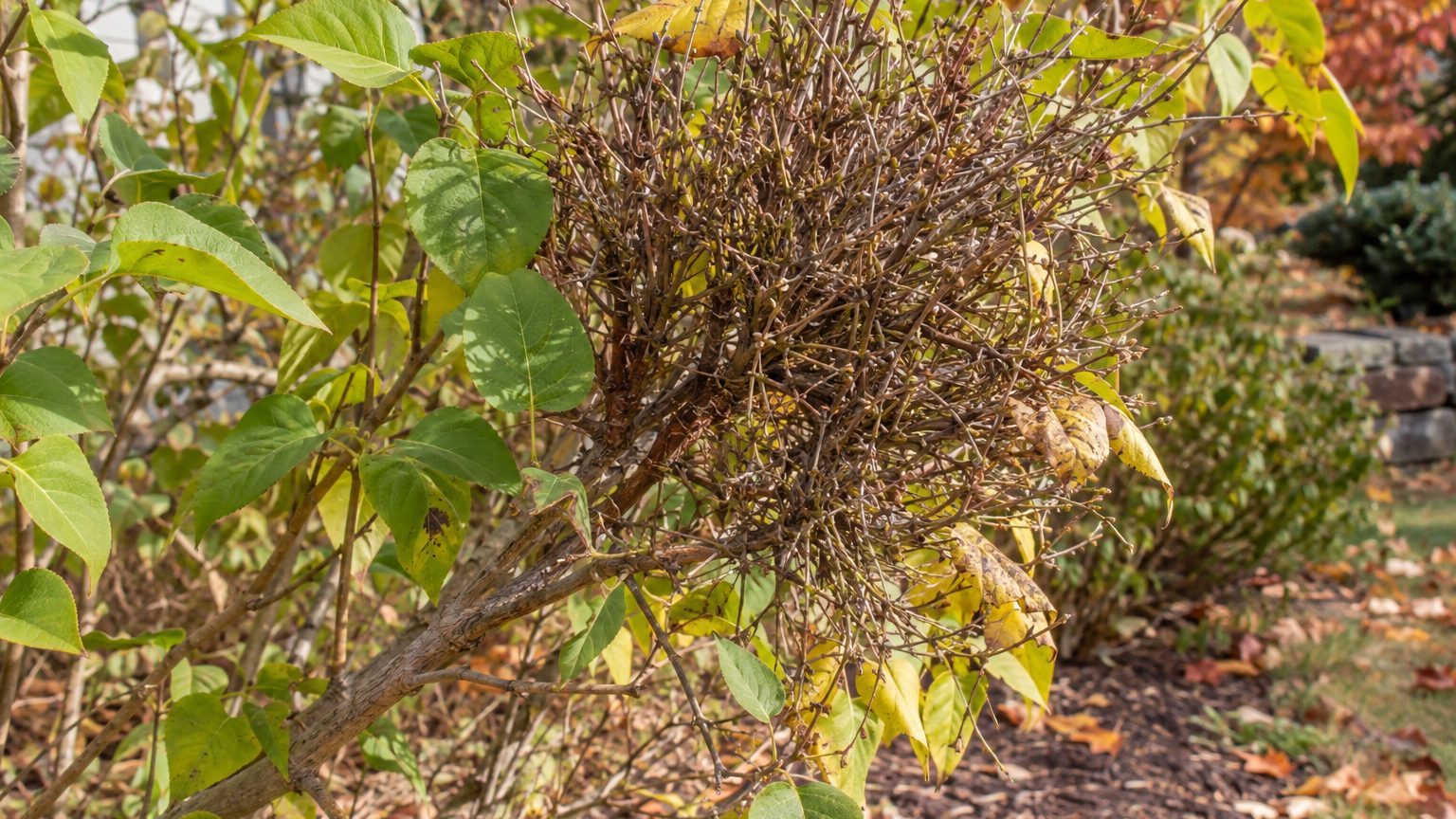
Dense tufts of thin, twiggy shoots sprouting from a single spot on a lilac stand out clearly on bare branches. That tuft is a witches broom, and it points to a disease of the plant, not just an odd growth habit. Knowing what the tufts look like, what else mimics them and what to do about them keeps the rest of the shrub healthier.

Witches Broom: What You See

Witches Broom on Lilacs: Signs, Treatment and Prevention

The clearest sign is the broom itself, and a few other changes usually travel with it.

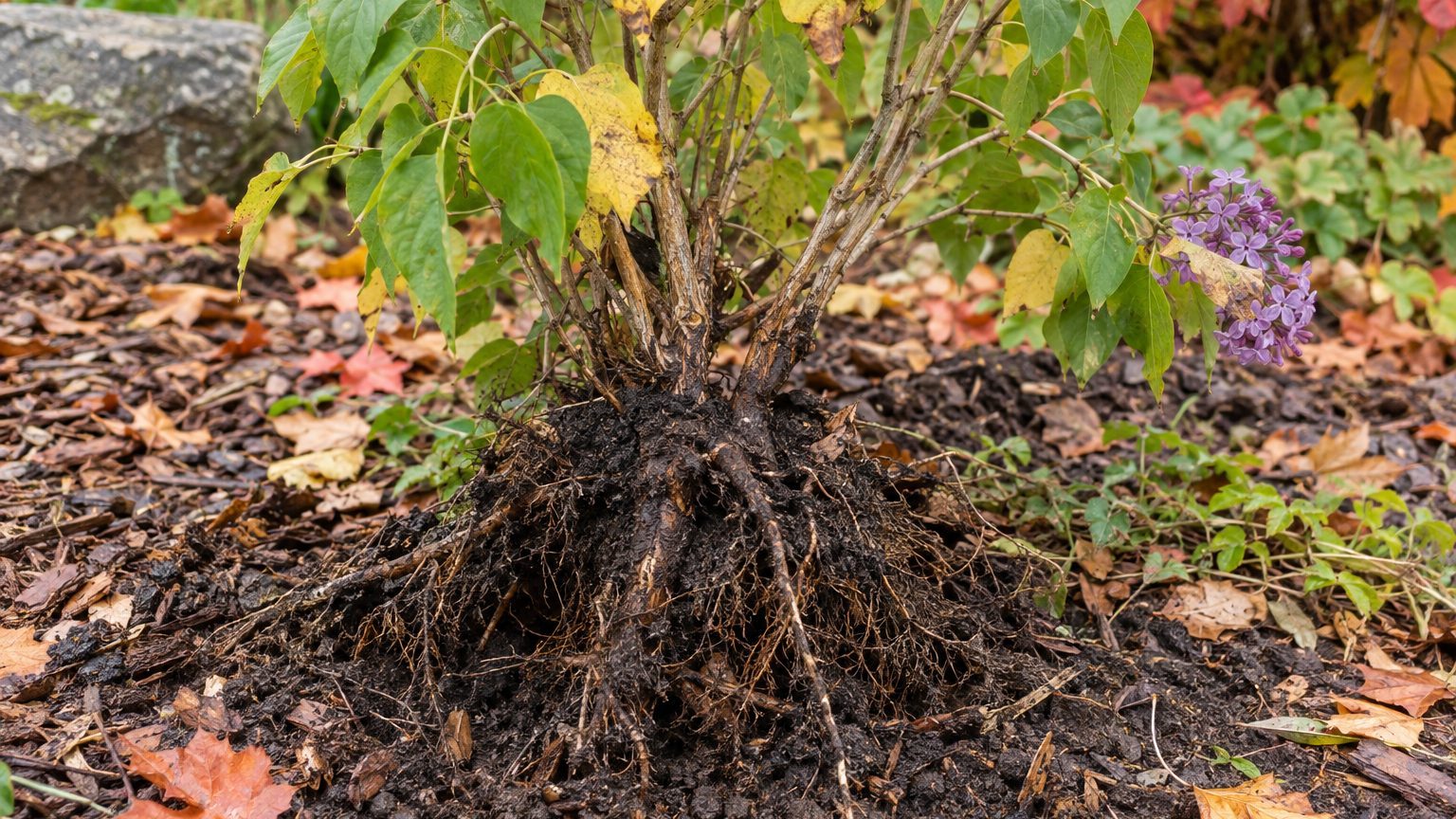
  • A cluster of many small, weak shoots grows out of one point, like a bristly tuft where a single twig should be.
  • The twigs in the tuft are short and thin, packed densely together on one area of the stem.
  • Brooms turn up at the ends of branches and also bunched at the very base of the plant.
  • Leaves on affected growth can be small, distorted and yellow.
  • Individual branches may die back, and the shrub can slowly decline.

Bare winter branches make the tufts easiest to spot, so a slow walk around the shrub after leaf drop is worth the time.

Witches Broom or Something Else?

Several problems can leave a lilac looking tufted or off-color, and the habit of the growth tells most of them apart. A tuft that starts from one point on a stem is a different story from growth that comes from the ground or from leaves that all look scorched.

Looks like How to tell them apart
Root suckers crowding the base Suckers are sturdy, upright shoots rising from the soil or roots with normal leaves, while a broom is a dense knot of thin, weak twigs on a stem.
Herbicide or drift injury Curled, twisted leaves appear across much of the shrub after spraying nearby, while a broom is a tight cluster of shoots at one spot and the rest of the plant looks normal.
Twig dieback from winter damage Dead tips show up on exposed branches after a hard winter, while a broom produces extra shoots at a single point instead of bare, dry ones.

Borer damage can also cause wilting branches. It shows as small holes and sawdust-like debris near the base, which a broom never produces.

What Causes Witches Broom, and Where It Is Worst

The cause is a phytoplasma, a tiny bacterium-like organism named Candidatus Phytoplasma fraxini that lives in the plant’s inner tissue. It scrambles normal growth, and the plant answers by sending up a mass of weak shoots from one point instead of a single healthy twig.

Injury, wet foliage, crowded growth and poor nutrition can make infection or spread more likely. Wounds in the bark give an opening, overhead watering keeps foliage wet, and crowded plants hold damp air around the branches. Poor nutrition leaves a lilac less able to resist disease.

In Minnesota, shrubs with brooms may lose branches and decline. Avoiding injury and keeping the lilac healthy matter wherever the disease appears.

How to Treat Witches Broom

Treatment centers on removing diseased growth and giving the shrub conditions that help it stay healthy.

  1. Inspect the whole shrub, base included, so that you find every broom instead of only the obvious ones at the branch tips.
  2. Prune out infected tissue as soon as you notice it, cutting back into healthy wood, because the sooner a broom comes off the less chance it has to affect nearby growth.
  3. Destroy the cuttings by bagging or burning them where local rules allow, so that diseased wood does not sit in a pile near the shrub.
  4. Keep the cut material away from healthy lilacs until you can destroy it.
  5. Water at the base of the plant and skip overhead irrigation, so that the foliage dries quickly.
  6. Feed according to what the plant needs, since healthy plants resist disease better than stressed ones.

Do not count on a spray to remove infected growth. Have the diagnosis confirmed locally before you settle on a plan.

How to Prevent Witches Broom Coming Back

Prevention follows the year, from the first pruning cuts through the growing season and into cleanup.

  • Remove infected brooms as soon as you notice them, and prune to thin crossing branches.
  • Thin the shrub lightly to open up air circulation, which slows the spread of the disease.
  • Water at the base and leave the sprinkler off the leaves.
  • Mow and trim carefully around the base, since injuring the plant raises the chance of infection.
  • Check again for brooms and clear fallen debris from under the shrub.

Spacing matters from the day of planting, because lilacs set with room around them slow the spread of the disease.

Where This Comes From

Local conditions and approved treatments differ, so have the diagnosis confirmed before settling on a plan.

Common Questions

Will Witches Broom Kill a Lilac?

It can. Individual branches die back, the shrub declines, and over time a badly affected plant can die. Prune and destroy infected tissue as soon as you notice it.

Is It Worth Keeping a Lilac with Brooms at the Base?

That depends on how much of the shrub is affected. Prune and destroy every infected broom you find, but continued decline may mean the shrub cannot be saved. Have a local plant diagnostic lab examine photos or a sample before deciding.

Who Can Confirm That It Is Witches Broom?

A local plant diagnostic lab can examine the growth and rule out lookalikes such as borer damage or herbicide injury. Bring a cut branch with a broom on it and a few leaves from nearby.
Verticillium Wilt on Lilacs: Signs, Treatment and Prevention

Verticillium Wilt on Lilacs: Signs, Treatment and Prevention

A lilac branch that droops and yellows in summer while the rest of the shrub looks fine is the picture most gardeners remember. That pattern points to a soil fungus that clogs the plant’s plumbing from the inside.

Verticillium Wilt: What You See

Verticillium Wilt on Lilacs: Signs, Treatment and Prevention

The disease shows up on one part of the shrub first, which sets it apart from problems that hit the whole plant evenly.

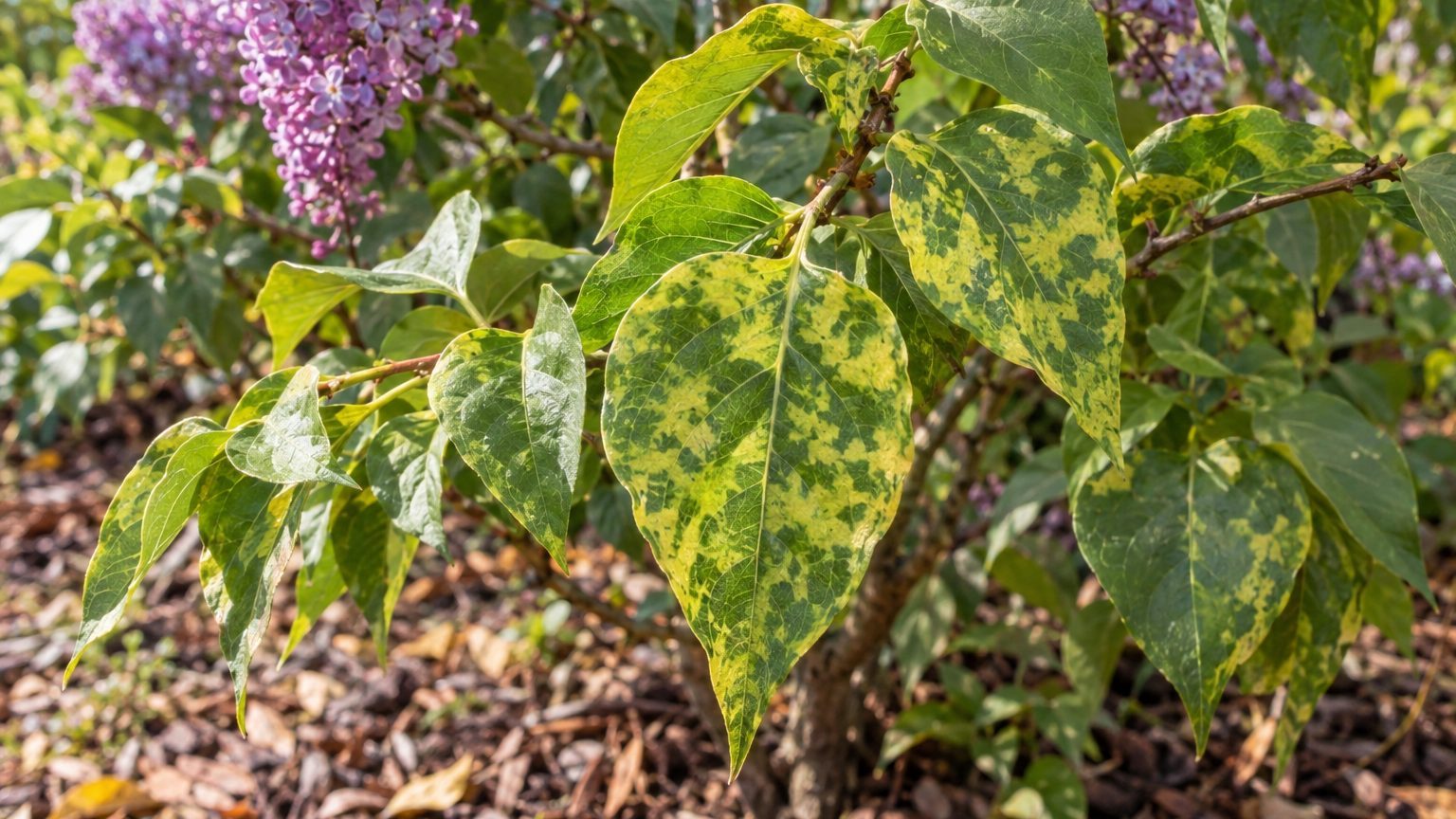
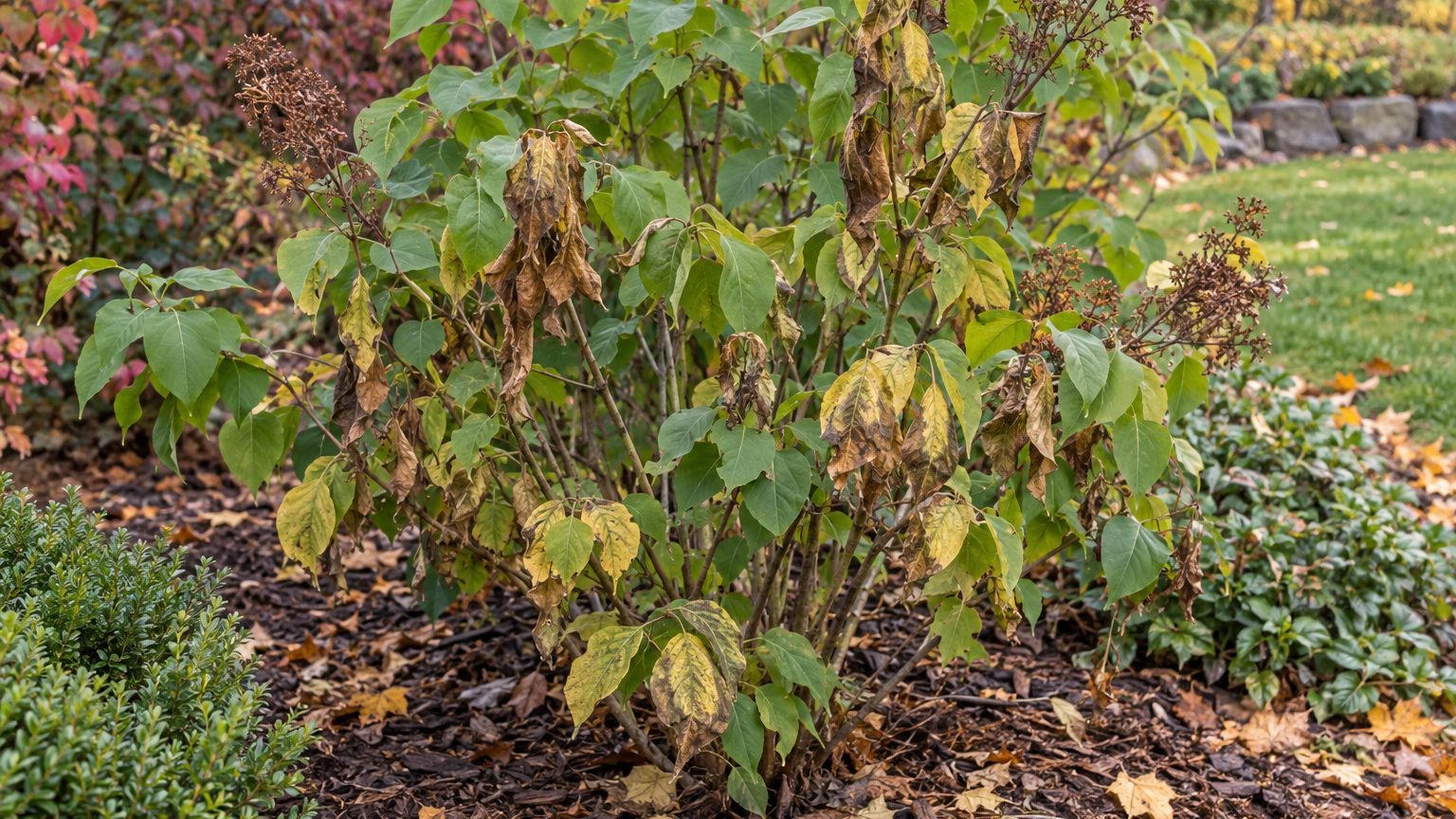
  • Wilting and yellowing begin in a single branch or one section of the shrub, and the foliage on only one side may collapse.
  • In midsummer, leaves turn yellow at the margins, then brown and dry.
  • Individual branches wilt suddenly and die, a pattern called flagging, and in Wisconsin affected branches may sit on one side or be scattered through the plant.
  • The wood under the bark of a wilting branch is discolored in streaks that run the length of the stem.
  • Those streaks are often not visible in lilac, so a clean cut stem does not clear the shrub.

Because the dieback can spread to the rest of the shrub, a lilac with one flagging branch deserves a close look soon.

Verticillium Wilt or Something Else?

Several lilac problems brown the leaves, so a single clue is never enough. Look at where the damage sits on the plant and what the wood looks like when you cut into it.

The sorting comes down to pattern: one branch dying while its neighbors stay green, plus dark streaking under the bark, leans toward the fungus.

Looks like What happens How to tell them apart
Other wilt-type diseases of lilac Leaves also wilt and brown Verticillium wilt can kill lilacs rapidly, and it often begins with sudden wilting in an individual branch.
Dry-soil stress Leaves droop and edges brown Drought stress tends to affect the whole shrub, while the fungus begins on a single branch or one side

Lilac is not the only host. Barberry, catalpa, elm, linden, smoke-tree and redbud can carry the same disease, so a sick neighbor in the yard is a useful clue. A local plant diagnostic lab can confirm the cause from a sample.

What Causes Verticillium Wilt, and Where It Is Worst

The cause is a fungus, typically Verticillium dahliae on lilac, living in the soil. It enters through the roots and colonizes the water-conducting tissue (the xylem), then blocks it off. Water can no longer travel from the roots to the branches, and the leaves wilt.

Soil is the carrier, so the problem follows the ground rather than a climate zone. Because the fungus lives in soil, the risk follows infested ground rather than a particular climate zone. Japanese tree lilac is among the lilacs affected by this disease.

Other hosts in the garden keep the fungus in place. Rose, boxwood and barberry are frequent hosts alongside lilac, so a bed that has already lost one of them is worth treating with care before planting a lilac there.

How to Treat Verticillium Wilt

No yard remedy reverses the blockage, so the work is about protecting the rest of the shrub and the soil. Start with the steps below, in this order.

  1. Because streaking is often not visible in lilac, have a local plant diagnostic lab test a sample before you treat the shrub.
  2. Cut out dead and wilting branches well below the damage, so that dying wood does not linger on the shrub.
  3. Remove dead and wilting branches without assuming that pruning removes the soilborne fungus.
  4. Water the shrub regularly through dry spells and avoid heavy feeding, so that a stressed plant keeps as much working tissue as it can.
  5. Do not expect a yard treatment to reverse the blockage inside the plant.
  6. Watch the shrub through the following seasons, so that you catch new flagging early.

If the whole shrub declines, removal may be the kindest choice. Replace it with something not on the host list, as the soil keeps the fungus.

How to Prevent Verticillium Wilt Coming Back

Prevention is mostly timing and tidiness, because the fungus waits in the soil and waits for a weak plant.

  • In early spring, check each lilac for branches that failed to leaf out, since a dead branch can be the first sign from the previous summer.
  • Once the soil warms, water deeply and regularly during dry periods, so that the shrub does not enter summer stressed.
  • In midsummer, look over the shrub often for leaves yellowing at the margins, and mark any one-sided wilting.
  • After removing diseased wood, take the debris out of the planting bed.
  • When choosing a replacement in a bed that had the disease, skip known hosts such as barberry, catalpa, elm, linden, smoke-tree, redbud, rose and boxwood.

A tidy bed and a steady watering habit cannot remove the fungus, but they keep the shrub in the best shape to hold on.

Where This Comes From

Local conditions differ, so have the diagnosis confirmed before you act.

Common Questions

Can a Lilac Recover from Verticillium Wilt?

Some shrubs lose affected branches and carry on, but the disease can kill lilacs rapidly. Because the fungus blocks water movement inside the plant, recovery is uncertain even after wilting wood is removed.

Is It Safe to Plant Another Lilac Where One Died?

The fungus lives in the soil, so a lilac in the same spot faces the same risk. Choose a different plant that is not a known host, and remember that the fungus remains in the soil.

Can Verticillium Wilt Spread to Other Plants in the Yard?

Yes. Barberry, catalpa, elm, linden, smoke-tree and redbud are susceptible, and rose and boxwood are frequent hosts. Keep an eye on those plants if a lilac nearby has been diagnosed.

Root Rot on Lilacs: Signs, Treatment and Prevention

Root Rot on Lilacs: Signs, Treatment and Prevention

A lilac that wilts and blackens in a wet spring often has more going on than a thirsty root system. Root rot does happen in lilacs, but several other problems copy its look, and the fix depends on telling them apart.

Root Rot: What You See

Root Rot on Lilacs: Signs, Treatment and Prevention

The trouble starts underground, yet the first clues appear above the soil, so look at the shoots and the base of the shrub.

  • Shoots blight and die back over wide areas, even though the pathogen lives in the roots and not in the branches.
  • Root sprouts at the base of the shrub are killed over time, which leaves the clump thinner each year.
  • Leaves may wilt even though the pathogen lives in the roots.
  • Water stands around the base after rain, or the shrub sits in heavy clay that drains slowly.
  • A cramped planting spot can leave little room for roots, while slow drainage lets water linger around the base.

Leaf symptoms alone do not settle the diagnosis, so pair them with what the soil and the site are telling you.

Root Rot or Something Else?

Several lilac problems begin with spotted, wilting leaves. Rot in the roots is only one explanation, and it is often the wrong one when the wet weather has been hard on the whole shrub.

Check the leaf surface and the ground under the shrub before you decide anything.

Looks like How to tell them apart
Bacterial blight (Pseudomonas syringae) Leaf spots that darken, with wilting and early leaf drop, in a wet season. Old leaf debris under the shrub carries it over to the next season.
Powdery mildew A grayish-white, powdery coating on leaves, stems and petals that sits on the surface. It shows up where plants are crowded and humid air lingers.

In Iowa, Verticillium wilt can also look similar in some lilac varieties. When the signs overlap like this, a local plant diagnostic lab can sort them out.

What Causes Root Rot, and Where It Is Worst

The cause is a water mold, Phytophthora, most often the species P. cactorum. It lives in the roots and sends symptoms up into the shoots, which is why the damage looks like a leaf problem first.

Lilacs do well in clay, but clay that drains slowly holds excess moisture in the root zone, and that is exactly what this pathogen needs. Standing water around the crown makes things worse, so low spots and the foot of a downspout are poor places for a lilac.

No region in particular is singled out. The risk follows wet seasons and heavy, slow-draining soil wherever you garden.

How to Treat Root Rot

Work from the site first, since the soil and the surroundings decide whether the shrub can recover.

  1. Look for standing water after rain, so that you know whether drainage is the real culprit.
  2. Do not rely on leaf cleanup to treat root rot; improve drainage around the shrub instead.
  3. Cut back watering and keep irrigation and runoff away from the base, so that the root zone can dry out.
  4. Remove shoots that have blighted and died, so that dead growth is not left to hold moisture around the clump.
  5. Take a sample to a local plant diagnostic lab, so that you know whether the cause is the roots or a blight on the leaves.

Any treatment must be approved for lilacs where you live and used exactly as directed. Treatments are not a cure on their own when the soil stays soggy.

How to Prevent Root Rot Coming Back

Prevention is mostly about water, drainage and a clean base, and each task has its moment in the year.

  • In early spring, check how water moves across the planting bed and redirect runoff before the shrub leafs out.
  • When you plant, in spring or fall, choose a spot that drains well and gives the roots room to spread, since a tight corner works against you.
  • During wet spells in the growing season, hold off on extra watering, because the pathogen thrives when the root zone stays saturated.
  • After heavy rain, check that water is not standing around the crown.

Mulch kept pulled back from the stems also helps the crown dry quickly after rain.

Where This Comes From

Conditions and approved treatments vary, so get a local diagnosis before you act.

Common Questions

Should You Replace a Lilac That Keeps Struggling?

If the shrub sits in a corner with poor air circulation and little room for roots, replacing it with a species better adapted to the spot may be the more sensible choice than fighting the site year after year.

Can Herbicide Drift Look Like Lilac Disease?

Yes. Environmental injury, including drift or herbicide misuse, can be mistaken for Phytophthora, so think about what has been sprayed nearby before blaming the roots.

Is Powdery Mildew a Sign of Root Rot?

No, it is a separate fungal disease. Spacing plants far enough apart for good air movement dries the foliage faster, and avoiding highly susceptible cultivars lowers the severity.

Powdery Mildew on Lilacs: Signs, Treatment and Prevention

Powdery Mildew on Lilacs: Signs, Treatment and Prevention

A white, dusty film on lilac leaves looks alarming, but it rarely harms the shrub. The fungus behind it is a common one on lilacs, and it shows up most often after the flowers are long gone. What you do about it depends on how early it appears and how much you mind the look.

Powdery Mildew: What You See

Powdery Mildew on Lilacs: Signs, Treatment and Prevention

The disease announces itself as a dry coating, so look at the leaves first and the rest of the plant second.

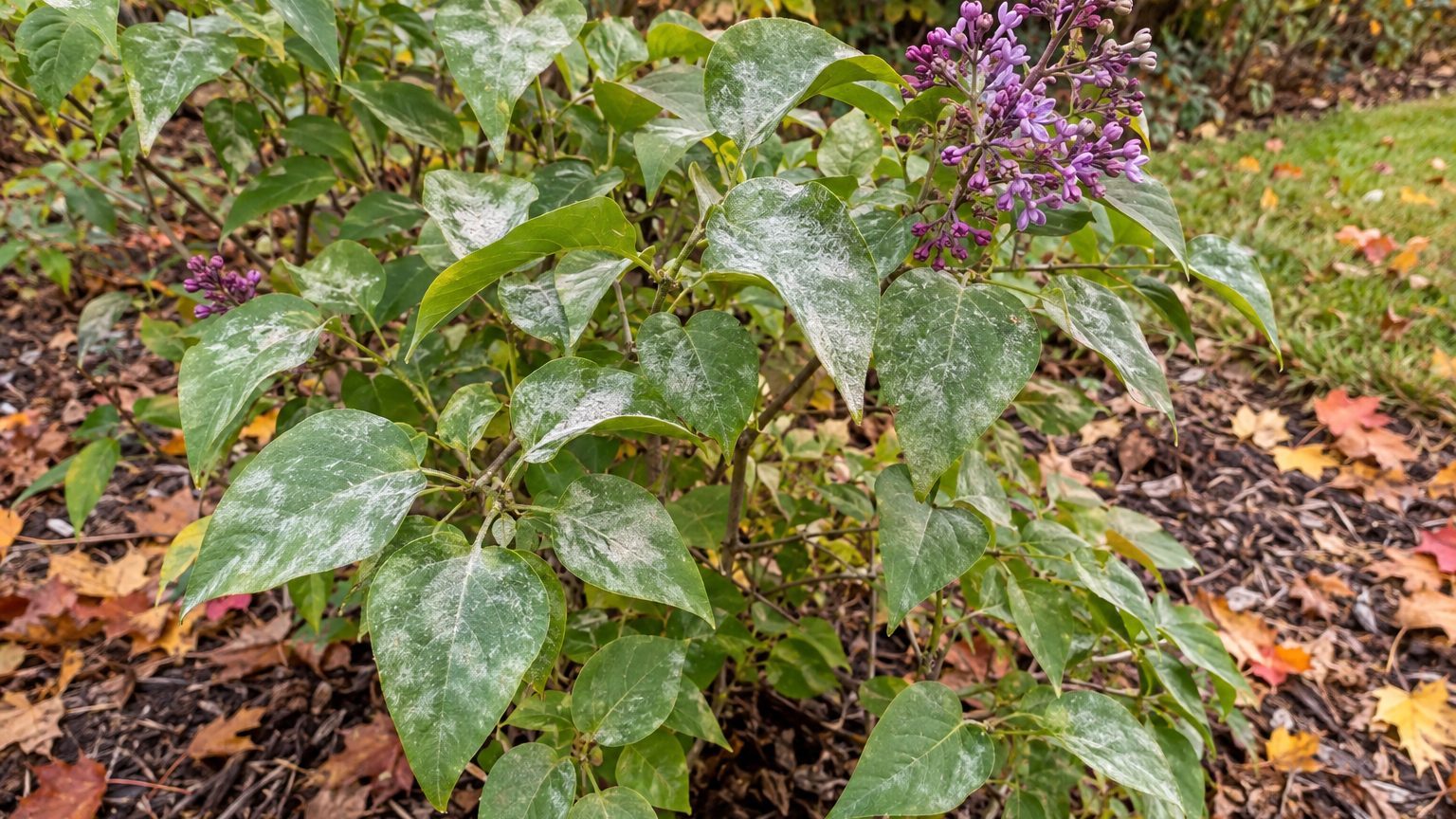
  • A dry, gray-white powder sits on the upper surface of the leaves, and it does not feel wet or slimy.
  • It starts on the lower leaves, then climbs the plant until most of the foliage is covered by late summer or early fall in New Hampshire.
  • The same grayish white blotches can spread to young stems, shoot tips and buds.
  • The coating blocks the light leaves need for photosynthesis, which is why heavily covered leaves look dull.
  • The leaves take on a white, mealy look in late summer, long after the spring bloom.

Even a badly coated lilac is more unsightly than sick, and the shrub comes back the next spring.

Powdery Mildew or Something Else?

Not every pale leaf is mildew. A few other problems leave a whitish look, and a quick check of texture and timing sorts them out.

Rubbing a finger across the leaf is the simplest test, since the mildew coating is dry and sits on the surface.

Looks like How to tell them apart
Rain or sprinkler residue White film that washes away once rains become more regular, which often happens in a wet year.
Mildew on a neighboring plant The fungus on lilac does not infect roses, so a mildewed rose beside a clean lilac is a separate case.

A clean lilac next to a mildewed rose is not a sign the rose passed it along. Each plant carries its own version of the fungus.

What Causes Powdery Mildew, and Where It Is Worst

A fungus called Erysiphe syringae causes it. It thrives when dry periods are broken by several days of high humidity, which is the pattern described in Illinois, where the disease can be expected on most older lilacs during the summer.

Weather sets the timing. Warm days followed by cool, humid nights suit the fungus. In Indiana, it tends to arrive in late summer or early fall, especially when heavy night dew stays on the leaves into the morning.

Summers with little rainfall and a lot of fog or cloud cover tend to be worse, and shade makes things harder. Avoid planting lilacs where shade lasts through long stretches of the day. In Iowa and Washington the disease usually turns up late in the season, so the damage stays small.

How to Treat Powdery Mildew

Treatment is mostly cleanup and airflow, and a fungicide is an option only when you catch it early.

  1. Check the lower leaves first, so that you spot the earliest white patches before they climb the plant.
  2. Hand-pick and destroy infected leaves and shoots, so that fewer spores are left to spread.
  3. Open up the plant to improve air flow, since moving air reduces how severe the disease gets.
  4. If you choose a fungicide, apply it as soon as mildew is observed.

If the white film only appears late in the season, no management is typically recommended. The leaves have nearly finished making food for the year and will soon drop.

How to Prevent Powdery Mildew Coming Back

Prevention starts with where the lilac stands and which type you choose, and a few seasonal habits keep the odds in your favor.

  • Plant new lilacs in full sun with good drainage and room around them, since ample air circulation helps control the disease.
  • When choosing a shrub, pick a resistant cultivar, because many newer varieties are more resistant to infection.
  • In summer, keep an eye on the lower leaves, because that is where the first white spots show.
  • Remove infected leaves and shoots as soon as you see them.

Prevention is the main line of defense for lilacs, so these habits matter more than any spray.

Where This Comes From

The details here come from university extension and government plant health pages, with local timing noted for the states that published it. Your state extension service can tell you what applies in your yard and which treatments are approved where you live.

Common Questions

Will Powdery Mildew Kill a Lilac?

No. It is more of a nuisance than a serious threat to the plant.

Can Powdery Mildew Spread from Lilacs to Roses?

The fungus that causes powdery mildew on lilac will not infect roses, though both plants can get their own mildew.

Why Does Lilac Mildew Look Worse Some Summers?

Dry spells with several days of high humidity favor the disease. Summers with little rainfall and heavy fog or cloud cover can make it worse. A wet year often washes the film away.

Mosaic Virus on Lilacs: Signs, Treatment and Prevention

Mosaic Virus on Lilacs: Signs, Treatment and Prevention

Brown spots and scorched-looking leaves on a lilac in spring often get blamed on a mosaic virus. The symptoms gardeners describe, though, match lilac bacterial blight, caused by the bacterium Pseudomonas syringae pv. syringae. Knowing which problem you have changes what you do, because bacterial blight calls for cleanup and careful attention to plant stress.

Mosaic Virus: What You See

Mosaic Virus on Lilacs: Signs, Treatment and Prevention

The lilac problem that gets called mosaic virus shows up as spots, scorching and blackened tips, and the clearest sign is how fast healthy leaves change.

  • Leaves look healthy at first, then suddenly seem singed, as if they had been held near an open flame.
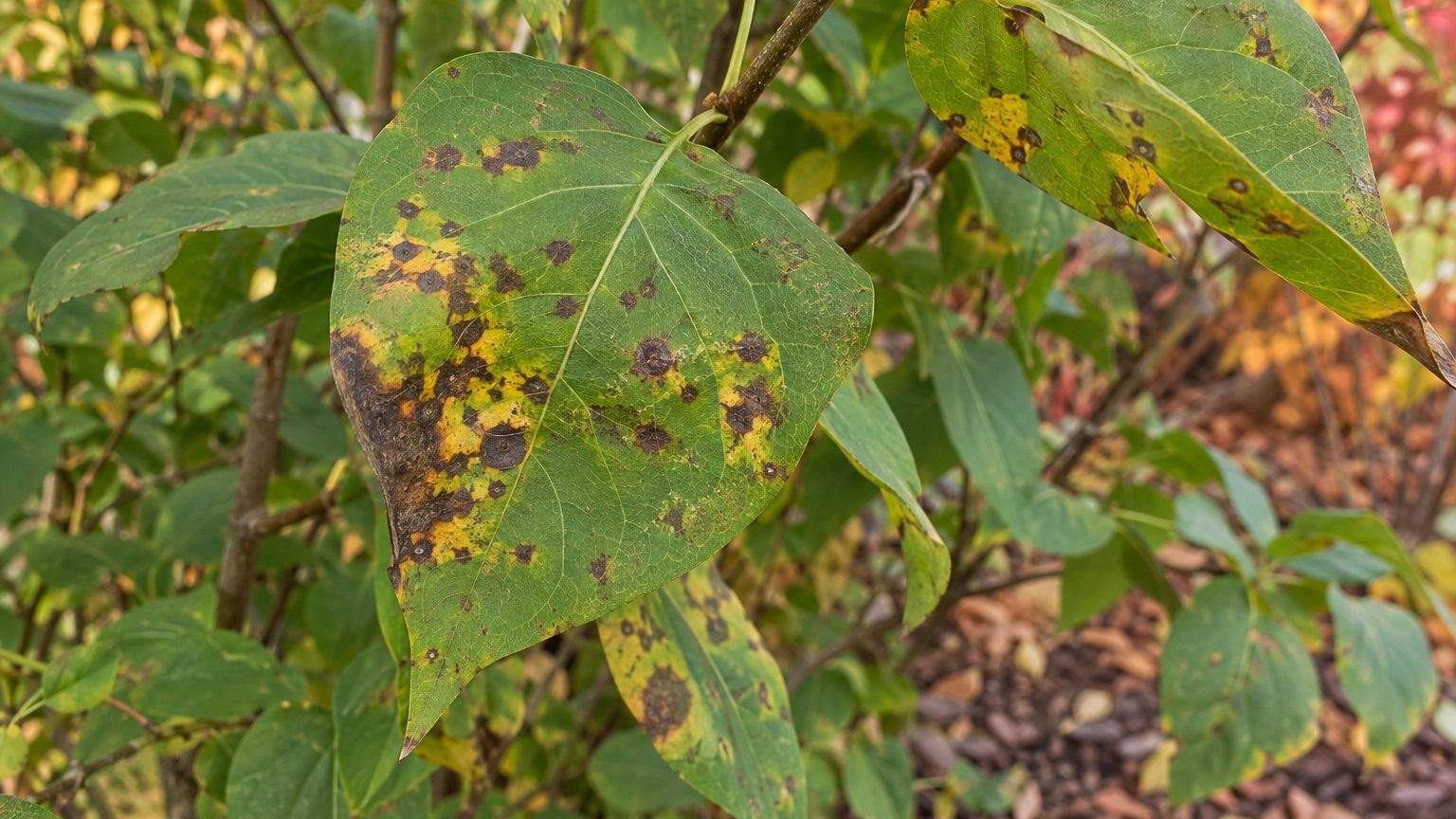
  • Dark, irregular spots appear on the leaves, sometimes ringed by yellow halos.
  • Spots start pin-point small, then enlarge to 1/8 inch or more and grow together, which can leave leaves misshapen.
  • Dark black streaks form on one side of young shoots, and affected shoots wilt and blacken as they are girdled.
  • Flowers wilt and turn brown, and unopened buds turn black.

Leaves that darken and wilt may drop early, and in bad cases whole shoots die back.

Mosaic Virus or Something Else?

A lilac with brown leaves is not always infected. Drought and frost can leave marks that look close to blight, so one clue is never enough to name the cause.

Check where the damage sits and what the weather did before it appeared.

Looks like How to tell them apart
Drought scorch: browned, wilting leaves Drought stress can make lilacs more vulnerable to disease, while bacterial blight can add irregular spots and black streaks on young shoots. Blight brings irregular spots, sometimes with yellow halos, and black streaks on one side of new shoots.
Frost or winter injury: blackened buds and shoots Blight can follow rain after a late frost and produce water-soaked spots that grow together.

A true plant virus would call for a different approach, and the leaf pattern alone rarely settles it. If the spots, streaks and wet weather do not line up, have a sample identified before treating the shrub.

What Causes Mosaic Virus, and Where It Is Worst

The cause is a bacterium. It survives winter in infected twigs and cankers, in dead plant debris, on neighboring plants and in the soil around the shrub, then moves into new growth when spring turns cool and wet. Leaf debris carries it from one season to the next.

Weather decides how bad it gets. In Oregon, cool, wet springs favor the disease, especially when rain follows a late frost or winter injury. In Maryland, rainy, mild spring weather promotes it, and in Iowa the infection begins in early spring on newly emerging shoots, flower buds and leaves.

Stress makes a lilac easier to infect. Drought, improper fertilization and wounds all set the stage. No lilac type is safe, since Japanese, Chinese, Persian and common lilacs can all be damaged. Some researchers suggest white-flowering varieties may be more susceptible.

How to Treat Mosaic Virus

Treatment for lilac blight focuses on sanitation and reducing stress on the shrub.

  1. Confirm the problem by checking for spots with yellow halos and black streaks on young shoots, so you do not treat drought or frost damage as an infection.
  2. Cut out blackened or girdled shoots in dry weather, making the cut well below the damage, so that infected tissue does not stay on the shrub.
  3. Disinfect your pruners between cuts, so that the bacterium does not travel from one shoot to the next.
  4. Bag the removed shoots and fallen leaves and throw them out with the trash, since the bacterium survives in dead debris and can start a new round next spring.
  5. Avoid drought stress and improper fertilization, which are associated with the disease.

How to Prevent Mosaic Virus Coming Back

Prevention works best when it follows the lilac’s year, since the bacterium waits in the debris and strikes when the weather turns cool and wet.

  • In Iowa, watch new shoots and buds closely in early spring, when cool, wet weather lets the bacterium infect emerging growth.
  • Check for blackened shoots after a late frost and watch for spotting if rain follows.
  • Avoid drought stress and improper fertilization, which can make the shrub more vulnerable.
  • In fall, rake up and discard all leaf debris around the base, because a thorough cleanup is what stops the disease carrying over to the next season.
  • In late fall and winter, hold off on pruning, since in Maryland late fall or winter pruning seems to predispose shoots to infection.

Planting where air moves freely helps leaves dry faster after rain, which is plain gardening sense for any wet-spring disease.

Where This Comes From

These details come from university extension guidance for Oregon, Maryland, Montana and Iowa, including Oregon State University Extension. Spring timing and weather vary by state, so check with your own state’s extension service before you act.

Common Questions

Are White Lilacs More Likely to Get It?

Some researchers suggest white-flowering varieties may be more susceptible than other varieties. That is a suggestion rather than a firm rule, so watch every lilac in the yard the same way.

Can Japanese or Chinese Lilacs Get Blight?

Yes. The bacterium can damage Japanese, Chinese, Persian and common lilacs.

Can You Tell Blight from a Virus by Eye?

Not reliably. Spots with yellow halos and black streaks on new shoots point to bacterial blight, but those signs alone do not confirm it. If the pattern does not fit, have a sample identified before choosing a treatment.

Leaf Spot on Lilacs: Signs, Treatment and Prevention

Leaf Spot on Lilacs: Signs, Treatment and Prevention

Tan or brown blotches on lilac leaves, sometimes with leaves dropping early, are the usual sign of a leaf spot disease, and most of the time the damage is more cosmetic than dangerous. The shrub looks rough, yet it generally comes back the next spring. What matters is telling the fungal types from the bacterial one, then cleaning up so the problem does not carry over.

Leaf Spot: What You See

Leaf Spot on Lilacs: Signs, Treatment and Prevention

Start with the leaf edges, because that is where the common fungal leaf spot gives itself away.

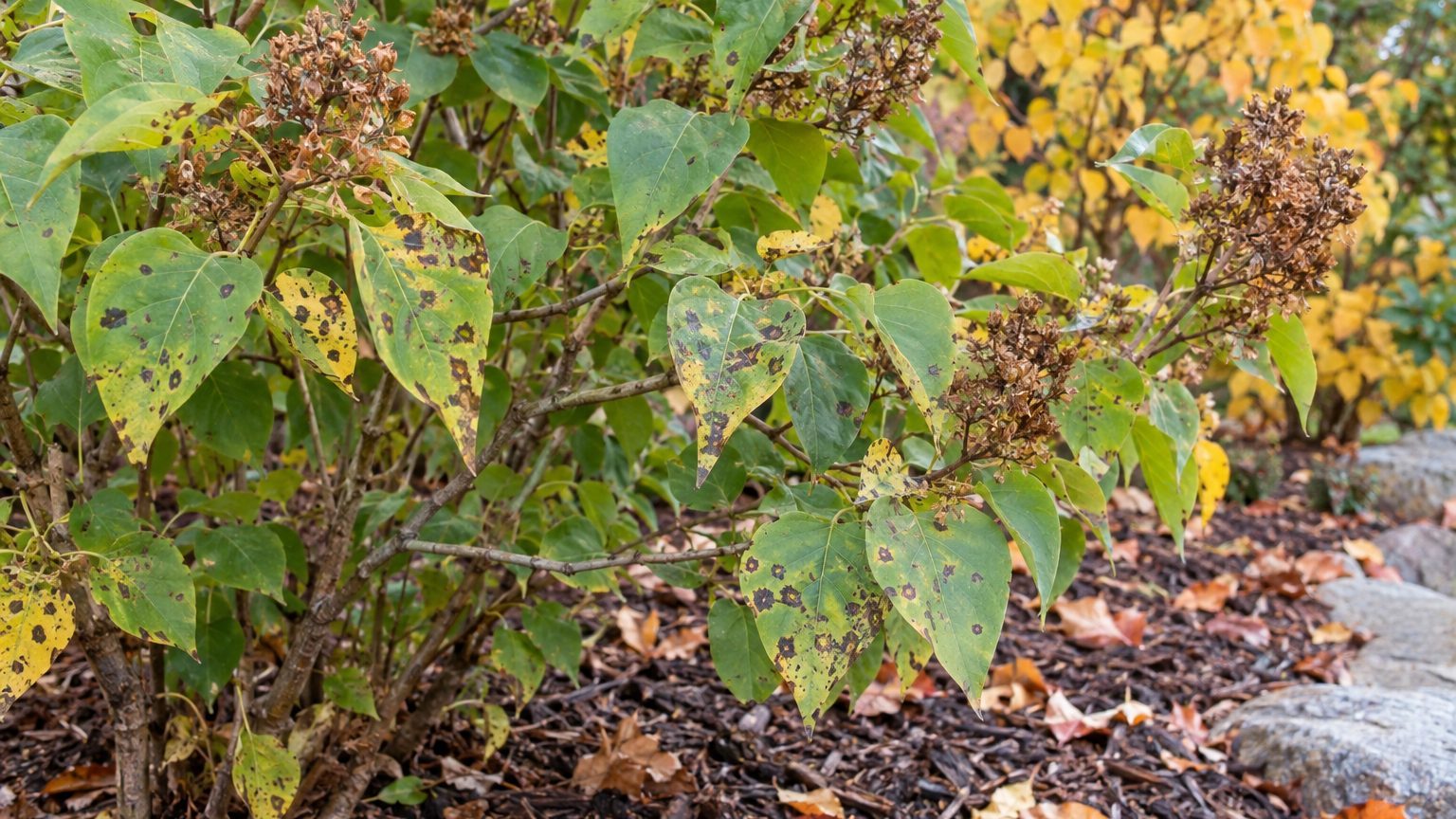
  • Brown spots begin at the edges of the leaves and move inward, sometimes looking splotchy.
  • As the infection progresses, neighboring spots merge, and the leaves curl and eventually drop.
  • Spots stay small at first, then enlarge, and veins hold them in place so they look angular.
  • Browning often starts on the lower part of the shrub and works its way up.
  • In Iowa, damage shows up in summer and intensifies into September on common lilac.

Severe browning looks dramatic, but the shrub is rarely in danger from it.

Leaf Spot or Something Else?

Bacterial blight is the main lookalike, and it behaves differently from a fungal spot. It hits shoots and flowers as well as leaves.

Wet spring weather and a late frost can also muddy the picture, so check where on the plant the damage sits before deciding.

Looks like How to tell them apart
Bacterial blight Leaves look singed as if by flame, and dark black streaks form on one side of young shoots.
Bacterial blight on blooms Flowers wilt and turn brown, and unopened buds blacken, which a fungal spot does not do.
Fungal leaf spot Brown spots start at the leaf edge and merge, with leaves curling and dropping.

Frost or winter injury can look similar in spring.

What Causes Leaf Spot, and Where It Is Worst

Several fungi cause lilac leaf spots, including Pseudocercospora and Septoria, and a bacterium, Pseudomonas syringae, causes the blight lookalike. The fungal types favor rainy or humid weather and moderate temperatures. Symptoms do not develop until seven or more days after infection, so visible damage reflects earlier weather.

In Vermont, the fungus overwinters on fallen leaves and infects emerging leaves during wet spring weather. As wet weather continues, more leaves become infected. Vermont and the Northeast see it commonly, and it flared there in 2024 after a wet spring and early summer.

In Oregon, cool, wet springs favor bacterial blight, especially when rain follows a late frost or winter injury. Crowded plants that stay damp after rain or dew are more vulnerable everywhere.

How to Treat Leaf Spot

Treatment is mostly sanitation, done in an order that keeps spores from reaching healthy growth.

  1. Confirm the symptoms by checking leaf edges, shoots and buds, so you know whether it is a fungal spot or the bacterial blight.
  2. In Maryland, prune off infected leaves and dead twigs during winter or dry summer months to prevent the spread of the disease spores.
  3. In Vermont, thin crowded stems in winter so air moves through the shrub and the leaves dry faster.
  4. In Maryland and Vermont, rake up fallen leaves in autumn so the fungus has less debris in which to overwinter.
  5. Dispose of the debris by burying or composting it, or by burning it where allowed.

Most leaf spots are cosmetic, so many lilacs need nothing beyond cleanup.

How to Prevent Leaf Spot Coming Back

Prevention follows the lilac’s year, since the fungus waits on fallen leaves and wakes in wet spring weather.

  • In Vermont, thin the shrub in winter and prune out dead branches so air can move through the canopy.
  • In Vermont, watch for wet spells in spring, when the fungus infects emerging leaves.
  • In summer, water at the base and not over the foliage, since leaves that dry quickly after rain or dew are less vulnerable to infection.
  • Through the growing season, keep lilacs well spaced from neighboring shrubs and walls.
  • In Maryland and Vermont, collect and dispose of infected fallen leaves in autumn so the disease is less likely to carry into the next season.

Thorough fall cleanup is essential because the disease can pass from one season to the next through leaf debris.

Where This Comes From

These notes draw on university extension guidance from Oregon, Maryland, Wisconsin, Vermont and Iowa. Timing and pruning advice holds where it was written, so check with your own state’s extension service for what fits your climate.

Common Questions

Will Leaf Spot Kill a Lilac?

Rarely. Most leaf spots are cosmetic, and even dramatic browning is not lethal to the shrub. In Wisconsin, buds set on the stems are ready to sprout the following spring.

Can You Compost Infected Lilac Leaves?

Composting is one option, alongside burying the leaves or burning them where allowed. The point is getting the leaves away from the shrub.

Why Do Lilac Leaves Turn Brown in Wet Years?

Humid, rainy weather favors the fungus, and the problem tracks high local humidity. In Vermont and the Northeast, the disease occurred in 2024 after wet weather in spring and early summer.

Canker and Dieback on Lilacs: Signs, Treatment and Prevention

Canker and Dieback on Lilacs: Signs, Treatment and Prevention

In spring, a lilac that looked fine recently can show leaves that seem singed, flowers gone brown and limp, and young shoots streaked with black. Lilac bacterial blight can cause this damage, along with dead branch tips and cankers on the stems. What you see on the leaves, buds and shoots tells you what you are dealing with.

Canker and Dieback: What You See

Canker and Dieback on Lilacs: Signs, Treatment and Prevention

Look at the young shoots first, then at the leaves and flower clusters.

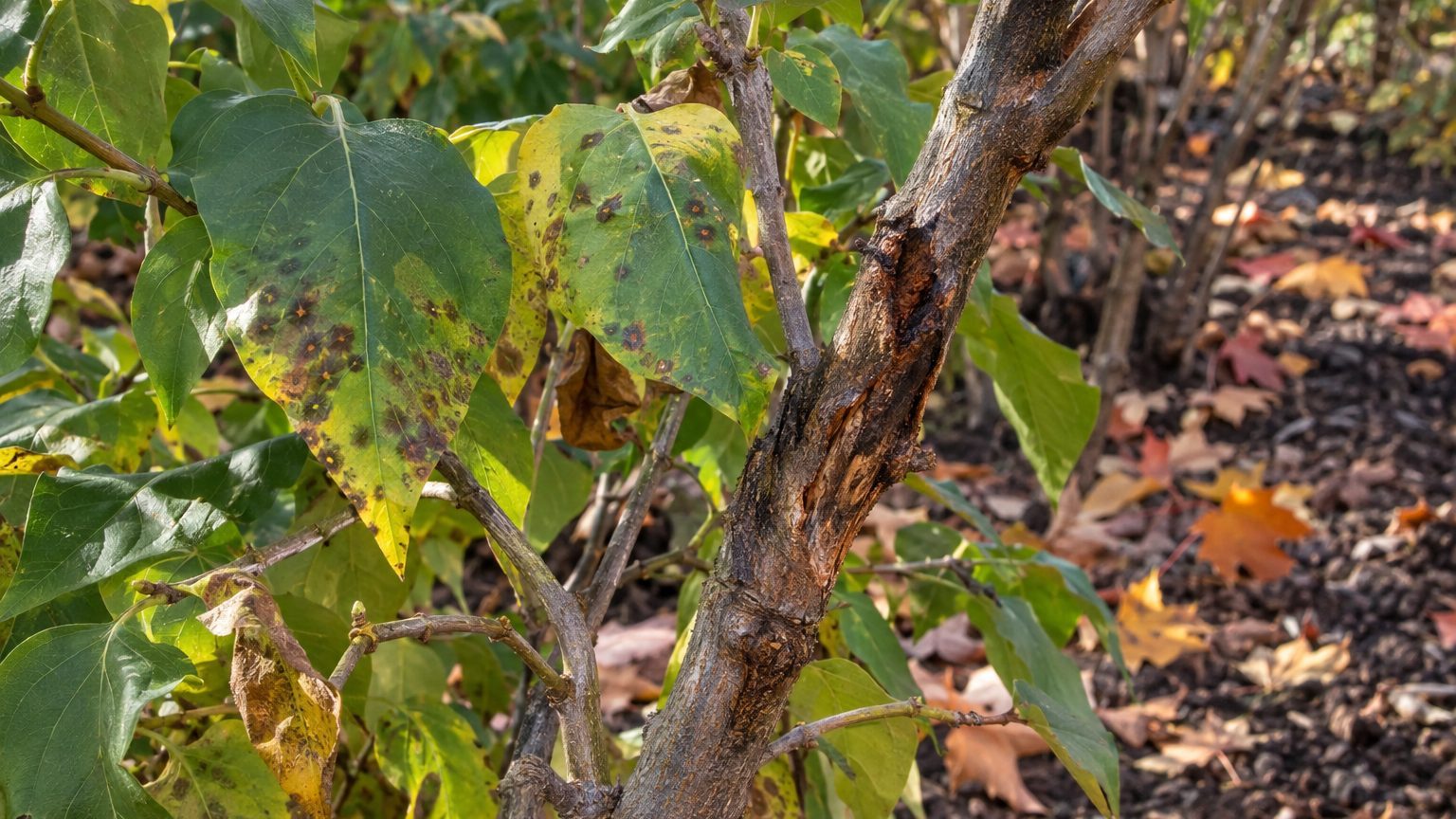
  • Dark black streaks run down one side of a young shoot, because only part of the shoot is infected.
  • Leaves carry brown spots with a yellowish halo, and the spots may merge into dark brown to black blotches.
  • Leaves that looked healthy turn suddenly scorched, as if held near an open flame.
  • Flowers wilt and turn brown while unopened buds blacken.
  • Black lesions form on infected stems, and the shoot is soon girdled and wilts.

In the worst cases the tips of branches, along with their leaves and blossoms, die back.

Canker and Dieback or Something Else?

Scorched, blackened growth on a lilac is not always bacterial blight. Fungal problems and other blights leave a similar look from a few steps back, so the details up close matter.

Check where the damage sits on the shoot and what is on the dead tissue itself.

Looks like How to tell them apart
Fungal shoot dieback or leaf spot Dark gray, pimple-like dots speckle the dead tissue in wet weather, and the base of the dead area is tan to gray and shriveled.
Fire blight Merged spots can give lilac the same scorched look, but lilac blight begins as brown leaf spots with yellowish halos and black streaks on one side of young shoots.

Spring frost damage seems to predispose shoots to bacterial blight infection. If the dots, halos or streaks do not match what you find, seek a local diagnosis before treating the shrub.

What Causes Canker and Dieback, and Where It Is Worst

The cause is a bacterium, Pseudomonas syringae pv. syringae. It survives in diseased stem tissue (the cankers), in plant debris and in the soil, and it can also winter on neighboring plants. From there it reaches stems through the leaves or directly through the bark, as Illinois growers have documented.

Weather decides how bad a season gets. In Oregon, cool, wet springs favor lilac blight, especially when rain follows a late frost or winter injury. In Maryland, rainy, mild spring weather promotes it, and spring frost damage and late fall or winter pruning seem to predispose shoots to infection.

The disease is not tied to one region, and it can turn up wherever lilacs meet a damp spring. Chinese, Japanese, Persian and common lilacs are the more susceptible, especially the white flowered varieties.

How to Treat Canker and Dieback

Treatment is mostly cleanup, and it is done in dry weather so you do not move the bacterium around on wet stems.

  1. Inspect the shrub in spring for streaked shoots, blackened buds and limp flowers, so that you know how far the damage reaches before you cut.
  2. Cut out infected shoots well back into healthy wood, so that the cankers that carry the bacterium through winter come off the plant.
  3. Clean your pruners between cuts.
  4. Bag the clippings and fallen leaves and take them away, because dead debris is one of the places the bacterium overwinters.
  5. Stop overhead watering and water at the base, so that the leaves stay dry and splashing water does not spread the bacteria.
  6. Seek local advice before buying any spray so you can check what is approved where you live and whether it suits your shrub.

Pruning removes the source of infection, but it will not restore a blackened leaf or bud. Some damage will remain visible after infected shoots are removed.

How to Prevent Canker and Dieback Coming Back

Prevention follows the lilac’s year, and most of it is about keeping foliage dry and giving the bacterium fewer places to hide.

  • In Oregon, watch the shrub during cool, wet spring weather, especially when rain follows a late frost.
  • Once the leaves open, water at the soil and skip sprinklers that wet the foliage, since overhead irrigation spreads the bacterium.
  • Through the growing season, remove any new black-streaked shoots promptly and disinfect your tools after each cut.
  • In fall, rake up and discard fallen leaves and twigs, because the bacterium can overwinter in plant debris and in the soil around the plant.
  • In late fall and winter, leave the pruning saw in the shed, because in Maryland late fall or winter pruning seems to predispose shoots to infection.

Giving each shrub some air around it helps the leaves dry faster after rain.

Where This Comes From

These notes draw on plant-health guidance about lilac bacterial blight written for several states. Timing and weather details vary by state, so seek local advice before you act.

Common Questions

Why Do Lilac Flowers Turn Brown Before They Open?

Flower buds can be infected before they open, so they blacken while open flowers turn brown and limp. Check nearby shoots for black streaks on one side, another sign associated with bacterial blight.

Do Curled, Twisted Lilac Leaves Mean Blight?

They can. Leaf spots that develop before the leaves are fully expanded are known to cause curling and twisting. Look for dark brown spots with yellow halos on the leaves.

Can Bacterial Blight Kill a Whole Lilac?

In its most severe form the disease kills branch tips, leaves and blossoms. Cutting out infected shoots and cleaning up debris removes infected material from around the shrub.

Bacterial Blight on Lilacs: Signs, Treatment and Prevention

Bacterial Blight on Lilacs: Signs, Treatment and Prevention

Lilac shoots that looked healthy and then turned black at the tips, as if a flame had passed over them, may be showing signs of bacterial blight. The disease is caused by a bacterium that enters through wounds; in Oregon, cool, wet spring weather favors its development. Catching it early and pruning out infected tissue helps limit the amount of diseased material on the shrub.

Bacterial Blight: What You See

Bacterial Blight on Lilacs: Signs, Treatment and Prevention

At first, leaves may seem healthy before the young growth changes suddenly.

  • Dark black streaks form on one side of young shoots, and the affected shoot is soon girdled and killed.
  • Leaves look singed, then turn completely brown to black and stay hanging on the branch.
  • Small, brown, water-soaked spots show up on the leaves, sometimes ringed by yellow halos, and they run together into larger dead patches.
  • Flower clusters go limp and brown, and unopened buds turn black.
  • Leaves that were spotted before they fully expanded may curl and twist.

As the disease advances, dead blotches creep inward from the leaf edges, and whole shoots can be blighted.

Bacterial Blight or Something Else?

Several problems brown lilac leaves and blossoms, so one symptom alone settles little. Look at the pattern on the shoot and the weather that came before it.

Frost injury and ordinary leaf spots can resemble bacterial blight, and each leaves a different trail.

Looks like How to tell them apart What to check
Frost or winter injury Blackened new growth and buds after a hard freeze, with no spots on the leaves Look for dark streaks on one side of the shoot and leaf spots with yellow halos, which are signs associated with bacterial blight
Ordinary leaf spot Scattered spots that stay as spots on mature leaves Bacterial blight spots quickly grow together and take whole shoots, with brown leaves that stay attached

Frost-damaged tissue can leave an opening for the bacterium.

What Causes Bacterial Blight, and Where It Is Worst

The cause is a bacterium, Pseudomonas syringae pv. syringae, which enters through open wounds in the plant. It survives the winter in infected twigs and cankers, in dead plant debris, on neighboring plants, or in the soil around the shrub. In Iowa, the disease can spread in spring through wind, splashing rain, insects and pruning tools.

Weather decides how bad a year gets. In Oregon, cool, wet springs favor lilac blight, especially when rain follows a late frost or winter injury. In Maryland, spring frost damage and late fall or winter pruning seem to leave shoots open to infection.

Iowa advice points to the same window: early spring, cool and wet, when the bacterium can infect newly emerging shoots, flower buds and leaves. Common, Chinese, Japanese and Persian lilacs all get it, and white-flowering common lilacs are the most susceptible of the group. The same bacterium also troubles walnut, apple, pear, plum and cherry.

How to Treat Bacterial Blight

Treatment is mostly careful removal of diseased wood, done in a sensible order.

  1. Prune out infected branches as soon as you notice them, so that the bacterium has less tissue to multiply in.
  2. Cut well below the diseased tissue, into clean wood, so that no blackened streaks are left behind.
  3. Disinfect your pruning tools, since tools carry the bacterium from shoot to shoot.
  4. Discard the infected branches and fallen leaves, because dead debris can harbor the bacterium over winter.
  5. Water at the base of the shrub and avoid overhead watering, so that splashing water does not move bacteria onto healthy leaves.
  6. Support the shrub with adequate water and nutrients during the growing season.

For a spray program, seek local advice on products approved where you live, since labels and rules differ from state to state.

How to Prevent Bacterial Blight Coming Back

Prevention follows the lilac’s year, with most of the work falling before and during the wet weeks of spring.

  • When you shop for a new lilac, buy disease-free plants and plant them with enough room that air moves between shrubs.
  • In early spring, avoid overhead watering, which Pennsylvania advice specifically recommends for that season.
  • Prune to open the canopy for air circulation, which slows the spread of the disease.
  • Keep the shrub adequately watered and fed during the growing season, because healthy plants resist disease better.
  • In late fall and winter, be cautious about pruning, since Maryland observations link late fall or winter pruning with infection.
  • Avoid nicking trunks and stems with mowers or trimmers, because every wound is a doorway.

Clean up dead debris around the base so the bacterium has fewer places to wait out the cold.

Where This Comes From

The details here draw on plant-health guidance written for several states. Timing and weather notes hold where they were written, so seek local advice before acting.

Common Questions

Will a Lilac with Bacterial Blight Die?

Bacterial blight kills girdled shoots; remove and destroy the infected growth as soon as you notice it.

Can Bacterial Blight Spread to My Other Trees?

The same bacterium also affects walnut, apple, pear, plum and cherry, so watch those trees near an infected lilac and keep tools clean when moving between them.

Do All Lilacs Get Bacterial Blight?

Chinese, Japanese, Persian and common lilacs can all be infected, and white-flowering common lilacs are the most susceptible.

Stem Canker and Dieback on Roses: Signs, Treatment and Prevention

Stem Canker and Dieback on Roses: Signs, Treatment and Prevention

A rose cane that leafs out fine in spring, then wilts and dries while the canes beside it stay green, is a common sight in a rose bed. The cause is a fungal canker that has settled into one stem. Cutting it out cleanly, with sterilized shears, is the main remedy.

Stem Canker and Dieback: What You See

Stem Canker and Dieback on Roses: Signs, Treatment and Prevention

The clearest sign is one dead branch on an otherwise healthy rose, and the stem itself tells you the rest.

  • A single cane dies back while the rest of the plant looks healthy.
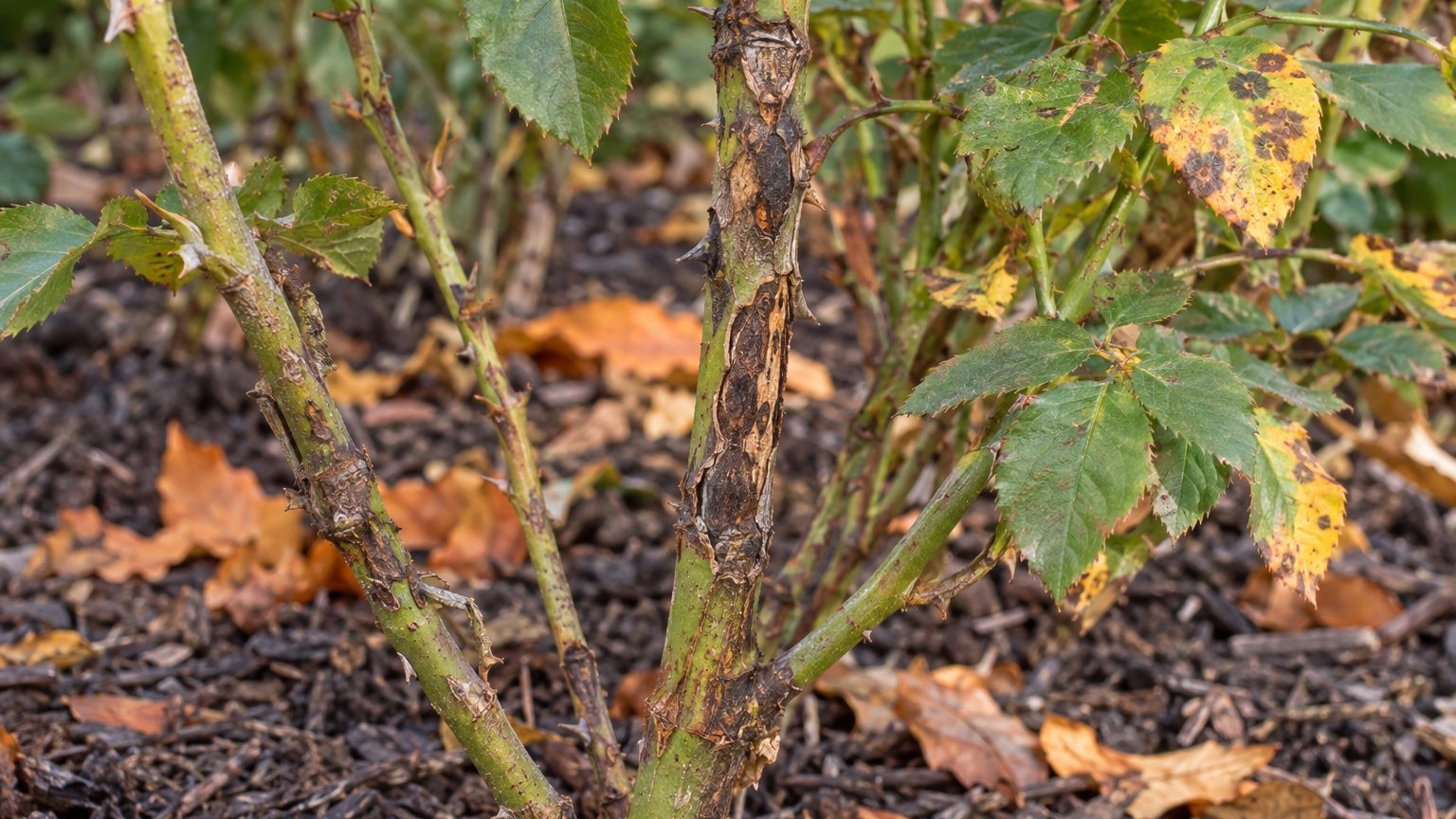
  • Light colored blotches or patches appear along the dead stem, often ringed with a reddish purple border.
  • Young cankers look slightly darker than the healthy tissue beside them and sit slightly sunken.
  • Some patches show flaky, loose or cracked surface tissue.
  • Tiny black bumps dot the dead area, and these are the fungus’s fruiting structures.

Color varies from light brown to dark purple, so go by the dead cane and the blotch together rather than by shade alone.

Stem Canker and Dieback or Something Else?

Several problems leave a rose with dead or spotted canes. Matching the spot to where it sits on the cane, and checking for the black dots, sorts most of them out.

A discolored or sunken area with black dots helps distinguish canker from other causes of cane dieback.

Looks like How to tell them apart
Winter injury Winter injury can wound a cane and allow canker to develop later, so look for a discolored or sunken area with black dots before calling it canker. Winter injury can also open the door for canker later.
Black spot Spots show up on the leaves, not on the cane, and the plant loses foliage rather than a single stem. A plant weakened by black spot can pick up canker afterward.

Powdery mildew, which coats young shoots and leaves in white film, can also leave a plant weak enough for canker to follow, though the mildew itself stays on the surface.

What Causes Stem Canker and Dieback, and Where It Is Worst

Several fungi cause it, among them Botryosphaeria, Leptosphaeria, Coniothyrium and Cryptosporella. They enter through wounds. In South Carolina, the wounds come from winter injury, improper pruning, wind, hail damage or flower cutting.

The disease follows stress. Roses weakened by black spot, poor nutrition or winter injury are the ones that get it, and cankers are more common on stressed plants in marginal sites or poorly maintained landscapes. No region is singled out, so it can turn up in any bed.

Left alone, a canker keeps growing until it circles the cane and kills it. It can also reach the crown at the base and spread to other canes, or kill the whole plant. Roses are susceptible to many stem canker fungi, so buying clean stock matters too: do not plant stock that already has cankers.

How to Treat Stem Canker and Dieback

Several kinds of canker exist, but you do not need to identify the fungus, since the treatment is the same for all of them: prune out the infected canes.

  1. Find the canker and trace the dead stretch, so that you know where healthy tissue begins.
  2. Disinfect your shears before each cut with 70 percent rubbing alcohol, or with household bleach mixed 1 part to 9 parts water, so that the fungus does not travel from cane to cane.
  3. Cut back to a strongly growing shoot or branch at least 2 to 3 inches below the infected portion, so that no diseased tissue stays behind.
  4. Make the cut immediately above a bud, so that the cane regrows cleanly instead of leaving a dying stub.
  5. Clean up all debris, including old mulch, and replace it with fresh mulch pulled back from the stems, so that spores are not left sitting at the base.

No fungicide controls canker, so pruning does the real work. Before using any spray, check that it is approved where you live and suitable for roses.

How to Prevent Stem Canker and Dieback Coming Back

Because the fungus needs a wound or a weakened plant, prevention means avoiding both across the year.

  • Check canes for cracks or frost damage, because winter injury leaves wounds where the fungus can enter.
  • When you prune, cut cleanly above a bud and disinfect the shears before every cut, since ragged pruning cuts invite infection.
  • Through the growing season, watch for black spot and powdery mildew and deal with them early, because a weakened rose is the easier target.
  • When you cut flowers, make clean cuts rather than tearing stems, since flower cutting is one way the fungus gets in.
  • Clear fallen debris and refresh the mulch, keeping it back from the stems.

If a bed holds 20 roses, they may be too crowded, and removing every other one may space them out for better air circulation.

Where This Comes From

This guidance reflects rose problems described in Minnesota, Maryland and South Carolina. Check local guidance for timing and treatments approved in your area.

Common Questions

Can a Rose Recover from Stem Canker?

The rose can recover when the infected canes are pruned out. Left in place, the canker can grow until it encircles the cane and kills it, and it can reach the crown.

Does Stem Canker Spread to Other Roses?

Cankers can spread to other canes on the same plant, and contaminated shears may carry the fungus between roses. Disinfecting the shears between cuts helps keep the fungus from moving along with you.

Is It Safe to Compost the Pruned Canes?

Remove the infected canes and all other debris from around the plant. Check local disposal guidance before adding infected canes to a compost pile.

Rose Rust on Roses: Signs, Treatment and Prevention

Rose Rust on Roses: Signs, Treatment and Prevention

Brush a rusty rose leaf and your fingers can come away dusted with orange. That powder is the spore mass of rose rust, a fungal disease that shows up on the lower leaves first and climbs the plant. Knowing what it looks like, what feeds it and when to clean up lets you keep it at a level the plant tolerates.

Rose Rust: What You See

Rose Rust on Roses: Signs, Treatment and Prevention

Turn leaves over, because the telling signs sit on the underside, while the top of the leaf gives only a hint.

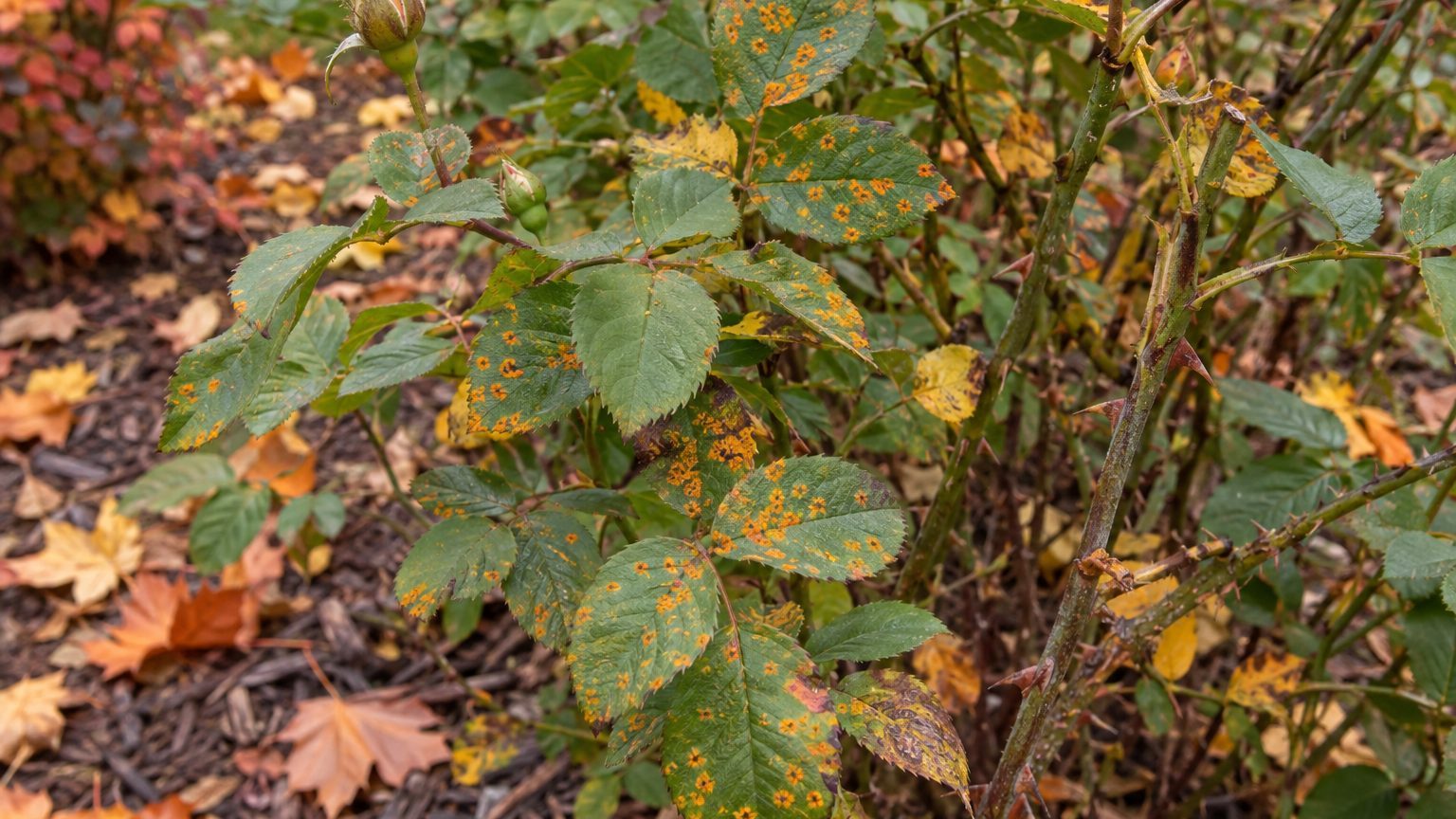
  • Small orange pustules full of powdery spores cover the undersides of leaves, usually starting on the lower ones and moving upward.
  • Yellow to reddish brown spots appear on the upper leaf surfaces, directly over the pustules below.
  • Pustules may also break out on the stems, as described for Maryland roses.
  • A severe case leaves orange dust on the leaves and on the ground beneath the plant.
  • In Maryland, the orange pustules darken late in summer as overwintering spores form, while in Pennsylvania black spores appear on the leaves in autumn.
  • Badly infected leaves on highly susceptible cultivars turn yellow or brown and drop.

Only roots and petals escape, so every other part of the bush can carry the fungus.

Rose Rust or Something Else?

Spotted, dropping leaves have more than one cause, and some of them call for a very different response. A diagnosis should combine the spot pattern with another clue, such as where the color sits on the leaf or how the stems grow.

Rose rosette disease is the one to rule out, because it reddens the plant in a way that can pass for rust at a glance.

Looks like How to tell them apart
Rose rosette disease: deep red color on the undersides of young leaves, then small, distorted, bright red leaves Stems grow vigorously in pink to magenta, leaf stalks shorten and the stem takes on a rosette look. No orange powder appears. Plants generally survive two to five years after the first symptoms.
Chrysanthemum rust: discolored spots on leaves that may drop early The spots are on chrysanthemum foliage, and the neighboring rose shows no orange pustules on its leaf undersides.

If new growth is red, crowded and rosetted instead of dusty orange underneath, treat it as a different disease. Before you decide what to do with the plant, have the problem identified.

What Causes Rose Rust, and Where It Is Worst

Rose rust comes from fungi in the genus Phragmidium, mainly Phragmidium mucronatum and Phragmidium tuberculatum, and these fungi infect roses only. The fungus runs through four spore stages. It arrives on infected roses you buy or on spores carried by the wind, and it can infect every type of rose, including Knockout cultivars.

Water is what lets an infection take hold, and cool, moist weather favors the fungus. It occurs throughout the United States, but the weather sets how bad it gets. Hot, dry summers limit it, yet it surfaces when conditions turn cool and wet.

The problem is chronic in cool coastal areas and can reach inland in wet years. Dark, thick-walled teliospores form in fall and wait out winter on fallen leaves. In California, some rusts also winter over on leaves that never drop from the plant.

How to Treat Rose Rust

Treatment centers on cleanup and careful watering.

  1. Check the undersides of the lower leaves first, so that you find the pustules before they climb the plant.
  2. Prune back severely affected canes, so that the heaviest source of spores leaves the bush.
  3. Stop overhead watering and wet only the soil, because water is needed for the fungus to infect new leaves.
  4. Pick up fallen leaves and dispose of them away from the bed, since the overwintering spores rest on them.
  5. A rose can tolerate a light infection without significant loss, but keep watching for heavier damage.

Fungicides are a separate decision. Which products are registered for roses differs by state, so your state extension service is the place to ask before you buy anything.

How to Prevent Rose Rust Coming Back

Rust returns on a seasonal cycle, so the prevention that works follows that cycle.

  • When you bring home new roses, inspect them closely, since infected plants are one way the disease arrives.
  • When rust is a problem, water at the base and keep the leaves dry, because wet foliage helps the fungus infect.
  • When pustules darken, prune out the most affected canes before the overwintering spores settle in.
  • Rake up fallen leaves, because dormant spores survive on them.
  • In California, collect leaves still hanging on the plants and those on the ground during winter.
  • When replacing a rose in a coastal location where rust is chronic, look for rust-resistant cultivars if they are available.

Removing fallen and lingering leaves clears away spores that can start another infection.

Where This Comes From

These notes draw on university extension and government plant disease publications written for states including California, Maryland, Pennsylvania, South Carolina and South Dakota. Timing and product rules differ by state, so confirm the details with your own state’s extension service.

Common Questions

Can Rose Rust Spread to Other Plants?

No. The fungi are specific to roses, so the disease moves from rose to rose, carried by wind. Chrysanthemums have their own rust, which looks similar but is a different disease.

Will Rose Rust Kill a Rose Bush?

Low levels of damage usually cost a plant little. Heavy infections cause leaves to yellow and fall, which weakens the bush.

Does Rose Rust Affect the Roots or Blooms?

It attacks every part of the plant except the roots and the petals. Leaves and stems carry most of the damage.

The almanac, state by state. Every date on this site comes from a state’s own frost facts and its extension service’s calendar — and says where it comes from.