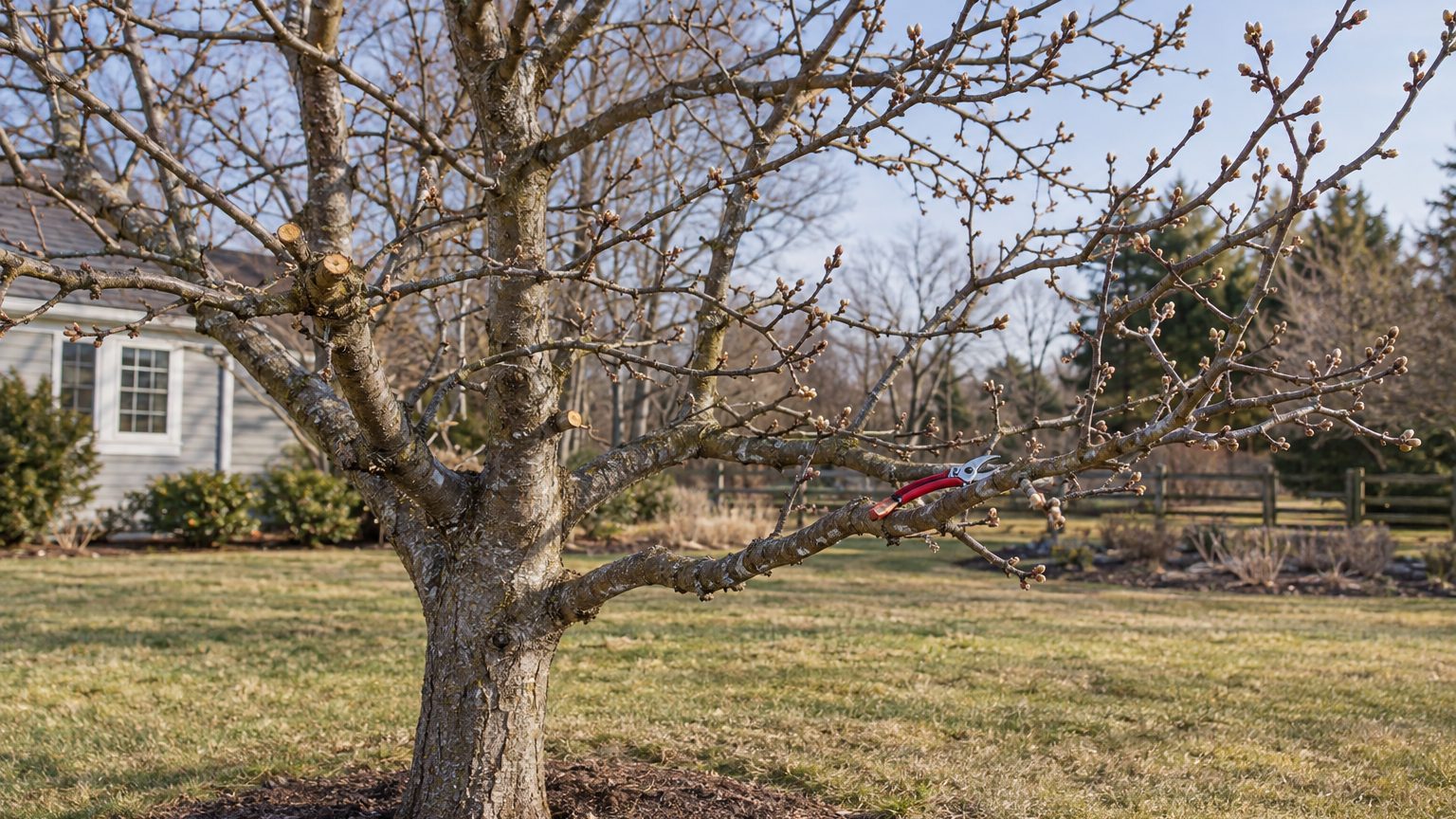
Bare branches against a gray winter sky are the cue to pick up the pruning saw. In Arkansas, fruit trees are cut back while they sleep, in the last stretch of winter before the buds open and the sap starts to move.
When to Prune Fruit Trees in Arkansas

Prune fruit trees in Arkansas while they are dormant, before the buds swell. February suits most of them, and January or March work as well when the weather or your schedule gets in the way.
Apples and pears can go first, from mid-January. Peaches and plums wait until mid-February to early March, closer to bloom.
| Fruit tree | When to prune in Arkansas | Why |
|---|---|---|
| Apples and pears | Mid-January into February | Hardy wood, so they can be pruned first while fully dormant |
| Peaches and nectarines | Mid-February to early March | Pruned last, close to bloom, because flower buds are easily hurt by cold |
| Plums | Mid-February to early March | Follow the peach timing, after the hardest cold has passed |
| Young trees | February, with January or March as alternatives | Shaping cuts heal as growth starts, while the tree is still dormant |
Cherries fit the general February window for most fruit trees. Fall and early winter are poor times for any of these cuts, since new growth they trigger may not harden before the cold arrives.
How to Tell Your Fruit Trees Are Ready to Prune
The tree itself gives better clues than a wall calendar, and a few signs line up with the months above.
- The leaves are gone, which means the tree is dormant and can take cuts without pushing tender new growth.
- The hardest cold of winter has passed, so fresh cuts are less likely to be hurt by a deep freeze.
- Buds are still tight and closed, which tells you there is time to prune before the sap starts to rise.
- Buds begin to swell on a peach, and that is the signal to finish its pruning quickly, since the flower buds are close to opening.
- The branch structure is clearly visible without foliage, so crossing limbs, dead wood and crowded centers are easy to spot.
If buds have already opened and bloom is underway, the dormant window has closed for that year, and light cleanup is all the tree needs until next winter.
When to Prune Peach and Apple Trees in Arkansas
Apples sit at the early end of the season. They can be pruned from mid-January through February, right in the heart of dormancy, because there is no rush and the cold is rarely a concern for the wood.
Peaches run on a later clock. Prune them from mid-February to early March, as close to bloom as you can manage while buds are still closed. Their flower buds are easily hurt by cold, so cutting early can remove wood you may need if a freeze arrives.
This order is a practical way to plan the work. Start with apples and pears, then move to plums and peaches as the days lengthen. Summer pruning is not part of the routine here, so save the main cuts for the dormant months.
Where to Get Fruit Tree Advice in Arkansas
Local help matters because hardiness runs from zone 6b to 8a across the state, so timing and varieties can shift between the Ozarks and the south.
- University of Arkansas Extension offers fruit tree guides and pruning advice, so look there before winter starts.
- Your county extension office can answer questions about your own orchard or backyard trees, and a visit in January gives you time to plan.
Common Questions
Can You Prune Fruit Trees in Summer?
Dormant winter pruning is the main job for fruit trees in Arkansas. Leave heavy cuts for the dormant months, and keep summer to the removal of broken or dead limbs if you notice them.
What Happens If You Prune Too Early in Winter?
Cuts made in fall or early winter can prompt new growth that has not hardened before cold arrives. Waiting until the late-winter window protects the tree, and it matters most for peaches.
Is It Too Late to Prune After Buds Swell?
Swelling buds mean the window is closing. Finish quickly if you must, starting with peaches, and plan the heavier work for the next dormant season.