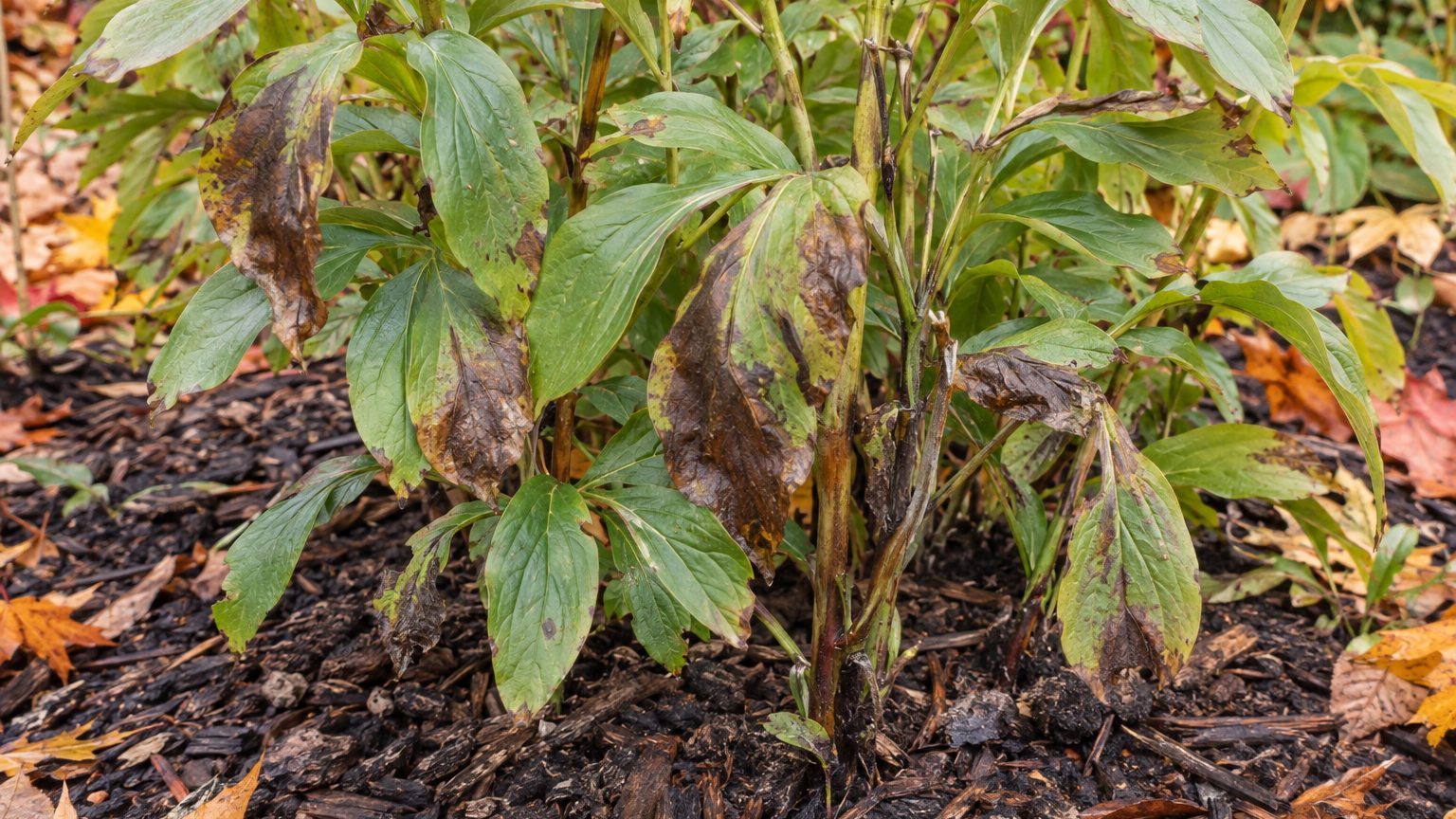
Young peony shoots can turn black and rot where they meet the soil. That is the usual look of Phytophthora blight, a soil fungus that favors cool, wet ground. Knowing the signs, what to pull out and how to keep the bed drier makes a big difference to the peonies you keep.
Phytophthora Blight: What You See

Young shoots that blacken and rot at soil level are a key sign.
- Young shoots turn black and rot at soil level, then die.
- Small, water-soaked spots show up first on emerging shoots, stems, leaf stalks, buds or leaves.
- The spots darken to brown or black, turning into leathery, elongated lesions.
- In Wisconsin, the black lesions on the lower half of young shoots can be several inches long, and the whole shoot may collapse.
- Higher on the plant, leaves and stems turn dark brown or black and feel somewhat leathery, and in Iowa stems tend to fall over at the lesions.
- In Kansas cankers may appear along the stem, and in Iowa the sunken black patches sometimes appear on upper stem tissue too.
From the almanac
Peonies in your state
The dates on this page depend on where you live. Your state's page carries its frost dates, its USDA zones and the year laid out month by month.
Northeast
Southeast
- Alabama
- Arkansas
- Delaware
- Florida
- Georgia
- Kentucky
- Louisiana
- Maryland
- Mississippi
- North Carolina
- South Carolina
- Tennessee
- Virginia
- West Virginia
Midwest
Southwest
West
Pacific Northwest
Canada
Phytophthora Blight or Something Else?
Peony problems in spring can look alike at first glance. Dark, collapsing growth has different possible causes, so a quick look at the surface of the damage helps.
Gray mold can look similar. The damage is similar, but the surface tells the story.
| Looks like | How to tell them apart |
|---|---|
| Botrytis blight (gray mold), with browning buds and darkened stems and leaves | Botrytis carries a velvety growth on the damaged tissue. Phytophthora blight does not, and its lesions are leathery and often start right at the soil line. |
Scorched-looking foliage can also come from Phytophthora root rot. If the scorching shows up in a bed that stays soggy, look at the roots and crown before blaming the leaves.
What Causes Phytophthora Blight, and Where It Is Worst
The cause is a fungus, Phytophthora cactorum, that lives in the soil. It is common in most soils and starts on either the roots or the developing shoots at ground level, blackening and decaying the stem tissue.
The disease is driven by wetness more than by region. It does best in cool, wet conditions such as very heavy rains, excessive irrigation and poor drainage. In Iowa, cool, wet spring weather is what favors it.
Drainage is the other half of the story. In Arkansas, peonies planted where water lingers may develop blight and stem canker. A bed that sits wet after rain, a low corner of the yard or a spot soaked by a sprinkler can set the stage in any state.
How to Treat Phytophthora Blight
Once symptoms are visible, chemical treatments are usually not effective, so the work is removal and cleanup.
- Cut away the infected shoots and stems as soon as you see them, so that the fungus has less tissue to spread through.
- Remove the entire plant and the soil right around it if most of the plant is infected.
- Clean up the soil around the planting carefully, so that no blackened scraps are left behind to feed the fungus.
- Bag the debris and keep it out of the compost pile.
- Check the drainage before replanting and correct any persistent wetness.
How to Prevent Phytophthora Blight Coming Back
Prevention comes down to keeping the crown and shoots out of standing water through the wet part of the year.
- When you plant or replant a bed, grow the peonies in raised beds so that excess water drains away from the crown.
- In Iowa, hold back on irrigation when shoots emerge into cool, wet spring soil, since excessive watering favors the disease.
- After heavy rains, check the bed for puddles or soggy patches and note which spots stay wet, because those need better drainage.
- Through the growing season, water only when the soil needs it and keep sprinklers from soaking the base of the plants.
- At cleanup, clear diseased debris from the bed and keep it out of the compost.
A well-drained bed is less favorable to this disease.
Where This Comes From
This soilborne fungus attacks roots or developing shoots at soil level.
Common Questions
Can Phytophthora Blight Kill the Whole Peony?
Yes. When the fungus reaches the crown and roots, it causes a wet rot that often destroys the entire plant. Shoots that blacken near the center of an older plant are a warning that the crown may be involved.
Does Phytophthora Blight Also Hit Peony Buds?
It can. Buds may turn brown and rot suddenly, and flowers and leaves can darken to brown or black. The symptoms often develop at the base of blighted leaves.
Why Do Some Stems Show Damage on Only One Side?
Infections sometimes appear on just one side of a stem. On older, multi-stemmed plants, they more often develop near the center of the plant, so look inside the clump as well as at the outer shoots.