Skip to content

Nevada

  1. Jan
  2. Feb
  3. Mar
  4. Apr
  5. May
  6. Jun
  7. Jul
  8. Aug
  9. Sep
  10. Oct
  11. Nov
  12. Dec
State
Nevada
USDA zones
4a-10a
Last spring frost
January 7 to February 1
First fall frost
December 8 to December 23
Annual rain
4 in
Lawn zone
warm-season
Source
NOAA NCEI U.S. Climate Normals 1991-2020, 32F freeze probabilities · Las Vegas

The year in Nevada, from the calendar

  1. JanSpring bulbs bloom · Plant hydrangeas · Plant roses · Prune roses · Prune fruit trees
  2. FebSpring bulbs bloom · Plant hydrangeas · Feed roses · Plant roses · Prune roses
  3. MarSpring bulbs bloom · Feed hydrangeas · Feed roses · Plant fruit trees
  4. AprSpring bulbs bloom · Feed roses · Crabgrass preventer · Mow
  5. MaySpring bulbs bloom · Feed hydrangeas · Feed roses · Mow
  6. JunPrune bigleaf hydrangeas · Feed roses · Mow · Water
  7. JulFeed hydrangeas · Prune bigleaf hydrangeas · Mow · Water
  8. AugSeed the lawn · Dethatch · Mow · Water
  9. SepPlant spring bulbs · Seed the lawn · Feed roses · Aerate · Dethatch
  10. OctPlant spring bulbs · Plant hydrangeas · Feed roses · Plant trees · Mow
  11. NovPlant hydrangeas · Plant trees · Fertilize the lawn · Mow
  12. DecPlant trees

From the state frost facts and extension calendars: University of Arizona Cooperative Extension · University of Arizona Cooperative Extension ; eXtension Ask an Expert · Clemson HGIC factsheet — Hydrangea · Purdue Extension — AY-13 Lawn Improvement Programs.

Best Time to Plant Trees in Nevada

Best Time to Plant Trees in Nevada

Bare branches in winter and a flush of new leaves in spring both tell you something about tree roots: they work best when the tree is not busy growing. In Nevada, that means planting in the cool, dormant stretch of the year, and the timing differs for shade trees and fruit trees.

When Is the Best Time to Plant Trees in Nevada?

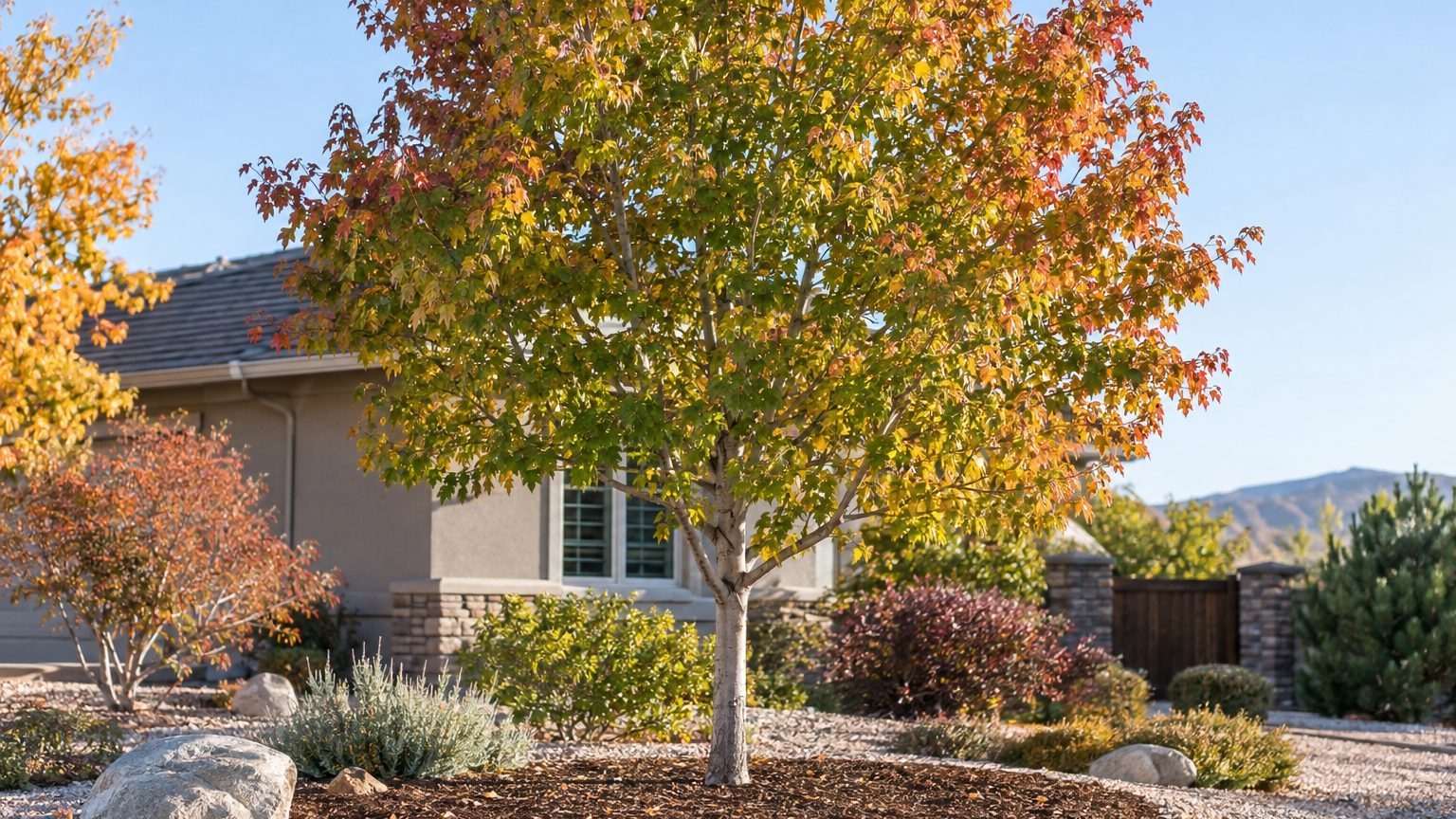
A young shade tree newly planted in a home yard

Shade and ornamental trees do best when planted in October, November and December, though trees can go in almost any time of year if you are willing to water them more.

  • In February and March, bare-root trees show up for sale, and they go into the ground while still dormant, before the buds open.
  • Through spring, a container-grown tree can be planted if you keep it watered, but it settles in more easily when planted during dormancy.
  • In summer, hold off, because heat and dry soil put heavy stress on new roots.
  • From October through December, plant shade and ornamental trees, whether container-grown or balled and burlapped, so the roots grow in soil that still holds some warmth.

Frost timing varies enormously across the state. The low southern desert valleys freeze late in the year and thaw early, while high northern valleys and mountain towns see frost much sooner in fall and well into spring. USDA hardiness zones run from 4a to 10a, so your county extension office can tell you what suits your elevation.

When to Plant Fruit Trees in Nevada

Plant fruit trees in February and March. Late winter into early spring is when bare-root trees are sold, and the sign to watch for is workable soil while the tree is still asleep.

Bare-root trees have no soil protecting their roots, so they cannot wait around. Get them in the ground soon after you buy them, before the buds swell.

Kind of fruit tree When to plant in Nevada Why then
Bare-root February to March Sold in late winter and early spring, and must be planted within a week of purchase
Container-grown February to March Settles best when planted while dormant, though it can go in most of the year with regular watering

Winter cold matters for fruit trees too. In Nevada, apricots and peaches need fewer chill hours, less than 400 to 500, while apples and pears need 700 to 800. Choose varieties to match the winters where you live.

Best Trees to Plant in Nevada

Where summers are hot, soil is dry and water is limited, desert-adapted trees do well. In the hot southern valleys, that points to species used to low rainfall and strong sun.

Evergreens give year-round shade and a windbreak, while deciduous trees let winter sun through. Colder northern and high-elevation yards call for different choices, so match the tree to your zone, your sun and your space.

Tree How it does in Nevada Why
Mesquite Suits hot, dry desert yards Deciduous shade tree with moderate to low water needs
Palo verde Suits hot, dry desert yards Deciduous shade tree with moderate to low water needs
Sweet acacia Suits hot, dry desert yards Deciduous shade tree adapted to desert conditions
Afghan pine Works for windbreaks and year-round shade Evergreen that comes in various sizes and shapes
Desert cypress Works for windbreaks and year-round shade Evergreen that comes in various sizes and shapes

Live oak is another evergreen choice for shade. Fruit trees selected for drought tolerance have also been grown in Nevada with soil amendment, proper irrigation, seasonal pruning and fertilization.

When to Plant, Water and Prune Trees in Nevada

Planting, watering and pruning each have their own moment in the year. Planting follows dormancy, watering follows the weather, and pruning follows the buds.

Water a young tree regularly while the soil is not frozen, since new roots have little reach. Prune fruit trees in late winter, never in fall or early winter, because new growth may not harden before the cold.

Task Best timing in Nevada Why then
Plant shade and ornamental trees October to December Roots settle in before the heat of summer
Plant fruit trees February to March Bare-root trees are on sale and still dormant
Water a young tree Regularly, as long as the soil is not frozen New roots dry out fast, especially in summer heat
Prune fruit trees January to February, before growth starts Cuts heal in mild weather before the buds swell

Order matters within pruning. Apples go first, and peaches go last, closest to bloom, because their flower buds are easily hurt by cold. The page When to Prune Fruit Trees in Nevada goes into this in more detail.

Where to Get Tree Advice in Nevada

Nevada spans desert valleys and mountain towns, so local advice pays off. The state extension service and your county office can help with choosing a species or testing soil.

  • University of Nevada, Reno Extension publishes planting and fruit tree guides, which are worth reading before you shop for a tree.
  • Your county extension office can advise on which species suit your elevation and can point you to a soil test, ideally before planting season starts.
  • When fall comes, or when February brings bare-root stock to the stores, dig the hole and get the tree in the ground.

Common Questions

Do You Need to Remove Burlap from a Balled-and-Burlapped Tree?

Yes. Set the tree in the hole, then cut away any wire basket and pull the burlap back from the top of the ball, so roots can grow outward freely.

Why Do Apricots and Plums Sometimes Bloom Too Early in Nevada?

Low-chill trees such as apricot, plum and peach can bloom during a warm spell in winter, because they have already collected the chilling hours they need. A frost afterward can then damage the flowers.

Do You Need to Water a Tree Planted in Winter?

Yes, though less often than in summer. Check the soil around the roots regularly, and water whenever it dries out and the ground is not frozen.
Best Peonies for Nevada

Best Peonies for Nevada

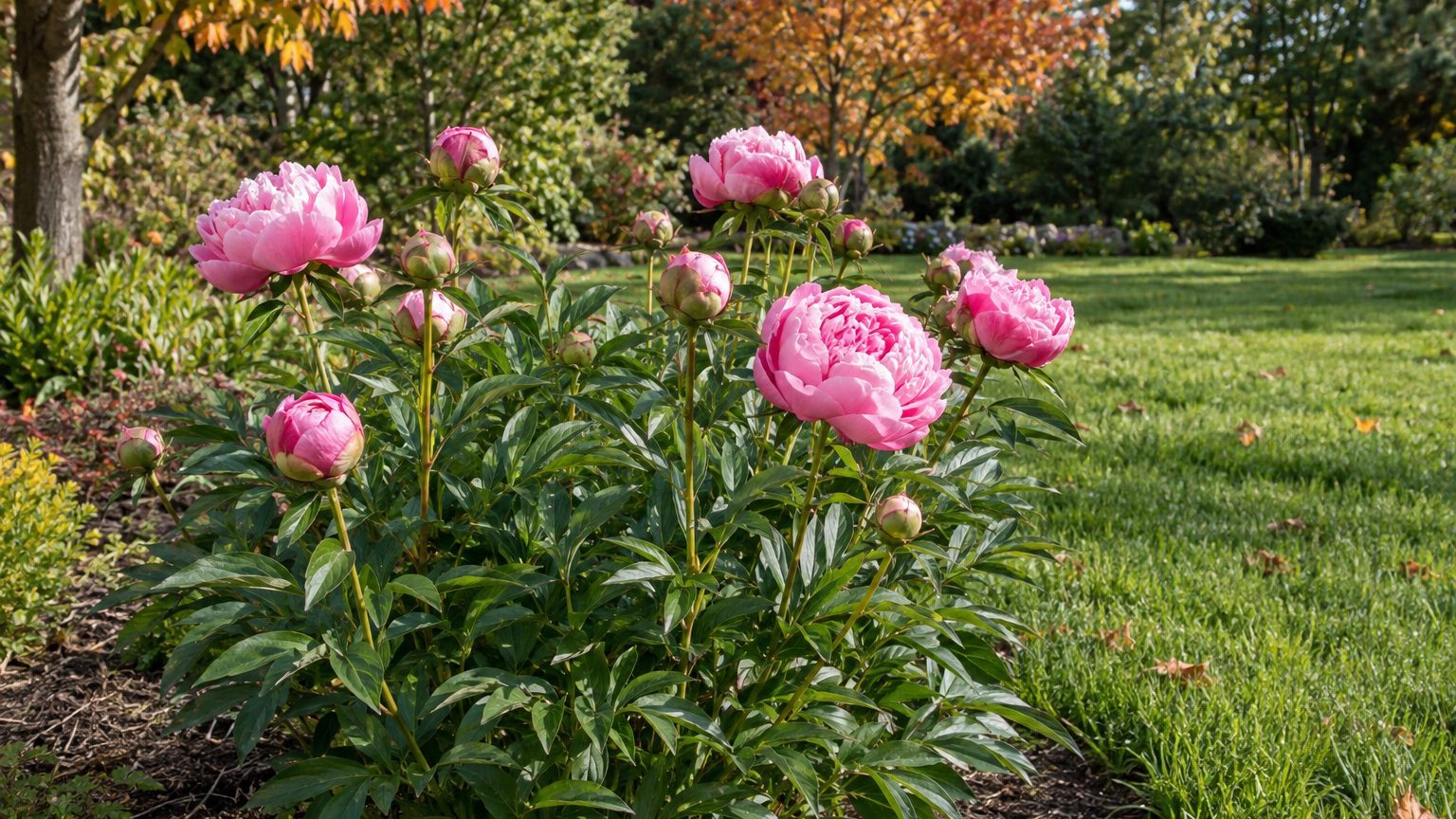
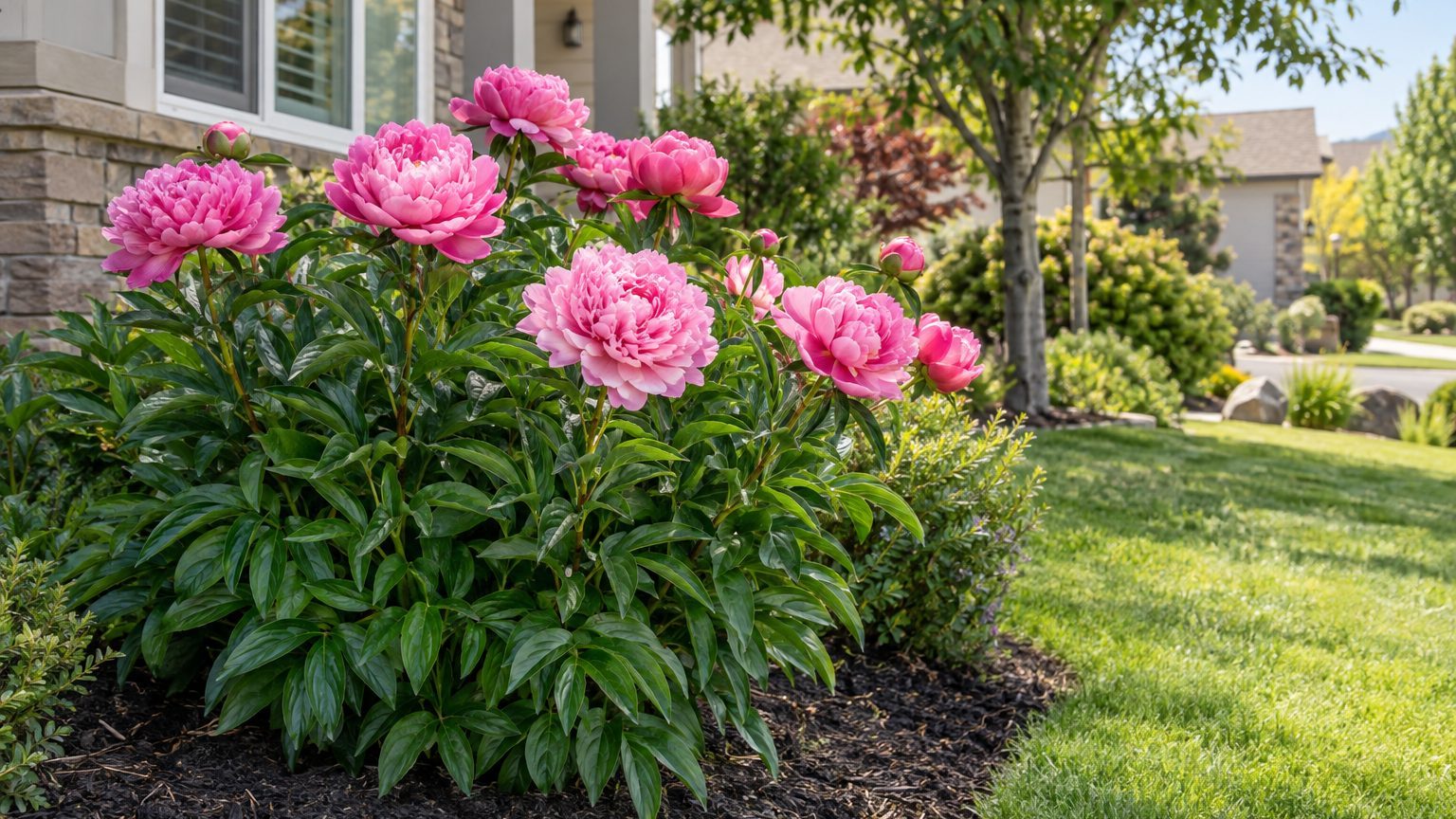
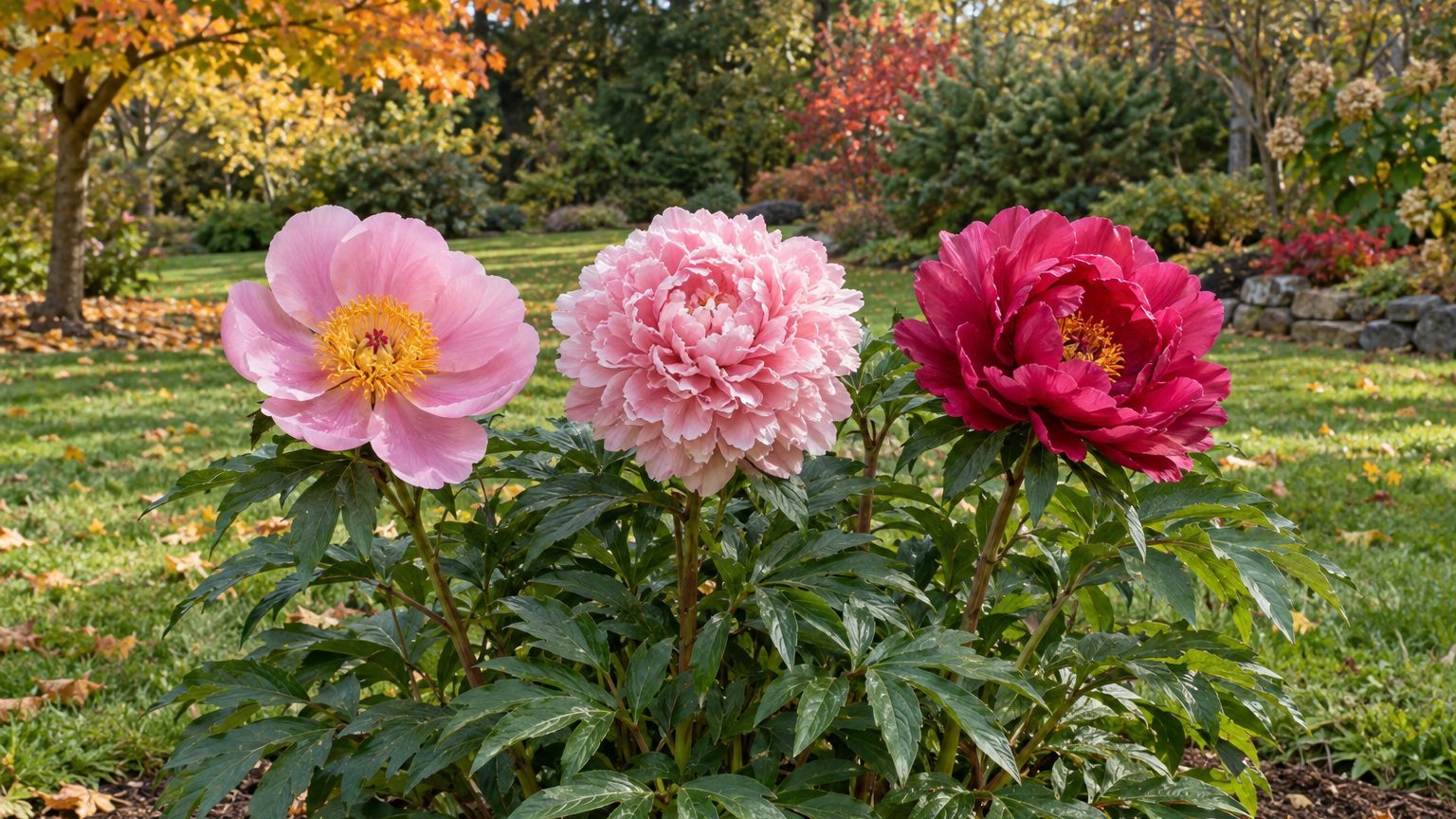
A peony in full bloom depends on a hard winter behind it. In Nevada that makes the choice of site matter as much as the choice of variety, because the cold high country gives peonies what the low desert cannot.

Best Peonies to Grow in Nevada

Best Peonies for Nevada

Herbaceous peonies do best in the cold, high-elevation parts of Nevada, and early-blooming cultivars can open before hot weather arrives. The low desert around Las Vegas may be too mild in winter for reliable flowering. Peonies need a cold winter rest to flower, so in mild-winter spots they may leaf out well and bloom poorly or not at all. Nevada spans USDA hardiness zones 4a to 10a, and that spread is exactly why the location matters.

Early-Blooming Cultivars

Early-Blooming Cultivars — Best Peonies for Nevada

Early bloomers have time to open before hot weather arrives, which matters in a state where summer heat arrives fast. They also tend to be less prone to botrytis blight, the gray mold that follows warm, damp spells. When a label or grower lists bloom time, lean toward the early end.

Sarah Bernhardt

Sarah Bernhardt — Best Peonies for Nevada

Sarah Bernhardt is a popular cut-flower and landscape cultivar. Plant it where winters are properly cold, such as Reno, Carson City or higher ground, and give it a spot with good drainage.

Karl Rosenfeld

A deep crimson double that appears on cut-flower and landscape cultivar lists. It suits the same cold-winter sites as other herbaceous types and pairs well with a pink variety for contrast in a front bed.

Festiva Maxima

A white double with crimson flecks that appears on cut-flower and landscape cultivar lists. Like the others, it rewards a cold winter and a site that does not bake in summer afternoons, so morning sun with some afternoon relief helps in hotter valleys.

Red Charm

Popular as a cut flower, this red is worth considering if you want bold color and plan to bring stems indoors. Peonies handle cold far better than heat, so the usual rule applies: put it in the coolest part of your yard that still gets sun.

How to Choose a Peony for a Nevada Garden

Match the plant to your winter first. A peony with a cold winter rest is more likely to flower, while one without it may bloom poorly. After that, think about summer heat and how much care you want to give.

Peonies are generally thought of as having very few disease problems. They also prefer well-drained, loamy soil but flower well in ordinary garden soil.

Your situation What suits it in Nevada Why
Very cold winter Sarah Bernhardt, Karl Rosenfeld, Festiva Maxima Peonies tolerate cold much more readily than heat
Hot summer Early-blooming cultivars They open before the heat sets in
Humid or damp spells Early-blooming cultivars They are less prone to botrytis blight
Concern about disease Any herbaceous peony in a cold-winter spot Peonies are generally thought to have few disease problems
Need for winter cold High-elevation, cold-region sites Peonies need a cold winter rest to flower

For a small yard, check the mature size on the plant label before you buy.

Which Peonies Suit Different Parts of Nevada

Peonies do best in the high, cold parts of the state, and the choice shifts as you move toward the warm south.

  • Reno and Carson City: Winters here are cold enough for the classic herbaceous cultivars, so this is where Sarah Bernhardt and similar varieties make the most sense.
  • Elko and the high northeast: Elevation brings the cold winters peonies want, while early bloomers may still avoid hot spells.
  • Las Vegas and the low desert: Winters are too mild for most peonies to bloom well, and summer heat is hard on them. Treat peonies as a gamble here, and ask your county extension office what grows better in your yard.

Within each area, choose a cooler spot away from reflected heat.

Peony Buying Mistakes to Avoid in Nevada

Planting in the Low Desert

Buying a peony for a mild-winter yard looks like a bargain at the nursery and turns into a leafy plant with few blooms. Peonies need a cold winter rest to flower, and low desert winters often do not supply it. If you live in the south, ask extension about plants better suited to your climate before you spend.

Choosing Late Bloomers

A late-opening cultivar may meet hot weather before it finishes blooming. Early-blooming cultivars have time to flower before hot weather, and they are less prone to botrytis. Check the bloom time on the label and pick early.

Setting the Plant Too Deep

A peony planted too deep may bloom poorly or not come up. Keep the eyes near the soil surface. Also expect a newly planted peony to skip its first spring, so a bare year is no reason to dig it up.

Where to Get Peony Advice in Nevada

Ask your county extension office for advice that fits your yard. Nearby help is worth using.

  • University of Nevada, Reno Extension offers guides and answers on what grows at your elevation, and it is worth a visit before you order plants.
  • Your county extension office can tell you which peonies have done well nearby, so call or stop in before you buy.

Common Questions

Do Peonies Bloom the First Spring After Planting?

Often not. A newly planted or transplanted peony may skip its first spring, then flower once its roots have settled.

Do You Cut Back Peonies in Nevada?

An herbaceous peony dies back each year, so cut it back after frost. A tree peony keeps its woody stems and is never cut back.

What Soil Do Peonies Need in Nevada?

Peonies prefer well-drained, loamy soil, but they flower well in ordinary garden soil. Avoid spots where water stands, since soggy roots stress the plant.

When Do Peonies Bloom in Nevada?

When Do Peonies Bloom in Nevada?

Peony buds in a Nevada yard open only if the plant has had a proper cold rest in winter, so bloom time here depends on how cold your winters run. Peonies flower in spring, shortly after the weather warms. Where winters stay mild, they may flower poorly or not at all. Your elevation and town decide most of it.

When Do Peonies Bloom in Nevada?

When Do Peonies Bloom in Nevada?

Peonies bloom in spring across Nevada, but no single month fits the whole state. The flowers follow the end of winter in your own yard, so they open later where spring arrives later. They need a cold winter rest to flower at all.

Where winters are mild, the plant may leaf out and never set a good flush of flowers. Colder yards give the plant the rest it needs, and bloom follows the first steady warmth.

Type of peony When it blooms in Nevada What to know
Early-blooming herbaceous Early in the peony season, before summer heat arrives Opens ahead of hot weather and is less prone to botrytis blight, so it suits warmer yards
Herbaceous, general In spring, after a cold winter rest Dies back each year and is cut back after frost, and may flower poorly in mild-winter areas
Tree (shrub) peony In spring, on woody stems that stay through winter Never cut back, since the stems carry next year’s buds

Peonies need winter chill before they flower. A newly planted or transplanted peony may not bloom the first spring, so a bare year after planting is normal.

How to Tell When Your Peonies Are About to Bloom

The plant itself gives a better signal than any date, because bloom follows your own spring.

  • Red, pointed shoots pushing through the soil mean the plant has come out of its winter rest and growth has begun.
  • Shoots that open into dark green, deeply cut leaves tell you the plant is putting energy into stems before flowers.
  • Small round buds at the stem tips mean flowers are on the way.
  • Buds that feel firm and tight are not ready to open.
  • Buds that soften when pressed very gently, with color showing at the seam, are close to opening.
  • Stems with no buds at all, on a plant that has been in the ground a while, often point to planting too deep or to a winter that was too mild.

That last sign is worth a check. A peony planted too deep may bloom poorly or not come up, so keep the eyes near the soil surface.

When to Cut Back Peonies in Nevada

Cut herbaceous peonies back in fall after a hard frost has blackened the foliage. The signal is the frost, not a calendar date. In milder yards where frost comes late or lightly, wait until the leaves have yellowed and collapsed on their own.

Cut the stems down close to the soil line, leaving the crown and the eyes undisturbed.

Tree peonies are different. They keep their woody stems through winter, so they are never cut back to the ground. Trim only wood that is clearly dead.

How Peony Bloom Time Shifts Across Nevada

Nevada spans a huge range of elevation and climate, from desert valleys to cold mountain basins, so bloom time and bloom quality shift a good deal from place to place.

  • Las Vegas Valley: winters are mild, so peonies may flower poorly or not at all. An early-blooming herbaceous type may open before the heat.
  • Reno and Carson City: winters are colder and spring comes later than in the south, so peonies get a better rest and bloom later in the season.
  • Elko and the northeastern high country: spring arrives later still at this elevation, and the cold winters suit peonies well, so flowers open well after those in the valleys.

Higher and colder generally means later bloom and stronger flowering. The USDA hardiness zones across the state run from 4a to 10a, which gives a sense of how different one yard can be from another.

Where to Get Peony Advice in Nevada

Nevada has no local extension page on peony pruning, so ask a local nursery or gardening group for advice that fits your yard. University of Nevada, Reno Extension and your county office can tell you which peonies suit your elevation.

  • The extension website has plant guides written for Nevada conditions, and it is a good time to read them before buying.
  • Your county extension office can speak to your exact elevation and microclimate, so call before you choose a variety.
  • Local master gardener programs often answer questions about bloom timing, so ask them when your own plant’s buds start to swell.

Common Questions

Why Didn’t a New Peony Bloom in Nevada?

A peony that was just planted or moved often skips bloom its first spring while the roots settle in. If it still has no flowers after that, check the planting depth, since eyes buried too deep keep the plant leafy but flowerless.

Does Your USDA Zone Tell You If a Peony Will Flower?

Only partly. The USDA system rates a place by its average annual extreme minimum temperature, and Nevada covers zones 4a to 10a. That says whether the plant survives the cold, not whether winter gives it enough rest to bloom, so ask your county extension office.

Can Tree Peonies Grow in Nevada Yards?

Tree peonies are woody shrubs that keep their stems year-round, and they need the same cold winter rest as herbaceous types. They tend to do better in the colder parts of the state, where winters are long enough to trigger bloom.

When to Plant Peonies in Nevada: Dates and Care

When to Plant Peonies in Nevada: Dates and Care

A peony earns its place in a Nevada yard through winter: the roots go in cool soil before the ground freezes, then spend the cold months resting. Red shoots push up in spring if that rest was long enough.

When to Plant Peonies in Nevada

When to Plant Peonies in Nevada: Dates and Care

Plant peonies when the soil is cool but still workable, so the roots can settle in before winter. Where that moment falls depends on your elevation, because the USDA hardiness zone system runs from 4a to 10a across the state. The year then unfolds like this.

  • In autumn, set the root divisions into cool soil while it can still be worked, with the buds (called eyes) kept near the surface.
  • Through winter, the plant sits dormant and collects the cold it needs to flower later.
  • In early spring, red shoots push up as the soil warms, and a plant set out the previous autumn may only grow leaves.
  • In late spring, established clumps send up buds, and the flowers open before summer heat arrives.
  • Through summer, the foliage keeps feeding the roots, and regular deep watering carries the plant through dry spells.
  • After the first hard frost in fall, an herbaceous peony’s leaves collapse and the clump goes back to rest.

Frost comes and goes at very different times from one Nevada town to the next, so a neighbor’s schedule in another valley may not match yours. Watch your own soil, and plant when it is still workable but the days have turned cool.

Which Peonies Grow Best in Nevada?

Peonies do well in the colder parts of Nevada and struggle in the hottest, mildest-winter parts. They need a cold winter rest to flower, so a yard in the low desert may see leaves but few blooms. Higher, colder ground suits them far better.

Peony type How it does in Nevada Why
Herbaceous peony Reliable in colder, higher yards, and poor in the low desert Needs a winter cold rest to flower, and mild winters can leave it with few blooms
Tree peony Worth trying in colder yards with some shelter Keeps its woody stems through winter, but still needs winter chilling in order to bloom

Nothing here changes the basic rule: the colder your winter, the better your odds. In a mild-winter yard, a peony may keep healthy leaves yet produce few or no flowers. If you live in the low desert, consider other flowering perennials suited to heat and save the peonies for a cooler spot at elevation.

When to Plant, Cut Back and Feed Peonies in Nevada

Peony work in Nevada is simple and takes place at the beginning and the end of the cold season. You plant before the ground freezes and you cut back after frost has blackened the leaves. Tree peonies skip the cutting entirely.

Task Best timing in Nevada Why then
Plant a new peony When the soil is cool but still workable Roots settle in cool soil and are ready for the winter rest
Cut back an herbaceous peony After the first hard frost has killed the foliage The leaves have finished feeding the roots, and removing them clears a hiding place for disease
Prune a tree peony Never cut it back The woody stems carry next year’s buds

Feeding has no firm date here. A soil test through your county office tells you whether the soil needs anything at all, and Nevada soils vary a great deal from one valley to the next.

How Peony Planting Dates Change Across Nevada

Elevation and latitude help shape the season in Nevada, which has a wide range of winters.

  • Las Vegas and the southern desert: Winters are mild and the ground rarely freezes hard, so peonies get little rest and often flower poorly. Planting here is a long shot for a peony that needs a cold winter rest.
  • Reno and Carson City: Winters are colder, frost arrives earlier in fall and leaves later in spring, and peonies get the rest they need. Plant sooner in autumn than a southern yard would, before the ground stiffens.
  • Elko and the high basins of the northeast: Cold arrives early and lingers, so the planting window closes sooner and shoots come up later in spring. A sheltered spot near a wall helps young plants in exposed ground.

Within a town, a yard higher on the slope may run cooler and wake later than a lower yard in spring.

Where to Get Peony Advice in Nevada

Nevada has no local extension page on peony pruning, so ask a local nursery or gardening group for advice that fits your yard. University of Nevada, Reno Extension and your county office can look at the particulars of your yard.

  • Extension publications and staff can help you judge which peony types suit your elevation, and they can diagnose leaf problems if you bring a sample.
  • The county office can point you to a soil test, which is worth doing before you dig a planting hole in autumn.

Common Questions

How Deep Should You Plant a Peony in Nevada?

Set the root so its eyes sit near the soil surface. A peony planted too deep may bloom poorly or not come up at all.

Will a New Peony Bloom the First Spring?

Not always. A newly planted or transplanted peony may skip blooming the first spring while it builds roots, so a leafy plant with no flowers in year one is normal rather than a sign of failure.

Is a Peony Dead When the Stems Disappear in Winter?

No. An herbaceous peony dies back to the ground each year and regrows from the roots in spring. A tree peony behaves differently, keeping its woody stems, so bare wood on one of those is the plant at rest and not a plant that needs replacing.

Best Lilacs for Nevada

Best Lilacs for Nevada

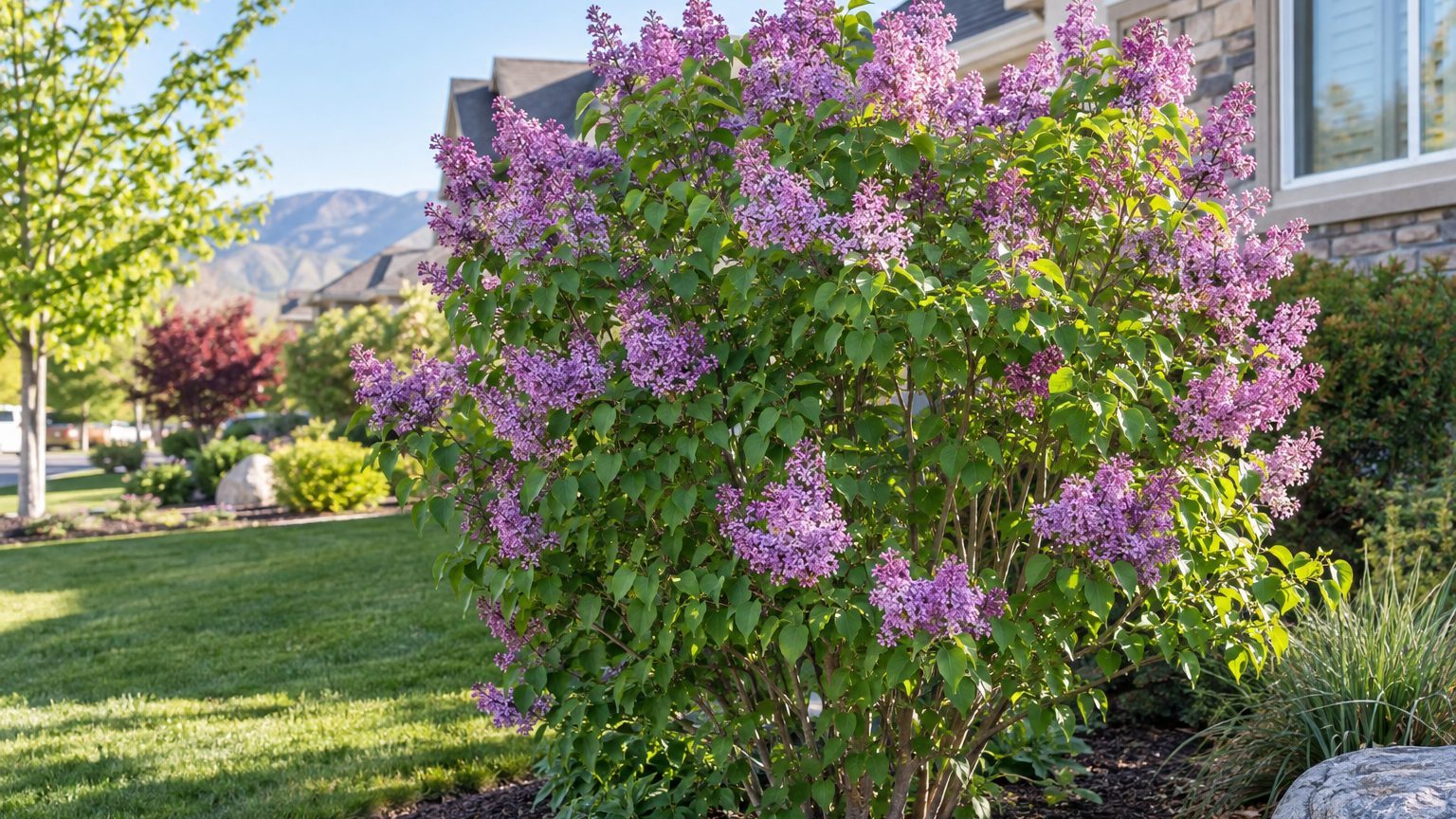
A lilac in full bloom fills a whole yard with scent for a short stretch each spring, and in Nevada whether yours does depends on how cold your winters get. Elevation is a major factor. Plants that thrive in a Reno or Carson City yard can sulk in the low desert, so the choice of lilac matters more here than the planting technique.

Best Lilacs to Grow in Nevada

Best Lilacs for Nevada

Common lilacs and their hardy hybrids do well in the cold-winter parts of Nevada, because the flower buds need a cold winter rest to mature. In the hot, low desert the plants tend to languish and bloom poorly. There, the lilacs bred for mild winters, such as the Descanso hybrids, are the ones worth trying.

Common Lilac on Its Own Roots

Common Lilac on Its Own Roots — Best Lilacs for Nevada

The classic lilac suits colder Nevada yards, but it struggles through hot, humid stretches of summer. Look for plants growing on their own roots, since those are far more hardy than grafted lilacs. Ask the nursery how the plant was propagated before you buy.

Hyacinthiflora Lilacs

Hyacinthiflora Lilacs — Best Lilacs for Nevada

These vigorous hybrids look like French hybrids but bloom earlier. The shrubs themselves are very hardy, though the early flowers are caught by late spring frosts. Plant them only where those frosts are less frequent.

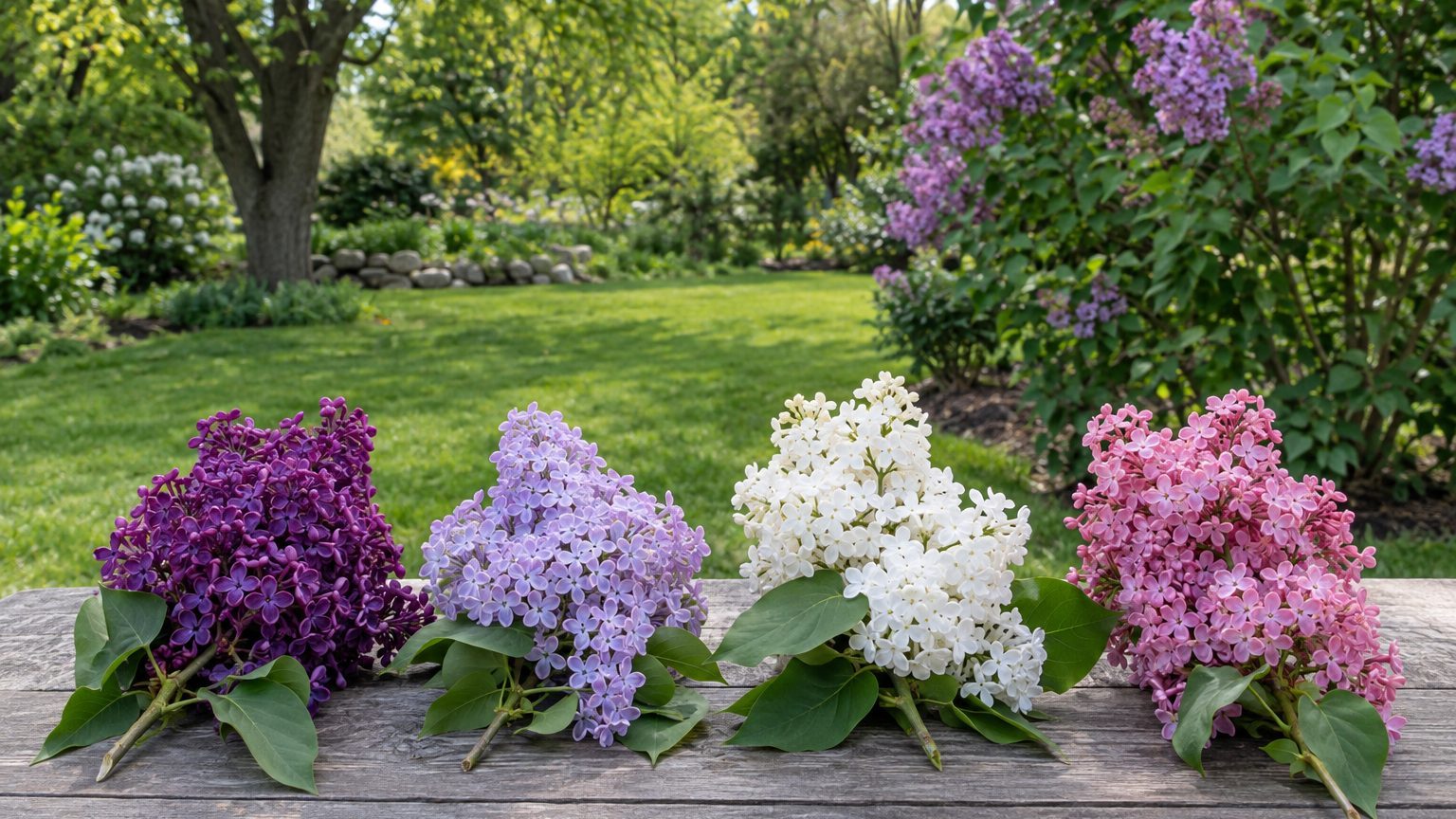
Cultivars include the lavender ‘Assessippi,’ pink ‘Maiden’s Blush,’ and violet ‘Pocahantas.’

Meyer Lilac

Slow growing, with dense foliage and a broadly rounded shape, this is a spreading shrub that stays compact. Its compact habit makes it a fit for front beds and tighter corners.

Superba

This cultivar is heat tolerant and mildew resistant, with dark pink, single flowers. That combination makes it a sensible pick for a Nevada yard where summers run hot.

Early Lilac

Syringa oblata grows tall and flowers in shades of purple. Give it room along a property line or at the back of a border, and it rewards you with early color.

Descanso Hybrids

Bred for mild winters, these include the white ‘Angel White,’ blue ‘Blue Boy,’ and pink ‘California Rose.’ They are worth trying where winters are mild, though even low-chill lilacs perform best with an extended cold rest and are often less fragrant than the ones you remember.

How to Choose a Lilac for a Nevada Garden

Start with the coldest night your yard sees and the last frost you can count on in spring. Those details sort the lilac list quickly, and matching your Nevada situation to the right type is simple.

Plant size matters too, because a shrub that outgrows its spot will need cutting back.

Your situation What suits it in Nevada Why
Very cold winter Common lilac on its own roots Own-root plants are far more hardy than grafted ones
Hot, humid summer Superba Heat tolerant and mildew resistant
Small space Meyer lilac Slow growing, compact, and suited to a smaller space
Late spring frosts Skip Hyacinthiflora types They bloom earlier and the flowers are caught by frost
Mild winter, little chilling Descanso hybrids Bred for mild winters, though they still prefer a cold rest

The table leaves out yards with plenty of room. Early lilac fits there, with purple flowers on a tall shrub.

Which Lilacs Suit Different Parts of Nevada

Nevada spans USDA hardiness zones 4a to 10a, so the lilac that suits one valley can fail in another.

  • Reno and Carson City: Winters give the cold rest lilacs want, so the common lilac and its hybrids are at home here. Frosts linger into spring, which argues against the earliest bloomers.
  • Higher-elevation towns: Spring frost arrives later than in the valleys, so own-root common lilacs and late-opening types are the safer pick. Hyacinthiflora lilacs risk losing their blooms to a frost.
  • Las Vegas and the southern desert: Heat and mild winters are hard on lilacs. Try Descanso hybrids or Superba and expect fewer flowers than a northern yard would give.

Elevation and local winter temperatures matter more than proximity to a mountain slope.

Lilac Buying Mistakes to Avoid in Nevada

Choosing a Plant Too Tender for Winter

A grafted lilac is less hardy than one on its own roots. Ask whether the plant is grown on its own roots and choose that one.

Picking a Lilac That Needs More Cold

Common lilacs need a cold winter rest, and in the hot desert they languish and bloom poorly. A shrub that flowers poorly can be a disappointment. In mild-winter yards, choose a Descanso hybrid, and set your expectations for scent lower.

Ignoring Adult Size

A small pot hides a large shrub. An Early lilac needs more room than a compact Meyer lilac. Check the mature height before you dig the hole.

Crowded shrubs need cutting back, and the timing matters. A lilac sets next year’s buds soon after it flowers, so prune right after the flowers fade. Pruning in late summer, fall, or winter cuts off the next spring’s blooms.

Where to Get Lilac Advice in Nevada

Local conditions in Nevada change sharply from one valley to the next, so local advice beats general rules. University of Nevada, Reno Extension and your county extension office can tell you which lilacs hold up near you.

  • Nevada has no local extension page for lilac timing, so confirm pruning with a local garden center or gardening group.
  • Your county office can speak to the frost pattern and soil in your own neighborhood, so call before planting day.

Common Questions

When Do Lilacs Bloom in Nevada?

Where winters stay mild, lilacs bloom poorly or not at all because their buds need a cold rest. Elsewhere, bloom follows the local spring, coming later at higher elevations and earlier in the valleys.

How Can You Keep Lilacs Blooming Longer?

Plant several species and varieties with different flowering times. Choosing species and varieties with different flowering times can extend the display.

Are Lilacs Fragrant in Warm Parts of Nevada?

The lilacs bred for mild winters usually grow and bloom there, but they are not as fragrant as the common lilacs you may remember from colder places.

When Do Lilacs Bloom in Nevada? Dates and Care

When Do Lilacs Bloom in Nevada? Dates and Care

Lilac flowers open on bare-looking stems when spring finally settles in, and in Nevada that moment depends heavily on where the yard sits. A shrub in a high valley and one in the Las Vegas Valley live in very different climates.

When Do Lilacs Bloom in Nevada?

A lilac bush in bloom in a home garden

Lilacs bloom with the local spring, so the flowers arrive when your own yard warms up rather than on a fixed Nevada date. The year of a lilac runs like this.

  • In spring, once the local weather warms, the clusters of flowers open on last year’s wood.
  • Right after the flowers fade, prune, because the shrub is about to start forming next year’s buds.
  • Through summer, the plant sets its flower buds for the following spring, so heat stress and heavy cutting at this stage cost you flowers later.
  • In fall, the leaves drop and the buds stay on the stems, so leave them alone.
  • In winter, the shrub needs a cold rest to mature those buds, which is the part of the year that mild-winter yards struggle to provide.

Frost timing swings widely. In the Las Vegas Valley, the last spring freeze falls between January 7 and February 1, which is a desert city extreme and no guide for the rest of the state. The first fall freeze there comes between December 8 and December 23. Reno, Carson City and anywhere with elevation freeze later in spring and earlier in fall. The USDA hardiness zone system, which rates only the average yearly minimum temperature, runs from 4a to 10a across Nevada, so your zone depends on your town.

Which Lilacs Grow Best in Nevada?

Lilacs do well where winters are properly cold and summers are not brutal. Cold-winter yards at higher elevation suit common lilacs. In hot low desert yards, common lilacs struggle and may flower poorly, so warm-climate types are the better bet.

Lilac type How it does in Nevada Why
Common lilac (Syringa vulgaris) Suited to cold-winter yards, weak in the hot low desert Needs a pronounced cold rest and struggles in prolonged high heat
Descanso hybrids Worth trying in warmer yards Developed for warm-climate gardens, and include white, blue and pink selections
Southern lilacs Usually grow and bloom in warmer yards Early-blooming types sold for warm regions, though less fragrant
Low-chill cultivars Bloom with less winter cold Bred to flower on little chilling, yet they still do better with a long cold rest

Plant labels sometimes claim strong heat tolerance for common lilacs. Treat that claim cautiously, because heat and humid spells also bring powdery mildew, a gray-white dusting on the leaves. If your yard is warm, look for the early-blooming Southern types or the Descanso hybrids, and expect a lighter scent than the old-fashioned lilac gives.

When to Plant, Prune and Feed Lilacs in Nevada

Lilac timing follows the plant’s own signals more than the calendar. The shrub flowers on last year’s wood and sets its next buds soon after the blooms drop, so the pruning cut has a narrow, easy-to-spot window.

Task Best timing in Nevada Why then
Pruning Right after the flowers fade Next year’s buds form in summer soon after bloom, so you cut before they exist
Hands off Late summer, fall and winter Cutting then removes the buds that would open the next spring
Planting Ask your county office for your local frost pattern first Frost arrives at very different times from the desert floor to the high country

Feeding is a matter for your soil rather than for a Nevada date, so a soil test through your county office is the sensible starting point. The full detail on cuts, tools and how much to remove belongs on the page about when to prune lilacs in Nevada.

How Lilac Bloom Time Changes Across Nevada

Elevation and latitude do most of the shifting in Nevada, and the direction is simple: colder places bloom later and mild places bloom earlier, when they bloom at all.

  • Las Vegas Valley: Winters are mild enough that common lilacs may flower poorly, and warm-climate types make more sense here. Where a shrub does bloom, it opens earlier than in colder parts of the state.
  • Reno and Carson City: Winters are colder, so common lilacs get the rest they need, and bloom comes later in spring than in the south.
  • Higher ground in the mountains, such as the Lake Tahoe area: Cold lingers longest, so flowers open later still, and a late freeze is more likely to catch the buds.

Within a single yard, a south-facing wall can pull bloom a little earlier than an open corner nearby.

Where to Get Lilac Advice in Nevada

Local help matters in a state with this much range. A lilac question in Elko and one in Henderson can have opposite answers.

  • University of Nevada, Reno Extension offers plant guidance for Nevada conditions, and it is a good place to start before choosing a variety.
  • Your county extension office can run a soil test and help diagnose leaf problems such as mildew, so bring a sample of the affected leaves.

Common Questions

Why Is a Lilac Not Blooming in Nevada?

A shrub with healthy green leaves that never sets flower buds, growing in a low, warm yard, is often short of the cold winter rest it needs. Moving to a low-chill type or a Southern lilac usually fits better than more fertilizer.

Do Las Vegas Frost Dates Apply to Reno?

No. The Las Vegas dates reflect a warm desert city, while Reno and Carson City freeze later in spring and earlier in fall. For your own planting decisions, check with your county extension office.

Why Do Lilac Leaves Look Dusty and White in Summer?

A pale, powdery coating on the leaves, appearing during a stretch of high heat and humidity, points to powdery mildew. Common lilacs are prone to it, and Southern types are a good choice for warm yards.

Best Roses for Nevada

Best Roses for Nevada

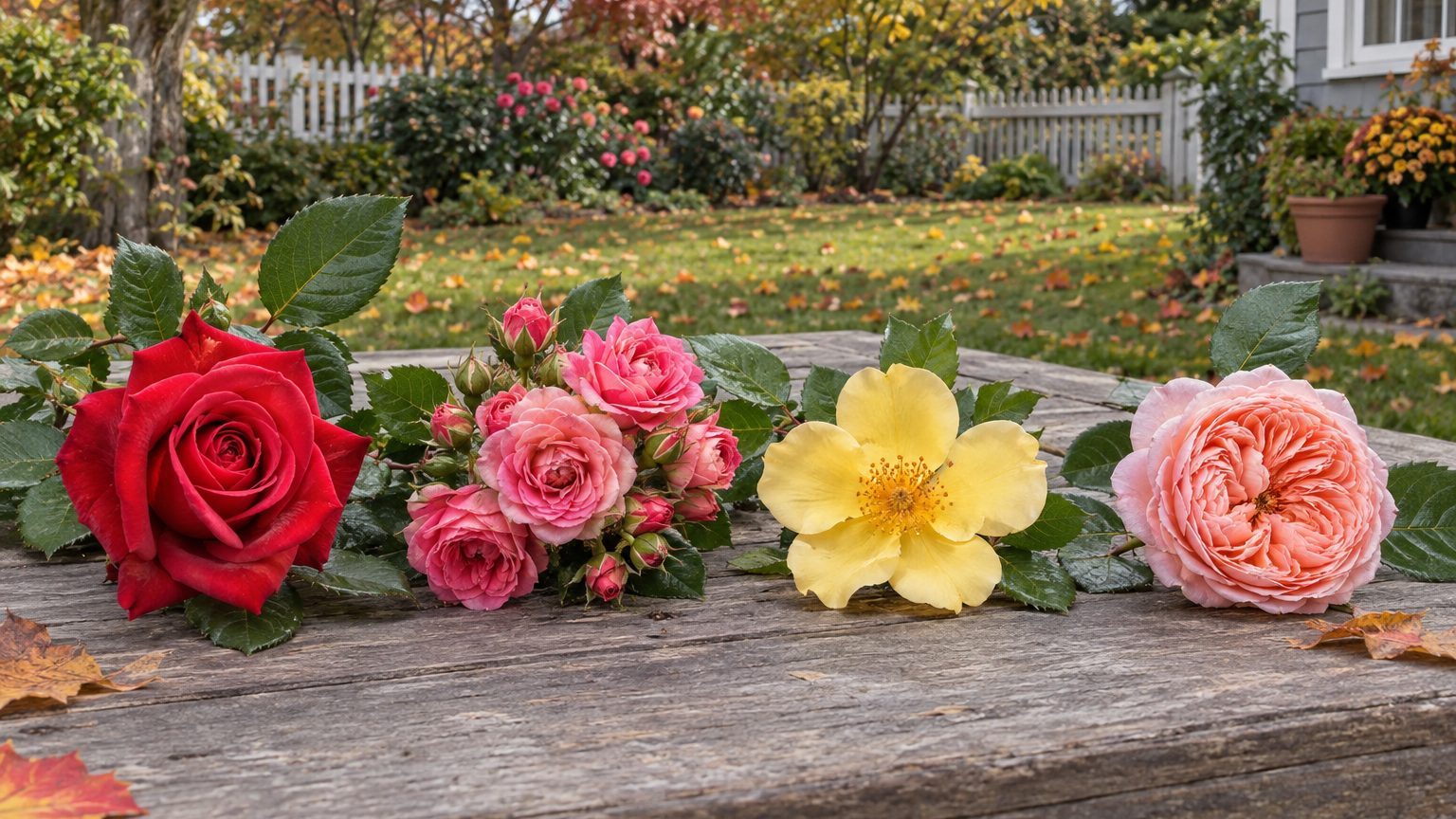
A Nevada spring can look very different in a low-desert yard and at high elevation. Hybrid teas, floribundas, polyanthas, miniatures, climbers and old garden roses all earn a place here, though elevation and summer heat decide which suits your yard.

Best Roses to Grow in Nevada

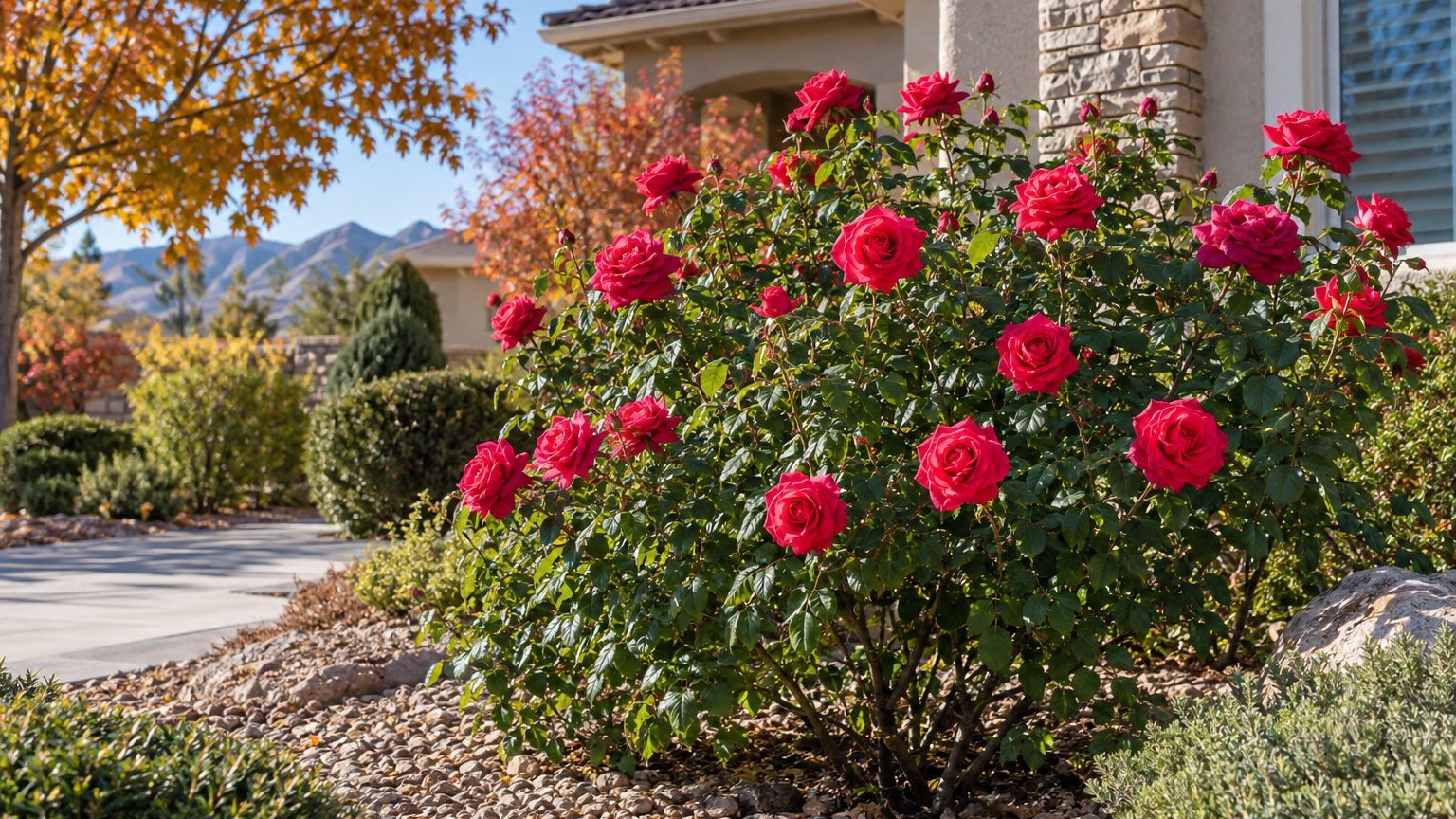
Healthy roses in bloom

Hybrid teas and floribundas are the roses grown most often, and the rest of the popular types (polyanthas, miniatures, climbers, old garden roses) earn their place for specific reasons. Dry air and summer heat matter in low-desert gardens, while colder high ground calls for a different plan.

Hybrid Teas

Hybrid teas are continuous bloomers, and many are resistant to powdery mildew, which suits dry air that can still leave leaves dusty with it in cool, shaded corners. They are the classic long-stemmed rose and the type most often grown in dry-climate gardens.

Prune them in January or February, and it can also be done in March.

Floribundas

Floribundas are grown nearly as often as hybrid teas and give you clusters of blooms instead of single stems. They bloom repeatedly, so they take the same winter pruning.

Use them where you want color over a long stretch rather than a few cutting-quality flowers.

Polyanthas

Polyanthas make excellent borders and small hedges, and they do well in containers. Many are hardy, and most varieties bloom continuously.

That makes them a sensible pick along a walkway or on a patio where you want low upkeep and steady flowers.

Miniatures

Miniatures sit among the popular types for dry-climate gardens and fit beds too small for a full-size shrub. Pot them or tuck them at the front of a border.

Check whether a miniature rose repeats or blooms once before choosing its pruning time.

Climbers

Climbers can cover fences and arbors. Some bloom once and some repeat, so check the tag before you buy.

A once-blooming climber flowers on last year’s wood, so prune it right after it blooms and never in early spring. A repeat bloomer follows the winter schedule.

Old Garden Roses

Old garden roses split into European types, which are cold hardy and bloom once, and Asian types, which repeat. Growers who keep European and Asian old garden roses often find the old garden group needs less maintenance than modern roses, especially in the hot summer months.

That is a real advantage in a Nevada summer.

How to Choose a Rose for a Nevada Garden

Nevada spans USDA hardiness zones 4a to 10a, so the right rose depends on where you garden more than on any one favorite variety. Start with the problem your yard poses, then pick the type that answers it.

The pruning and planting months below follow the nearest comparable climate, since Nevada has no local rose-timing page. Confirm them with a local garden center or a rose society.

Your situation What suits it in Nevada Why
Very cold winter, high ground European old garden roses They are cold hardy, and in the high mountains other roses need some protection
Powdery mildew on leaves Hybrid teas and other mildew-resistant varieties Many hybrid teas resist mildew, and planting resistant varieties is the best control
Hot, dry summer Old garden roses They need less upkeep than modern roses in the hot months
Little time to spare Polyanthas They are hardy, and most varieties bloom continuously
Small space or patio Polyanthas in containers, or miniatures Polyanthas do well in pots and make small hedges

For bare-root roses, the planting months run January and February, with March as a fallback. Potted roses can go in later than that. Pruning repeat bloomers follows the same months, and feeding starts after pruning.

Which Roses Suit Different Parts of Nevada

The gap between the desert south and the mountain edges is wide, and it changes which roses you can rely on.

  • Las Vegas: Heat is the main test in the low desert, so lean toward old garden roses and the sturdier modern types, and plant bare-root roses early in the winter window.
  • Reno and Carson City: Winters are colder here than in the south, so favor cold-hardy roses and confirm bare-root planting time with a local garden center or rose society.
  • Lake Tahoe and the high mountains: Conditions at Lake Tahoe and in the high mountains differ sharply from the low desert, so confirm suitable rose types and winter care locally.

Your own yard may sit in a pocket warmer or colder than the town around it, so treat these as starting points.

Rose Buying Mistakes to Avoid in Nevada

Choosing a Type Too Tender for Winter

A hybrid tea planted on a high, exposed site can suffer where a cold-hardy rose would not, because the high mountains are where roses need protection from winter. The cost is canes killed back and a slow, weak start the next year.

Look up your hardiness zone before you buy, and choose a cold-hardy European old garden rose or a polyantha if your site runs cold.

Buying a Mildew-Prone Variety

Powdery mildew can show up on roses in shaded or crowded plantings. A susceptible variety may leave you reaching for a spray.

Look for varieties sold as mildew resistant, since planting resistant varieties or using a preventive fungicide spray is how this disease is best controlled. Good airflow around each plant helps too.

Planting a Grafted Rose in a Hard Winter Spot

Where winter is hardest, a grafted rose can lose its top growth and leave only the rootstock to sprout, which means a plant that is not the rose you paid for. The loss shows up in spring, when the new shoots look different from the original.

Ask the nursery whether the rose is grafted and how it handles winter at your elevation. In cold sites, favor the hardy types already named above.

Where to Get Rose Advice in Nevada

Local advice matters most here, because conditions change so much from valley floor to mountain slope. University of Nevada, Reno Extension and your county extension office can tell you what grows in your own zone.

  • The state extension service offers gardening guidance for Nevada conditions, so check it before choosing varieties.
  • Your county extension office can answer questions about your specific site, and the cooler months before planting season are a good time to call.
  • A local rose society or garden center can confirm timing and tell you which varieties do well near you.

Common Questions

When Should You Feed Roses in Nevada?

Feeding runs from February through June, starting after pruning and repeating regularly until June. Skip midsummer, then feed again from September to mid-October.

Why Do Roses Stop Blooming in Summer Heat?

Many varieties pause blooming during extreme summer heat. They usually pick up again as the weather cools.

Do Light-Colored Roses Attract Thrips?

Thrips are said to prefer light-colored blossoms, such as yellow and white. If thrips bother your roses, darker varieties may be less appealing to them.

When to Prune Roses in Nevada

When to Prune Roses in Nevada

Rose canes on Nevada’s desert floor can start swelling early, which is why pruning begins in winter there. Repeat-blooming roses are pruned in January or February, while once-blooming roses wait until their flowers fade. The dates also shift between the desert floor and the high ground.

When to Prune Roses in Nevada

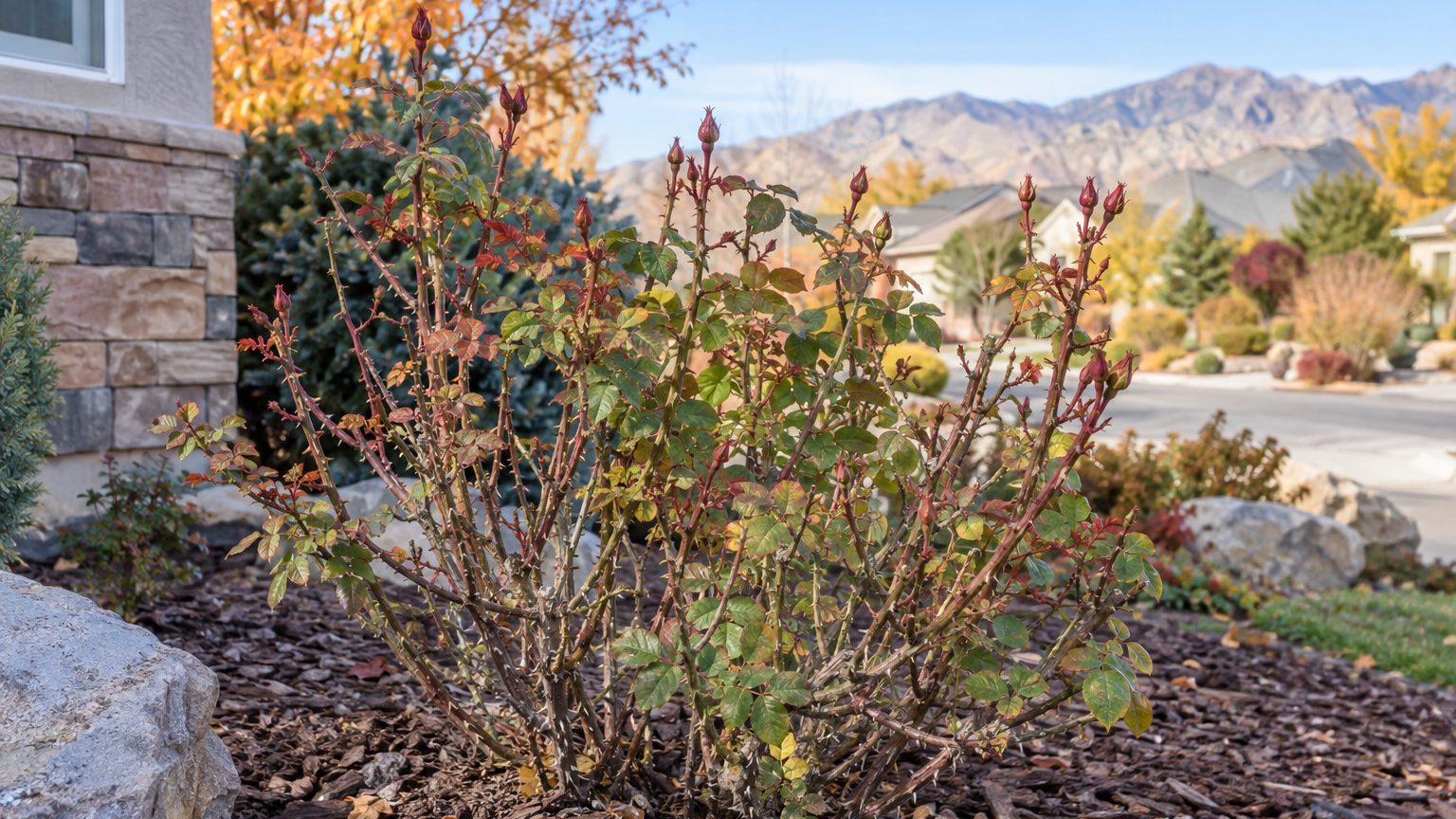
Rose canes at pruning time

Prune repeat-blooming roses in January and February. It can also be done in March if the weather or your schedule gets in the way. Nevada has no local rose-timing guide of its own, so these months follow the nearest comparable desert climate.

Confirm the timing for your town with a local garden center or a rose society, since the state covers a huge range of elevations.

Type of rose When to prune in Nevada Why
Hybrid teas, floribundas and modern shrub roses (repeat-blooming) January to February, or March if needed They flower on new wood, so a winter cut sets up the growth that carries the next round of blooms.
Old garden roses, ramblers and many climbers (once-blooming) Right after the flowers fade, never in early spring They flower once a year on last year’s wood, so a spring cut removes the buds you were waiting for.

Before pruning a climber, find out whether it blooms once or repeats. Plan around the range of conditions too: hardiness zones in Nevada run from 4a to 10a on the USDA system, so a gardener in a high valley and one on the desert floor are not working with the same winter.

How to Tell When Your Roses Are Ready to Prune

The calendar gives you the window, and the plant tells you the day inside it. Watch the canes for these signs before you cut.

  • Buds that swell and turn slightly red on the canes mean the rose is waking up, and cutting just above a healthy outward-facing bud will direct the new growth where you want it.
  • In colder towns, wait until the sharpest cold is behind you so tender new shoots are less likely to be caught by a freeze.
  • Forsythia coming into bloom, where it grows in your neighborhood, is a useful sign that seasonal growth is beginning.
  • Winter protection or a mound of soil taken off the base of the canes tells you the rose is ready to be shaped, because you can now see which wood is alive.
  • Faded flowers on a once-blooming rose are the only cue those plants need, since the cut comes right after the show ends.

Dead, dark or shriveled wood becomes easier to spot once buds begin to move; cut back until the cane is green outside with pale pith at the center.

Should You Prune Roses in Fall or Winter in Nevada?

Winter is the main pruning season for repeat-blooming roses, but that means January and February, not autumn. In fall, shorten only the long whippy stems that would catch the wind and rock the plant loose at the roots. Leave the shaping and the hard cuts for later.

A severe pruning in fall can encourage tender growth as cold weather approaches. Once-blooming roses keep their own rule all year: they are cut after flowering, so a fall or winter cut takes off next season’s flowers.

Feeding follows the same rhythm. Roses are fed after pruning from February through June, skipped in midsummer, and fed again from September to mid-October.

How Rose Pruning Dates Shift Across Nevada

Elevation does most of the sorting in Nevada, and the further you climb above the desert floor, the later the winter loosens its hold.

  • Las Vegas and the southern desert: This is where January and February fit best, and the warm winters mean buds can move early. Prune on the early side and expect new growth soon after.
  • Reno and Carson City: Frost lingers later into spring here than in the south, so the March fallback is often the more comfortable choice. Wait for the buds to swell before you commit.
  • Elko and the high mountain towns: Cold holds on longest in these places, so confirm local timing with a garden center or rose society before pruning.

Wherever you garden, check local conditions before pruning because swelling buds can still be followed by a cold snap.

Where to Get Rose Advice in Nevada

Nevada’s climates are too varied for one schedule to fit every yard, so local sources are worth a call. University of Nevada, Reno Extension offers research-based gardening help for the state.

  • Your county extension office can tell you how local elevation and frost patterns affect pruning, so call before the first buds swell.
  • A local garden center sees which roses thrive in your neighborhood and can advise on timing in the weeks around the January to March window.
  • A local rose society brings together growers who prune in your exact conditions, and a spring meeting or garden walk is a good time to see their roses.

Common Questions

When Should You Feed Roses in Nevada?

Feed after pruning from February through June, then pause through midsummer. Resume from September to mid-October.

When Should You Plant Bare-Root Roses in Nevada?

January and February are the months for bare-root roses, and March works as a fallback. Planting then lets the roots settle before the growing season gets going.

Can You Plant Potted Roses Later than Bare-Root Ones?

Yes. Potted roses can go in later than bare-root roses, since their roots arrive already established in soil.

When to Plant Roses in Nevada: Dates and Varieties

When to Plant Roses in Nevada: Dates and Varieties

A bare-root rose in Nevada may meet workable soil in the southern desert while higher ground is still frozen. Nevada is a big, varied state, so the planting dates, the suitable rose types and the yearly care schedule all shift from the Las Vegas valley to the Sierra side.

When to Plant Roses in Nevada

A rose bush in bloom in a home garden

Nevada runs from zone 4a to zone 10a on the USDA hardiness system, so no single frost date speaks for the whole state. In Las Vegas, the warm desert extreme, the last spring freeze falls between January 7 and February 1, which is why dormant roses can go in so early there.

  • In January, bare-root roses can go into the ground while they are fully dormant, and container roses can be planted from this time too.
  • In February, bare-root planting is in full swing, and repeat-blooming roses such as hybrid teas, floribundas and modern shrub roses get their annual pruning.
  • In March, a bare-root rose can still be planted if winter got away from you, and pruning can be finished.
  • From February through June, feed roses after pruning, then keep feeding regularly until June and stop for midsummer.
  • From September to mid-October, resume feeding so the plant builds strength before the cooler months.

The first fall freeze in Las Vegas arrives between December 8 and December 23, while Reno, Carson City and any higher ground freeze much earlier in fall and much later in spring. Nevada has no local extension page on rose timing; these dates follow the nearest comparable climate and need confirmation from a local garden center, rose society or gardening group.

Which Roses Grow Best in Nevada?

Hybrid teas and floribundas are among the roses commonly grown in the region, and both repeat-bloom. Climbers and old garden roses also earn a place, but they follow a different pruning rhythm.

Rose type How it does in Nevada Why
Hybrid teas A repeat-blooming rose They repeat-bloom, so they are pruned in January or February
Floribundas A repeat-blooming rose They repeat-bloom and follow the same winter pruning
Modern shrub roses Pruned on the same winter schedule as hybrid teas They bloom again on new growth
Old garden roses Fed in February even though pruning waits They bloom once on last year’s wood, so prune right after flowering
Climbers Pruning depends on whether the plant blooms once or repeats Many bloom once a year, so they are pruned after they flower, never in early spring

Pick a type for the look you want, then match its pruning to how it blooms.

When to Prune, Feed and Protect Roses in Nevada

Most of the rose year happens in the cool months. Pruning and planting cluster in winter, while feeding stretches from late winter through early summer and then picks up again in early fall.

Task Timing in Nevada Why then
Planting bare-root roses January and February; March can work too The plant is dormant and can settle in before growth starts
Pruning repeat-blooming roses January and February, or March if needed Flowers form on new growth, so winter pruning sets up the season
Feeding in spring February through June Feed after pruning, then regularly until June
Feeding in fall September to mid-October A last round before growth slows, with none in midsummer

The deeper details on cuts and timing belong on the Nevada page about when to prune roses. No winter protection or removal dates are set for Nevada here, so ask your county extension office what your elevation calls for.

How Rose Care Dates Change Across Nevada

Elevation does most of the work in shifting the rose calendar, with the southern desert running early and the northern and mountain areas running later.

  • Las Vegas Valley: Winter warmth lets planting and pruning happen at the early end of the months above, and growth starts sooner.
  • Reno and Carson City: Spring freezes linger and fall freezes come sooner, so planting and pruning move later in the window and wait until the hardest freezes have passed.
  • Lake Tahoe basin and other high-elevation towns: The season is shortest and latest, so bare-root planting and pruning wait for the ground to thaw and the buds to begin swelling.

When in doubt, let the buds guide you. Swelling buds show that the rose is beginning active growth, but local frost patterns still matter.

Where to Get Rose Advice in Nevada

University of Nevada, Reno Extension and your county extension office can answer rose questions grounded in your local soil and climate.

  • The extension service offers growing guidance written for Nevada conditions, and it is worth reading before winter planting begins.
  • Your county office can help diagnose a struggling plant and explain how to test your soil, so visit with a sample or a photo before you feed.
  • A local garden center or rose society can confirm timing for your elevation before you buy.

Common Questions

Can You Plant a Potted Rose After the Bare-Root Window Closes?

Yes. Container roses can go in later than bare-root roses, since they arrive with their roots intact. Ask a local garden center what timing suits your elevation, and water the new rose regularly while it settles.

Should You Feed Old Garden Roses Before Pruning Them?

Feed old garden roses in February even though they are pruned after blooming. The feeding supports the flowers that are already on their way.

Can You Plant Bare-Root Roses in Fall in Nevada?

The calendar gives no fall months for bare-root planting. Fall is the season for feeding, from September to mid-October. Hold bare-root purchases until winter dormancy; container roses can go in later than bare-root roses.

Best Spring Bulbs for Nevada

Best Spring Bulbs for Nevada

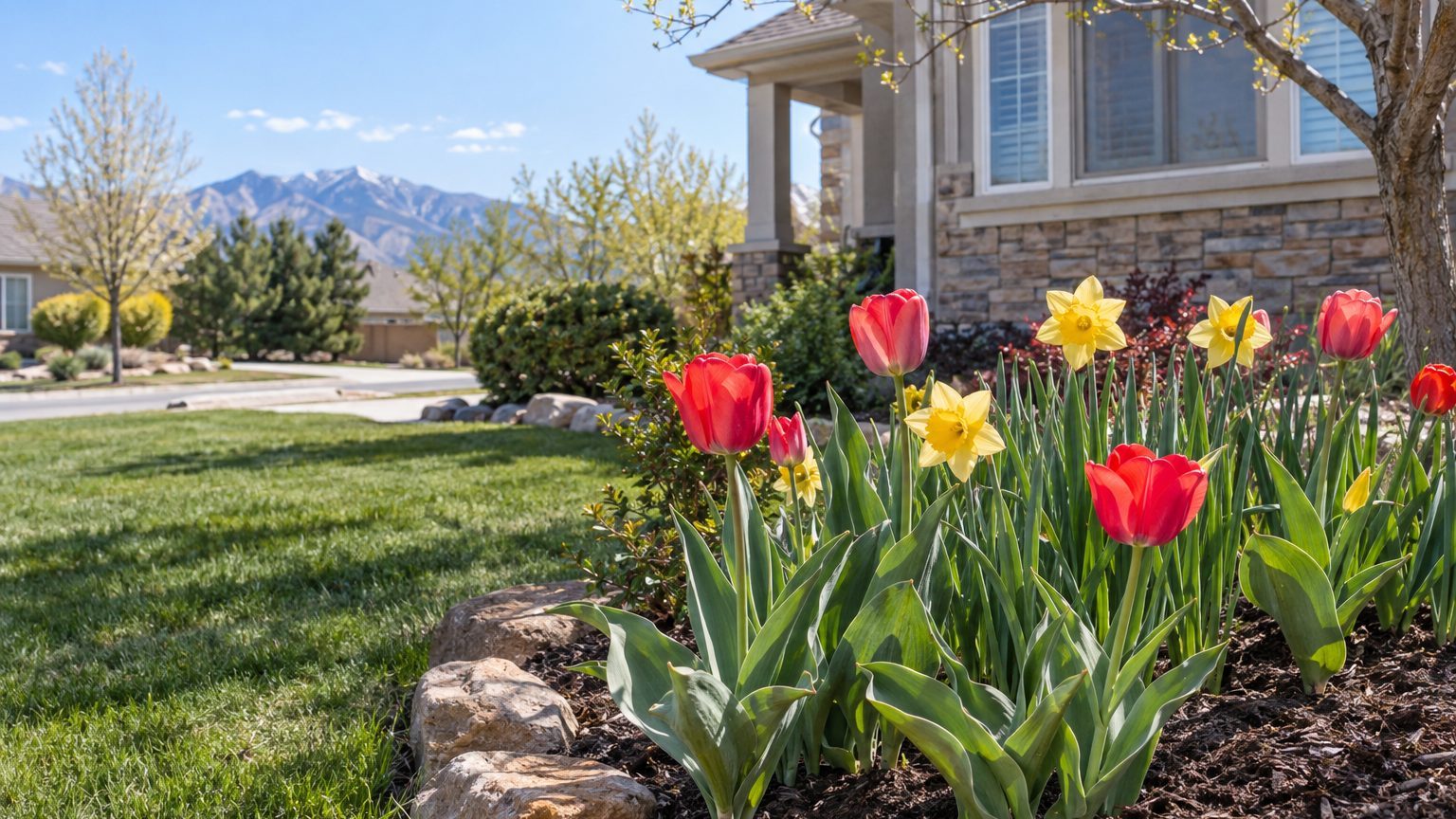
Tulips and daffodils pushing up through cold, bare soil are a sight Nevada gardeners can count on in the right spot, as long as the bulbs go in during fall. Daffodils, tulips, crocus, hyacinths and alliums all have a place in a Nevada yard, and what you pick depends on your drainage, sun and winter cold.

Best Spring Bulbs to Grow in Nevada

Healthy spring bulbs in bloom

Tulips and daffodils are fairly adaptable across the region, and according to Iowa State University Extension, alliums need the cold of winter to bloom. Nevada spans USDA hardiness zones 4a to 10a, so the right bulb shifts with your elevation. Planting happens in September and October, and hardy spring bulbs bloom between January and May.

Daffodils

Daffodils last longer than tulips and are the more reliable perennial bulb. Voles, squirrels, rabbits and deer leave them alone, which matters in yards with wildlife traffic.

Give them full sun and loosen the soil with compost so water drains away, especially in spring.

Tulips

Tulips are adaptable here but often short-lived in the garden, so treat them as a bright seasonal show rather than a permanent planting. Voles, squirrels, rabbits and deer eat them.

Where winters are too mild to give the cold they need, chill the bulbs in the refrigerator before planting.

Alliums

Alliums need the cold of winter to bloom. They flower at the end of the bulb season, as ornamental onions.

Plant them in full sun with well-drained, compost-enriched soil.

Crocus

Crocus is a small bulb that suits the edge of a bed or a lawn corner. Voles, squirrels, rabbits and deer eat the bulbs, so plant where wildlife pressure is low or protect the spot.

Most spring bulbs, crocus included, want about 12 to 16 weeks of cold to flower.

Hyacinths

Hyacinths follow the same rule as tulips: where winters run too mild to supply the cold, chill the bulbs in the refrigerator before planting.

Plant once the soil has cooled below about 60°F, so roots form before the ground freezes without the bulbs sprouting in fall.

How to Choose Spring Bulbs for Your Nevada Garden

Start with how cold your winter gets and how much drainage your bed has. Tulips and daffodils reward a planting hole amended with compost, and every spring bulb sulks in a low spot that stays wet.

Then think about how much upkeep you want. Bulbs that wildlife ignores save you protection work later.

Your situation What suits it in Nevada Why
Very cold winter at elevation Daffodils and tulips Most spring bulbs need about 12 to 16 weeks of cold to flower, and a cold winter supplies it
Mild winter, little natural chill Alliums, or refrigerator-chilled tulips and hyacinths Alliums need the cold of winter to bloom, while tulips and hyacinths get their cold from the refrigerator.
Little time for upkeep Daffodils They last longer than tulips and are the more reliable perennial bulb
Deer, rabbits or voles around Daffodils Wildlife leaves them alone, while tulips and crocus get eaten
Wet or heavy soil Any bulb in a raised or amended spot Compost loosens the soil and aids drainage, and low wet ground is best avoided

Crocus and hyacinths fit small beds and borders. Match them to your sunniest, best-drained corner.

Which Spring Bulbs Suit Different Parts of Nevada

Nevada runs from high mountain country to low desert, so the bulb that thrives in one town may need help in another.

  • Las Vegas: Winters are mild, so alliums are the easy choice, and tulips and hyacinths need a refrigerator chill before planting.
  • Reno and Carson City: Winters are colder, so daffodils and tulips get the cold they want without any chilling step.
  • Higher elevations: Frost arrives earlier in fall and lingers later in spring, so hardy daffodils are the dependable pick and planting should not wait.

Your county extension office can tell you which of these descriptions fits your own yard.

Spring Bulb Buying Mistakes to Avoid in Nevada

Choosing Bulbs That Need More Cold

Tulips and hyacinths planted straight into mild-winter ground may bloom poorly because they miss the 12 to 16 weeks of cold they want. Chill them in the refrigerator before planting, and alliums need the cold of winter to bloom.

Planting into Wet Soil

A low spot that stays wet in spring invites rot. Pick a sunny place and work compost into the hole to loosen the soil and help water drain away.

Cutting Leaves Too Soon

Tidying the foliage after bloom robs the bulb of next year’s flowers. Remove only the faded blooms and leave the leaves until they turn brown, since they feed the bulb.

Holding Bulbs Over in the Bag

A bulb that is still in the bag does better planted late than stored over the winter. Plant as long as the ground can be dug.

Where to Get Spring Bulb Advice in Nevada

Local conditions vary a great deal across the state, so local advice pays off before you buy.

  • University of Nevada, Reno Extension publishes gardening guidance for the state, worth reading before you order bulbs in late summer.
  • Your county extension office can speak to your elevation and soil, so call before the September and October planting window.

Common Questions

When Do Spring Bulbs Bloom in Nevada?

Hardy spring bulbs bloom between January and May, depending on the type and where you garden.

Do You Have to Chill Bulbs Before Planting?

Alliums never need it. Tulips and hyacinths only need a refrigerator chill where winters are too mild to give them cold.

Which Bulbs Will Wildlife Leave Alone?

Daffodils. Voles, squirrels, rabbits and deer eat tulips and crocus, so plant daffodils where animals visit often.

The almanac, state by state. Every date on this site comes from a state’s own frost facts and its extension service’s calendar — and says where it comes from.