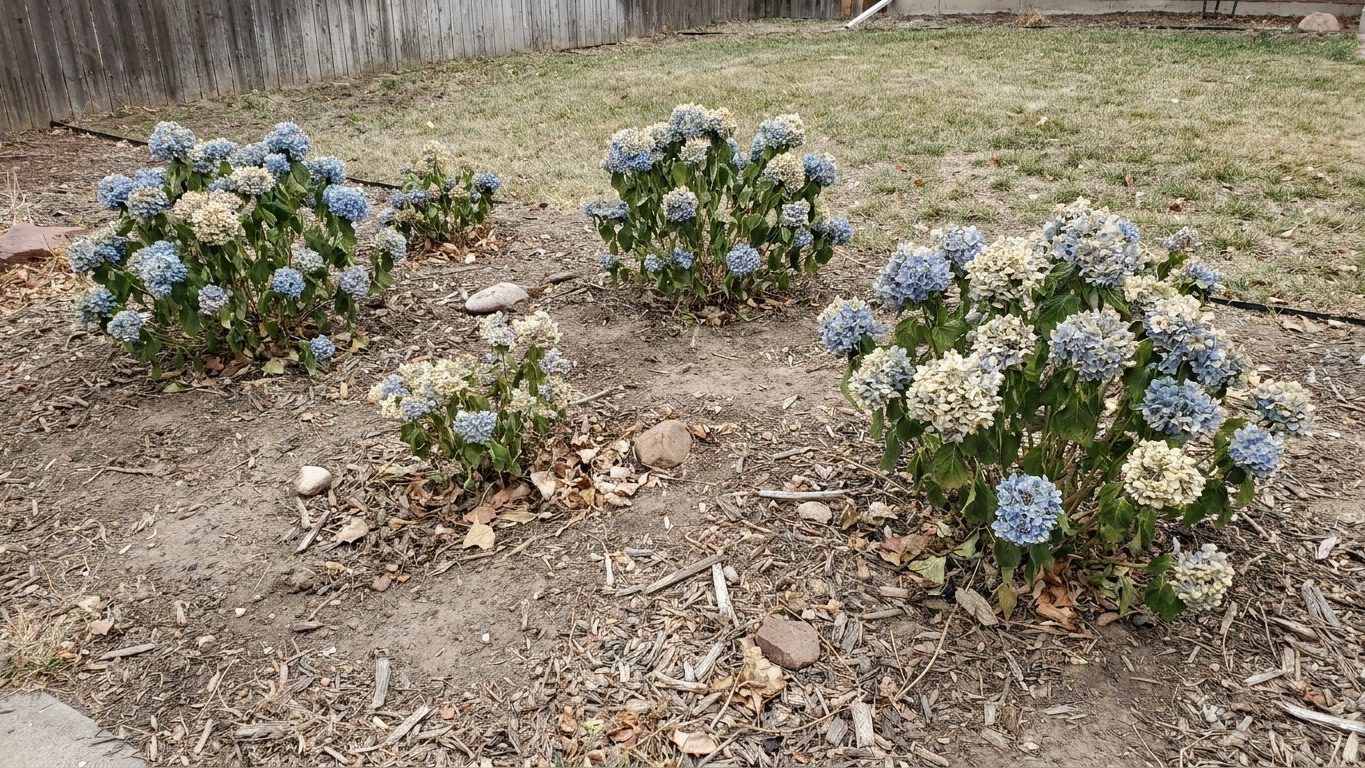
In Indiana, hydrangeas go into the ground once frost risk passes in mid to late spring, and panicle and smooth types are the safer bet statewide, since winter cold routinely kills bigleaf’s flower buds. The zone runs 5b to 7a. Planting, pruning and feeding all follow that same frost clock, and where you sit inside the state shifts each date by a couple of weeks.
Hydrangeas Care Calendar for Indiana

NOAA NCEI 1991-2020 Climate Normals puts the last spring frost at Indianapolis between April 9 and April 21, the first fall freeze between October 21 and October 30, and the state’s hardiness zone at 5b to 7a, the span a hydrangea’s whole year has to fit inside.
- Dormancy: from late fall into March is the one safe window to move a hydrangea, roots undisturbed by frost.
- Planting: set new shrubs out two to three weeks after the last frost, once the soil has warmed enough to work.
- Bud break: panicle and smooth types push new growth through April no matter what a late frost does, since they bloom on new wood.
- Bloom: flowers open from June through August, with panicle types often still going into September.
- Deadheading and light shaping: cut spent panicle and smooth blooms back through midsummer without touching next year’s flowers.
- Fall prep: stop feeding by August and mulch the root zone by mid-October, ahead of the first freeze.
Skip that mid-October mulching and an early hard freeze can still reach roots that haven’t hardened off for winter.
Best Hydrangeas for Indiana
The USDA Plant Hardiness Zone Map puts the state at 5b to 7a, colder toward the north and milder near the Ohio River in the south. That range decides which hydrangeas shrug off winter and which ones lose their flower buds.
Types that bloom on new wood come back reliably no matter how cold the winter runs, since the plant regrows its flowering stems each spring. Types that bloom on old wood depend on those stems surviving the freeze intact, and in zone 5b that’s a gamble most winters.
| Kind | Flowers on | Cold tolerance here | Sun |
|---|---|---|---|
| Panicle | New wood | Thrives statewide | Full sun to part shade |
| Smooth | New wood | Thrives statewide, native to the region | Part shade |
| Oakleaf | Old wood | Holds up well with a wind-sheltered spot | Part shade |
| Bigleaf | Old wood, mostly | Struggles, buds often killed over winter | Part shade |
| Climbing | Old wood | Hardy but slow to establish | Part shade to shade |
Mountain hydrangea and the newer reblooming bigleaf cultivars show up in nurseries here too, but the page on which hydrangeas hold up best goes through those options in more depth.
When to Plant, Prune and Feed Hydrangeas in Indiana
Three windows matter more than the rest of the calendar, and all three count backward or forward from the same two frost dates already on the table.
Planting waits for warm soil, pruning waits for dormant wood, and feeding has a hard stop before the shrub needs to shut down for winter.
| Task | Window here | Counted from |
|---|---|---|
| Planting | Late April into mid-May | Two to three weeks past the April 9 to 21 last frost |
| Pruning panicle and smooth | Late winter into March | Before new growth starts, ahead of the April frost window |
| Feeding | Spring growth start through early September | Stopping roughly six weeks before the October 21 first freeze |
Bigleaf and oakleaf run on a different pruning clock since they carry next year’s buds through winter on this year’s stems, and cutting them back in March removes the flowers before they open.
Hydrangeas Problems in Indiana and What Causes Them
No flowers on a healthy shrub

This is usually bigleaf hydrangea losing its flower buds to a hard winter, since zone 5b winters routinely dip past what those buds tolerate. Switching to panicle or smooth solves it for good.
Leaves scorched on the sunny side

Full afternoon sun combined with a dry stretch in July or August burns leaf edges on most types except panicle. Moving the shrub to part shade or adding a deeper mulch ring usually fixes it the following season.
Wilting by midafternoon in summer

Heavy clay soil common across central Indiana holds water near the surface and starves roots below, so the shrub wilts even after rain. Working compost into the planting hole before setting a new shrub out helps more than watering more often.
Indiana North to South: How the Dates Shift
The frost dates above are anchored to Indianapolis, and the state stretches far enough that both ends run on their own clock.
- The northern counties (near Lake Michigan and the Michigan line): spring arrives later and fall frost lands sooner, so both planting and the fall mulching deadline shift earlier in the season.
- Central Indiana (the Indianapolis corridor): this is the reference point the dates above were built around, with no adjustment needed.
- The southern counties (along the Ohio River): frost lets go earlier in spring and holds off longer in fall, stretching the growing season on both ends.
The state’s calendar page breaks that shift down month by month for whichever county comes closest to home.
Indiana Extension Offices and County Contacts
The zone and frost figures above cover the whole state, but soil, wind exposure and even microclimate in a single yard can move the real dates around.
- Your county extension office: local staff know the frost pattern for that specific area better than a statewide average can.
- Which ones hold up here: a deeper look at cultivars beyond the five kinds covered above.
- Purdue Extension: the state’s land-grant service for soil testing and plant questions county by county.
Common questions
Can I grow bigleaf hydrangea anywhere in Indiana?
It survives in sheltered spots, especially in the milder southern counties, but flower buds get killed by winter cold often enough that panicle or smooth types are the safer choice for most yards.
When is the safest time to plant a new hydrangea here?
Two to three weeks after the last spring frost, once soil has warmed, gives roots the longest stretch to establish before summer heat arrives.
Do all hydrangeas need pruning every year?
No. Panicle and smooth types tolerate a hard cut back in late winter, while bigleaf and oakleaf only need spent blooms removed, since they set next year’s buds on this year’s growth.