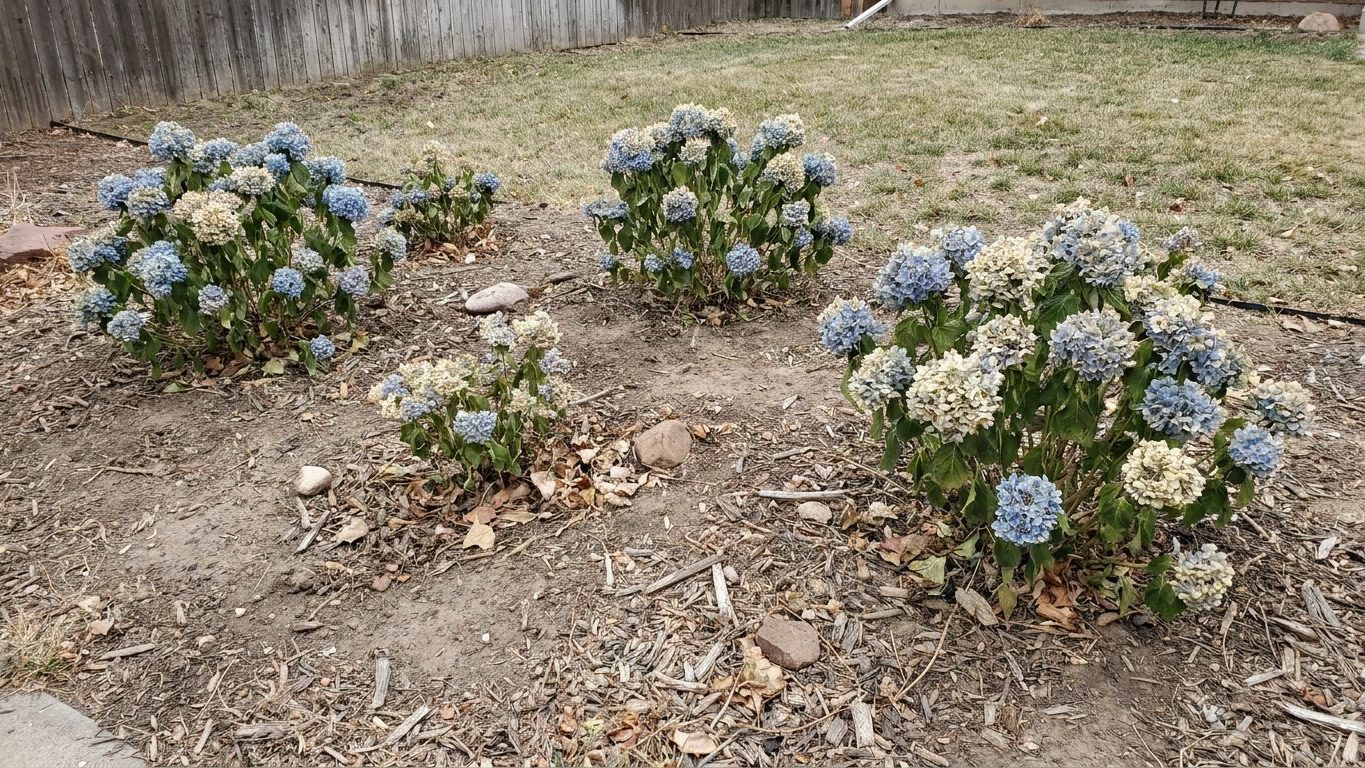
Yes, hydrangeas grow well across Alabama, from Huntsville to Mobile, as long as the type matches the local heat and frost pattern. The state spans USDA zones 7a to 9a, mild enough for bigleaf, oakleaf, panicle and smooth hydrangeas to thrive. What changes town to town is the planting window and how much afternoon sun a shrub can take before it scorches.
Hydrangeas Care Calendar for Alabama

In Birmingham, NOAA NCEI 1991-2020 Climate Normals put the last spring frost between March 19 and April 3 and the first fall frost between November 2 and November 16, and the USDA Plant Hardiness Zone Map places the state at zone 7a to 9a, the freeze-free stretch that decides every hydrangea task on this page.
- Dormancy: from late fall through late winter is the safe window to move a hydrangea, roots undisturbed by frozen ground.
- Planting: two to three weeks after the last frost, once the soil has warmed, is the safest time to set a new shrub.
- Spring feeding: four to six weeks after the last frost, as new growth pushes, is when the first feeding goes down.
- Bud watch: a warm spell followed by a freeze inside that same window can strip buds on old-wood types like bigleaf and oakleaf.
- Peak bloom: early summer brings the main flush, with mophead and lacecap types color-shifting depending on soil pH.
- Fall taper: six to eight weeks before the first fall frost, feeding stops and mulch goes down for winter.
- Frost protection: as the first fall frost nears, a thick layer of mulch over the root zone matters more than covering the leaves.
That rhythm holds for Birmingham. A garden in the hills of northeast Alabama runs behind it by a week or two.
Best Hydrangeas for Alabama
The USDA Plant Hardiness Zone Map puts Alabama at zone 7a to 9a, and that heat paired with long, humid summers favors hydrangeas that bloom on new wood, since a late freeze can’t erase a season that hasn’t started building buds yet.
Bigleaf and oakleaf still work here, but they need a sheltered spot out of the harshest afternoon sun. Climbing hydrangea works too, though slowly, and it wants years before it covers a wall.
| Kind | Verdict here | Why |
|---|---|---|
| Bigleaf | Good, with a sheltered spot | Blooms on old wood, a late freeze after a warm spell can strip the buds |
| Oakleaf | Reliable | Native to the Southeast, handles heat and part shade well |
| Panicle | Best all-around | Blooms on new wood, unaffected by spring bud loss |
| Smooth | Solid | Also blooms on new wood, cut back hard each year |
| Climbing | Slow but sound | Takes years to cover a structure, tolerates shade |
Lacecap and mountain hydrangea are close relatives of bigleaf and are covered on their own pages, along with the specifics of soil pH and color change.
When to Plant, Prune and Feed Hydrangeas in Alabama
Three windows matter more than the rest of the calendar, and NOAA NCEI 1991-2020 Climate Normals put Birmingham’s last frost at March 19 to April 3 and its first fall frost at November 2 to November 16.
Miss the spring window and a new hydrangea spends its first summer struggling to root instead of settling in.
| Task | Window here | Counted from |
|---|---|---|
| Planting | Two to three weeks after the last frost, or six to eight weeks before the first frost | Last frost March 19 to April 3, first frost November 2 to 16 |
| Feeding | Stops six to eight weeks before the first frost | First frost November 2 to 16 |
| Pruning new-wood types | Four to six weeks before the last frost, while still dormant | Last frost March 19 to April 3 |
Old-wood types like bigleaf and oakleaf skip that pruning window entirely. They get cut right after the flowers fade instead, a detail covered on the month-by-month calendar page for this state.
Hydrangeas Problems in Alabama and What Causes Them
No flowers after a late freeze

Bigleaf and oakleaf set their buds the previous fall, so when a warm stretch tricks them into growth and a freeze follows inside the March 19 to April 3 window that NOAA NCEI Climate Normals set for Birmingham, those buds die before they open. A panicle or smooth type nearby as backup, or a look at the varieties page, solves the repeat problem.
Leaves scorched on the sunny side

Alabama’s summer heat, paired with full afternoon sun, burns the edges of bigleaf leaves brown by August. Part shade after midday and a thick mulch layer keep roots cool, and the problems page covers the pest side of the same stress.
Wilting despite damp soil

Heavy clay and high humidity common across central Alabama hold water around the roots, so a hydrangea that wilts even after rain is usually suffocating, not thirsty. Raised beds or amended drainage fix it, with more on root rot on the dedicated problems page.
Alabama North to South: How the Dates Shift
Alabama stretches from the Tennessee line to the Gulf Coast, and that distance shifts frost dates away from the Birmingham reference above.
- North Alabama and the Tennessee Valley (Huntsville, Scottsboro, Florence): sits closer to zone 7a, with frost lingering later in spring and arriving earlier in fall than the Birmingham dates above.
- Central Alabama (Birmingham, Tuscaloosa, Montgomery): tracks the reference window most closely, the transition zone between the two extremes.
- South Alabama and the Gulf Coast (Mobile, Dothan): leans toward zone 9a, with frost arriving later and leaving earlier, stretching the bloom season for heat-tolerant types.
Check the month-by-month calendar page for the dates closest to your county.
Alabama Extension Offices and County Contacts
The Alabama Cooperative Extension System, at aces.edu, is the starting point for anything specific to your soil, your county, and this week’s forecast.
- Your county extension office: local advice tuned to your soil and microclimate, found through the ACES directory.
- Which hydrangeas hold up here: a deeper look at variety choice for Alabama gardens.
- What goes wrong here: pests and problems specific to Alabama’s heat and humidity.
With mid-September underway, this is the month to ease off feeding and start planning where the mulch goes before frost reaches Birmingham in early November.
Common questions
Can I grow bigleaf hydrangeas anywhere in Alabama?
Mostly yes across zones 7a to 9a, but a sheltered spot out of afternoon sun and away from late-freeze pockets matters more in the north of the state than near the coast.
When is the best time to plant hydrangeas in Alabama?
Two to three weeks after the last frost in spring, or six to eight weeks before the first fall frost, whichever fits the nursery stock available.
Do hydrangeas need full sun in Alabama?
No, part shade suits most types here better, especially bigleaf and oakleaf, since Alabama’s summer sun scorches leaves faster than it does in cooler states.