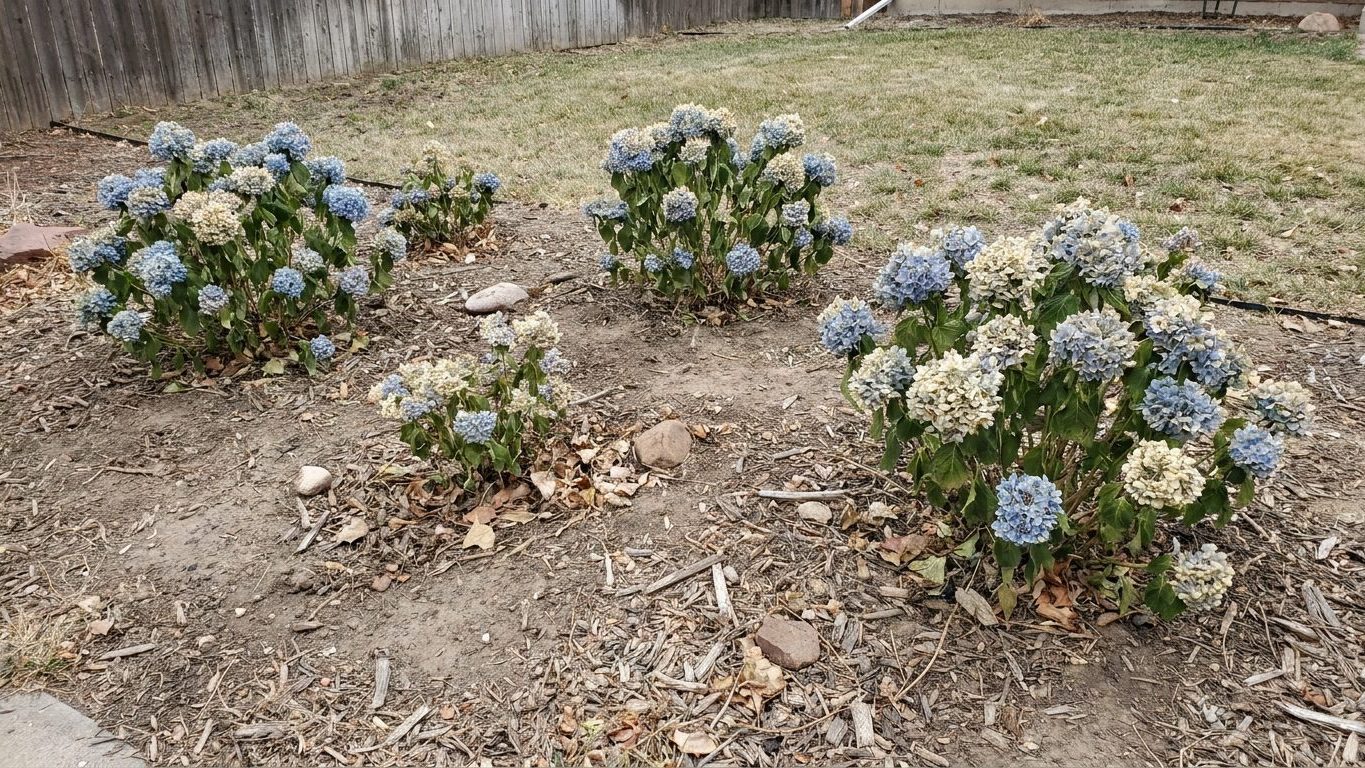
Kentucky sits in USDA zones 6a to 7a, cold enough that the wrong hydrangea can lose a whole season of blooms to a late freeze. Panicle and smooth types shrug off that swing. Bigleaf, the variety most people picture when they hear the name, is the one that struggles here, especially on a cold pocket at the edge of the state’s range.
Hydrangeas Care Calendar for Kentucky

In Louisville, the reference point for Kentucky’s frost data, the last spring frost falls between March 24 and April 4 and the first fall frost between November 2 and November 12, per NOAA NCEI 1991-2020 Climate Normals, and the state spans USDA zones 6a to 7a, deciding whether bigleaf buds survive winter.
- Dormancy: from late fall through winter, before growth starts, is the one stretch to dig up or move a hydrangea without disturbing tender roots.
- Planting: wait until two to three weeks after the last spring frost, so mid to late April in most of the state, before setting a new shrub in the ground.
- Pruning old-wood types: cut bigleaf and oakleaf back within a few weeks of the last bloom fading, never in late winter, or next year’s flowers get lost.
- Pruning new-wood types: panicle and smooth hydrangeas take a hard cut in late winter, four to six weeks before the last spring frost, while still dormant.
- Feeding: apply the first round of fertilizer two to three weeks after the last spring frost, once new leaves have hardened off a little.
- Mulching for winter: lay three to four inches of mulch over the root zone two to three weeks before the first fall frost to buffer the cold snap.
- Deep watering: keep the soil evenly moist through the stretch between the last spring frost and the first fall frost, hydrangeas wilt fast in a dry week.
Follow that order and a hydrangea planted this spring should be blooming well before its second Kentucky winter arrives.
Best Hydrangeas for Kentucky
USDA Plant Hardiness Zone Map data puts the state at 6a to 7a, a range cold enough that hydrangea choice matters more than it does farther south.
Panicle and smooth hydrangeas bloom on new wood, so a late frost that kills old growth doesn’t cost the flowers, making them the safer bet for most Kentucky yards. Bigleaf and oakleaf, both old-wood bloomers, can struggle when a warm spell fools their buds into breaking early.
| Kind | Verdict here | Why |
|---|---|---|
| Bigleaf | Risky in colder pockets | Old-wood buds often killed at the state’s colder edge |
| Oakleaf | Generally reliable | Native range overlaps Kentucky, tolerates both 6a and 7a swings |
| Panicle | Best all-around choice | New-wood bloomer, breaks after last frost so cold snaps spare the flowers |
| Smooth | Solid choice | Native to the eastern US, new-wood bloomer, tolerant across the zone range |
| Climbing | Slow but workable | Hardy through the state’s zone range, needs a few seasons to establish |
Mountain hydrangea and other less common kinds are on their own page rather than here.
When to Plant, Prune and Feed Hydrangeas in Kentucky
Three windows decide most of a Kentucky hydrangea’s year, and each one counts backward or forward from Louisville’s frost dates, which NOAA NCEI 1991-2020 Climate Normals set at March 24 to April 4 in spring and November 2 to November 12 in fall.
Planting and feeding wait for the ground to warm, while pruning new-wood types happens while the plant is still dormant, weeks before that last frost arrives.
| Task | Window here | Counted from |
|---|---|---|
| Planting | Two to three weeks after the last spring frost | Louisville’s last frost, March 24 to April 4 |
| Pruning new-wood types | Four to six weeks before the last spring frost | Same last-frost window, while dormant |
| Feeding | Two to three weeks after the last spring frost | Same window, once new growth hardens |
Old-wood bloomers like bigleaf skip this frost math, since their pruning window follows the flowers fading rather than the calendar, and the state’s month-by-month page walks through that timing in full.
Hydrangeas Problems in Kentucky and What Causes Them
No flowers on an otherwise healthy shrub

Bigleaf and oakleaf set next year’s buds on old wood, and NOAA NCEI 1991-2020 Climate Normals put Louisville’s last frost as late as April 4, late enough that a freeze can still kill those buds. Switch to a new-wood bloomer or prune only right after flowering fades, covered on the page for which types hold up here.
Leaves scorched on the sunny side

Kentucky summers pair heat with humidity, and a bigleaf hydrangea planted in full afternoon sun browns at the leaf edges by midsummer. Moving the shrub to part shade or watering deeply through the stretch before the first fall frost keeps the foliage from crisping.
Buds killed after a hard winter

The state’s USDA zones run 6a to 7a, and a shrub planted at the cold edge of that range can lose its flower buds even when the plant itself survives. Extra mulch over the root zone and a hardier kind, detailed on the state’s problem page, cut that risk.
Kentucky North to South: How the Dates Shift
Kentucky’s frost dates and zone don’t apply evenly from the Ohio River to the Cumberland Plateau, and elevation and latitude push the safe planting window in opposite directions across the state.
- Northern Kentucky (near Cincinnati, along the Ohio River): frost lingers close to Louisville’s dates, and the growing season starts and ends on roughly the same schedule.
- Eastern Kentucky (the Appalachian foothills, toward West Virginia): higher elevation tends to push the last frost later and the first fall frost earlier than the Louisville reference.
- Western Kentucky (the Purchase region, near Tennessee): lower elevation and a longer frost-free stretch let gardeners there lean toward the earlier end of the planting window.
The state’s calendar page adjusts the reference dates for your county, so check it before setting a frost-sensitive shrub in the ground.
Kentucky Extension Offices and County Contacts
Kentucky’s 6a to 7a range is a starting point, not a final answer, and the county extension office for your zip code will know how local frost dates and soil differ from Louisville’s numbers.
- Your state page: the frost dates and pruning window for where you garden in Kentucky.
- Which ones hold up here: a longer look at bigleaf, panicle, oakleaf and smooth hydrangeas under Kentucky conditions.
- University of Kentucky Cooperative Extension: find your county office for soil tests and planting advice specific to your address.
Common questions
Do hydrangeas survive Kentucky winters?
Most do, but bigleaf hydrangeas are the riskiest choice at the cold edge of the state’s 6a to 7a zone range, since a hard freeze can kill their flower buds even when the plant itself lives on. Panicle and smooth types come through winter far more reliably.
When should I plant hydrangeas in Kentucky?
Plant two to three weeks after the last spring frost, which lands between March 24 and April 4 in Louisville, so mid to late April is the safe target for most of the state.
Why didn’t my hydrangea bloom this year?
The usual cause is pruning an old-wood bloomer like bigleaf at the wrong time, or a late freeze killing buds that had already set the previous fall. Prune those types right after the flowers fade, not in late winter.