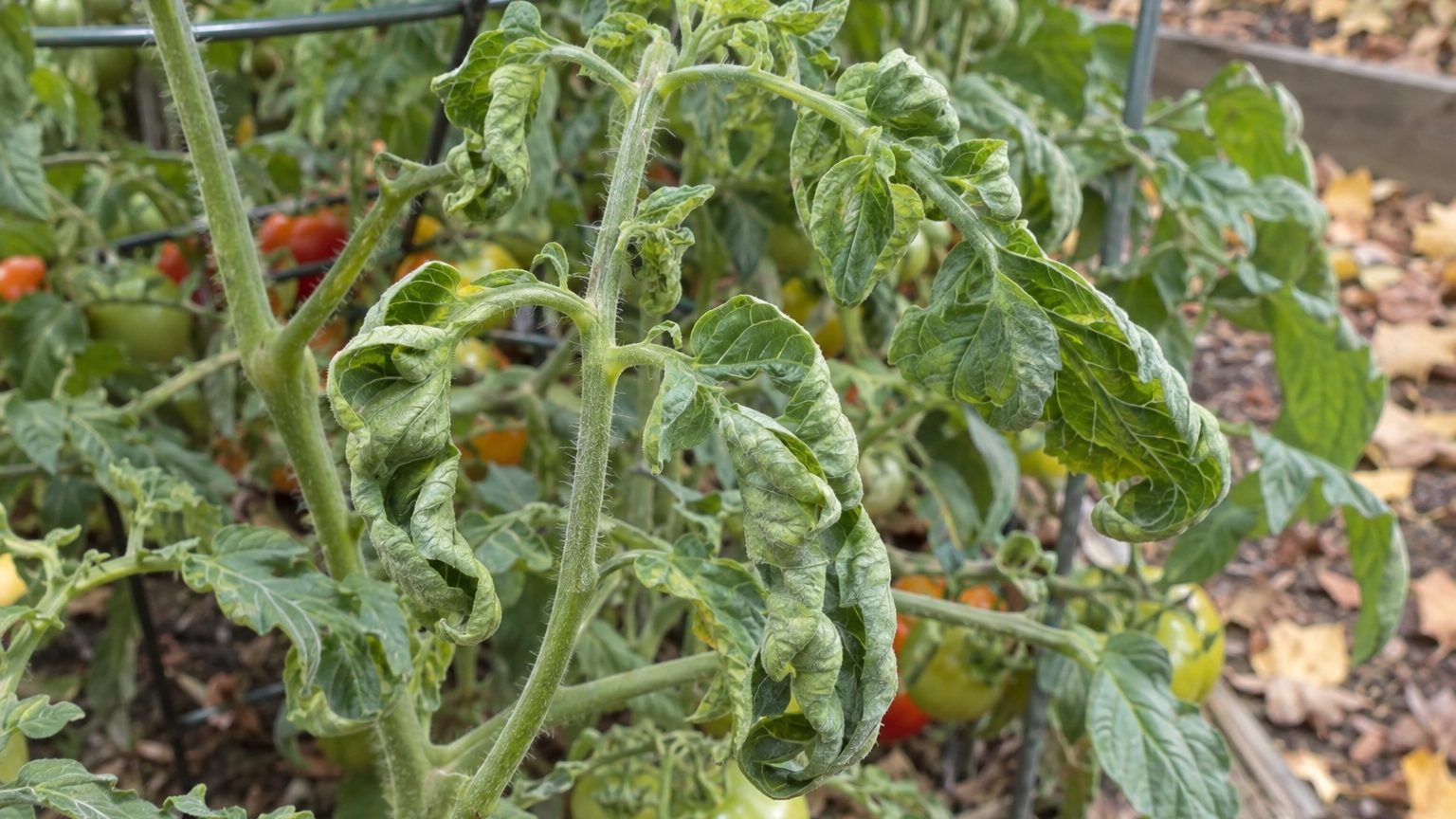
Tomato leaves that roll inward or twist upward in the heat of summer usually point to a plant under stress, not a plant that is dying. Most of the time the cause is weather or watering, and the plant recovers once conditions settle.
Tomato Leaves Curling: What You See

Start with the shape of the curl and where it sits on the plant, because that tells you most of what you need.
- Leaf edges roll inward or upward along the length of the leaflet, often on the older, lower leaves first, during hot dry stretches.
- The margins turn brown and crispy, then twist and curl, which happens when heat and low moisture make the edges die back.
- Leaves look twisted or torn on the windward side of the plant after strong gusts or blowing dust.
- New growth at the top looks yellowed, crinkled and stunted, and the whole plant seems smaller than its neighbors.
- Leaves droop and curl after a soggy spell, since too much water can curl them just as drought can.
A plant that shows only the first or second sign, with healthy green growth at the tips, is usually reacting to weather.
From the almanac
Tomatoes in your state
The dates on this page depend on where you live. Your state's page carries its frost dates, its USDA zones and the year laid out month by month.
Northeast
Southeast
- Alabama
- Arkansas
- Delaware
- Florida
- Georgia
- Kentucky
- Louisiana
- Maryland
- Mississippi
- North Carolina
- South Carolina
- Tennessee
- Virginia
- West Virginia
Midwest
Southwest
West
Pacific Northwest
Canada
Tomato Leaves Curling or Something Else?
Leaf roll from weather is common, but a few other problems twist leaves in a similar way. Looking at where the damage starts and how the new growth behaves keeps you from treating the wrong thing.
Wind damage and a virus both distort leaves, yet they behave very differently over time.
| Looks like | How to tell them apart |
|---|---|
| Wind or blowing dust damage | Twisted, torn or scuffed leaves on the exposed side only, and the plant normalizes once the weather improves. |
| Tomato yellow leaf curl virus | Curled, yellowing, stunted new growth on the whole plant, with whiteflies present on the undersides of leaves. |
| Heat and dry-air leaf roll | Edges browning and rolling during hot dry weather, while new growth stays green. |
Pests and other diseases can also curl leaves, so check the undersides of the foliage with a hand lens before you decide the cause is only weather.
What Causes Tomato Leaves Curling, and Where It Is Worst
Environmental stress is the most common reason for tomato leaves to curl. High temperatures, irregular watering, and wind or physical stress lead the list. The curl is often a response to environmental stress rather than an illness.
Hot, dry summers bring it on most. In places like Texas, hot dry weather can cause a symptom called physiological leaf roll, and high winds, blowing dust and low humidity can add leaf and stem damage on top of it. Hot dry weather may cause this pattern, though any yard with a hot spell can see it.
Water swings matter as much as heat. Tomato leaves certainly curl from drought stress, but they can also curl if the plant gets too much water. Mild leaf roll generally does not lower yields or quality, though severe symptoms may cause flowers to drop and fewer fruit to set.
The virus is the one cause to take seriously. It spreads by whiteflies and can lead to significant yield loss.
How to Treat Tomato Leaves Curling
Work from the simplest fix to the most serious, and resist the urge to do everything at once.
- Check the soil with a finger a few inches down, so that you know whether the plant is dry or waterlogged before you change anything.
- Water deeply and consistently, so that the roots get steady moisture instead of swinging between drought and flood.
- Spread mulch around the base, so that the soil temperature stays more even and moisture holds longer.
- Shield plants from strong wind with a screen or stakes and ties that keep stems from whipping, so that new growth is not scuffed again.
- Turn leaves over and look for whiteflies, so that you catch a virus risk early.
- Leave the curled leaves in place unless they are dead, so that the plant keeps the foliage it needs.
Avoid overreacting to temporary plant stress during extreme weather. If whiteflies or yellow, stunted growth show up, your state extension office can tell you which treatments are approved where you live.
How to Prevent Tomato Leaves Curling Coming Back
Prevention follows the season, and most of it comes down to keeping moisture and temperature steady.
- At planting time, set plants where they get some shelter from prevailing wind.
- Soon after planting, lay down mulch so that the soil stays at an even temperature as summer builds.
- Through the growing season, water regularly and deeply, and avoid letting the bed dry out and then flood.
- Before a hot spell, check moisture and top up the mulch, since heat is when leaf roll starts.
- All summer, look under the leaves now and then for whiteflies, so that any problem is caught while it is small.
A plant that has curled during a heat wave will often straighten out on new growth once the weather eases.
Where This Comes From
The guidance here draws on research from Texas A&M AgriLife Extension, University of Nebraska-Lincoln Extension and NC State Extension. Your own state extension service can confirm what works in your local climate.
Common Questions
Do Curled Tomato Leaves Mean the Plant Is Sick?
Often they do not. Leaf curling is often caused by environmental stress, not disease, and the plant usually recovers when conditions improve.
Will Curling Leaves Hurt My Tomato Harvest?
Mild curling generally does not lower yields. Prolonged stress can reduce fruit production, so steady care matters if the curl lingers.
Can Too Much Water Make Tomato Leaves Curl?
Yes. Overwatering can curl leaves just as drought does, so check the soil before you water again.