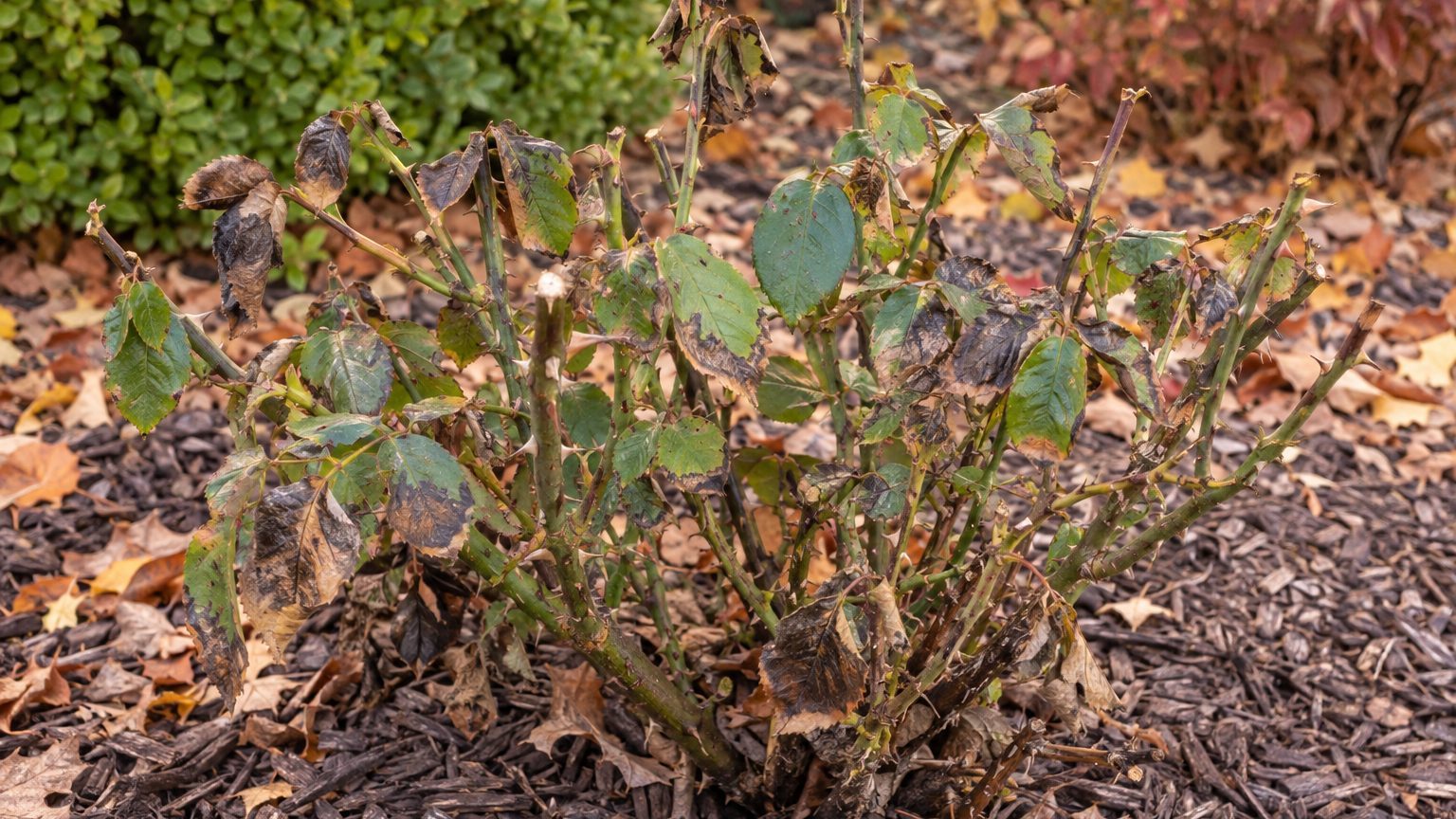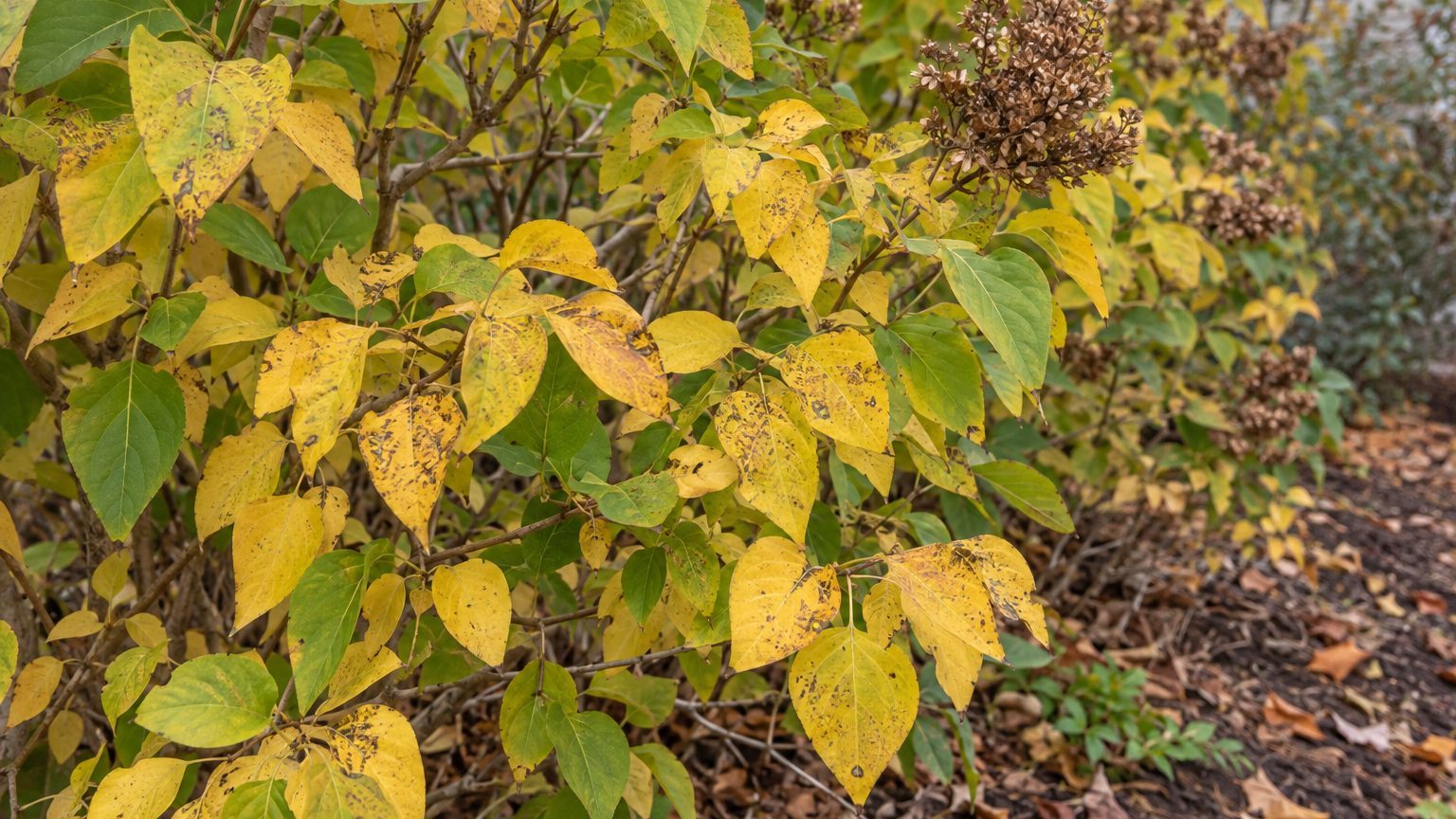
Yellow leaves on a lilac can have different causes, and the color alone rarely tells the whole story. A lilac turns yellow when its roots cannot supply what the leaves need, when a fungus attacks the foliage, or when a stressed branch begins to die.
Lilac Leaves Turning Yellow: What You See

The pattern of the yellowing points to the cause, so start by looking at where the color sits on the leaf and on the shrub.
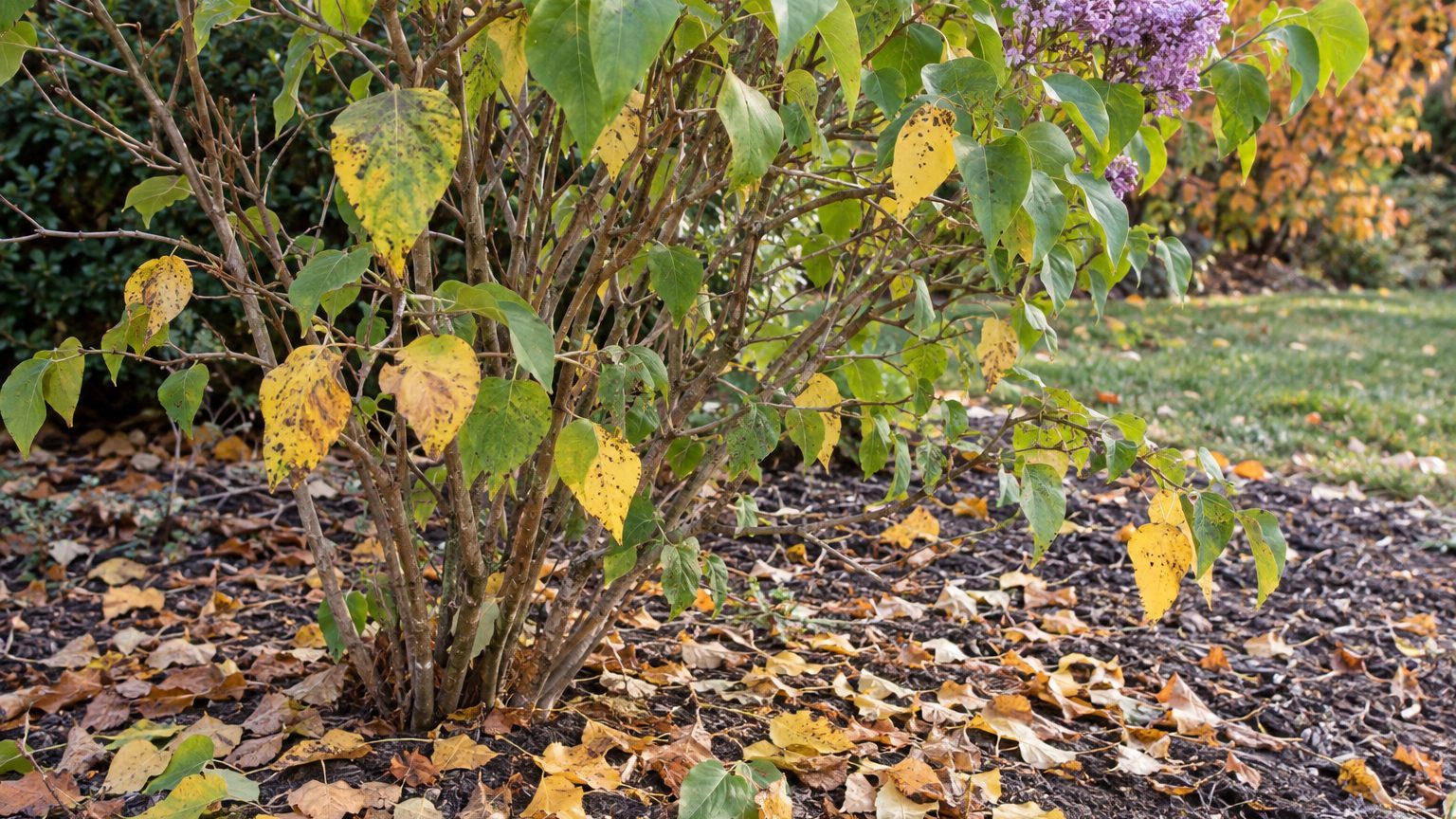
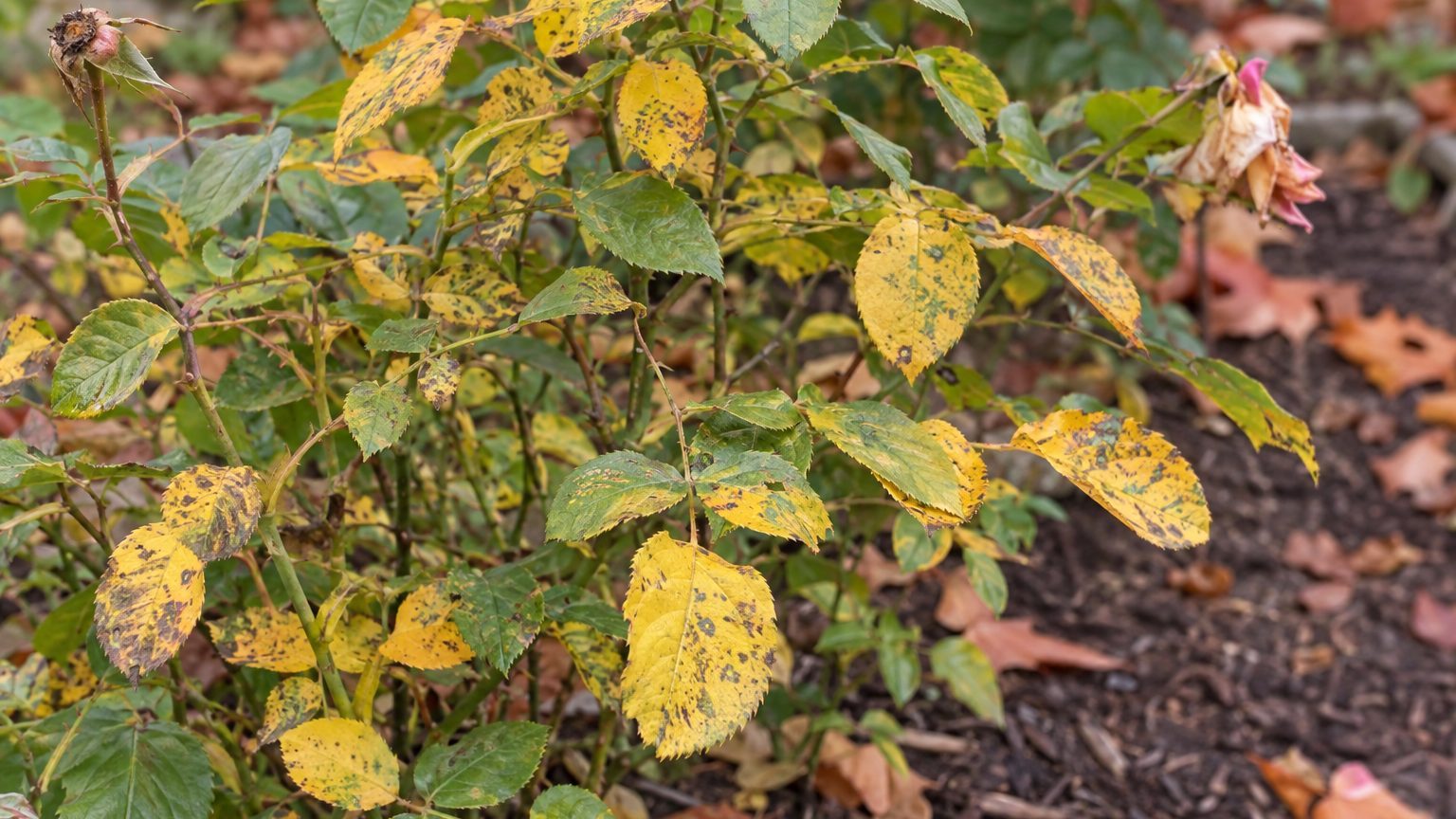
- Yellow between the veins while the veins stay green, which points to a root problem with minerals such as iron, manganese, or zinc.
- Pale, even yellowing can fit a shortage of nitrogen.
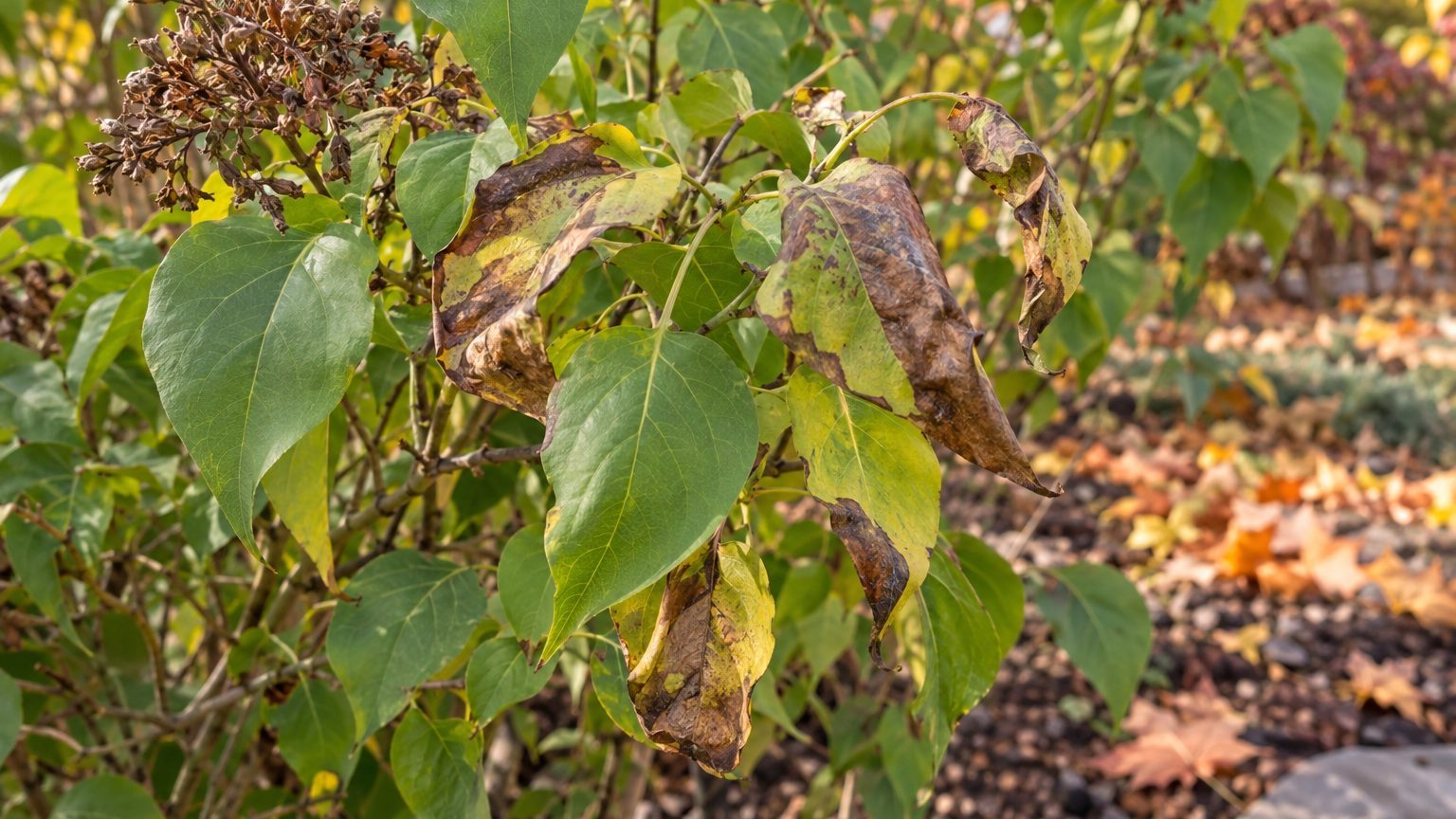
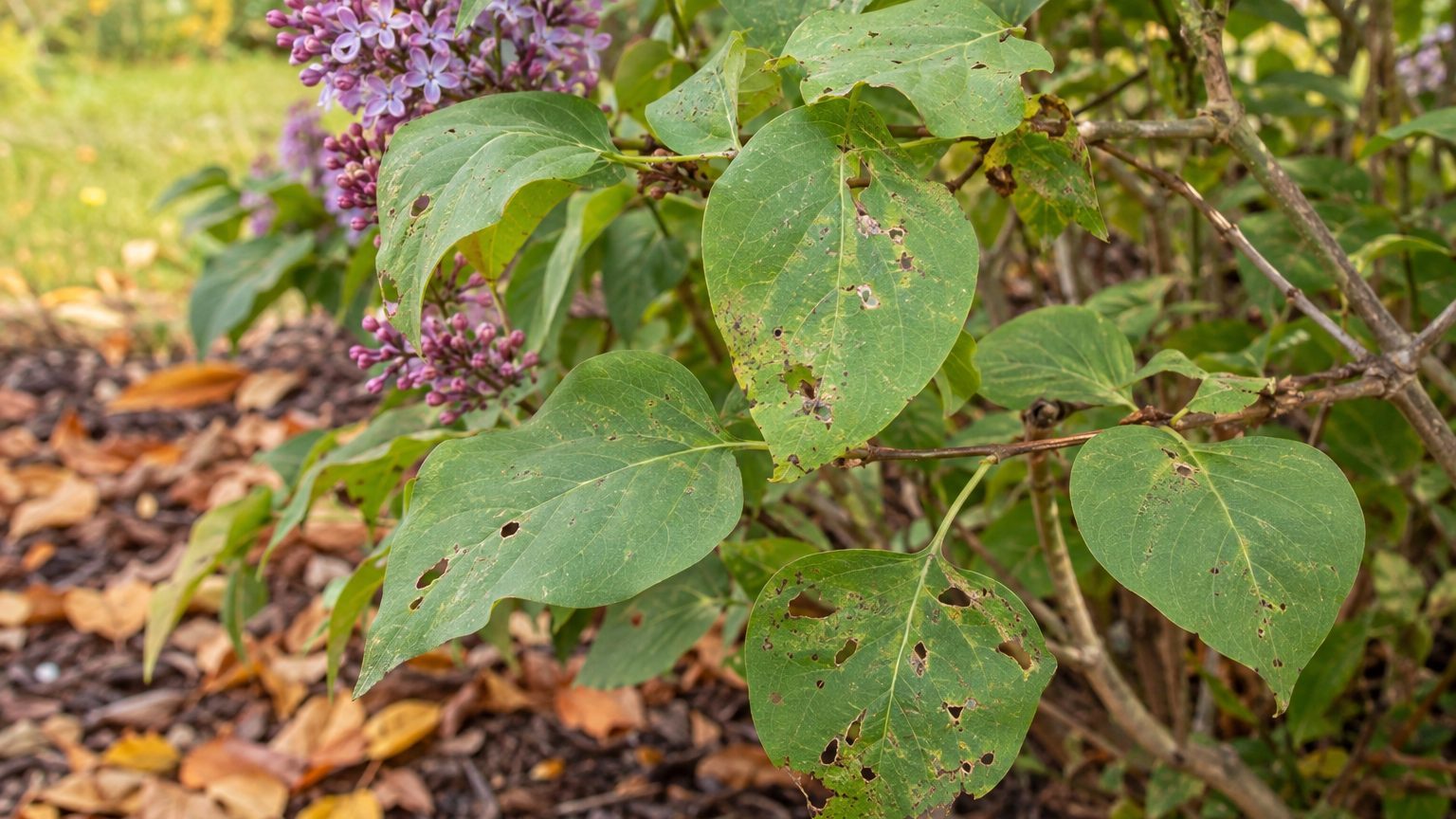
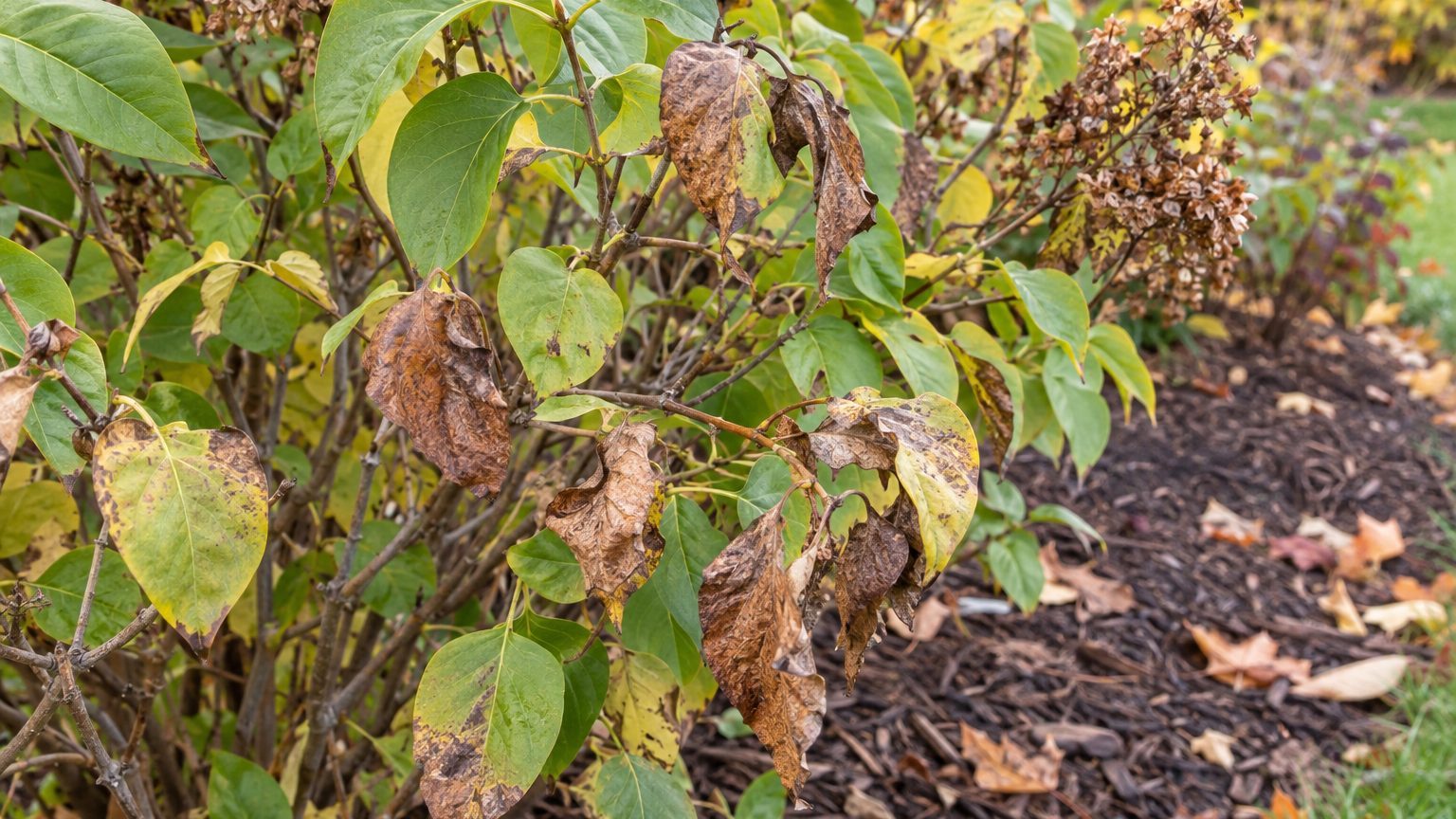
- Irregular dark spots on the leaves, sometimes ringed by yellow halos, followed by leaves that turn brown and drop.
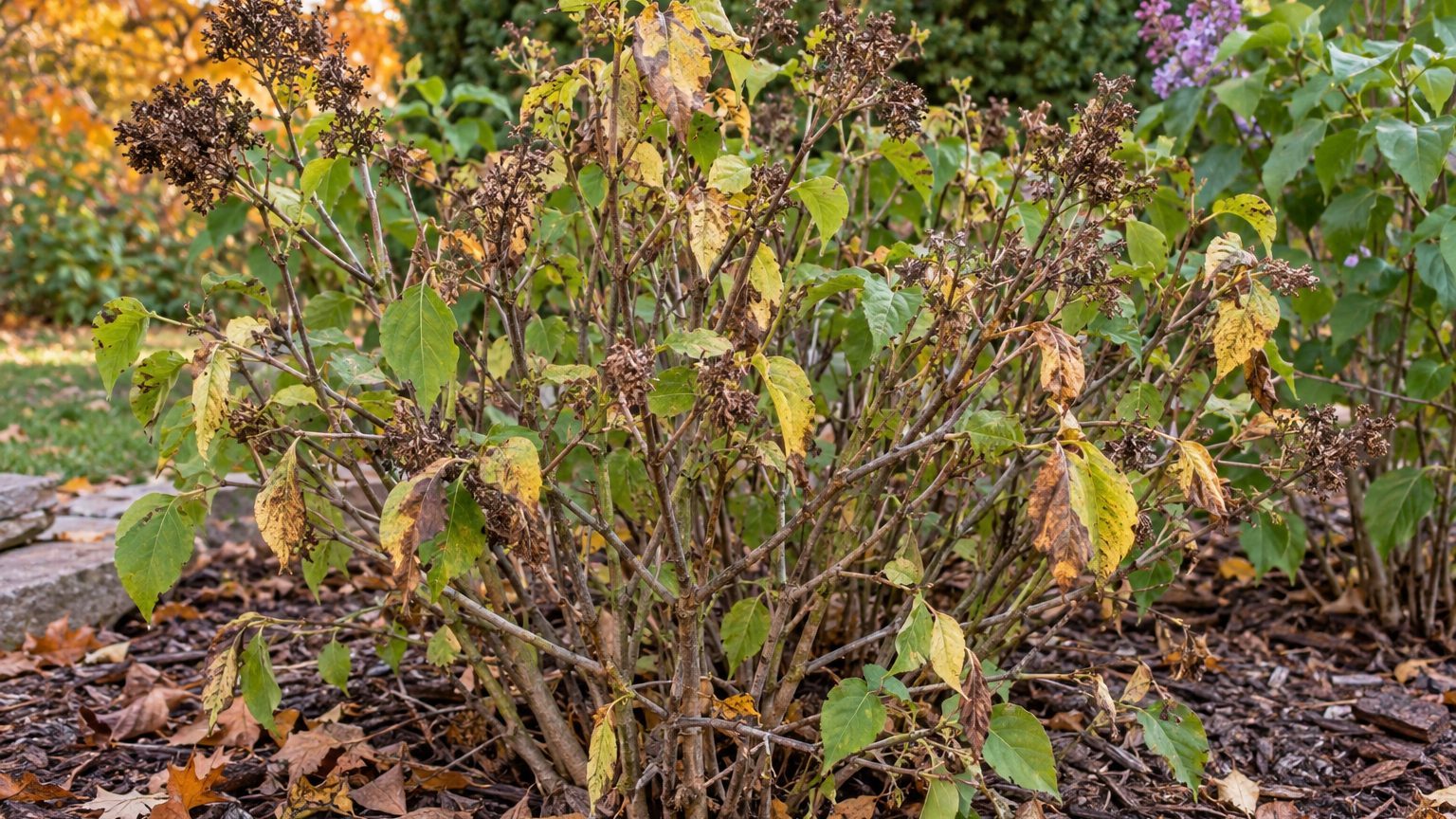
- Leaves on one to several branches turning red to yellow, wilting, dying, and falling off, which was described in Minnesota.
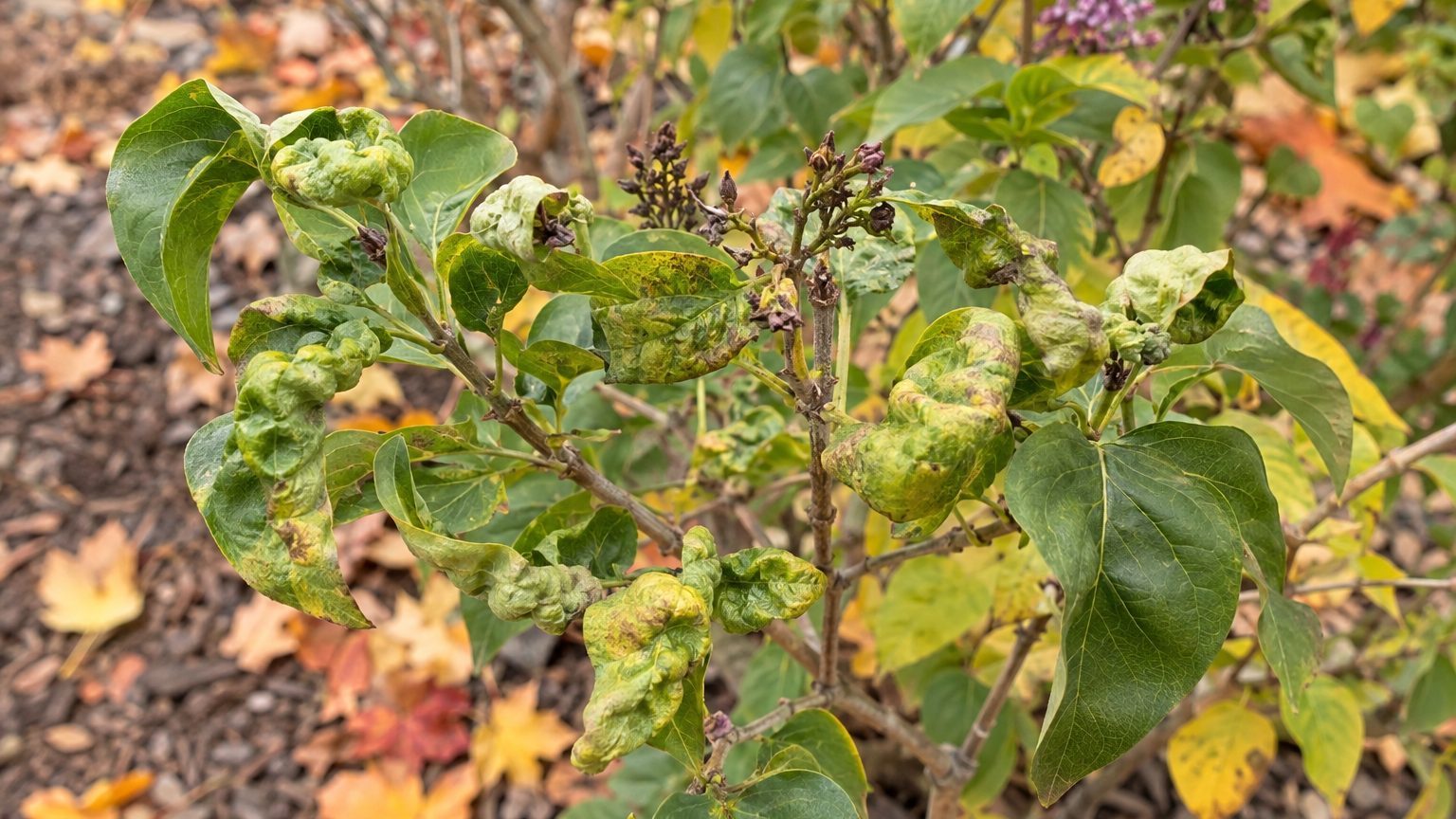
- Small, distorted, yellow leaves may appear with a severe infestation, but this symptom alone does not identify the cause.
Spots or dieback help distinguish disease from a nutrient problem.
Lilac Leaves Turning Yellow or Something Else?
Several lilac troubles brown or discolor foliage in ways that get mistaken for plain yellowing. The difference usually lies in the leaf edges, the timing, and what you find under the bark.
Leaf color is only part of the picture, so check the shape of the damage and inspect a branch before settling on an answer.
| Looks like | How to tell them apart |
|---|---|
| Bacterial blight | Leaves look singed as if by an open flame, and young leaves blacken quickly from the margins downward. Brown spots on young shoots in early spring, noted in Oregon, support the diagnosis. |
| Wilt and dieback on a branch | In Minnesota, leaves on one to several branches turn red to yellow, wilt, and fall. Peel back the bark and look for dark olive to gray streaks in the sapwood. |
| Heat stress | Leaves shrivel and drop early after a hot summer, as reported in Maryland. The whole shrub may lose vigor. |
Powdery mildew and Septoria leaf spot also turn up on lilacs and can be mistaken for simple yellowing. Both are fungal problems, and they are worth ruling out when spots or a dusty coating come with the color change.
What Causes Lilac Leaves Turning Yellow, and Where It Is Worst
Nutrition comes first. A shortage of nitrogen is the most common reason plants yellow. Iron, manganese, and zinc matter too, since chlorosis, the loss of chlorophyll that dims photosynthesis, mostly traces back to roots that cannot take those minerals up.
Disease is another possible cause. Leaf spot fungi cause spots with yellow halos, then browning and drop, and their spores can persist for several years on plant debris such as leaves, stems, dead flowers, and bark. Wet foliage encourages fungal growth, so a crowded, damp canopy invites trouble.
Stress ties it together. In Maryland, excessive summer heat has been linked to shriveled leaves, premature leaf drop, and lack of vigor, and stressed plants become more open to insects and infection. Lilacs also grow bare-bottomed and leggy with age, and often look bedraggled after a hot summer with leaf infections. Regional heat and disease patterns do not automatically apply wherever lilacs grow.
How to Treat Lilac Leaves Turning Yellow
Confirm the cause before choosing a treatment or spending money.
- Test the soil in the fall, so that you know the pH and nutrient values rather than guessing at what the shrub lacks.
- Feed with an organic fertilizer and skip water soluble types, since an organic fertilizer breaks down more slowly and feeds the plant continuously.
- If iron chlorosis is confirmed, a soil amendment or foliar treatment may provide temporary relief.
- Remove and dispose of infected leaves and branches, so that fungal spores have less material to spread from.
- Water at the base of the plant to keep the foliage dry, because wet leaves promote fungal growth.
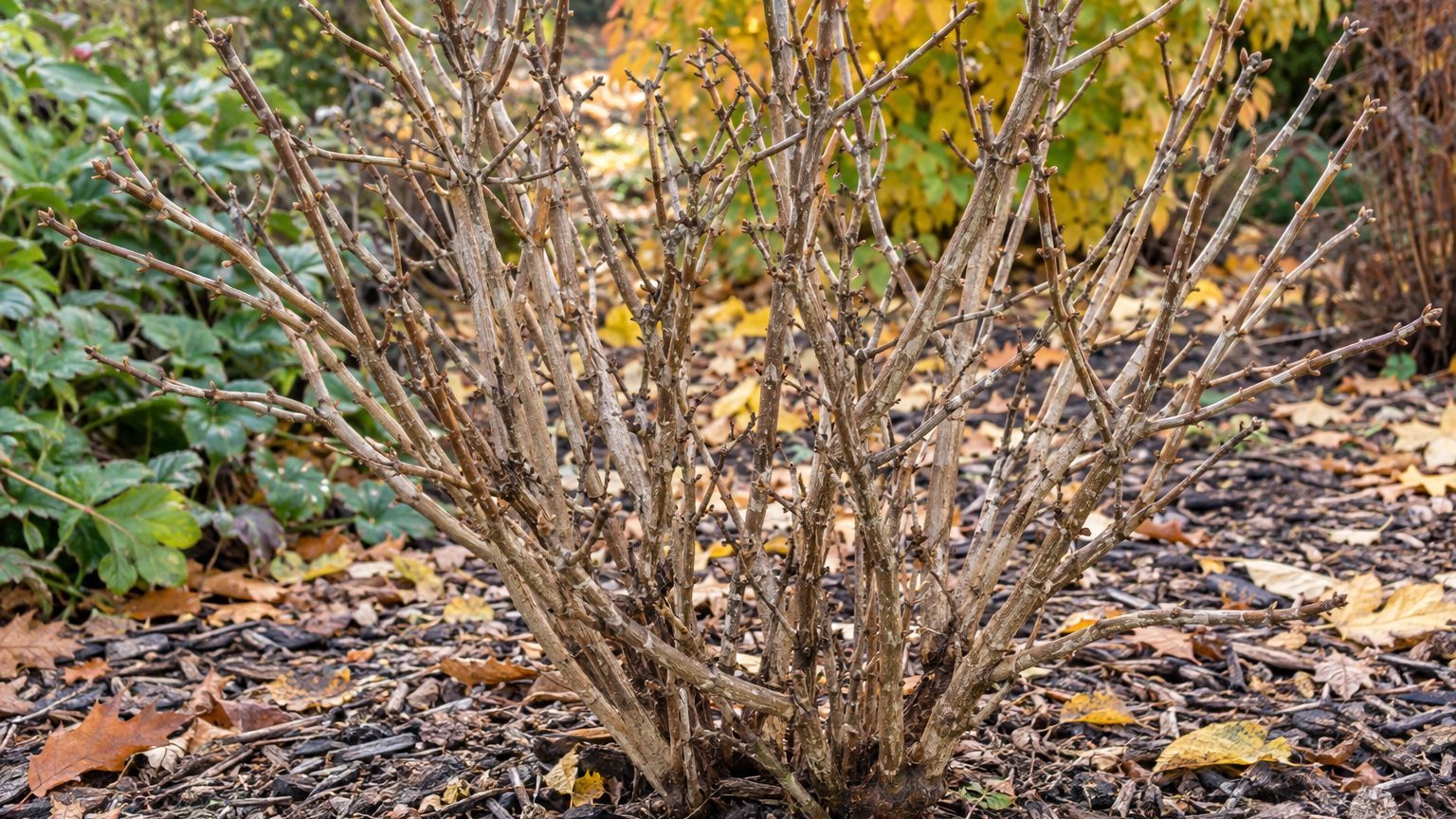
- Thin the canopy with renewal pruning to reduce density, which opens the shrub to air and eases the strain on a stressed plant.
If fungal disease is confirmed and you want a fungicide, use one labeled for lilacs and ask your state extension service which products are approved where you live. Established shrubs are tough, but a long decline in photosynthesis can weaken them, so do not ignore a persistent problem.
How to Prevent Lilac Leaves Turning Yellow Coming Back
Prevention follows the seasons, and most of it is cleanup and steady care rather than treatment.
- In Oregon, check young shoots for brown spots in early spring.
- Through the growing season, water at the soil line rather than over the leaves, and water consistently so the shrub does not swing between dry and wet.
- After leaf drop in fall, rake up and dispose of every fallen leaf, which is tedious but lowers the chance of reinfection next season.
- In fall, take a soil sample to catch pH or nutrient problems before they show on the leaves.
- Use renewal pruning to open the canopy and keep good air circulation around the plants.
Give new shrubs enough room from the start to promote good air circulation.
Where This Comes From
The guidance here draws on university extension and government plant health pages, with regional notes marked by state where they apply.
Because soils, climate, and approved products differ, check your state’s extension service before buying anything for your lilac.
Common Questions
Should You Cut Off Yellow Lilac Leaves?
Leaves that are spotted or diseased are worth removing and disposing of, since that reduces the spread of fungal spores. Leaves that are simply pale from a nutrient shortage can stay, because they still do some work for the plant.
Can a Lilac Recover After Its Leaves Turn Yellow?
Established shrubs are fairly tough, but persistent yellowing can still weaken the plant. The entire canopy may show symptoms in a single season or take several years.
Does Fertilizer Fix Yellow Lilac Leaves?
It helps when the cause is a nitrogen shortage, but a soil test tells you whether that is the problem. If the yellowing sits between green veins, confirm a mineral uptake problem before adding more nitrogen.