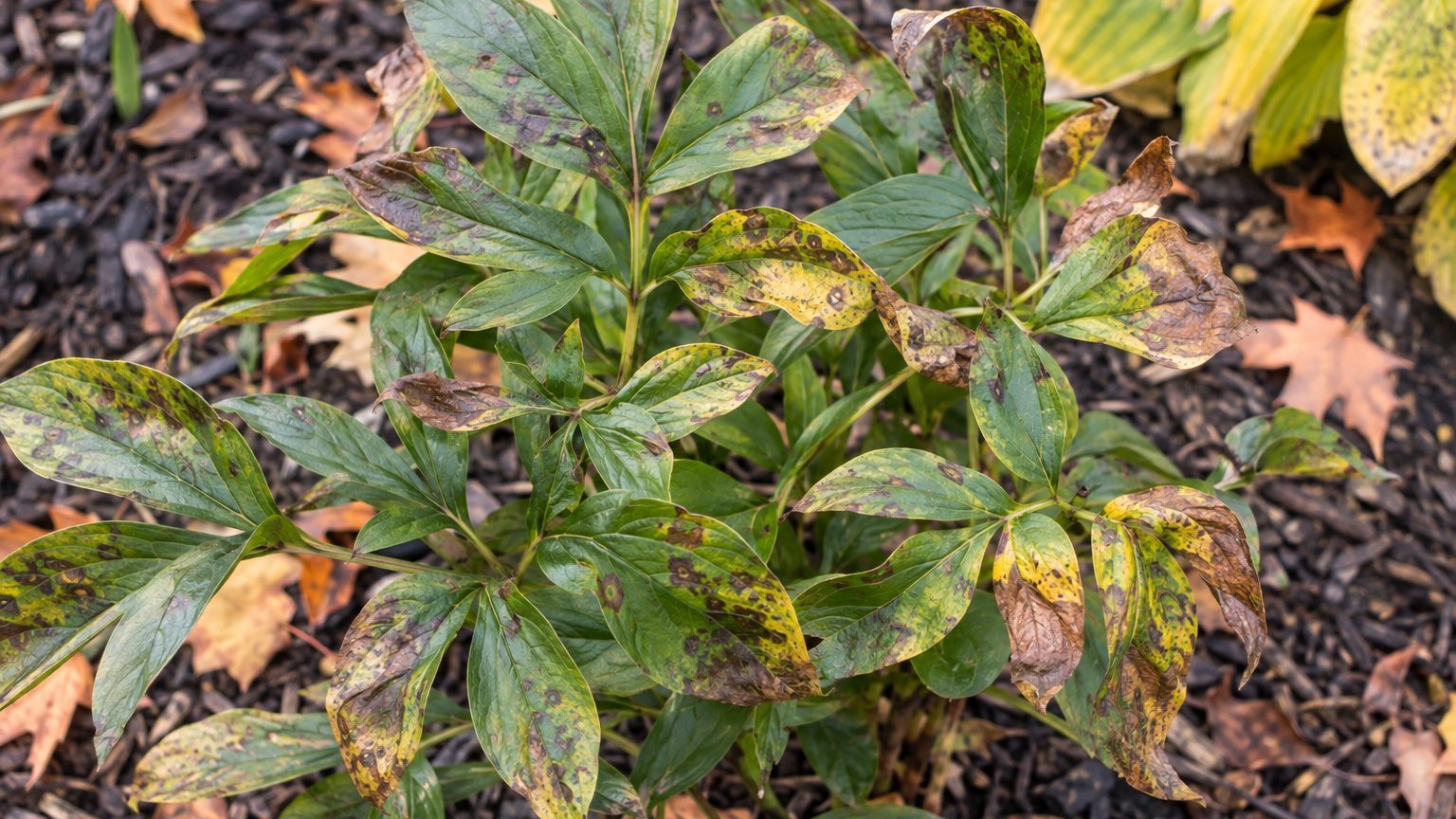
Brown, blotchy leaves on a peony can look alarming, and plenty of gardeners assume the plant is finished. The real question is whether the plant is losing leaves early, failing to bloom, or simply dying back on schedule.
Peony Plant Dying: What You See

Start with the stems and leaves, because the pattern of spotting tells you which disease is at work.
- Distinct red to reddish-black spots on the stems, often called measles or red spot, are the sign that sets this problem apart.
- Young stems show elongated, reddish-brown streaks that later turn purple as the spots merge.
- Leaves carry glossy, purplish-brown circular spots on top and chestnut or milk-chocolate brown spots underneath.
- Spots join into large brown or purple blotches, and leaves may twist slightly as they keep growing.
- Damage tends to be heavier at the margins of the outer leaves.
Warm, humid weather favors all of this, so the spotting usually builds as the season goes on.
From the almanac
Peonies in your state
The dates on this page depend on where you live. Your state's page carries its frost dates, its USDA zones and the year laid out month by month.
Northeast
Southeast
- Alabama
- Arkansas
- Delaware
- Florida
- Georgia
- Kentucky
- Louisiana
- Maryland
- Mississippi
- North Carolina
- South Carolina
- Tennessee
- Virginia
- West Virginia
Midwest
Southwest
West
Pacific Northwest
Canada
Peony Plant Dying or Something Else?
Several harmless or unrelated things resemble a failing peony. Look at the color and the timing together before you decide anything is wrong with the roots.
A peony that browns in autumn is simply doing what peonies do, and one that merely lacks flowers has a different list of causes altogether.
| Looks like | How to tell them apart |
|---|---|
| Powdery mildew | Heavy infections can look dramatic on the leaves, yet the disease rarely kills a plant, and spotting from leaf blotch is glossy and brown instead. |
| Natural fall dieback | Foliage browns in autumn after a healthy summer, and the plant regrows the following spring. |
| Heat and drought stress | Leaves brown through much of a very hot, dry summer, and sandy soil makes the problem worse. |
Gray mold is a separate fungus that also attacks peonies, while missing buds can point to growing conditions and buds that never open may signal weather, disease, insects, or poor nutrition.
What Causes Peony Plant Dying, and Where It Is Worst
Fungi are behind most of it. Leaf blotch comes from a fungus that overwinters on infected plant debris, then releases spores in spring that splash onto young foliage and stems with rain or overhead irrigation.
Warm, humid weather gives the fungus its best conditions, so wet, muggy summers produce the worst spotting. In Ohio, the measles symptoms typically appear before the leaf blotch symptoms, with the stem lesions expanding as the season progresses.
The disease looks worse than it is. Despite the ugly foliage, leaf blotch does not have a major impact on plant health and survival, so a spotted peony is usually a plant under cosmetic attack, not one at the end of its life.
In Washington, advice for peonies that fail to bloom lists too little sun, recent transplanting, planting too deep, too much fertilizer, clumps that need dividing, and cutting foliage off too early in July or August.
How to Treat Peony Plant Dying
Treatment is mostly cleanup and better watering, done in this order.
- Remove infected leaves, even if that means taking all of them, so that spores have less tissue to live on.
- Cut the dead stems down to the ground in late fall or early spring, before the plant breaks dormancy, so the fungus loses its winter shelter.
- Bag and discard the debris instead of composting it, because spores overwinter on the old material.
- Switch to drip irrigation in place of overhead sprinklers, so that the foliage stays dry and the fungus has less chance to spread.
- Water sandy soil more frequently in hot, dry spells, so that drought stress does not add to the browning.
- If unaffected or new leaves are emerging, a fungicide may help manage further damage.
A fungicide only helps protect leaves that are still clean, so it cannot repair tissue that is already spotted.
How to Prevent Peony Plant Dying Coming Back
Prevention follows the calendar, and most of it comes down to keeping spores and moisture away from the foliage.
- In late fall or early spring, cut all dead peony stems to the ground and remove them before new growth starts.
- When spring growth begins, water at the base with drip irrigation so rain-splashed spores have less help reaching young stems.
- Through warm, humid summer weather, keep the leaves dry and check the stems for the first red spots.
- During hot, dry spells, water sandy soil more often so the plant is not stressed on top of any disease.
- In Washington, leave the foliage in place in July and August, because cutting it early can cost you buds next year.
Then expect the leaves to brown in autumn, which is normal and is no cause for alarm.
Where This Comes From
This guidance focuses on leaf blotch, natural dieback, and other problems that can look similar. Local growing conditions can change treatment timing, so match any intervention to your climate.
Common Questions
Will Leaf Blotch Kill a Peony?
Not usually. The spotting looks severe, but the disease does not have a major impact on the plant’s health or survival, and the plant regrows the next spring.
Is It Normal for Peony Leaves to Turn Brown in Fall?
Yes. Peonies die back naturally in autumn, and a plant that stayed healthy all summer needs no attention.
Why Does a Peony Have Buds That Never Open?
The listed causes include a late freeze, other extreme weather, fungal diseases, insects, and poor nutrition. Possible causes include a late freeze, other extreme weather, fungal disease, insects, and poor nutrition.