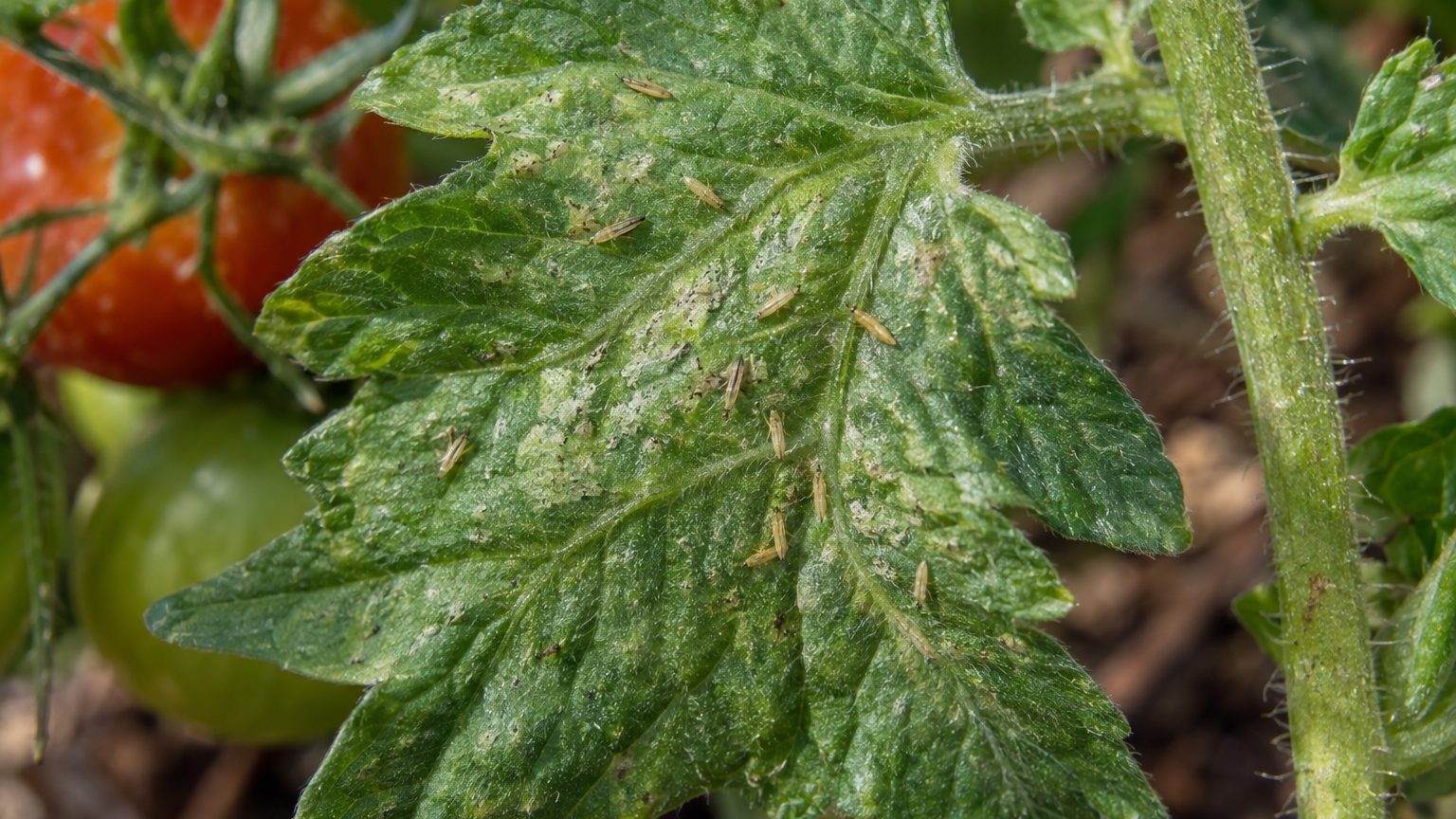
A silvery, flecked sheen on tomato leaves, with tiny black specks scattered across it, usually points to thrips. These slender insects feed on the plant’s cell contents, and the damage shows up well after the feeding starts. Spotting the signs early and cleaning up the growing space are what keep a small problem from spreading.
Thrips: What You See

Thrips are small enough that the damage gets noticed before the insect does, so look at the leaves first.
- Silvery, flecked patches and black specks of frass sit on the surface of fully expanded leaves.
- The insects themselves are thin, yellowish-orange and about the size of metal filings, with fringed wings.
- Young fruits can carry small indentations where females laid their eggs.
- Flowers and leaves may come out deformed, because the plant cells collapse where thrips have fed.
- Scarring and distorted growth can follow on new tissue.
In Maryland, the first symptoms can take 2 – 4 weeks to appear after adults begin feeding, so the insects are often well settled by the time you notice.
From the almanac
Tomatoes in your state
The dates on this page depend on where you live. Your state's page carries its frost dates, its USDA zones and the year laid out month by month.
Northeast
Southeast
- Alabama
- Arkansas
- Delaware
- Florida
- Georgia
- Kentucky
- Louisiana
- Maryland
- Mississippi
- North Carolina
- South Carolina
- Tennessee
- Virginia
- West Virginia
Midwest
Southwest
West
Pacific Northwest
Canada
Thrips or Something Else?
Several tomato problems leave pale or spotted leaves, so one clue is never enough. Pair what the leaf looks like with where it shows up and what you find when you look closely.
A hand lens helps, because thrips leave a distinctive trail of black flecks that other causes do not.
| Looks like | How to tell them apart |
|---|---|
| Mite damage, with stippled, discolored leaves | Mites also stipple the leaf, but thrips add black frass flecks on the damaged surface and slender, fringe-winged insects on the plant. |
| Tomato spotted wilt virus, with spotted, stunted foliage | Thrips carry this virus, so flecking plus stunting means checking for the insects too. |
Because thrips can pass spotted wilt virus to tomatoes, peppers and eggplants, flecked leaves on a stunted plant deserve a close look rather than a quick guess.
What Causes Thrips, and Where It Is Worst
Thrips build up fast. A female lays kidney-shaped eggs inside plant tissue, the young pass through two larval stages and then a prepupa and pupa stage, and the adults feed and lay more eggs. There can be up to eight generations in a year.
Warmth speeds all of this up. In Maryland, when the weather is warm, the life cycle can be as short as 2 weeks, so a few insects become a crowd quickly.
Protected growing spaces such as greenhouses and high tunnels see a lot of trouble. Western flower thrips feed on cucumbers, peppers, lettuce and tomatoes under cover, and problems there often trace back to poor sanitation before planting.
How to Treat Thrips
Work in order, starting with the cleanup and then moving to the plants themselves.
- Check the leaves with a hand lens, so that you confirm the black flecks and slender insects before doing anything else.
- Remove weeds and old plant debris around the tomatoes, because these shelter thrips and let them move onto your plants.
- Pull and bag the worst-damaged leaves, which takes away tissue where eggs are already laid.
- Keep watching new growth regularly, since feeding damage appears well after the insects arrive.
- Contact your state extension service about what is approved and legal in your state if the population keeps climbing, because label rules differ from place to place.
In a greenhouse or high tunnel, sanitation before planting does more than almost anything done later, so clear the space thoroughly before the next crop goes in.
How to Prevent Thrips Coming Back
Prevention follows the season, and most of it is cleanup done before thrips have a chance to build up.
- Before planting, clean out greenhouses and high tunnels thoroughly, removing old plants and weeds that carried thrips through the cold months.
- Before transplanting, inspect seedlings for flecking and black specks so that you do not bring thrips in with them.
- Keep weeds down around the beds, because warm weather lets thrips breed quickly.
- During the growing season, check the leaves regularly for silvery flecks, since symptoms trail the feeding.
- Clear spent tomato plants and debris, so nothing is left to harbor thrips into the next year.
Most thrips problems found in protected growing spaces came down to skipped sanitation, which makes the cleanup the easiest part to control.
Where This Comes From
This guidance draws on university extension research from Maryland, Utah and North Carolina on thrips in tomatoes and other vegetables.
Rules on what you can use differ by state, so confirm details with your state’s extension service.
Common Questions
Can Thrips Kill a Tomato Plant?
Thrips mainly damage leaves, flowers and young fruit, but they can also carry tomato spotted wilt virus, which harms the plant more seriously. Early detection limits both problems.
Do Thrips Live Inside Tomato Flowers?
Thrips feed on flowers and leaves, and deformed blooms are one sign of their feeding. Check new growth closely when flowers look distorted.
Will Thrips Spread to My Peppers and Eggplants?
They can. Thrips feed on a wide range of vegetables, and the virus they carry affects peppers and eggplants as well as tomatoes, so inspect nearby crops too.