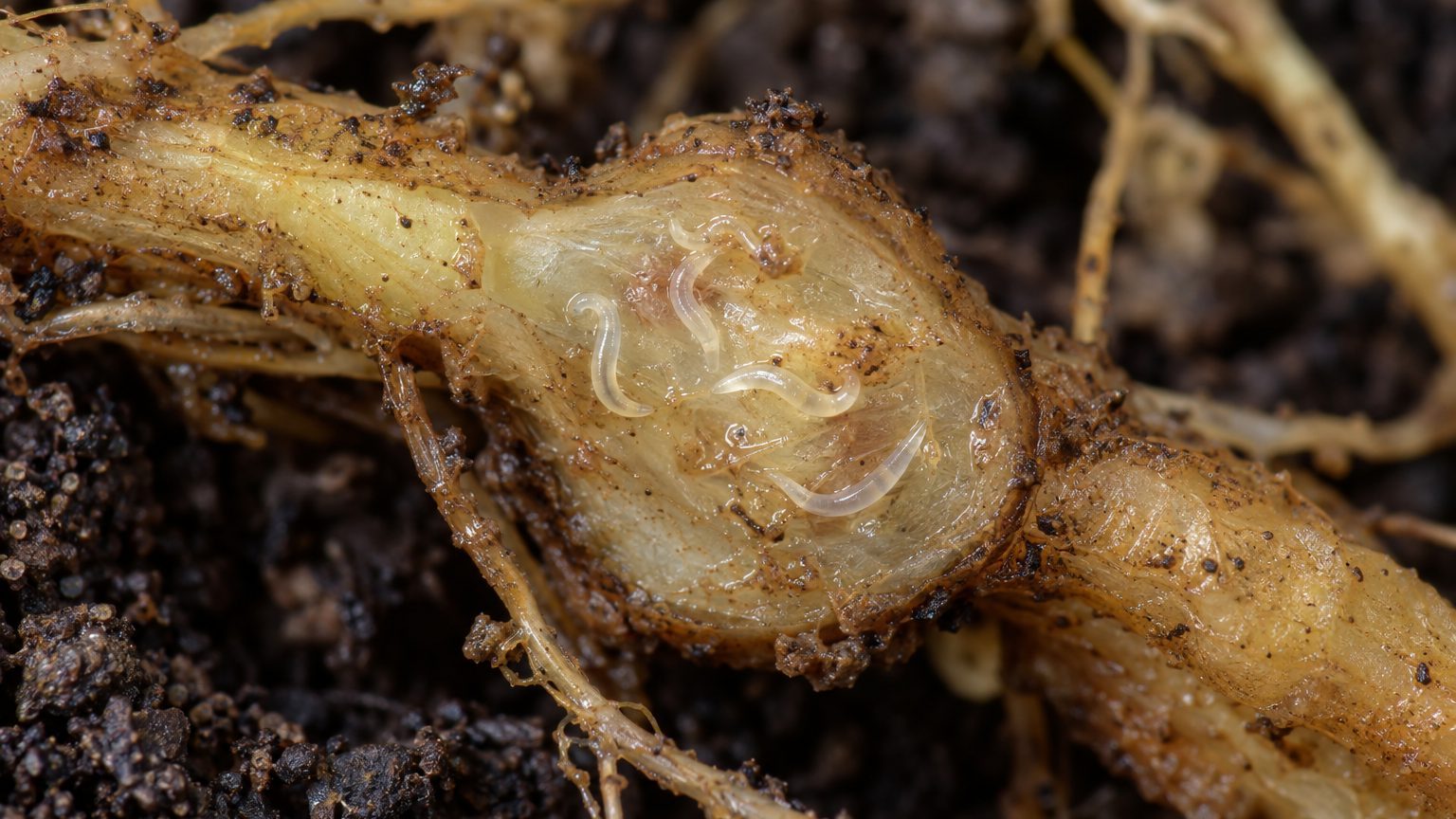
Peonies that stay small and weak and produce no flowers may be showing that something is wrong underneath the soil. Root-knot nematodes, tiny worms that feed inside the roots, can cause these symptoms. Confirming them takes a look at the roots, and getting rid of them means treating the plant itself and moving it.
Root-Knot Nematodes: What You See

The signs show up on the whole plant and then on the roots, so look at both when a peony is struggling.
- Fine roots carry round swellings called galls, each about one-eighth inch in diameter.
- The root system looks short and stubby instead of long and branching.
- Sliced through, a gall shows brown areas packed with small round worms, also called eelworms.
- The plant stays small and weak compared with healthy peonies nearby.
- No flowers form, even on a clump that is old enough to bloom.
The galls are the sign that sets this problem apart, so dig gently at the edge of the clump and wash some fine roots to see them clearly.
From the almanac
Peonies in your state
The dates on this page depend on where you live. Your state's page carries its frost dates, its USDA zones and the year laid out month by month.
Northeast
Southeast
- Alabama
- Arkansas
- Delaware
- Florida
- Georgia
- Kentucky
- Louisiana
- Maryland
- Mississippi
- North Carolina
- South Carolina
- Tennessee
- Virginia
- West Virginia
Midwest
Southwest
West
Pacific Northwest
Canada
Root-Knot Nematodes or Something Else?
A peony that sulks without blooming has many possible causes, and a poor plant above ground proves nothing by itself. The roots decide the question.
Nodules and swellings also turn up on other plants, so check the shape and the inside of the swelling before you decide.
| Looks like | How to tell them apart |
|---|---|
| Small, weak plant that never flowers | Dig a few roots. Nematode damage shows galls on the fine roots, and a slice through one reveals brown areas full of worms. |
| Short, stubby roots | Look at the fine roots for galls about one-eighth inch across. Stubby roots with no galls point to another cause. |
Poor planting, too much shade or a clump set too deep can also keep peonies from blooming, but they do not produce galls with worms inside. If you cannot tell, have a sample of roots and soil analyzed.
What Causes Root-Knot Nematodes, and Where It Is Worst
The cause is the nematode itself, a small round worm that lives in soil and feeds on peony roots. It enters the fine roots, and the galls are the swellings that form where it feeds. The damage cuts the plant’s ability to take up water and nutrients, which explains the small size and the missing flowers.
The worms travel in soil, and a division or root bought from an infested bed carries them into a new spot. That is how a healthy garden picks up the problem.
Soil that has already held infested plants is the place to be most careful.
How to Treat Root-Knot Nematodes
Treatment means cleaning the roots and crown, then planting them somewhere new, in this order.
- Dig the whole clump carefully, so that you keep the roots and crown intact for treatment.
- Wash the soil off, so that you can see the galls and judge how far the damage goes.
- Soak the roots and crown in hot water at 115 F for one-half hour, because that heat kills the nematodes in the tissue.
- Choose a new planting spot away from the old one, so that the survivors left in the soil cannot reach the clean roots.
- Plant the heat-treated roots there, which prevents reinfestation.
Keep the water steady at that temperature, since too hot harms the plant and too cool will not kill the worms. Check whether any soil treatment is approved where you live, because that varies by state.
How to Prevent Root-Knot Nematodes Coming Back
Prevention follows the planting calendar, and it starts with where the roots come from.
- Check new peonies and any divisions you plan to plant for galls on the fine roots before they go into the ground.
- Watch for small, weak plants that fail to put up strong stems.
- Keep tools and boots clean when moving between beds, so soil from a sick clump does not travel to a healthy one.
- Set heat-treated roots in a new location rather than back into the old hole.
- If a plant remains weak, lift it and look at the roots instead of waiting for flowers that never come.
A laboratory analysis of soil and roots can confirm the diagnosis before you replant.
Where This Comes From
Rules and options differ by state, so check local rules before you treat or replant.
Common Questions
Can You Save a Peony with Nematodes?
Yes, in many cases. Hot-water treatment of roots and crown at 115 F for one-half hour kills the nematodes, and planting the treated roots in a new location prevents reinfestation.
Why Is My Peony Small and Not Blooming?
A weak plant with no flowers can be a sign of nematodes, but confirm it by checking the roots for galls and short, stubby growth. Without galls, look at planting depth, light and other causes.
Should You Replant in the Same Spot?
No. Plant the treated roots in a new location, since the soil of the old spot can still hold worms that would infest the clean roots again.