Skip to content

Pests

Thrips on Lilacs: How to Spot Them and Get Rid of Them

Thrips on Lilacs: How to Spot Them and Get Rid of Them

Silvery, speckled leaves on a lilac can point to tiny insects feeding on the surface. Thrips are slender and so small you will often notice the damage before the insect. Spotting that damage early, and knowing how to tell it from lookalikes, keeps this common lilac pest manageable.

Thrips: What You See

Thrips on Lilacs: How to Spot Them and Get Rid of Them

The leaves tell the story first, so start there and work toward the insect itself.

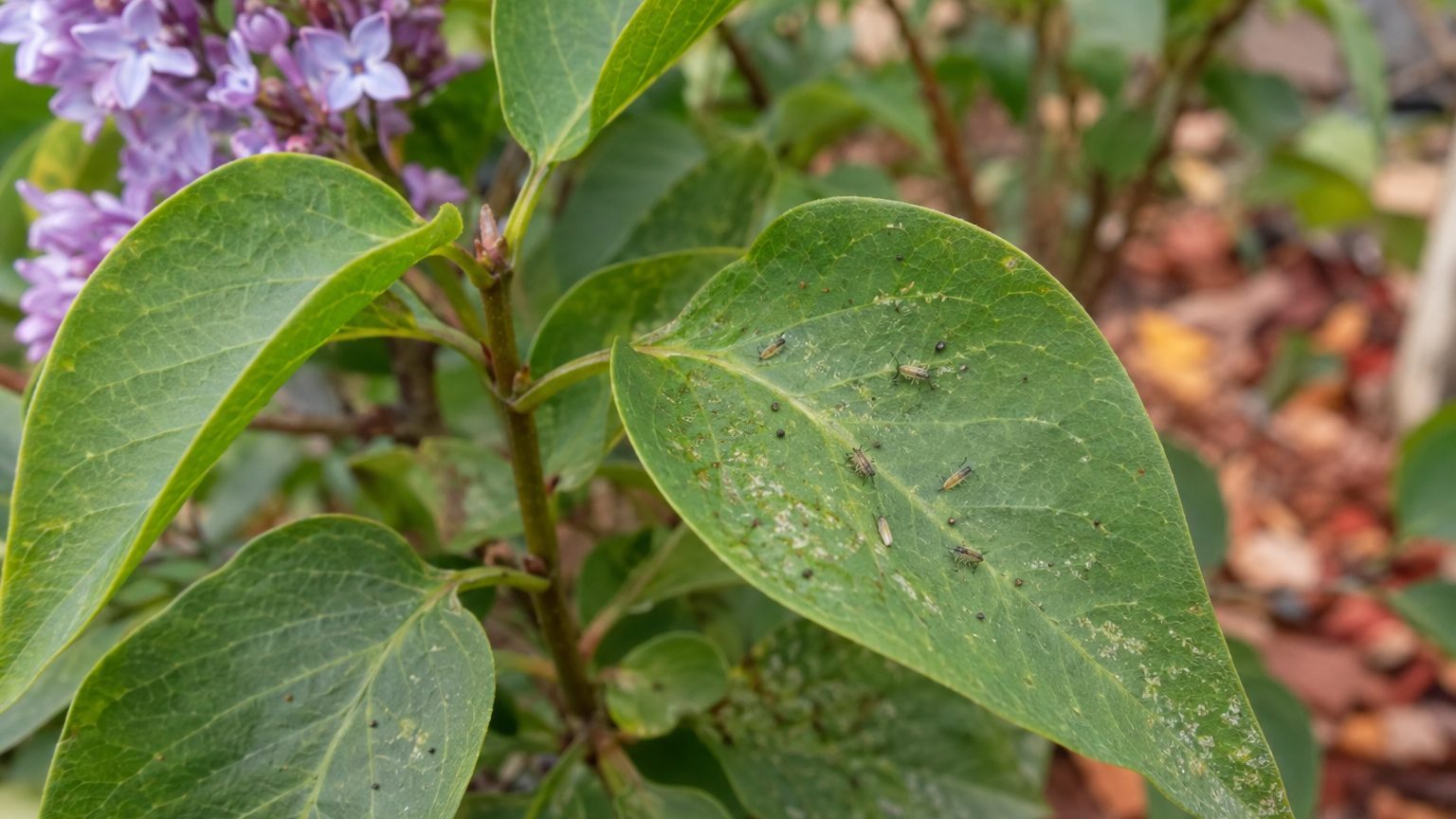
  • Leaves show a silvery or bronzed stipple, fine pale flecks where the surface cells have been drained.
  • Tiny black specks, the insects’ droppings, dot the undersides of damaged leaves.
  • Leaf edges and new shoot tips curl, twist or stay stunted instead of opening flat.
  • Flower buds may brown, shrivel or open ragged and discolored in spring.
  • The insects themselves are slim, pale to dark, and quick to crawl or hop when a leaf is disturbed.

Damage tends to show on the newest growth, since that is where the soft tissue they prefer is found.

Thrips or Something Else?

Several other lilac troubles leave pale, dull foliage, and treating the wrong one wastes effort. Check the pattern on the leaf and then confirm it with a quick test before deciding anything.

Shake a damaged shoot over a sheet of white paper. Thrips show up as tiny slim specks that run about, while the other culprits look different.

Looks like How to tell them apart
Powdery mildew A white, dusty coating sits on top of the leaf, often on shaded, crowded stems, and it wipes off with a thumb. Thrips damage cannot be rubbed away.
Spider mites Fine stippling comes with delicate webbing under the leaf, and the specks on white paper are round and crawl slowly. Thrips leave dark droppings and no webbing.

Leaf-chewing insects are another possibility. They leave holes or torn margins, while thrips only scrape and drain, so a leaf with a clean outline and silvery patches points away from them.

What Causes Thrips, and Where It Is Worst

Thrips arrive on their own. They drift in on warm air or move over from neighboring plants, then settle on soft new growth to feed and breed. A lilac does not have to be neglected to attract them, though a crowded shrub with dense, shaded stems gives them more hiding places and is harder to inspect.

Wherever lilacs grow, the same pest can show up in the growing season, and it feeds on many other plants nearby.

Natural enemies work in your favor. In South Dakota, extension advice notes that ladybugs and lacewings may already be present in the yard and help hold thrips populations in check. That is a good reason to look closely before reaching for any spray.

How to Treat Thrips

Work from the gentlest step to the firmest, and stop as soon as the pressure drops.

  1. Confirm the pest with the white paper test, so that you treat thrips and not mildew or mites.
  2. Rinse the shrub with a firm stream of water, which knocks insects off the foliage and slows their feeding.
  3. Prune out the worst of the distorted shoot tips and bag them, so that the insects feeding there leave the yard with the clippings.
  4. Leave ladybugs, lacewings and other beneficial insects alone, since they are already working on the problem.
  5. Call your state’s extension service before using any spray, because only they can tell you which products are approved where you live and when to apply them.

Cosmetic scarring on leaves does not heal, but new growth will come in clean once the insects are gone. Judge your progress by the new leaves, not the old ones.

How to Prevent Thrips Coming Back

Prevention for lilacs comes down to shrub structure and timing, with renewal pruning doing most of the work.

  • In early spring, check new shoots as they open, because early damage is easiest to catch while the leaves are small.
  • For a lilac, begin renewal pruning by cutting out the oldest stems at the base.
  • When you prune, remove up to one third of the branches in a given year, so the shrub keeps enough growth to recover.
  • Through summer, keep the center of the shrub open and watch the fresh growth that follows pruning.

Renewal pruning also helps lilac produce more flowers, keeps the shrub from outgrowing its spot, and makes any later shearing easier. Privet responds to the same technique.

Where This Comes From

Rules and approved products differ from state to state, so check with your state’s extension service before you act.

Common Questions

Do Thrips Kill a Lilac?

Thrips mostly spoil the look of the leaves and buds. A shrub that is otherwise healthy usually carries on, and the clean new growth is a sign that the pressure is easing.

Do Thrips Live on Other Plants Near Lilacs?

They feed on many garden plants, so insects can move between shrubs, flower beds and hedges. Looking over the plants beside your lilac gives a fuller picture of where they are coming from.

Should You Cut Off Damaged Leaves?

Leaves that are only speckled can stay, since they still photosynthesize. Cut off shoot tips that are badly twisted or stunted, and bag them rather than composting them.
Lilac Sphinx Moth Caterpillars: How to Spot Them and Get Rid of Them

Lilac Sphinx Moth Caterpillars: How to Spot Them and Get Rid of Them

A lilac that loses vigor stem by stem, with swollen areas on the bark and emergence holes, may be hosting a borer rather than suffering from drought or disease. The damage comes from the larva of the lilac borer, a clearwing moth rather than a sphinx moth.

Lilac Sphinx Moth Caterpillars: What You See

Lilac Sphinx Moth Caterpillars: How to Spot Them and Get Rid of Them

The caterpillar itself stays hidden in the wood, so you spot it mostly through the marks it leaves on the stems.

  • Inside a cut or split stem, the larva is white with a brown head and grows to about an inch long.
  • Swollen, unsightly areas on the stems mark the places where borers are working.
  • Small emergence holes appear in the bark, and the empty pupal skins often stay stuck to the bark at those holes.
  • Larger lilac stems are the ones attacked, so check the thick canes first.
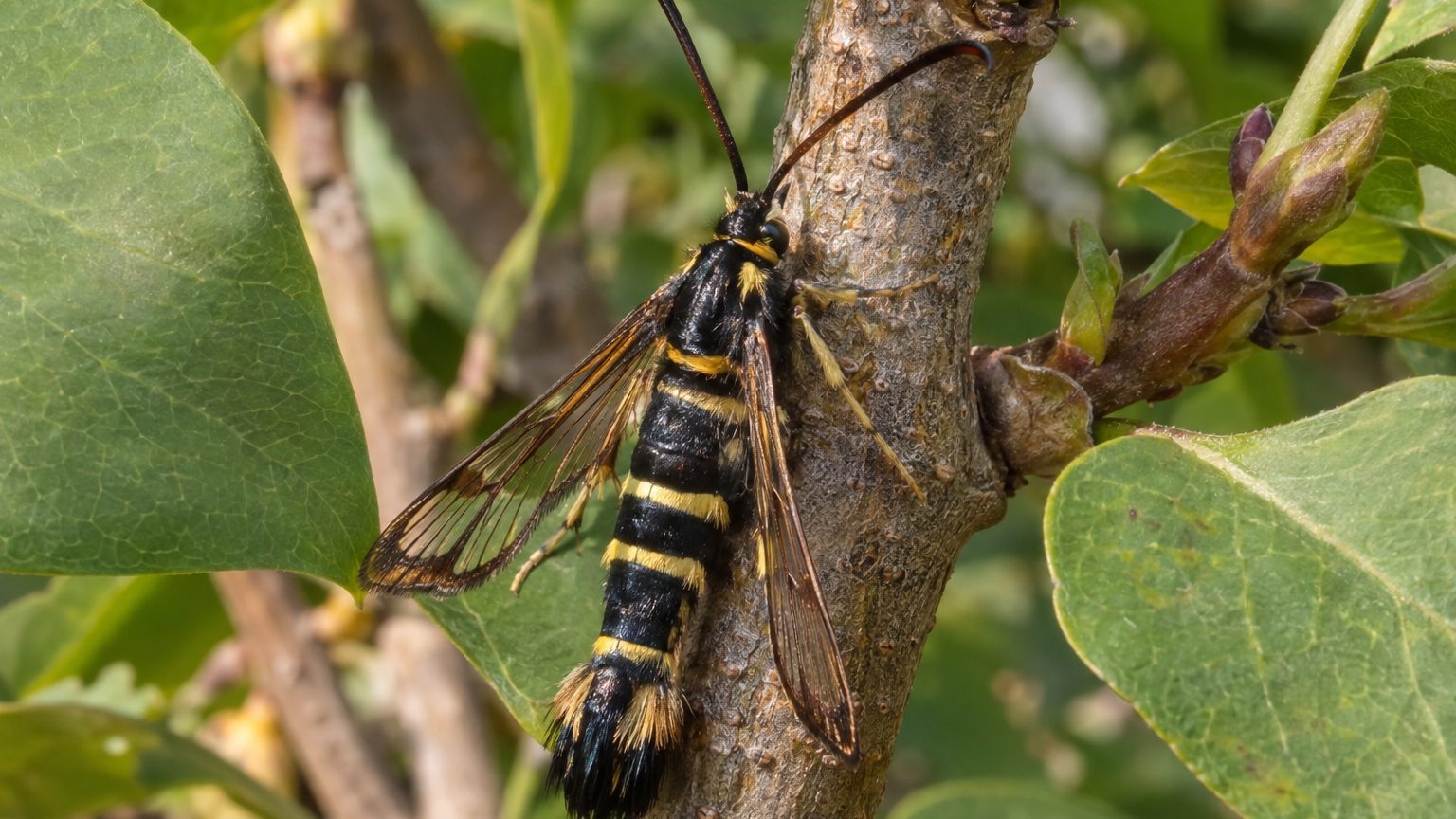
  • The adult is a clearwing moth with brown forewings and clear hind wings, and it looks like a paper wasp.
  • The plant weakens gradually as the tunnels spread under the bark.

The adult is the part of the life cycle you may notice flying around the shrub, but the larval stage is the one that does the harm.

Lilac Sphinx Moth Caterpillars or Something Else?

The adult moth can be mistaken for a paper wasp. It behaves and looks so much like a wasp that people often mistake it for a stinging insect near the shrub.

Looks like How to tell them apart
Paper wasp hovering around the lilac Look for brown forewings with clear hind wings, and note that it cannot sting. It is active around the bark in April and May in North Carolina.
Leaf-eating caterpillar on the foliage A caterpillar chewing leaves in the open is a different insect. The borer larva stays inside the stem, where you find it only by splitting the wood, and it leaves swollen bark with emergence holes.

Ordinary stem dieback from drought or winter injury can also look similar from a distance. Check the base of the dying stem for holes and pupal skins before blaming the weather.

What Causes Lilac Sphinx Moth Caterpillars, and Where It Is Worst

The cause is the adult moth. Females lay eggs in cracks, crevices and damaged areas of the bark, often at the base of major branches. The eggs hatch soon after, and the tiny larvae tunnel under the bark and feed on the layer that carries sap.

Rough bark and wounds are the invitation. A stem scarred by a mower, a trimmer or a broken branch gives the female a place to lay. Ash and privet are attacked the same way as lilac.

Timing shifts with the place. In North Carolina, adults emerge in April and May to mate and lay. In Iowa, the moths emerge in mid-May.

How to Treat Lilac Sphinx Moth Caterpillars

Treatment starts with confirming the borer and then removing what it has already damaged.

  1. Inspect the base and the thickest stems for swollen areas, emergence holes and pupal skins, so that you treat the right pest.
  2. Mark the infested stems, so that you can find them again after the leaves drop.
  3. Remove badly damaged stems only with timing suited to the lilac’s bloom habit and local moth activity.
  4. Remove the cut wood from the yard or destroy it, because larvae left in a brush pile can still finish their cycle.
  5. Check the remaining stems for fresh wounds and leave the healthy bark alone, so that the female has no new place to lay.
  6. Ask a qualified local gardening professional which controls are legal and appropriate where you live.

Infested stems may continue to weaken as larvae tunnel through the wood.

How to Prevent Lilac Sphinx Moth Caterpillars Coming Back

Prevention centers on avoiding bark wounds and watching for adult activity.

  • In late winter, walk the shrub and look for emergence holes and pupal skins from last year, so you know whether borers are present before the moths fly.
  • In April and May, avoid cutting into lilac, ash or privet bark, because fresh wounds attract egg-laying females during the flight period in North Carolina.
  • Through spring and summer, keep mowers and string trimmers away from the base of the stems, since scarred bark gives the moth a place to lay.
  • Remove infested cut wood from the yard, because larvae overwinter inside the wood near the ground.

Avoid bark wounds, because females lay eggs in cracks, crevices and damaged areas.

Common Questions

How Many Generations Do Lilac Borers Have in a Year?

There is usually only one generation per year. In the northern part of the range, a two-year cycle can occur, so signs may show up less often there.

Where Do Lilac Borers Spend the Winter?

They overwinter as larvae in the wood, usually near the ground. In Idaho, after a summer feeding under the bark, they move toward the heartwood for winter.

Which Other Plants Do Lilac Borers Attack?

The larvae damage lilac, ash and privet. If you grow any of these near each other, check all of them for swollen bark and emergence holes.

Where This Comes From

The details here come from university extension pages written for North Carolina, Idaho and Iowa. Local timing varies, so confirm dates and approved controls with your own state’s extension service.

Rabbits on Lilacs: How to Spot Them and Get Rid of Them

Rabbits on Lilacs: How to Spot Them and Get Rid of Them

Bark peeled off a lilac stem, with pale wood showing and snapped branches, is the mark rabbits leave behind. The damage can be easy to miss because the shrub may leaf out normally in spring.

Rabbits: What You See

Rabbits on Lilacs: How to Spot Them and Get Rid of Them

The clearest sign is on the stems, so start there and then look at the shape of the whole shrub.

  • Bark may be stripped from stems about a foot to 2 feet off the ground.
  • The wood underneath looks pale and bare where the cambium is exposed.
  • Plenty of branches are broken or snapped, often before you notice anything is wrong.
  • In spring the shrub may leaf out just fine, which hides the harm.
  • As summer drought and heat set in, the shrub begins to die back.

A lilac that looks healthy in spring can decline during summer stress, so trust the stripped bark as your clue.

Rabbits or Something Else?

Several other problems leave a lilac looking chewed or declining. Pairing what you see with where it sits on the shrub keeps you from blaming the wrong culprit.

Rabbit damage can include stripped bark and broken branches on the lower stems. Damage outside that pattern deserves a closer look before you rule rabbits in or out.

Looks like How to tell them apart
Deer browsing Bark and twig ends look ragged and torn, and the damage reaches well above the height a rabbit can reach.
Voles Gnawing sits right at the base of the stem, and you may find small runways in the mulch or grass around it.
Drought and heat stress Branches die back in summer, but the bark on the lower stems is still whole and unmarked.

Drought stress and rabbit damage can also happen together, since stripped stems struggle most when summer turns hot and dry.

What Causes Rabbits, and Where It Is Worst

Rabbits gnaw bark to feed, and a lilac stem within easy reach makes a convenient meal. When bark is stripped and the cambium is exposed, the shrub’s response is uncertain, and damaged stems may die back under summer stress.

Where rabbits browse lilacs, exposed stems may be at risk. Brush, woodpiles and thick hedges can provide nearby cover for rabbits.

The slow part is how the harm shows up. The shrub leafs out normally in spring, then suffers once summer drought and heat arrive, and the dieback follows.

How to Treat Rabbits

Once the bark is gone, there is no fix to apply. Care means giving the shrub time and removing only what is clearly dead.

  1. Inspect the stems and note where the cambium is exposed, so that you know how much of the shrub is at risk.
  2. Wait and see how the shrub responds, because stripped bark cannot be repaired and the outcome is not clear at first.
  3. Hold off on pruning until late spring, so that you can tell which stems are truly dead from those that leaf out.
  4. Cut out dead branches once the surviving parts have leafed out, so that the shrub puts its energy into healthy growth.
  5. Keep an eye on the shrub through summer drought and heat, since that is when a damaged lilac tends to give out.

If rabbits keep returning, ask your state’s extension service what control options are allowed where you live. Rules differ from place to place.

How to Prevent Rabbits Coming Back

Protection is simpler than recovery, and it follows the calendar.

  • In fall, put wire fencing around the shrubs, as advised in Iowa, so that the stems are shielded before rabbits start browsing.
  • In fall, walk around the fence and look for gaps or bent sections, because a small opening is enough for a rabbit to get through.
  • In late spring, take a close look at the stems and remove any dead wood, so that you can see new damage clearly.
  • In summer, check the shrub during drought and heat, since earlier bark damage can show up as dieback then.

Putting the fence up before the damage happens matters most, because a stripped stem cannot be undone.

Where This Comes From

The details here come from university extension guidance on rabbit damage to lilacs, including the fall fencing advice written for Iowa. Check with your state’s extension service for timing and options that fit your own yard.

Common Questions

Can You Tell in Spring Whether a Damaged Lilac Will Live?

Not reliably. New leaves can appear on a shrub that is already compromised, so the real test comes later, when summer stress shows whether the stems can keep supporting the foliage.

Is Wire Fencing Enough to Protect Lilacs?

Fencing around the shrubs is the protection recommended for Iowa, and it works by keeping rabbits away from the bark. It only helps while it is intact, so it is worth checking for gaps.

Who Can Say What Rabbit Control Is Allowed Near You?

Your state’s extension service is the place to ask. It can explain what is permitted locally, and no product advice is given here for that reason.

Oystershell Scale on Lilacs: How to Spot Them and Get Rid of Them

Oystershell Scale on Lilacs: How to Spot Them and Get Rid of Them

Look along the bark of a lilac and you may spot rows of tiny gray-brown bumps, each shaped like a miniature mussel shell. They are oystershell scale, a sap-sucking insect that can quietly weaken a lilac. Knowing what the crust looks like, when the young hatch, and what to do about them keeps the shrub healthy.

Oystershell Scale: What You See

Oystershell Scale on Lilacs: How to Spot Them and Get Rid of Them

Start with the bark, because that is where this pest lives, and look closely at the older stems and trunk.

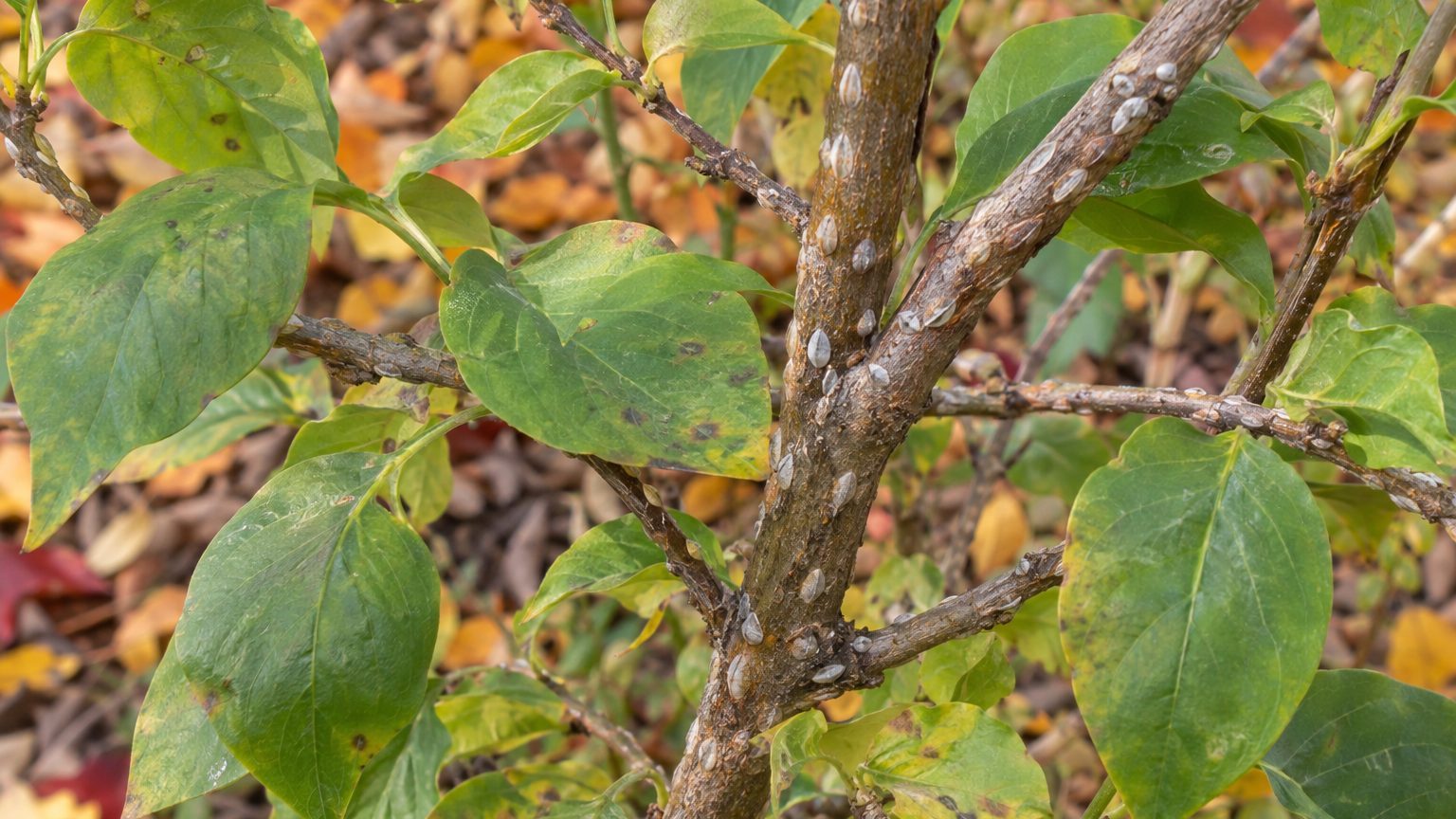
  • Small, hard, convex covers sit pressed against the bark, shaped like tiny oyster shells and grayish brown, and each mature one is about 1/8-inch long.
  • The crust can be found throughout the plant, on branches and on the trunk, often packed so closely that the bark looks roughened.
  • In Arizona, lift a cover in winter and you may find tiny white eggs beneath the female’s waxy shield.
  • Leaves turn yellow and stay smaller than they should, because the insects are draining the plant underneath.
  • Twigs and whole branches may die back.

In Colorado, late May or early June brings the mobile young, so that is a good time to check a suspect shrub.

Oystershell Scale or Something Else?

Lilacs get plenty of problems that leave yellow leaves and dead twigs, so the shell-like crust on the bark is what settles the matter. Pair the symptom with a look at the bark itself before you decide on anything.

A fingernail helps. A scale cover lifts off as a separate shield, while bark features stay part of the stem.

Looks like How to tell them apart
Rough, cracked bark with yellowing leaves Bark cracks can come with scale, but scale leaves a raised, shell-shaped cover you can flick off; plain cracking has nothing on the surface.
Twig dieback with small leaves Scale dieback comes with gray-brown covers on the dead and nearby living wood; dieback with clean, bare bark points elsewhere.
Gray flecks or crust on old stems Scale covers are convex and oyster-shaped, about 1/8-inch long, and hide white eggs beneath; flat or powdery patches without eggs are something different.

If a lifted cover is empty, inspect other covers and nearby bark before ruling out oystershell scale.

What Causes Oystershell Scale, and Where It Is Worst

The Insect

The cause is a small armored insect that feeds on the plant it lives on. Developing scales suck the fluids from the cells under the bark, often killing the cells at the feeding site. Lilac, with its thin bark, offers a good feeding site, and the pest has been reported on more than 130 host plants.

Oystershell scale can produce one generation per year in some regions. In Arizona, the insects spend the winter as eggs under the scale of the female. In Colorado, the pearly white eggs hatch on warm, calm days in late May or early June, and most hatch over a fairly brief period of 2-3 weeks.

The young crawl over the bark looking for a feeding site, and they remain mobile for only a few days after hatching. Those that find a spot settle and build their covers. In Colorado, females lay eggs in late summer and early fall and die at the end of the season.

Where It Turns Up

Scale turns up on lilacs in Colorado, Utah, Arizona and Kentucky, so it is not tied to one region. A stressed shrub suffers more, while vigorous growth from proper siting and care appears to help reduce infestations.

How to Treat Oystershell Scale

Confirm the pest first, then match your action to the insect’s stage.

  1. Confirm the pest by lifting a cover and looking for white eggs beneath, so that you do not treat a problem you do not have.
  2. Watch for the crawlers in late May or early June in Colorado, so that you act while the young are mobile and unprotected by a cover.
  3. Ask your state extension office which products are approved where you live and when to apply them, so that the treatment is legal and aimed at the right stage.
  4. Check the bark again later in the season, so that survivors are caught before the next generation.

Catching scale early means less damage and an easier recovery. Without effective management, severe infestations can kill a shrub, so a lilac with heavy crust deserves attention soon.

How to Prevent Oystershell Scale Coming Back

Prevention comes down to a healthy shrub and regular looks at the bark through the year.

  • In Arizona, inspect the bark in winter for eggs beneath the covers.
  • Give the shrub proper siting and care, because vigorous growth appears to help reduce infestations.
  • In late May or early June, look for crawlers on the bark, because that is when the young hatch and move about in Colorado.
  • Water during dry spells as part of normal lilac care, but use the bark signs, not yellowing alone, to judge whether scale is present.
  • In late summer and early fall, check stems again, since females lay eggs then, in Colorado, before dying at the end of the season.

Make the bark check a habit, because consistent observation is what keeps a small patch from becoming a dying branch.

Where This Comes From

The details here come from university extension and government plant health pages written for Colorado, Arizona, Utah and Kentucky. Timing differs by place, so check with your own state’s extension service before you act.

Common Questions

Can a Lilac Recover from Oystershell Scale?

Often it can when the problem is caught early, since earlier action means less damage and easier recovery. Left untreated, heavy infestations can kill the plant.

Which Other Plants Get Oystershell Scale?

Ash, dogwood, maple, poplar, willow, aspen and cotoneaster are common hosts. If one of them is nearby and crusted, check your lilac too.

Why Are My Lilac Leaves Small and Yellow?

Small, yellowing leaves can come from scale feeding, but check the bark for shell-shaped covers on the stems before blaming it. If you find none, ask your state extension office to look at a sample.

Lilac Borer on Lilacs: How to Spot Them and Get Rid of Them

Lilac Borer on Lilacs: How to Spot Them and Get Rid of Them

Sawdust-like specks at the foot of a lilac, or a stem that wilts in summer heat while its neighbors stay green, usually mean larvae are feeding inside the wood. That is the work of the lilac borer. Knowing what it looks like, when the moths fly and what you can still do for an infested shrub makes the difference between losing a stem and losing the plant.

Lilac Borer: What You See

Lilac Borer on Lilacs: How to Spot Them and Get Rid of Them

The clearest sign is on the bark near the ground, well before the leaves say anything.

  • Trunks and large stems show cracked bark and holes, with material like sawdust (frass) pushed out of the tunnels.
  • Cut into an infested stem and you find a creamy white caterpillar with a small dark head, and full-grown larvae are 1 inch long.
  • Leaves wilt on infested branches in hot weather, and the weakened branches often break off easily.
  • Empty pupal skins stay attached to the bark at the emergence holes, which tells you the pest was there even after the moth has flown.
  • The adult is a clearwing moth that looks like a wasp, and in Maryland it emerges in mid-May.

On lilac, the damage stays at the base of the plant, so that is where to look first.

Lilac Borer or Something Else?

A tunnel in the wood does not always mean this pest. Several wood borers leave similar holes, and the larva itself is the most reliable way to tell them apart.

Check the body, not just the damage. The borer is a moth caterpillar, so its legs are reduced to fleshy prolegs that carry rings of tiny hooks at the tips.

Looks like How to tell them apart
A grub inside a tunnel in the wood, with sawdust at the entrance Beetle larvae lack prolegs, while the lilac borer larva has prolegs with hook-like crochets in rings, which you can see under a hand lens

The adult can fool you too, since the moth resembles a wasp. If it is hovering near the base of a stem, look for frass and cracked bark before you assume it is a stinging insect. On ash trees, the emerald ash borer is a separate pest, so the same borer holes there need a closer look at the larva.

What Causes Lilac Borer, and Where It Is Worst

The cause is the female moth laying eggs in cracks, crevices and wounds in the bark, usually low on the trunk or at the base of major branches. The eggs hatch, and the tiny larvae tunnel in and feed under the bark. A shrub with rough bark or fresh injuries gives them more places to start.

In Idaho, larvae spend the summer feeding under the bark and then move toward the heartwood for the winter. In Utah, they keep feeding in the sapwood as summer goes on. There is usually just one generation a year, and the larval stage is the one that does the harm.

The pest is generally distributed throughout the United States and Canada. In Iowa, severe damage is more common on young ash trees than on lilac shrubs. Lilac and privet are hit much less often. Lilac borers can still weaken a shrub, though, because larvae in small stems can girdle and kill them.

How to Treat Lilac Borer

Once larvae are inside the wood, nothing reaches them, so treatment is mostly about removing damaged stems and protecting the rest.

  1. Inspect the base of every stem for frass and cracked bark, so that you know which stems are infested and which are still clean.
  2. Cut out stems that wilt in the heat or snap easily, taking them to the base, so that the larvae inside are removed with the wood.
  3. Thin out older stems with renewal pruning, so that younger and more vigorous ones take their place, and take no more than one third of the branches in a given year.
  4. Get the cut wood away from the shrub and dispose of it, so that no moths can emerge from the pile next to your lilacs.
  5. Call your county extension office and ask which preventive treatments are registered in your state and when to apply them, since only preventive treatments exist.

Removing damaged stems takes the larvae inside them away from the shrub. A shrub with frass at the base of nearly every stem needs the extension office’s advice before you cut deeply.

How to Prevent Lilac Borer Coming Back

Prevention follows the moth’s year, from the dormant season to the cleanup after leaf drop.

  • Use renewal pruning to remove older stems and allow younger, more vigorous ones to grow.
  • Ask your extension office when to time any preventive treatment where you live.
  • Keep mowers and string trimmers away from the base of the shrub, because females lay eggs in bark wounds.
  • During hot weather, watch for wilting branches, which can reveal tunneling.
  • Clear out cut stems and fallen branches from around the shrub.

Mulch kept a little back from the stems also keeps the bark at the base easier to check.

Where This Comes From

These notes draw on university extension publications written for Colorado, Idaho, Iowa, Maryland and Utah. Timing differs from state to state, so check with your own state’s extension service before you plan treatments.

Common Questions

Can a Lilac Survive Lilac Borer?

The outcome depends on how much of the shrub has been damaged. The larvae weaken the plant gradually, and in small stems they can girdle and kill the stem. Renewal pruning removes older stems and allows younger, more vigorous ones to grow.

Will Lilac Borer Spread to Ash or Privet?

It can. Ash, privet and lilac are all hosts. If you have an ash tree nearby, look at the base of its trunk for the same sawdust-like frass.

How Many Generations of Lilac Borer Are There in a Year?

Usually just one. The larval stage is the damaging phase, and there is usually only one generation per year.

Lilac Leafminer on Lilacs: How to Spot Them and Get Rid of Them

Lilac Leafminer on Lilacs: How to Spot Them and Get Rid of Them

Lilac leaves that curl in at the edge, with brown, papery patches nearby, are the telltale sign of the lilac leafminer. The culprit is a small moth whose larvae feed inside the leaf. Pinching or picking and destroying infested leaves kills the larvae inside.

Lilac Leafminer: What You See

Lilac Leafminer on Lilacs: How to Spot Them and Get Rid of Them

The damage shows up on the leaves long before you ever see the insect itself.

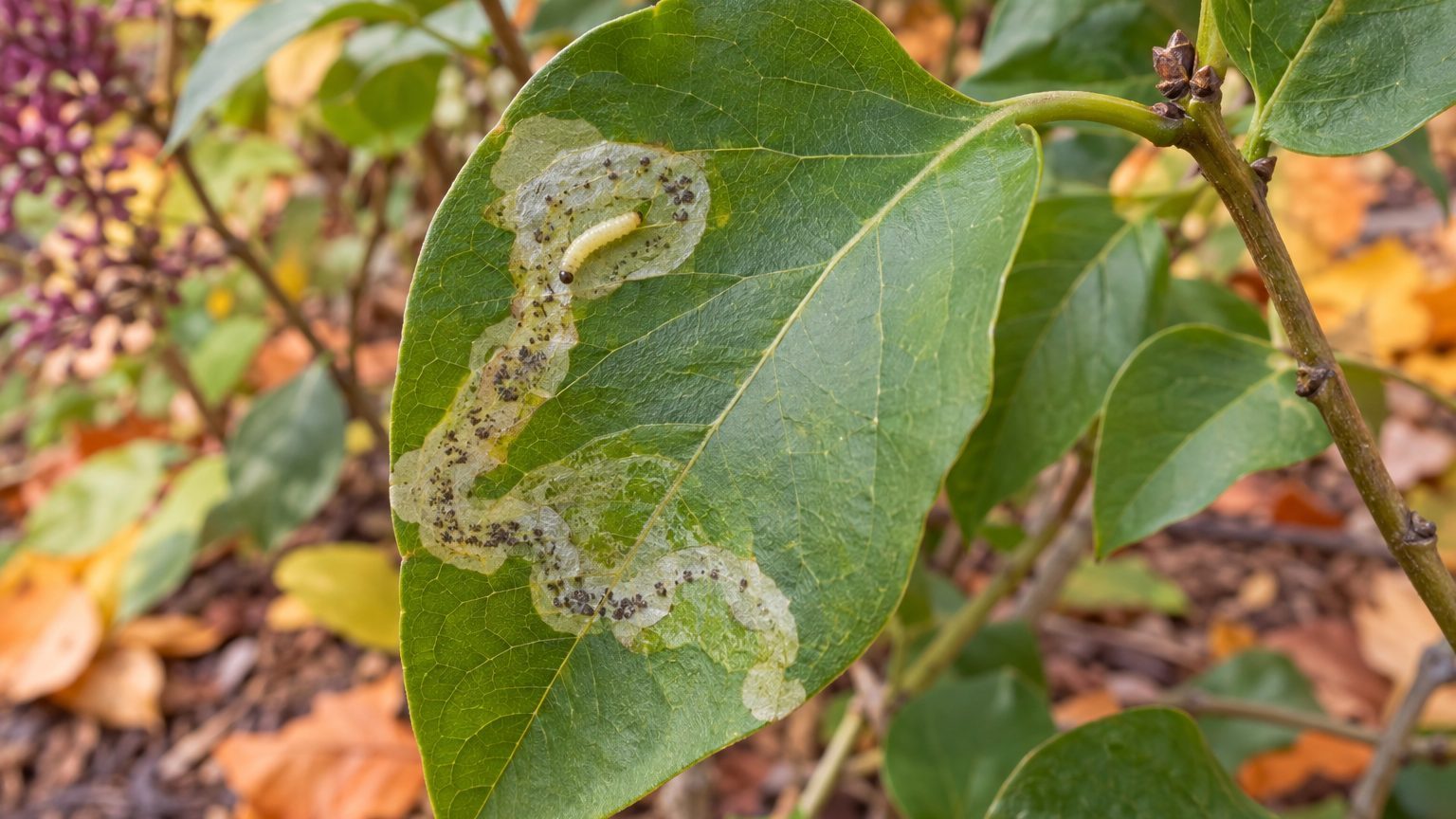
  • The edge of a leaf is folded over on itself, and this fold is the sign that separates leafminer from most other lilac troubles.
  • Before the fold, a pale blotch appears on the leaf surface, a patch where the larva has eaten out the green tissue between the top and bottom skin.
  • The blotch turns brown and dry over time, so older damage looks like scorched, papery spots.
  • The adult is a small brown moth, easy to miss and seldom noticed on the shrub.

Privet hedges can carry the same damage, so a nearby privet with folded leaves is another clue.

Lilac Leafminer or Something Else?

Brown leaves on a lilac have plenty of causes, and many have nothing to do with insects. Sorting them out takes a look at the pattern on the plant and a quick test with your fingers.

Gently unroll a folded leaf. A larva, silk or tunneled tissue inside points to the leafminer.

Looks like How to tell them apart
Leaf scorch Browning runs along the margins after hot, dry spells, and the leaf stays flat with nothing inside it.
Powdery mildew A white, dusty film coats the leaf surface and rubs off on a finger.
Bacterial blight Dark spots with a yellow edge may appear in cool, wet weather, and young shoots may blacken.

Folding is the clue that sets the leafminer apart. If leaves are spotted or coated but never folded, look to disease or weather stress first.

What Causes Lilac Leafminer, and Where It Is Worst

The cause is a small moth native to Europe, known as Gracillaria syringella (also listed as Caloptilia syringella). Its larvae first mine a blotch in the leaf and then fold the leaf edge. Lilac and privet are both hosts.

Nothing in the soil or lawn drives it. The pest follows its host plants, so any yard with lilac, or with privet close by, can see it. Privet can be infested too, which makes a neighboring hedge worth a look.

In Washington, natural predators may help hold populations down. A yard with a mix of plants gives those helpers a chance to work.

How to Treat Lilac Leafminer

Hand removal starts with finding and destroying infested leaves.

  1. Look over the shrub for folded leaves and remove those that are infested.
  2. Pinch folded leaves right through the fold, which kills the larvae inside.
  3. Pick off badly blotched leaves and destroy them.
  4. Destroy removed leaves rather than leaving them on the ground.
  5. Check any privet close by and treat it the same way.
  6. Go back over the lilac regularly.

If damage is heavy and hand removal is not keeping up, your state’s extension service can tell you which products are approved where you live and how to use them. Stick with their advice rather than guessing at a spray.

How to Prevent Lilac Leafminer Coming Back

Prevention follows the same calendar as the pest, so it comes down to looking at the right time and cleaning up behind yourself.

  • Check leaves for folded edges and pinch infested leaves to kill the larvae inside.
  • Check the shrub regularly for newly folded leaves.
  • Check any privet growing near the lilac and remove infested leaves there as well.
  • Natural predators may help control populations.

Regular checks can catch newly folded leaves.

Where This Comes From

The details here come from university extension guidance, including advice written for Washington. Pest timing and approved treatments differ by state, so check with your state’s extension service before settling on a plan.

Common Questions

Can You Compost Leaves Damaged by Lilac Leafminer?

Destroy infested leaves if you find live larvae inside.

Should You Spray Every Lilac That Has Folded Leaves?

Often not. Pinching or picking and destroying infested leaves kills the larvae inside. For heavier infestations, ask your extension office what is approved in your state.

Can Privet Hedges Bring Leafminer to Your Lilac?

They can, since privet is also a host. Inspect the hedge and destroy infested leaves there as well.

Deer on Lilacs: How to Spot Them and Get Rid of Them

Deer on Lilacs: How to Spot Them and Get Rid of Them

A lilac trunk with long strips of peeled bark, or branches with raggedly chewed ends, usually points to deer rather than disease. The damage tends to show up on the trunk more than on the leaves. Telling a deer from the pests that look similar takes a close look at the bark and the cut ends.

Deer: What You See

Deer on Lilacs: How to Spot Them and Get Rid of Them

Deer leave a rough, torn look on a lilac, and the clues sit on the trunk and the lower branches.

  • Bark torn away without any teeth marks, because a deer that strips bark tears it rather than gnawing it.
  • Long lines of shredded or peeled bark along the main trunk, reaching up to 3 feet off the ground in Minnesota, where antler rubbing is the cause.
  • Wood that looks shiny or polished where an antler has scraped the trunk clean.
  • Ragged, frayed edges on twigs and stems, where the deer pulled the growth instead of snipping it.
  • Feeding that begins at the ground and climbs well above where rabbits or voles can reach.

Leaves are often left alone, since deer usually avoid browsing on lilac foliage, so a lilac that looks fine from a distance can still be wounded up close.

Deer or Something Else?

Several lilac problems leave a damaged trunk or odd-looking leaves, and a quick glance can mix them up. Look at the wound itself, then at where it sits on the shrub and what is around it.

Deer injury is torn and fibrous. Insect injury and disease tend to leave holes, swelling or discolored tissue.

Looks like How to tell them apart
Lilac borer Cracked, swollen bark with holes and sawdust-like material pushing out, often near the base. Deer leave torn strips with no holes.
Lilac blight Leaves that look scorched, with dark streaks on one side of young shoots and blackened buds. Deer leave torn bark, never blackened buds.
Powdery mildew A white powdery coat on leaves in summer, often on older shrubs. It can wash off in wet weather, while deer damage cannot.

Oystershell scale is another lookalike. It appears as tiny oyster-shaped bumps scattered over the bark, so a bark that is rough but intact with small bumps points to the insect and not to a deer.

What Causes Deer, and Where It Is Worst

The cause is a deer itself, either rubbing its antlers on the trunk or feeding on the stems. Bucks scrape the bark when they clean and polish their antlers, and a smooth, upright lilac trunk makes a convenient post. Feeding damage comes from deer working over shrubs along their route.

Lilac foliage is usually passed over, so feeding on the shrub often points to a deer with few other choices nearby.

Anywhere deer move through yards, a lilac can be a target. The numbers from Minnesota give a sense of the range, with rubbing marks up to 3 feet from the ground and feeding up to 6 feet or a little higher. Yards that back onto woods, fields, or creek corridors see more traffic than a fenced lot in the middle of town.

How to Treat Deer

Treating deer damage means protecting the shrub from the next visit and tidying what has already been hurt.

  1. Inspect the whole trunk and lower branches, so that you know how far the bark was torn and whether the wound runs around the stem.
  2. Check for teeth marks, because bark removed by a deer leaves none, and that separates the damage from rodent gnawing.
  3. Cut broken or dangling branches back to a clean cut, so that the shrub is not left with ragged stubs that tear further.
  4. Trim loose, hanging bark flaps back to firm edges with clean tools, so that debris does not hold moisture against the wound.
  5. Surround the trunk with a sturdy cage or wrap, set a little away from the bark, so that antlers meet a barrier rather than wood.
  6. Ask your state extension service which deer repellents are registered where you live, so that you use only what is allowed for your yard.

Leave the wound open to the air and skip homemade coatings.

How to Prevent Deer Coming Back

Protection works best when it goes up before deer start visiting, and the calendar points to the seasons when bucks are active and food runs short.

  • Set cages or wraps around the trunks of young and thin-stemmed lilacs before antler rubbing begins.
  • Walk the yard and fix any gap in the cage or fencing so the trunk stays protected.
  • Look over the shrubs after snow or heavy wind, because a cage that has been knocked over no longer protects the trunk.
  • Check for fresh rubbing and ragged stems, and inspect the damage before leaves hide it.
  • Keep lawn clippings and brush piles away from the lilac so the base remains easy to inspect.

Keep the guards loose enough that the trunk can swell, and adjust them as the stems thicken.

Where This Comes From

The signs and measurements here come from university extension and government plant health pages, including the Minnesota advice on rubbing height. Local deer pressure and the rules on repellents vary, so check with your state’s extension service before you buy or apply anything.

Common Questions

Should You Worry If a Deer Nibbles Lilac Leaves?

Deer usually avoid lilac foliage, but inspect both the leaves and bark when you see damage. Bark damage on the trunk matters more, so look there first.

Can You Tell Deer Damage from Rodent Damage on Lilac?

Look for teeth marks. When a deer removes bark, no teeth marks are left, while gnawing from a smaller animal does leave them.

Does a White Film on Lilac Leaves Mean Deer Are Around?

No. A white powdery film on leaves in summer is powdery mildew, which can wash away once rains become regular.

Caterpillars on Lilacs: How to Spot Them and Get Rid of Them

Caterpillars on Lilacs: How to Spot Them and Get Rid of Them

Chewed leaves in summer call for a different response than a pale, grub-like larva under loose bark on a lilac trunk. Some feed openly on the foliage, while the lilac borer works hidden inside the wood. Knowing which one you have decides what you do next.

Caterpillars: What You See

Caterpillars on Lilacs: How to Spot Them and Get Rid of Them

The lilac borer looks different from the leaf-eaters you may find on the same shrub.

  • The borer larva has creamy white skin and a small dark head, so it looks pale against the wood it tunnels in.
  • Its prolegs are very reduced and end in rings of tiny hooks called crochets.
  • Eggs are laid in small groups or singly on the bark of the lower trunk, so that is where trouble begins.
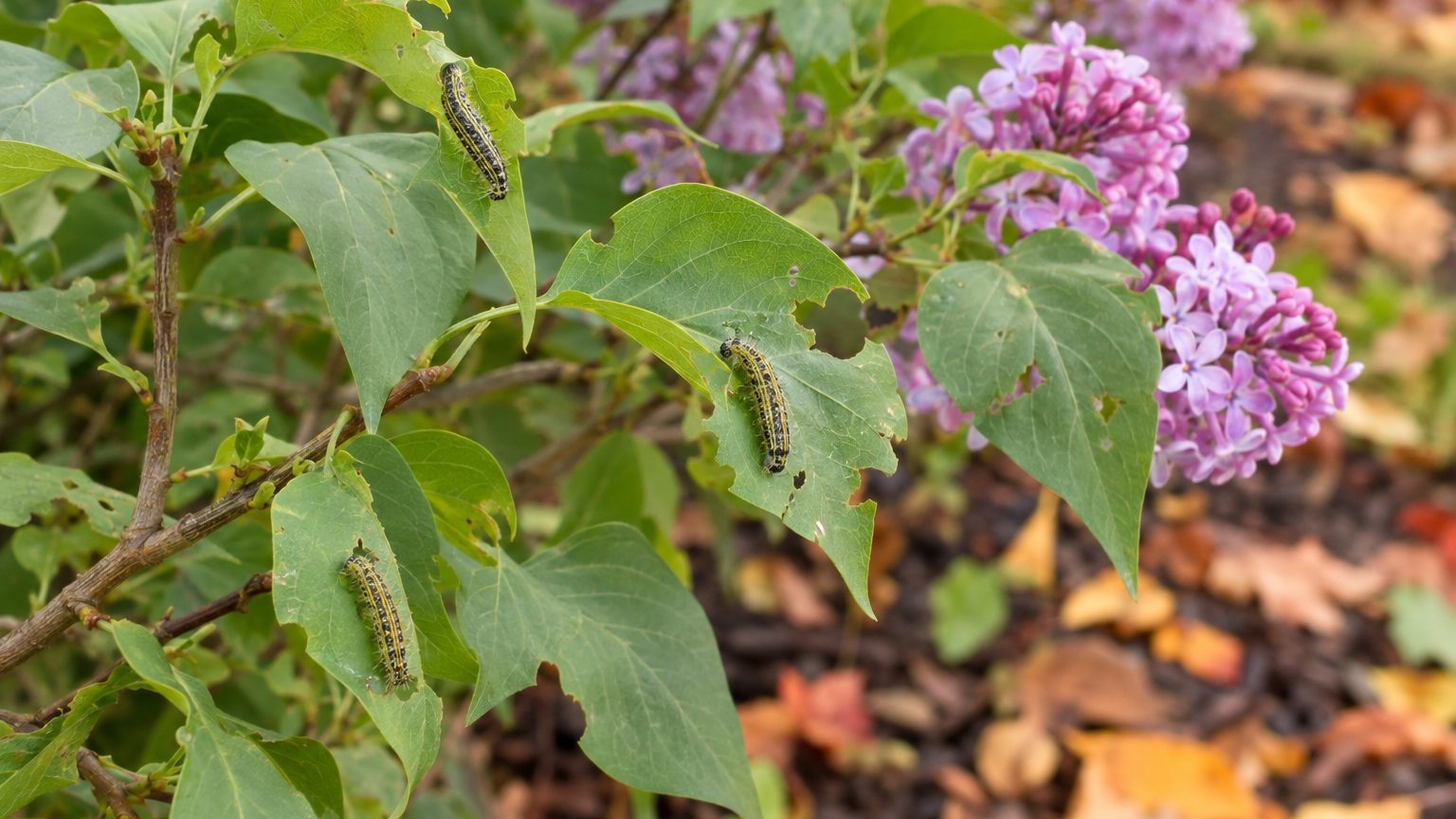
  • Leaf-feeding caterpillars sit out in the open and chew foliage, and lilac is one of many trees and shrubs they eat.
  • In Ohio, one such leaf feeder keeps eating for 37 to 42 days, which is long enough to leave a branch ragged.

Look at the lower trunk first, then at the leaves, because the two groups leave their marks in different places.

Caterpillars or Something Else?

Not every pale grub in a lilac is a caterpillar. Many wood-boring pests are beetle larvae, and at a glance they can look much like the borer.

A hand lens settles it quickly. Look at the underside of the body, where a caterpillar carries fleshy prolegs and a beetle larva does not.

Looks like How to tell them apart
Beetle larva, a pale grub inside the wood Check the body under magnification: beetle larvae lack prolegs, while the lilac borer has prolegs tipped with rings of tiny hooks.

Leaf damage is a separate matter. Chewed foliage with caterpillars sitting on it is a leaf-feeder problem, and the borer is not involved. A creamy larva under the bark may be the borer, but check for prolegs before identifying it.

What Causes Caterpillars, and Where It Is Worst

Every caterpillar on a lilac began as an egg laid by a moth. In Colorado, females lay eggs in small groups or singly on the bark of the lower trunk within a week after emerging. The young larvae then tunnel into the wood, which is why damage tends to show up low on the shrub.

Lilac and privet are hosts, but they are attacked less often than other hosts of the borer. Leaf-feeding caterpillars are far less picky, and lilac sits on a long menu with trees such as:

  • wild cherry and plum
  • maple and birch
  • willow and poplar
  • apple and pear
  • walnut, pecan and ash

How to Treat Caterpillars

Start with what you can see and reach, and move to anything stronger only after you know which caterpillar you have.

  1. Inspect the lower trunk and the leaves, so that you know whether you are dealing with a borer or a leaf feeder.
  2. Remove any leaf-feeding caterpillars you can safely reach, then ask a local garden professional how to dispose of them.
  3. Check the trunk base for damaged bark and signs of tunneling, so that you can tell a borer problem from simple leaf damage.
  4. Photograph the larva and its prolegs, so that an expert can confirm the identification before you buy anything.

Your state’s cooperative extension service can tell you which controls are approved where you live, and when the timing is right. Take the photo and a sample of the damage with you.

How to Prevent Caterpillars Coming Back

Prevention follows the pests’ own calendar, from the moths laying eggs to the larvae feeding on leaves.

  • Inspect the bark of the lower trunk regularly, because that is where borer eggs are laid.
  • Once the leaves open, glance at the foliage regularly, so that leaf feeders are caught before they strip a branch.
  • Keep mowers and string trimmers away from the base of the trunk to avoid damaging the bark.

Where This Comes From

The notes here come from university extension and government pages on lilac pests, and some of the timing was written for Colorado and Ohio. Check with your own state’s extension service for local timing and approved controls.

Common Questions

Do Privet Hedges Get the Same Caterpillars?

Privet can host the lilac borer as well, though it is attacked less often than other hosts. If you grow both, check the lower stems of the hedge as you check the lilac.

Should You Spray Lilacs as Soon as You See a Caterpillar?

Identify it first. A borer hides in the wood and a leaf feeder sits on the foliage, so one treatment will not suit both. Ask your state’s cooperative extension service for local control advice.

Can the Same Caterpillar Move to Other Trees in Your Yard?

Leaf-feeding caterpillars eat many trees and shrubs, so they can. Privet can host the lilac borer, while ash appears among the hosts of the leaf-feeding caterpillars covered here.

Thrips on Roses: How to Spot Them and Get Rid of Them

Thrips on Roses: How to Spot Them and Get Rid of Them

A rosebud that swells, colors up, and then refuses to open is the classic sign that thrips have been feeding inside it. These slender insects work out of sight in the folds of the petals, which is why the damage often shows up before the pest does. The good news is that the harm is mostly to looks.

Thrips: What You See

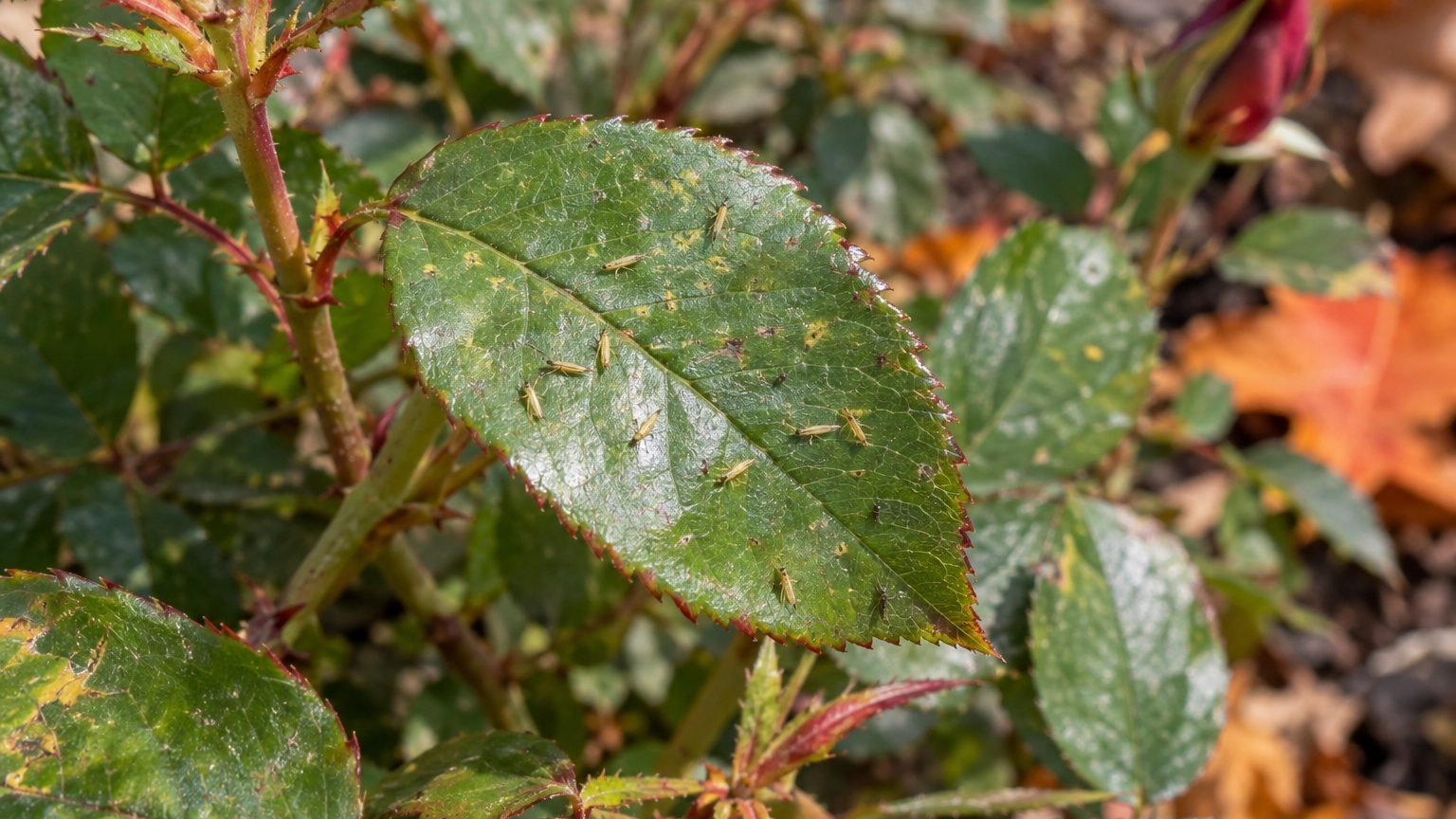
Thrips on a rose

Thrips are hard to catch in the act, so you read the bloom and the bud for clues, starting with the one that gives them away.

  • A bud that stays closed and never opens is the sign gardeners notice first, and heavily infested buds in particular may fail to open.
  • The outer petals carry brown edges, and the petal itself is often malformed, because the insect chews and sucks the juices.
  • Brown spots dot the petals of flowers that do open, and they show up best on lighter colored blooms.
  • Tiny brownish-yellow insects with fringed, feathery wings sit at the base of the petals, at less than 1/16 inch long.
  • Leaves can look distorted too, since thrips also feed in leaf buds.

In North Carolina, roses are most susceptible in June, so that is when to look closely.

Thrips or Something Else?

Petal browning and stalled buds have other causes, so a single clue is not enough to name thrips. Pair what you see with where it is happening, and add a quick test before you reach for any treatment.

Peel back the outer layer of petals on a healthy blossom and look at the base. Blowing lightly into a bloom makes thrips move, which makes them easier to spot.

Looks like How to tell them apart
Browned petal edges from a stressed or damaged bloom No tiny insects appear at the petal base when you peel back the first layer, and a light puff of breath produces no insect movement.
Distorted new leaves from sap feeders such as aphids Aphids cluster visibly on tips and buds, while thrips hide inside the bud and the petal base.

Unopened buds can also come from weather or watering stress, so check inside the bud for the narrow, fast-moving insects before you decide.

What Causes Thrips, and Where It Is Worst

Thrips are tiny flying insects, and the wind carries them into your garden on warm, sunny days. They arrive on their own, so a clean yard can still get them. Roses are one of several hosts, along with strawberries, bell pepper, and white clover.

Warm weather speeds them up. In North Carolina they reproduce through the year, with most of their 12 to 15 generations falling in the warmer months, and in summer the adult stage arrives in about 11 days. Populations can build quickly once the weather turns warm.

Other species feed on roses too. Chilli thrips are a nuisance to rose growers because their feeding damages both foliage and flowers. Various thrips species feed on roses, so do not rule them out without checking the buds.

How to Treat Thrips

Because the damage is cosmetic and will not harm the bush, start with the gentlest steps and decide how far to go based on what you see.

  1. Check a few buds as they start to form, so that you catch thrips before the blooms are ruined.
  2. Pick one healthy blossom and peel back the first layer of petals, looking at the base for tiny brown-to-orange insects.
  3. If thrips are present, decide whether the cosmetic damage warrants treatment.
  4. Leave beneficial insects alone, since some gardeners report thrips are eaten by the same insects that consume aphids.
  5. Decide whether a spray is worth it for you, because in Arizona gardeners growing show-quality blooms may spray buds before they open with an insecticide labeled for thrips on roses.

If you consider spraying, check which products are approved for roses where you live. Buying predatory mites is not a reliable fix, since they typically do not establish well on roses. Smooth rose leaves lack the protective structures underneath that the mites need for shelter. Interestingly, when pepper plants were added as a home for the mites, thrips damage to the roses decreased significantly.

How to Prevent Thrips Coming Back

Thrips arrive by wind, so you cannot keep them out, but timing your checks and cleanup shrinks the damage.

  • As flower buds begin to form, start looking inside a few of them regularly, because that is when thrips move in.
  • Keep checking buds through the warmer months, when most thrips generations occur.
  • In June in North Carolina, when roses are most susceptible, check lighter colored blooms first because browning shows there.

Where This Comes From

Local timing and approved treatments vary.

Common Questions

Will Thrips Kill a Rose Bush?

No. The damage is cosmetic and will not harm the bush, though it can spoil the look of the blooms.

Why Do Rosebuds Turn Brown and Not Open?

Thrips chewing and sucking the petals cause brown edges and malformed petals, and heavily infested buds may fail to open. Check inside the bud for tiny insects to confirm.

How Big Are Thrips on Roses?

They measure less than 1/16 inch and are barely visible without a magnifying glass. Blowing lightly into a bloom makes them move so you can spot them.

Spider Mites on Roses: How to Spot Them and Get Rid of Them

Spider Mites on Roses: How to Spot Them and Get Rid of Them

Rose leaves that turn gray or speckled in hot, dry weather, often with fine webbing underneath, usually point to spider mites. These pests feed on the underside of the leaf, so the damage shows from above before the culprit is easy to find. Washing the plant is a useful first move, and regular watering helps keep the rose from becoming drought-stressed.

Spider Mites: What You See

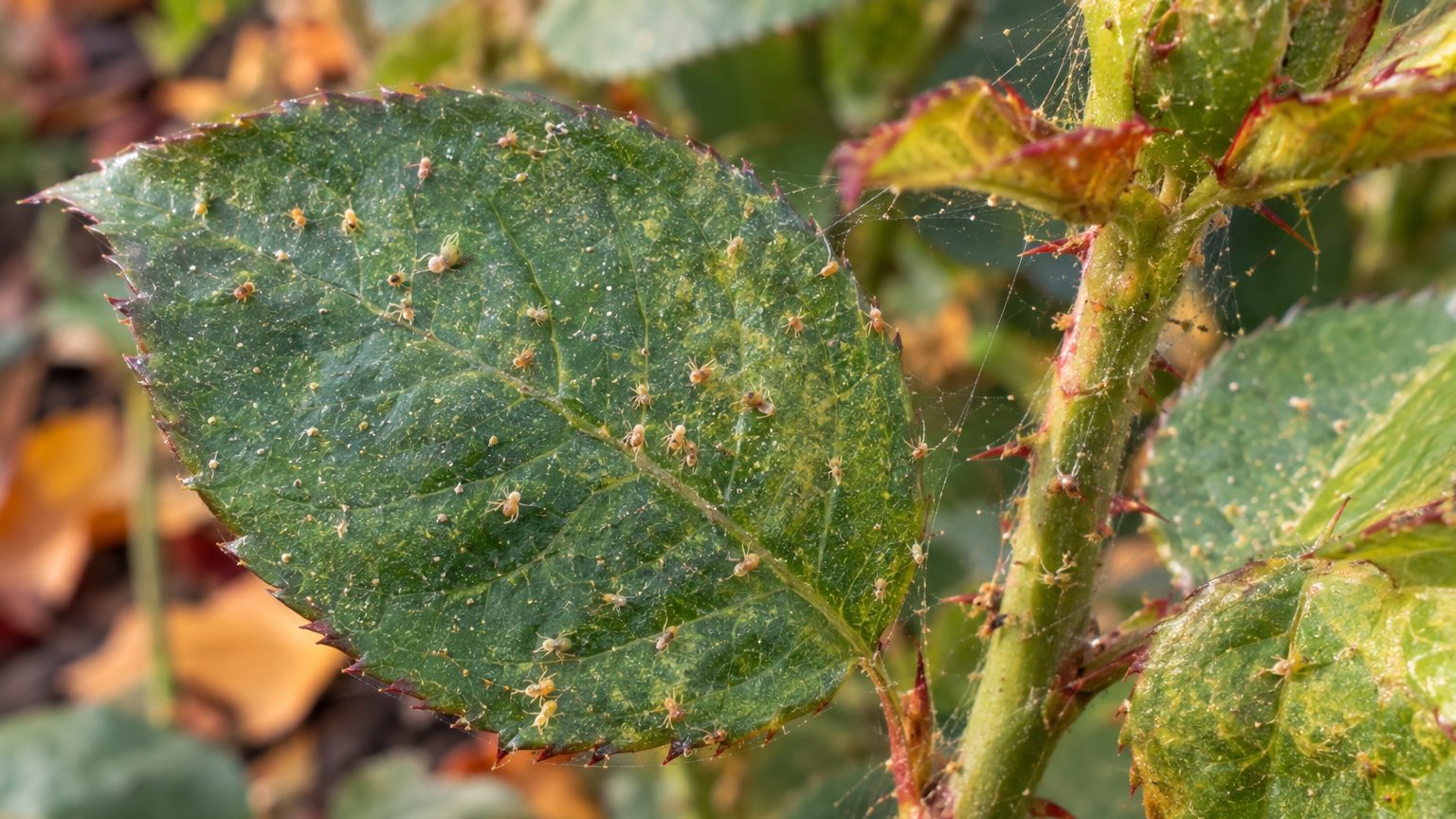
Spider Mites on a rose

The first sign is on the leaf surface, and the mites themselves are harder to spot.

  • Tiny pale spots crowd together on the leaf, a pattern called stippling, and the leaf can look gray or finely speckled.
  • Webbing appears on the underside of the foliage, though some species produce none.
  • Lower leaves turn a fuzzy yellow with red specks, and those specks are the mites.
  • Each mite is about the size of the period at the end of this sentence, so a magnifier helps.
  • In California, mites usually appear first on the undersides of leaves and may move to the upper surfaces as their numbers grow.
  • Shaken over a sheet of white paper, the leaves drop mites that can be seen scurrying around.

In Arizona, hot and dry weather from May through September is the time to look.

Spider Mites or Something Else?

Speckled, off-color leaves have more than one cause, and a speck on the leaf is not enough to name the culprit. Check where the speckling sits and whether anything moves when you shake a leaf over white paper.

Southern red mites are the closest lookalike on roses, and they follow a different seasonal pattern.

Looks like How to tell them apart
Southern red mites, with the same speckled leaves In South Carolina, southern red mite numbers climb in cool spring and fall weather and drop in summer, while two-spotted spider mites build in hot, dry spells.

Powdery mildew is a disease, not a mite. It also troubles roses, especially in greenhouses, but nothing scurries across the paper when you shake a mildewed leaf.

What Causes Spider Mites, and Where It Is Worst

Mites settle where conditions suit them. Dry, dusty air favors them, and females lay more eggs and develop faster at lower relative humidity. A rose that is short of water is more susceptible, which is why a dry summer spell hits so hard.

Warmth speeds the whole cycle. Development from egg to adult shortens as temperatures climb:

  • At 54F, it takes 40 days.
  • At 70F, it drops to 14 days.
  • At 86F, it is only 7 days.

Hot, dry weather is the usual trigger. In Arizona the watch runs from May through September, and in South Carolina two-spotted spider mites flare in hot, dry spells while southern red mites take over in cool spring and fall weather. Roses are among their favored hosts, and a low-level mite population may do no harm.

How to Treat Spider Mites

Confirm the mites first, then start with water, which is the gentlest tool you have.

  1. Shake leaves over white paper, so that you know you are dealing with moving mites and not another leaf problem.
  2. Decide whether to treat at all, since a low-level population may not harm the rose.
  3. Wash the plant with a strong stream of water, aiming at the undersides of the leaves, because that is where the mites feed.
  4. Try soapy water if plain water does not do enough, since in Arizona it may be more effective.
  5. Repeat the washing regularly, because mites that survive keep laying eggs and the numbers rebound.
  6. If washing is not enough, get local advice about treatments registered where you live.

Watch how the numbers behave after any treatment. In North Carolina trials, a high kill that declined within 2 or 3 weeks pointed to surviving mites or eggs, while a high kill soon after treatment meant all stages were hit.

How to Prevent Spider Mites Coming Back

Prevention follows the season, because mites build with heat and dryness and a roughly timed routine keeps them in check.

  • Look at the undersides of the lower leaves, where mites usually show up first.
  • Before the hot, dry stretch, water the roses well to reduce drought stress.
  • Through the hot months (May through September in Arizona), rinse the foliage regularly, which also washes off the dust mites favor.
  • In cool spring and fall weather in South Carolina, keep checking, since southern red mites peak then.

Regular checks catch a problem while it can still be washed away.

Where This Comes From

Some timing and treatment details apply only in the states named above. Timing and treatment rules vary by place, so seek local advice before acting.

Common Questions

Can Spider Mites Harm a Rose?

They can. Mites suck the contents of leaf cells and remove chloroplasts, which weakens the leaf’s ability to turn sunlight into food. Heavy feeding can dry leaves up and drop them, as reported in California.

Do Spider Mites Always Leave Webbing?

No. Some species produce webbing and others do not, so a rose can be infested without any silk. Stippling and the white-paper shake test are steadier signs.

What Other Plants Do Spider Mites Favor?

Roses share the list with bee balm, butterfly bush, catmint, dahlia, marigolds, Russian sage, verbena and New Guinea impatiens. Mites are less common on woody trees and shrubs than on semi-woody shrubs like roses, so plants beside your roses are worth a look.

The almanac, state by state. Every date on this site comes from a state’s own frost facts and its extension service’s calendar — and says where it comes from.