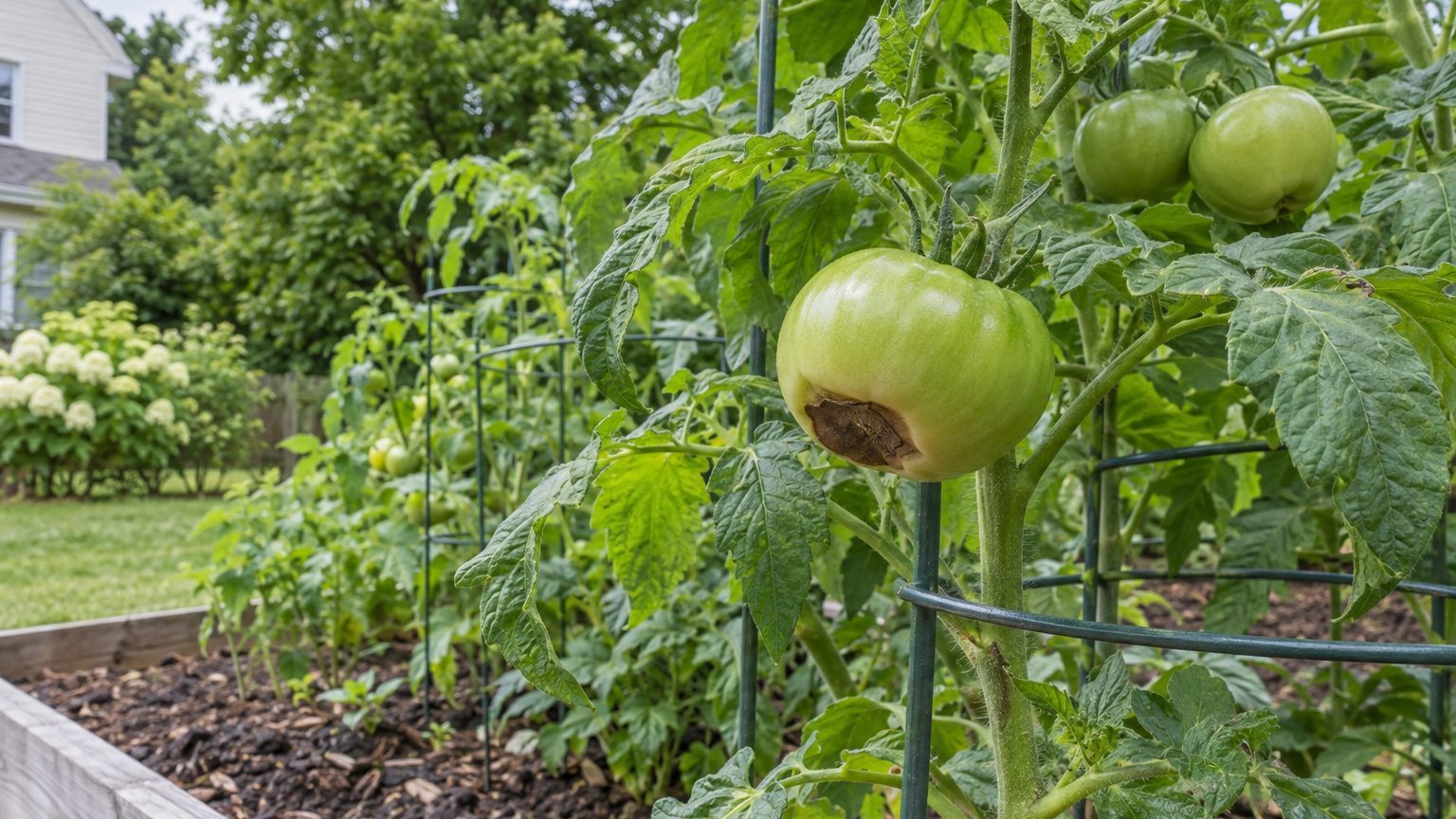
A dark, sunken patch on the bottom of a green tomato is a common sight in summer, usually on the first fruit of the season. That patch is blossom end rot, a disorder of the fruit that comes from how the plant gets its calcium. The causes are easy to trace once you know where to look, and most fixes are simple garden habits.
What Causes Blossom End Rot on Tomatoes?
Blossom end rot is a calcium shortage inside the developing fruit. It rarely means the soil lacks calcium. More often the plant cannot move enough of it to the fruit because the roots are stressed by swings between wet and dry soil.
It first appears as a sunken, brownish black spot 1⁄2 to 1 inch in diameter on the blossom end, the side opposite the stem. The spot can widen and turn leathery as the fruit grows.
Climate and soil change how likely it is. Hot, dry spells dry the root zone quickly, and acidic soil holds less usable calcium. Where summers are hot and humid, a stretch of extreme heat can trigger the problem even in gardens that were fine in cooler years.
From the almanac
Tomatoes in your state
The dates on this page depend on where you live. Your state's page carries its frost dates, its USDA zones and the year laid out month by month.
Northeast
Southeast
- Alabama
- Arkansas
- Delaware
- Florida
- Georgia
- Kentucky
- Louisiana
- Maryland
- Mississippi
- North Carolina
- South Carolina
- Tennessee
- Virginia
- West Virginia
Midwest
Southwest
West
Pacific Northwest
Canada
How Do You Fix Blossom End Rot on Tomatoes?
The fixes follow the season, starting with the soil before planting and ending with the habits that keep roots steady.
- Test the soil, so you know whether lime is needed, since a pH test every 2-3 years is the usual rhythm.
- If your soils tend to be acidic, work lime into the soil in fall, giving it time to react before spring planting.
- Only when a test shows low calcium and the pH is already right should you till in gypsum before planting, at the rate the soil test report gives.
- Water deeply and regularly so the whole root zone is wet, which in dry-summer climates means every 7 to 10 days.
- To check moisture, push a finger a few inches down into the soil, and water once it feels barely damp.
- Spread mulch around the plant bases, so the soil holds moisture through hot, dry stretches.
Pick off fruit that already has the spot, because it will not recover and the plant puts its energy into the rest. Healthy fruit set later often comes out clean once watering and soil are steady.
Does Blossom End Rot Change with Soil and Climate?
Advice differs by region more than by tomato variety. The range of target soil pH shows this, as do the watering rules, which are written for very different summers.
Whatever you grow, a soil test report is the best guide for your own ground, since the right pH target varies from place to place.
| What changes | Why it matters |
|---|---|
| Target soil pH, from 6.0 to 7.2 depending on the region | Calcium is easier for roots to take up in the right pH range, and a test tells you where your soil sits. |
| Rainfall in humid regions, with at least 1 inch of water per week as rain or irrigation | When rain falls short during fruit development, you make up the difference with a hose. |
| Dry summers in the Pacific Northwest, where deep watering every 7 to 10 days is common | Rainless weeks mean the root zone depends on you, so a slow soak matters. |
| Hot, dry spells in the Northeast, where 1-2 inches of water a week plus mulch is advised | Mulch slows evaporation, which keeps moisture from swinging between extremes. |
In practice, set your pH goal from a local soil test and your watering from the weather. The same two habits apply across the country, only the numbers shift. Heavier fruit and long heat waves put extra strain on the plant, so extra care with moisture in those weeks pays off.
What Mistakes Make Blossom End Rot Worse?
Watering in Shallow Sips

Light, frequent sprinkling wets only the top of the soil, so the roots stay shallow and dry out fast. The cost is uneven calcium delivery and spotted fruit. Water slowly enough to soak the root zone to a depth of 2 feet, then let the soil rest before the next watering.
Hoeing Close to the Stem

Cultivating near the plant cuts fine feeder roots, and those are the roots that carry calcium upward. The damage is invisible until fruit starts showing spots. Keep hoes and cultivators more than 1 foot from the base of the plant, and pull nearby weeds by hand.
Adding Calcium Without a Soil Test
Dumping gypsum or lime on the bed without testing can waste money and push pH the wrong way. If the pH is off, lime fixes it. If the pH is right but calcium is low, gypsum fits. A test result tells you which case you have, and a rate of 1 pound of gypsum per 100 square feet is a typical starting point in a calcium-poor bed.
When Should You Act on Blossom End Rot?
Act at the first sunken, dark spot on a young fruit, since that tells you moisture or soil needs attention right away. Soil work such as lime waits for fall or the weeks before planting, but watering and mulch can change today. Each state has its own months for tomato work.
- Your state’s tomato page lists the months for planting out, so you can plan the soil work ahead of it.
- Check there before fall, since that is when lime goes in and has time to settle before the next season.
Common Questions
Can You Eat a Tomato with Blossom End Rot?
Yes, once you cut away the dark, sunken spot and any soft flesh beneath it. The rest of the fruit is fine to eat. If the rot has opened the skin and mold has set in, toss it.
Does Blossom End Rot Spread from One Tomato to Another?
No. It is a nutrient and moisture problem inside each fruit, so it does not pass between plants like a disease. Several fruit on one plant often show it at once because they all develop under the same dry or wet conditions.
Will a Plant with Blossom End Rot Keep Producing Good Tomatoes?
Often it will. Fruit that sets after the soil moisture steadies tends to come out clean, while the early fruit that already has the spot will not heal. Keep the soil evenly damp and the plant has a good chance of turning around.